
Volkswagen Touareg — service and repair in Espoo
The Volkswagen Touareg is a large premium SUV that combines comfort, powerful engines, permanent all-wheel drive and long-distance capability. The model suits Finland well: the Touareg performs confidently in winter, offers a spacious cabin and works for towing trailers, trips outside the city and everyday use.
However, the Touareg is technically far more complex than most other Volkswagen models. Powerful V6 engines, an automatic gearbox, all-wheel drive, extensive electronics and, on some cars, air suspension require skilled maintenance. Timely diagnostics matter because a minor fault in a complex component can lead to costly repairs over time.
At Volkkarihuolto Espoo we service and repair Volkswagen Touareg cars from different generations. Our workshop is at Ruukinmestarintie 7, 02330 Espoo.
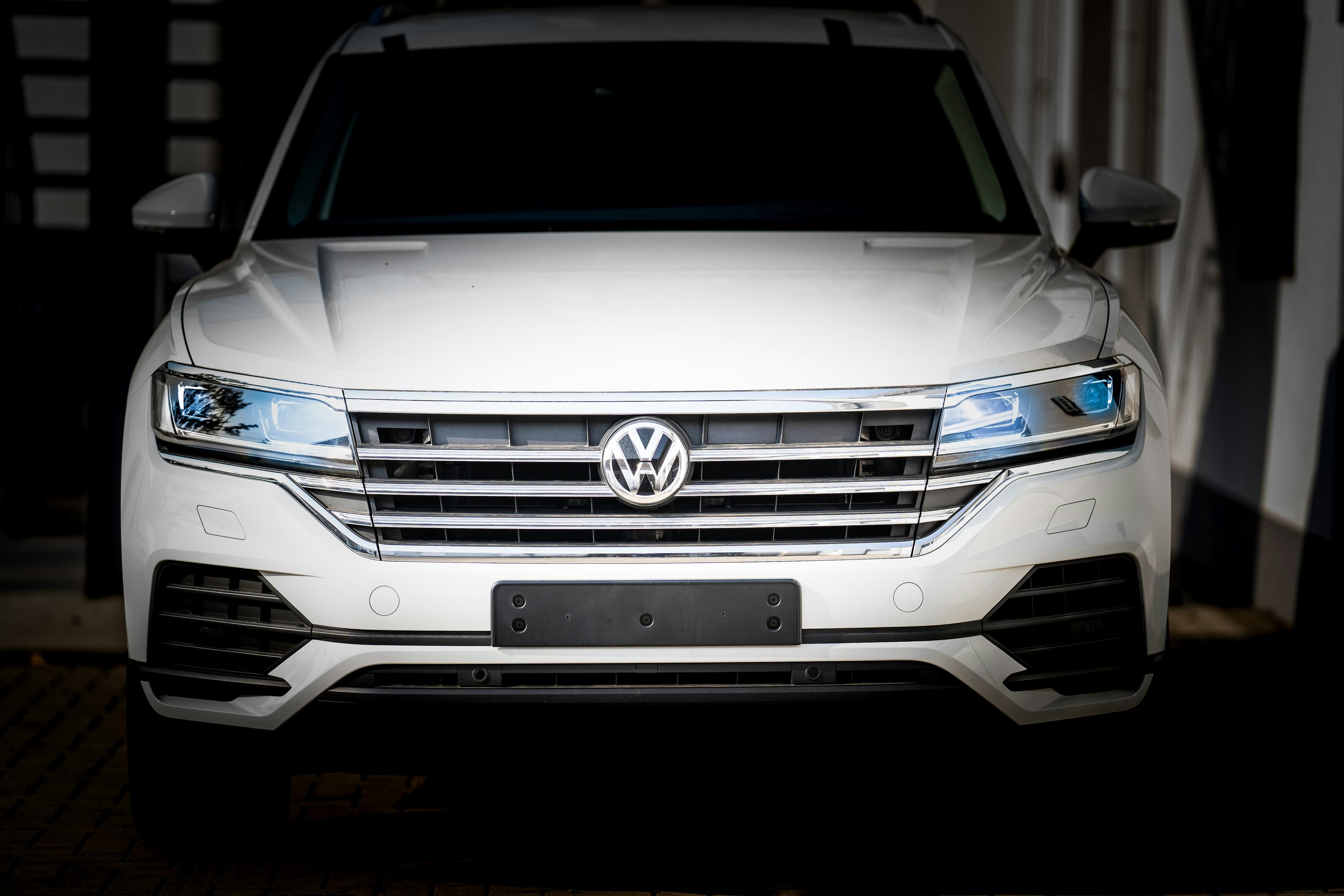
History of Volkswagen Touareg
The first-generation Volkswagen Touareg appeared in 2002. It was Volkswagen's first large premium SUV, developed as a comfortable road car with serious all-wheel-drive capability. The first generation offered a wide choice of engines, including petrol V6 and V8, diesel V6 TDI, V10 TDI and the rare petrol W12.
The second generation arrived in 2010. The car became lighter, more economical and more advanced while keeping a spacious cabin and all-wheel drive. The second-generation Touareg with the 3.0 V6 TDI became one of the most common Touareg variants in Europe.
The third-generation Volkswagen Touareg has been built since 2018. It gained a more modern platform, a digital instrument cluster, a wider range of driver aids and an updated engine line-up. In 2023 Volkswagen presented a facelifted third generation with updated design, suspension settings and infotainment. According to Volkswagen, around half a million second-generation cars were sold, and the Touareg is among Volkswagen models with more than a million units produced in total.
Volkswagen Touareg generations
We service all three Touareg generations, including diesel and petrol engines, automatic transmission, 4Motion, conventional and air suspension, and Touareg eHybrid and Touareg R eHybrid.
- Touareg I — 2002–2010
- Touareg II — 2010–2018
- Touareg III — from 2018
Volkswagen Touareg service in Espoo
The Touareg needs regular maintenance depending on the engine, mileage, equipment and use. The car's weight puts extra load on brakes, suspension, wheel bearings and tyres. Diesel engines are sensitive to oil, cooling, DPF, EGR and AdBlue condition. On cars with air suspension, system leaks and compressor operation must be monitored.
In Finnish conditions, cold starts, short urban trips, winter salt and large temperature swings add stress. Even with low annual mileage, it is worth having the car checked at least once a year.
As part of Volkswagen Touareg service we can change engine oil and filters, diagnose the engine and gearbox, and check all-wheel drive, brakes, suspension, the battery, cooling, air conditioning and control units.
V6 TDI engines: DPF, EGR and AdBlue system
The 3.0 V6 TDI diesel is one of the most popular Touareg power units in Finland. It offers strong torque and suits long journeys but needs timely maintenance.
Mostly urban use can prevent the DPF from completing regeneration. Soot builds up, the car triggers filter burn-offs more often, fuel consumption rises and limp mode may appear.
The EGR valve and cooler can also clog or leak. For second-generation Touareg V6 TDI cars, sources on used vehicles mention coolant loss linked to EGR faults.
On newer Touareg models, faults can occur in the SCR and AdBlue system. A dashboard message may be caused not only by low fluid level but also by the NOx sensor, pump, heater, injector or another part of the system.
Book diagnostics if:
- Check Engine is on
- the car has lost power
- the engine is in limp mode
- DPF regeneration runs too often
- white or black smoke appears
- coolant level drops
- AdBlue fault or start restriction message
- TDI diesel engine repair
- engine diagnostics
Petrol TSI and FSI engines
Touareg models include petrol V6 FSI, V8 FSI, V6 TSI and hybrid versions. They offer strong performance but need attention to ignition, cooling, intake, turbocharging and oil consumption.
Rough running can be linked to spark plugs, coils, air leaks, a dirty intake or fuel system faults. On direct-injection engines, deposits can build up on intake valves over time.
If your Touareg misfires, is hard to start, loses power or shows an EPC fault, start with computer diagnostics. Running for long periods with misfires can damage catalytic converters.
Volkswagen Touareg automatic transmission
The Touareg uses a conventional automatic transmission, not the DSG common on many compact Volkswagens. The gearbox is designed for high torque, but its condition depends heavily on regular service and use.
Over time you may notice jerks, delayed engagement, vibration, harsh shifts or oil leaks. The cause may be oil level and condition, the valve body, solenoids, the torque converter, engine mounts or the mechanical part of the transmission.
“Filled for life” should not be read as “never check”. On a high-mileage car, oil and gearbox condition should be assessed individually, especially if the Touareg tows or often runs under heavy load.
4Motion all-wheel drive and transfer case
All European third-generation Touareg models have all-wheel drive, and it is one of the model's defining features.
Depending on generation, the driveline differs, but diagnostics should cover the transfer case, propshaft, driveshafts, differentials and tyres. Uneven wear or tyres with clearly different rolling circumference can stress the all-wheel-drive system.
On early Touareg cars, known age-related issues include propshaft wear and transfer case faults. First-generation reviews also mention driveline problems with uneven rear tyre wear.
Reasons to inspect include vibration on acceleration, shocks when changing direction, jerks at low speed, droning from under the car or all-wheel-drive faults.
Volkswagen Touareg air suspension
Some Touareg versions have height-adjustable air suspension. It offers high comfort but may need repair as the car ages.
Possible faults involve air struts, reservoirs, lines, the valve block, body height sensors and the compressor. On first-generation Touareg cars, air suspension issues are often noted on vehicles older than five or six years.
Typical warning signs:
- the car sinks while parked
- one side sits lower
- the compressor runs too long
- suspension will not rise
- chassis warning appears
- the ride has become excessively firm
- body height changes unevenly
Conventional suspension and steering
The Touareg's weight accelerates wear on suspension parts. Over time, arms, bushings, ball joints, dampers, anti-roll bar links and wheel bearings may need replacement.
Knocks on bumps do not always point to one part. Proper repair requires checking front and rear suspension, subframe mounts, tie rods, mounts and tyre condition.
Uneven tyre wear may relate not only to wheel alignment but also to worn suspension, different pressures or all-wheel-drive issues.
Touareg brake system
The Touareg is heavy and powerful, so the brake system works hard. Discs and pads can wear faster with urban use, towing or spirited driving.
After a Finnish winter, check discs, calipers and sliders. Salt and moisture can cause corrosion, seized calipers and uneven pad wear.
If you feel vibration when braking, the car pulls to one side, you hear squealing or one wheel gets hotter than the others, have the brakes checked.
Cooling system and leaks
The Touareg has a complex cooling system with many hoses, valves, heat exchangers and pumps. A leak can be small and show only as falling coolant level or antifreeze smell after a drive.
The cause may be the water pump, thermostat, connections, radiator, heat exchanger, EGR cooler or other components. On some engines access to the faulty part is difficult, so the leak source must be identified before repair.
Do not keep driving if coolant level drops regularly: overheating can lead to a much more expensive engine repair.
Electronics and battery
The Touareg has extensive electronics. A weak 12-volt battery can cause many random faults, especially after frost or long standing.
Warnings may appear for ABS, ESP, suspension, driver aids, parking systems, keyless access and other control units. In used large-SUV reliability research, owners of second-generation Touareg also reported electrical faults, though many were fixed relatively quickly.
Diagnostics should not stop at clearing codes: battery voltage, alternator charging, event history and communication between control units must be checked.
Volkswagen Touareg eHybrid and R eHybrid
Touareg hybrid versions combine a petrol engine, electric motor, high-voltage battery and charging system. They need diagnostics for both the combustion side and the high-voltage system.
Checks can include 12-volt battery condition, hybrid system faults, charge port operation, battery cooling and correct switching between electric and hybrid modes.
Work on high-voltage components must be carried out only by qualified specialists with appropriate equipment.
Volkswagen Touareg services we provide
At Volkkarihuolto Espoo you can book Volkswagen Touareg maintenance and diagnostics, including:
- engine oil and filter change
- computer diagnostics
- diesel and petrol engine repair
- DPF, EGR and AdBlue diagnostics
- automatic transmission service
- 4Motion and driveline diagnostics
- conventional and air suspension repair
- brake disc and pad replacement
- oil and coolant leak detection
- air conditioning service
- pre-purchase inspection
- MOT preparation
Volkswagen Touareg pre-purchase inspection
A used Touareg can be comfortable and dependable, but repair costs are significantly higher than for a Golf, Polo or Tiguan. Before buying, service history and technical condition are especially important to verify.
Inspection should include engine and gearbox diagnostics, all-wheel drive, suspension, brakes, leaks, electrics and tyres. On diesels, check DPF, EGR and AdBlue; on air suspension, check leaks and compressor operation.
The first generation needs the most careful check because of age and complexity. The second generation generally has a better reputation: in What Car? research, the 2010–2018 Touareg scored 89.3% reliability and ranked highly among used large SUVs. Still, any individual car depends above all on service history and previous use.
Common Volkswagen Touareg fault signs
Book diagnostics if:
- Check Engine or AdBlue message appears
- the car has lost power
- coolant level drops
- the gearbox shifts with jerks
- vibration on acceleration
- the car sinks while parked
- air suspension compressor runs often
- knocks or droning from suspension
- vibration when braking
- the battery discharges quickly
- several faults appear at once after frost
- all-wheel drive behaves inconsistently
Volkswagen Touareg repair in Espoo
Need Volkswagen Touareg service or repair? Contact Volkkarihuolto Espoo at Ruukinmestarintie 7, 02330 Espoo. We will diagnose the fault, find the cause and suggest a suitable repair option for the generation, engine, mileage and condition of your car.
FAQ
How often should a Volkswagen Touareg be serviced?
Intervals depend on the engine, mileage and use. In Finland, service and a general check at least once a year is sensible. For cars used mainly on short trips or for towing, some jobs may need shorter intervals.
What gearbox does the Volkswagen Touareg have?
Most Touareg models use a conventional automatic transmission with a torque converter. The exact gearbox depends on generation, engine and equipment.
Should automatic transmission oil be changed on a Touareg?
Oil condition should be assessed for mileage and use. Even if the manufacturer does not specify frequent changes in the standard schedule, old or contaminated oil can affect gearbox operation.
Why does a Touareg sink while parked?
On air suspension this can indicate a leak in a strut, reservoir, line or valve block. System integrity should be checked before replacing the compressor.
Why does a diesel Touareg lose power?
Possible causes include a full DPF, EGR fault, turbo, intake, pressure sensors or the AdBlue system. The exact cause is found after diagnostics.
Why does a Touareg vibrate on acceleration?
Vibration can be linked to the propshaft, driveshafts, wheels, engine mounts, transfer case or other driveline parts.
Can a Volkswagen Touareg be inspected before purchase?
Yes. Pre-purchase inspection is especially recommended for the Touareg because of its complex design and potentially high repair costs. Check control units, engine, gearbox, all-wheel drive, suspension, brakes and service history.
Detailed Services
Professional fault diagnostics for Volkswagen Touareg.
Oil ChangeEngine oil and filter replacement for Volkswagen Touareg.
Annual maintenanceComprehensive annual maintenance for Volkswagen Touareg.
Regular MaintenanceScheduled maintenance for Volkswagen Touareg according to service needs.
Engine RepairEngine diagnostics and repair for Volkswagen Touareg.
Diesel Engine RepairDiesel engine service and repair for Volkswagen Touareg.
Electrical RepairElectrical fault tracing and repair for Volkswagen Touareg.
ECU ProgrammingControl unit programming and coding for Volkswagen Touareg.
DSG RepairDSG transmission diagnostics and repair for Volkswagen Touareg.
Transmission RepairTransmission diagnostics and repair for Volkswagen Touareg.
Transmission Oil ChangeTransmission oil change for Volkswagen Touareg.
Timing Belt ReplacementTiming belt and related component replacement for Volkswagen Touareg.
Timing Chain ReplacementTiming chain, tensioner, and guide replacement for Volkswagen Touareg.
Cooling System RepairCooling system service and repair for Volkswagen Touareg.
AC RepairAir conditioning service and repair for Volkswagen Touareg.
Engine Heater InstallationEngine heater installation and service for Volkswagen Touareg.
Cabin OzonationCabin ozonation and odor removal for Volkswagen Touareg.








.webp&w=3840&q=75)
.webp&w=3840&q=75)