
Volkswagen Caddy — service and repair in Espoo
The Volkswagen Caddy is a compact commercial and family vehicle offered in cargo and passenger versions. Thanks to its spacious body, economical engines and relatively compact size, the Caddy is used as a work van, family car, taxi, delivery vehicle and base for small campers.
In Finland, third- and fourth-generation Volkswagen Caddy models with TDI diesel engines, a manual gearbox or DSG are especially common. There are also petrol TSI engines, long-wheelbase Caddy Maxi versions and 4MOTION all-wheel-drive vehicles.
The modern fifth-generation Caddy is already built on the MQB platform also used in Volkswagen passenger cars. This made the vehicle more comfortable and technologically advanced, but also increased the number of electronic systems that must be considered during diagnostics.
At Volkkarihuolto Espoo we carry out diagnostics, servicing and repair of the Volkswagen Caddy at Ruukinmestarintie 7, 02330 Espoo.
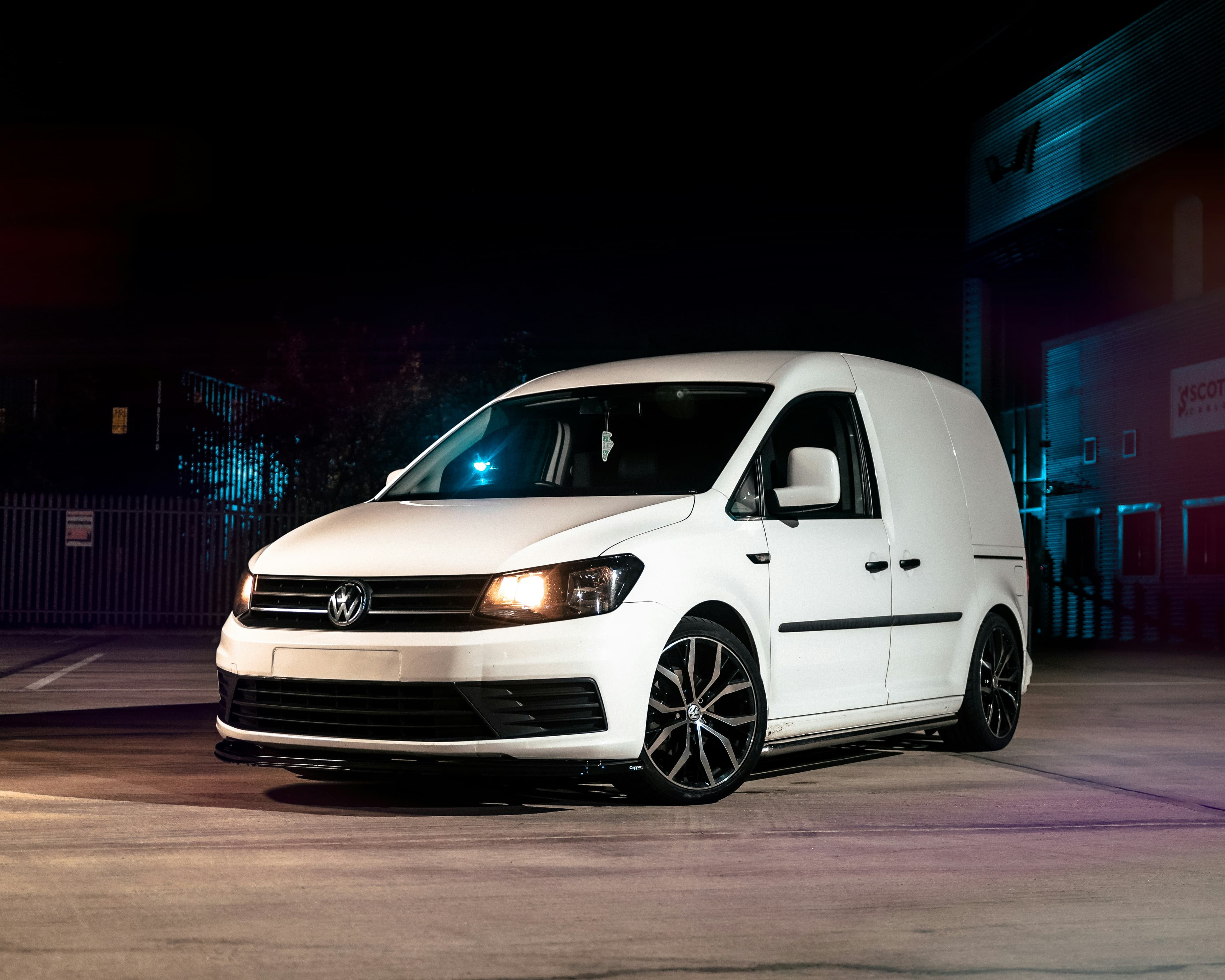
History of the Volkswagen Caddy
The history of the Volkswagen Caddy began in the late 1970s. Initially a compact pickup based on the Golf I was produced in the USA under the name Volkswagen Rabbit Pickup.
On the European market the vehicle appeared as the Caddy in 1982. The first Caddy was technically closely related to the Golf I, but had a longer wheelbase and a cargo bed. The European version was built in Sarajevo, and its payload was about 625 kg.
Later the model concept changed: instead of a compact pickup, the Caddy became a small closed van and passenger vehicle. The Caddy II used the technical base of Volkswagen compact models of that period and was offered with petrol 1.4 and 1.6 engines, naturally aspirated diesels and the 1.9 TDI among others.
The most significant technical transition in recent years came with the Caddy V. The fifth generation is built on the modular MQB platform also used in the modern Volkswagen Golf.
Main generations:
- Volkswagen Caddy I — European version from 1982
- Volkswagen Caddy II — 1990s and early 2000s
- Volkswagen Caddy III — from 2003
- Volkswagen Caddy IV — from 2015
- Volkswagen Caddy V — from 2020
Volkswagen Caddy and Caddy Maxi
The Caddy is offered with a standard and extended wheelbase. The Volkswagen Caddy Maxi has a longer body and more space for passengers or cargo. In the current generation the Caddy Maxi is about 4.9 metres long.
Because of the higher mass and possible constant load, it is especially important on the Caddy Maxi to monitor the brakes, rear suspension, shock absorbers and tyres.
The extended version is especially suitable for:
- commercial transport
- a large family
- seven-seat configuration
- bicycle transport
- fitting camper equipment
- working with tools and materials
Volkswagen Caddy servicing in Espoo
A Caddy can be used much more intensively than a typical passenger car. A work van sometimes covers tens or hundreds of kilometres daily, constantly carries equipment and is often started with a cold engine.
A family Caddy may have lower mileage but many short city trips. Therefore the real operating pattern must be considered when setting the service interval.
For a vehicle used daily for business, prevention usually costs less than an unexpected breakdown and downtime. It is worth checking regularly:
- engine oil
- oil, air and fuel filters
- timing drive
- brake system
- suspension
- battery
- cooling system
- DSG
- DPF
- EGR
- AdBlue on relevant diesel versions
- air conditioning
- tyres
- underbody condition
- regular maintenance
- oil and filter change
- computer diagnostics
- annual maintenance
Volkswagen Caddy TDI diesel engines
Diesel versions are among the most common used Caddy models in Finland. Across generations you will find 1.9 TDI, 1.6 TDI, 2.0 TDI and other diesel variants depending on generation and market.
Diesel suits high mileage and a loaded vehicle well thanks to high torque. It is especially important to diagnose the cause first rather than immediately replacing the DPF, EGR or turbocharger.
A check is needed if:
- the Caddy has lost power
- the engine starts poorly
- smoke appears
- fuel consumption has increased
- the Check Engine light is on
- the vehicle has entered limp mode
- the turbo whistling has become noticeable
- the engine runs unevenly
- coolant level is dropping
- TDI diesel engine repair
- computer diagnostics
Volkswagen Caddy DPF
The DPF particulate filter is especially sensitive to short trips. If a diesel Caddy is constantly used for short delivery runs or only driven in the city, exhaust gas temperature may be insufficient to complete regeneration.
Before cleaning the filter it is necessary to check soot quantity, calculated ash quantity, differential pressure, temperature sensors, EGR operation and injector condition. If the engine produces too much soot due to another fault, the problem will quickly return.
The driver may notice:
- raised idle speed
- fan running after the engine is switched off
- more frequent regenerations
- increased fuel consumption
- DPF warning light
- loss of power
- limp mode
- DPF diagnostics
Volkswagen Caddy EGR
EGR returns part of the exhaust gases to the intake to reduce NOx emissions. On diesel engines the system gradually becomes contaminated with soot.
On some engines the EGR cooler should also be checked, especially if coolant level is dropping at the same time.
A fault may appear as:
- Check Engine
- unstable running
- loss of power
- jerking
- limp mode
- frequent DPF regenerations
- EGR diagnostics
Volkswagen Caddy AdBlue
More modern diesel Caddy models use an SCR system with AdBlue fluid. If an AdBlue error appears on the dashboard, topping up the fluid does not always help.
It is especially important not to ignore a message with a countdown to an engine start lockout. If such a counter has appeared, the system should be diagnosed in advance.
Causes may include:
- NOx sensor
- pump
- AdBlue injector
- heater
- level sensor
- wiring
- control unit
- AdBlue diagnostics
Volkswagen Caddy petrol engines
Petrol MPI, FSI and TSI engines were also fitted to the Caddy depending on generation. For vehicles with low annual mileage a petrol engine can be more convenient than diesel, as there are no short-trip DPF issues.
On a petrol Caddy it is worth monitoring spark plugs, coils, turbocharging on TSI models, the cooling system, timing drive, crankcase ventilation and the intake.
Reasons for diagnostics may include:
- Check Engine
- EPC
- misfires
- uneven idle
- jerking
- loss of power
- increased consumption
- oil consumption
- coolant leak
- petrol engine repair
- computer diagnostics
Volkswagen Caddy timing chain or belt
The type of timing drive depends on the specific engine. Across Caddy generations you will find both belt- and chain-driven engines. There is no universal answer for every Volkswagen Caddy.
The exact service interval is best determined from the VIN and engine code. On some Volkswagen petrol engines of the relevant years chain stretch did occur and could lead to serious consequences.
If a chain is fitted, reasons for a check may include a metallic noise on start-up, timing errors, difficult starting and unstable running. For a belt drive, replacement usually includes checking:
- belt
- tensioner
- idlers
- water pump
- accessory belt
- timing belt replacement
- timing chain replacement
Volkswagen Caddy turbocharger
A turbocharger is used on both TDI diesel and TSI petrol engines. The turbo should not be replaced on the basis of a single fault code alone.
Incorrect pressure may be caused by pipes, the intercooler, actuator, sensor, vacuum system or EGR. The actual cause must be found first.
Possible faults are indicated by:
- loss of power
- limp mode
- whistling
- smoke
- increased oil consumption
- boost pressure errors
- engine diagnostics
Volkswagen Caddy DSG
Many Caddy models are fitted with an automated DSG gearbox. The gearbox type depends on the engine and vehicle generation. For gearboxes that require regular oil changes, the corresponding interval must be followed.
Similar symptoms can also be linked to the flywheel, engine mounts, driveshafts or an engine fault. Diagnostics are needed if:
- jerking
- vibration on take-off
- delayed engagement of D or R
- hard shifts
- gearbox fault
- limp mode
- DSG service and repair
- transmission oil change
Manual gearbox and clutch
A manual gearbox is common on commercial Caddy models. On a vehicle that constantly carries cargo, the clutch can be under heavy load.
On diesel vehicles the dual-mass flywheel should also be checked. A worn flywheel can cause a metallic knock and vibration at idle and on take-off.
Wear is indicated by:
- slipping
- a changed bite point
- vibration on take-off
- noise when pressing the pedal
- difficult gear engagement
- manual gearbox diagnostics
Volkswagen Caddy 4MOTION
Some Caddy generations were offered with 4MOTION all-wheel drive. Such vehicles are especially useful in Finnish winters and for gravel roads and trips to holiday cottages.
The all-wheel-drive system needs its own maintenance. Tyre condition is also important: a large difference in size or wear between wheels is undesirable for the drivetrain.
A check is needed if:
- the rear axle does not engage
- the front wheels constantly spin
- an all-wheel-drive fault appears
- vibration occurs
- a humming noise appears
Volkswagen Caddy suspension
A Caddy may regularly carry several passengers or significant cargo, so the suspension is under high load. This applies especially to the Caddy Maxi and cargo versions.
Over time attention may be needed for:
- anti-roll bar links
- bushes
- silent blocks
- ball joints
- shock absorbers
- springs
- wheel bearings
- track rods and tie-rod ends
Wheel bearings
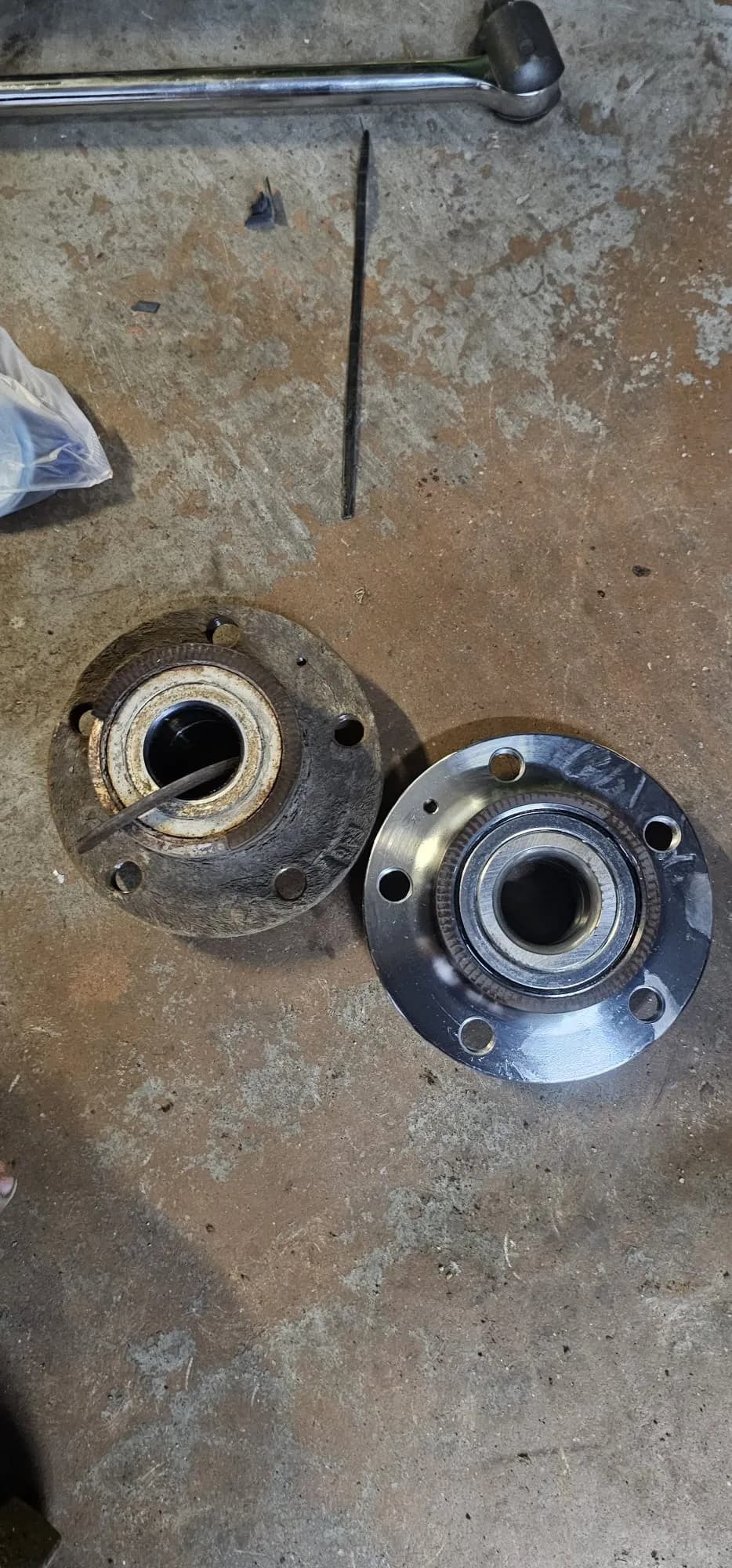
When a wheel bearing wears, a hum usually appears and increases with speed. Sometimes the sound changes when cornering.
However, winter tyres or uneven tread wear can create a similar noise. Therefore it is advisable to identify the exact source of the sound before replacing the bearing.
Volkswagen Caddy brake system
On a commercial Caddy the brakes can be under heavy load due to constant cargo transport. In Finland road salt is an additional problem.
On a work vehicle brake condition is especially important to check regularly. Diagnostics are needed if:
- the vehicle vibrates under braking
- squealing appears
- the vehicle pulls to one side
- one wheel overheats
- braking distance has increased
- the handbrake holds poorly
Cooling system
If coolant has to be topped up regularly, this should not be treated as normal. A small leak can worsen over time and lead to engine overheating.
Coolant loss may be caused by:
- water pump
- thermostat housing
- radiator
- hoses
- EGR cooler
- heat exchanger
- coolant leak detection
Battery and alternator
The Caddy is often used for short work trips where the engine is started many times a day. In winter this type of use puts especially heavy load on the battery.
A commercial vehicle may also have extra cargo-area lighting, chargers, an inverter, refrigeration equipment and an auxiliary heater. Battery condition should preferably be checked before winter.
Signs of a weak battery:
- slow starting
- Start-Stop errors
- random warnings
- settings resetting
- unstable electrical equipment
- electrical repair
Volkswagen Caddy sliding doors
Side sliding doors are one of the Caddy’s main practical features. On a work vehicle they may open dozens of times a day.
In winter ice, dirt and salt add extra load. If a door starts to close with force or sags, the mechanism should be repaired before the guide is damaged.
Over time the following wear:
- rollers
- guides
- locks
- handles
- cables
Air conditioning and heating
A working climate system is especially important on passenger Caddy and Caddy Maxi models. A simple recharge without leak detection only makes sense when the system is sealed.
If the vehicle heats poorly in winter, check the thermostat, coolant level and cabin heater. If the air conditioning does not cool, the cause may be:
- refrigerant leak
- condenser
- compressor
- pressure sensor
- fan
- air conditioning service
Volkswagen Caddy body and corrosion
On older Caddy III models corrosion can already be an important factor in technical condition. Commercial vehicles also often receive stone chips and mechanical body damage during loading.
Minor corrosion is better addressed early before it requires serious welding work. After Finnish winters it is especially worth inspecting:
- sills
- jacking points
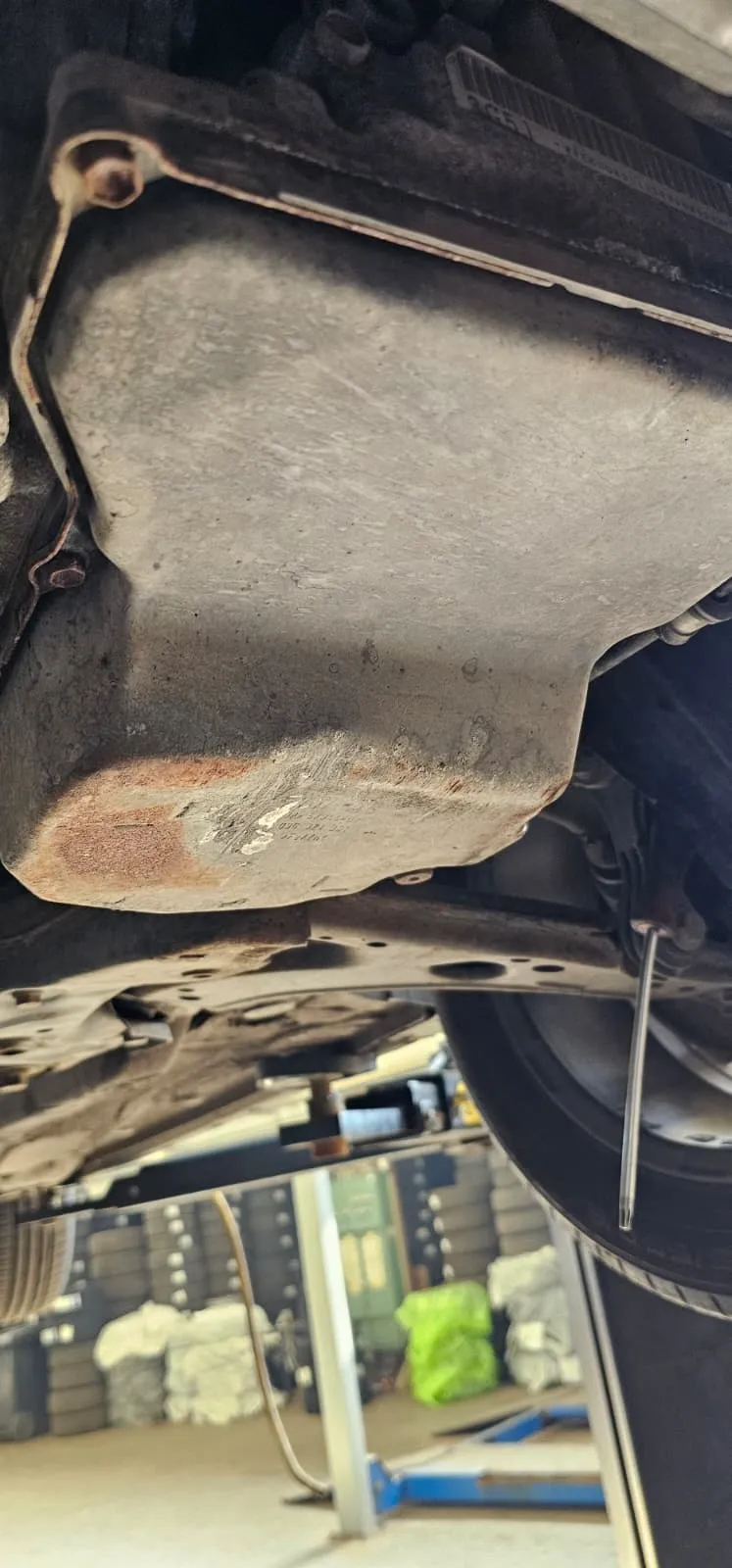
- underbody
- wheel arches
- lower door edges
- rear door
- brake lines
- suspension mounts
Volkswagen Caddy Cargo
The cargo version of the modern vehicle is called Caddy Cargo. The fifth-generation Caddy Cargo is built on the MQB platform shared with the modern Golf and other Volkswagen Group models.
Constant operation at maximum load can significantly accelerate chassis wear. In commercial use it is especially important to monitor:
- rear suspension
- brakes
- tyres
- sliding doors
- clutch or DSG
- cargo area condition
Passenger Volkswagen Caddy
The passenger Caddy is an alternative to a traditional MPV. A modern vehicle may have five or seven seats, and the Caddy Maxi is especially well suited to a seven-seat layout.
On a family vehicle it is also worth checking:
- rear climate and ventilation
- seat mechanisms
- sliding doors
- seat belts
- ISOFIX
- locks
- power windows
New Volkswagen Caddy eHybrid
The modern Caddy range has expanded with a plug-in hybrid version. Current data for Caddy Cargo already includes petrol, diesel and plug-in hybrid options.
In the eHybrid the combustion engine works together with an electric motor and a high-voltage battery. Work directly on high-voltage components requires appropriate qualifications.
Diagnostics are needed if:
- the Caddy does not charge
- charging is interrupted
- electric mode is unavailable
- a hybrid system fault appears
- electric range has dropped sharply
- computer diagnostics
Volkswagen Caddy pre-purchase inspection
A used Caddy can be an excellent practical vehicle, but first you need to understand its operating history. A work Caddy with low mileage is not necessarily in good condition: the vehicle may have carried heavy loads daily and constantly run short routes.
On a modern Caddy V it is also worth checking electronic assists and multimedia. The fifth generation received many safety systems borrowed from modern Volkswagen passenger models.
Before buying it is worth checking:
- cold start
- engine
- turbocharger
- DPF
- EGR
- AdBlue
- timing drive
- DSG or clutch
- flywheel
- 4MOTION
- suspension
- wheel bearings
- brakes
- air conditioning
- sliding doors
- body
- underbody
- computer diagnostics
Which Volkswagen Caddy services we provide
At Volkkarihuolto Espoo you can come for:
- regular Volkswagen Caddy servicing
- oil and filter change
- computer diagnostics
- TDI and TSI servicing
- DPF diagnostics
- EGR inspection
- AdBlue diagnostics
- turbo diagnostics
- timing belt or chain replacement
- DSG servicing
- clutch replacement
- flywheel diagnostics
- 4MOTION diagnostics
- brake repair
- suspension diagnostics
- wheel bearing replacement
- coolant leak detection
- battery and alternator check
- air conditioning service
- sliding door diagnostics
- eHybrid inspection
- MOT preparation
- Volkswagen Caddy pre-purchase inspection
Common Volkswagen Caddy fault signs
Book diagnostics if:
- Check Engine or EPC is on
- the engine has lost power
- the vehicle has entered limp mode
- DPF regeneration starts frequently
- an EGR or AdBlue fault appears
- turbo whistling is heard
- coolant level is dropping
- the DSG shifts with jerks
- the clutch slips
- flywheel knocking is heard
- the vehicle vibrates under acceleration
- 4MOTION works unstably
- the suspension knocks
- a wheel hum appears
- the brakes vibrate
- a sliding door closes poorly
- the battery discharges quickly
- the air conditioning has stopped cooling
Volkswagen Caddy repair in Espoo
Need repair or servicing for a Volkswagen Caddy? Contact Volkkarihuolto Espoo at Ruukinmestarintie 7, 02330 Espoo.
We can diagnose the engine, DPF, EGR, AdBlue, turbocharger, DSG, all-wheel drive, brakes, suspension, cooling system, electrics and other vehicle components.
When servicing a Volkswagen Caddy it is important to consider not only generation and engine, but also the operating pattern. A cargo Caddy Cargo, a seven-seat family Caddy Maxi and a modern Caddy eHybrid may require completely different approaches to diagnostics and preventive maintenance.
FAQ
When did the Volkswagen Caddy appear?
The first Caddy appeared in the USA in 1979 as the Rabbit Pickup, and the European version under the Caddy name went on sale in 1982.
Which vehicle is the Volkswagen Caddy based on?
The first generation was based on the Golf I. The modern fifth-generation Caddy is built on the modular MQB platform also used by the Volkswagen Golf.
How does the Caddy Maxi differ from a standard Caddy?
The Caddy Maxi has an extended wheelbase and a longer body, giving more space for cargo or a third row of seats.
Which engines are fitted to the Volkswagen Caddy?
Depending on generation, naturally aspirated petrol engines, TSI, and diesel SDI and TDI engines were used. The modern range also includes a plug-in hybrid powertrain.
Is there a Volkswagen Caddy with DSG?
Yes. Many modern Caddy models are available with a DSG automated gearbox.
Is there a Volkswagen Caddy with all-wheel drive?
Yes. For some generations 4MOTION versions were produced.
Why does a diesel Caddy often start DPF regeneration?
One of the main reasons is a large number of short trips, which prevents filter regeneration from completing.
Why does a Caddy DSG jerk?
Causes may include clutches, mechatronics, gearbox condition, flywheel, mounts or an engine fault. Diagnostics are required.
Does the Volkswagen Caddy have a timing belt or chain?
It depends on the engine and year of manufacture. The exact drive type should be determined from the VIN and engine code.
Can a Volkswagen Caddy be inspected before purchase?
Yes. For a used Caddy it is especially useful to check the engine, DPF, EGR, DSG or clutch, suspension, brakes, body and to understand whether the vehicle was previously used commercially.
Detailed Services
Professional fault diagnostics for Volkswagen Caddy.
Oil ChangeEngine oil and filter replacement for Volkswagen Caddy.
Annual maintenanceComprehensive annual maintenance for Volkswagen Caddy.
Regular MaintenanceScheduled maintenance for Volkswagen Caddy according to service needs.
Engine RepairEngine diagnostics and repair for Volkswagen Caddy.
Diesel Engine RepairDiesel engine service and repair for Volkswagen Caddy.
Electrical RepairElectrical fault tracing and repair for Volkswagen Caddy.
ECU ProgrammingControl unit programming and coding for Volkswagen Caddy.
DSG RepairDSG transmission diagnostics and repair for Volkswagen Caddy.
Transmission RepairTransmission diagnostics and repair for Volkswagen Caddy.
Transmission Oil ChangeTransmission oil change for Volkswagen Caddy.
Timing Belt ReplacementTiming belt and related component replacement for Volkswagen Caddy.
Timing Chain ReplacementTiming chain, tensioner, and guide replacement for Volkswagen Caddy.
Cooling System RepairCooling system service and repair for Volkswagen Caddy.
AC RepairAir conditioning service and repair for Volkswagen Caddy.
Engine Heater InstallationEngine heater installation and service for Volkswagen Caddy.
Cabin OzonationCabin ozonation and odor removal for Volkswagen Caddy.







.webp&w=3840&q=75)
.webp&w=3840&q=75)