
Volkswagen Transporter — service and repair in Espoo
Volkswagen Transporter is one of Volkswagen’s best-known commercial vehicles. Over the decades the model has evolved from the classic rear-engined T1 to modern diesel, hybrid and fully electric vans. The Transporter is used as a work vehicle, passenger minibus, camper base and versatile car for family or business.
In Finland, Volkswagen Transporter T5, T6 and the updated T6.1 with diesel TDI engines, manual gearboxes, DSG and 4MOTION all-wheel drive are especially common. These vehicles often have high mileage and work under heavy load, so timely diagnostics of the engine, transmission, brakes and suspension is particularly important.
At Volkkarihuolto Espoo we carry out diagnostics, scheduled maintenance and repair of Volkswagen Transporter at Ruukinmestarintie 7, 02330 Espoo.

History of the Volkswagen Transporter
The history of the Volkswagen Transporter family begins with the legendary T1. The T designation comes from the word Transporter, and subsequent generations have traditionally been named T2, T3, T4, T5 and T6. Volkswagen uses this naming system across several generations of its famous van.
The first three generations had a rear-mounted engine. A major technical shift came with the T4: the engine moved to the front and front-wheel drive became the main layout. This architecture was later used in the T5 and T6.
It is important not to confuse the modern Transporter with the Multivan T7. In 2022 Volkswagen defined three directions for the Bulli family: the T6.1 Transporter/Caravelle as the commercial model, the new Multivan as a separate passenger car and ID. Buzz as the electric family.
By 2025–2026 deliveries of an entirely new Transporter generation had begun. Volkswagen Commercial Vehicles states that the new model is offered with turbo diesel, plug-in hybrid and fully electric drive.
For current owners the following are especially relevant:
- Volkswagen Transporter T4
- Volkswagen Transporter T5
- Volkswagen Transporter T5 GP
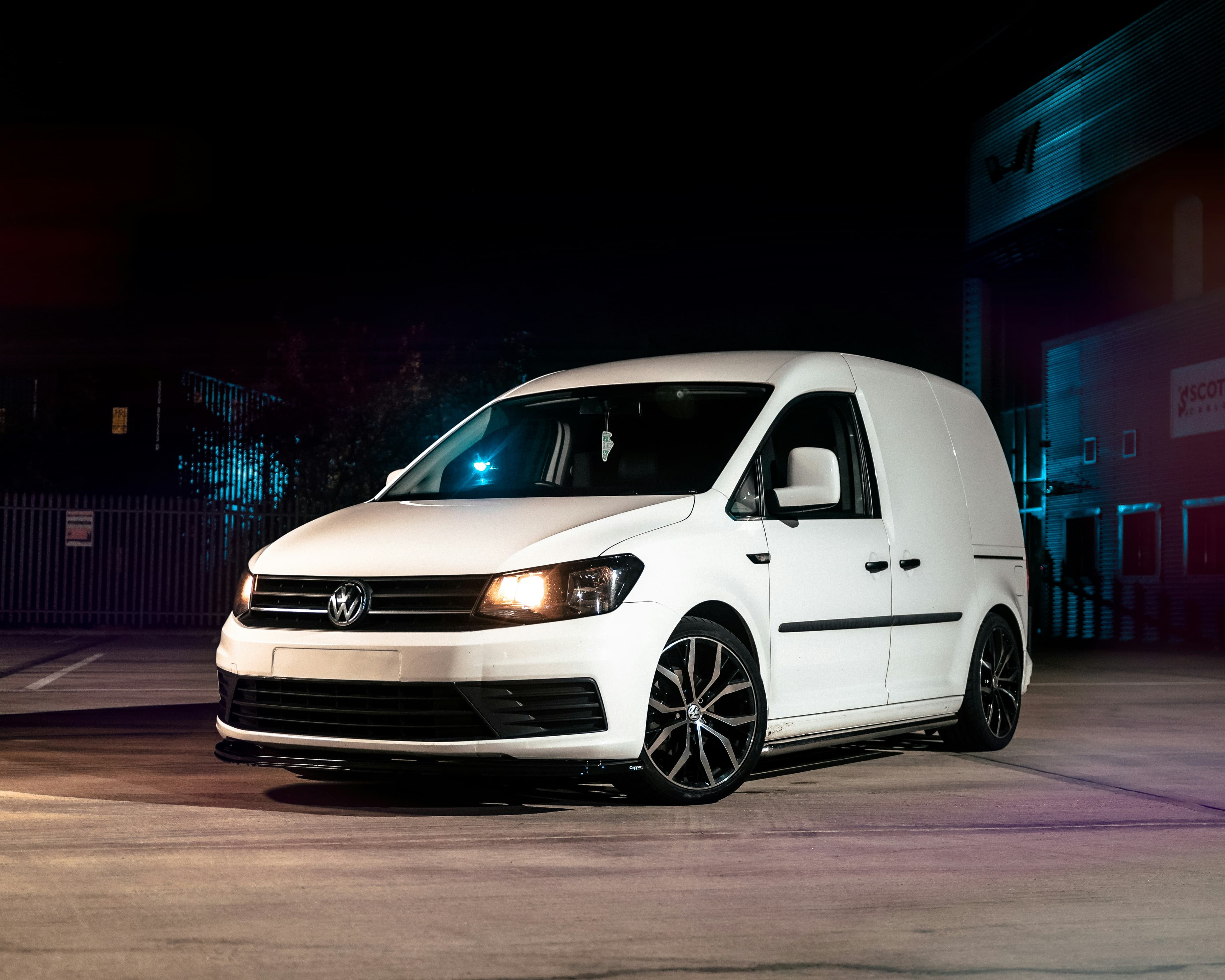
- Volkswagen Transporter T6
- Volkswagen Transporter T6.1
- new-generation Volkswagen Transporter
Volkswagen Transporter T5
The Transporter T5 is widely used in Finland and is already an ageing commercial vehicle. Its technical condition depends primarily on mileage and the quality of previous servicing.
The T5 can be found with various diesel engines, including 1.9 TDI, 2.5 TDI and later 2.0 TDI units. Manual and automatic gearboxes were used, as well as all-wheel-drive versions.
A Transporter should not be judged by mileage alone. A commercial vehicle with a good service history can be in significantly better condition than one with lower mileage but irregular maintenance.
On a high-mileage vehicle it is especially worth checking:
- engine and turbo
- EGR system
- injectors
- cooling system
- dual-mass flywheel
- clutch
- gearbox
- driveshafts
- wheel bearings
- suspension
- underbody and body corrosion
Volkswagen Transporter T6 and T6.1
The T6 continued development of the previous generation platform and received modern diesel engines, electronic assistants and a more complex exhaust after-treatment system.
The updated T6.1 became even more advanced. These vehicles have more electronic systems, so diagnostics must cover all control units, not just the engine.
The T6.1 remained the commercial representative of the Volkswagen Transporter family alongside the new Multivan and ID. Buzz.
Main service areas for the T6 and T6.1 are:
- 2.0 TDI engines
- timing belt
- turbocharging
- DPF
- EGR
- AdBlue and SCR
- manual gearbox
- DSG
- 4MOTION all-wheel drive
- braking system
- suspension
- electronic equipment
New Volkswagen Transporter
The current Transporter generation differs significantly from the T6.1.
In the current Volkswagen Commercial Vehicles range the new Transporter is offered as Panel Van, Kombi and Shuttle. Turbo diesel, fully electric and plug-in hybrid powertrains are available. Volkswagen states a payload of roughly up to 1.2 tonnes and cargo volume of up to 6.8 m³ depending on specification.
The new Transporter has also grown noticeably compared with the T6.1: Volkswagen indicated an increase in length of about 146 mm for the new generation.
Because the new Transporter’s technology differs substantially from earlier generations, it is especially important to identify the exact variant, engine or electric drive type by VIN before servicing.
Volkswagen Transporter service in Espoo
A Transporter is often used far more intensively than a typical passenger car. A commercial vehicle may carry tools daily, work with heavy loads, tow a trailer, make short trips, idle for long periods and cover tens of thousands of kilometres per year.
Because of this the standard maximum service interval is not always optimal. If the vehicle is used daily for business, preventive maintenance is usually cheaper than an unexpected breakdown and several days of downtime.
For a working Transporter it is especially important to check regularly:
- engine oil
- air and fuel filters
- timing belt
- coolant
- brakes
- suspension
- tyres
- DSG
- 4MOTION
- DPF and EGR
- AdBlue
- battery
- underbody condition
- scheduled maintenance
- oil and filter change
- computer diagnostics
- annual service
Volkswagen Transporter TDI engines
TDI diesel engines have been the main power units for the Transporter in recent decades. They suit high mileage thanks to strong torque and economy, but require the correct engine oil and a properly working exhaust after-treatment system.
On a commercial vehicle you should not run the engine for long with a minor fault. For example, a turbo or EGR issue can gradually increase load on the DPF and other components.
Reasons to book diagnostics include:
- loss of power
- increased fuel consumption
- smoke
- poor starting
- uneven running
- Check Engine
- limp mode
- unusual turbo whistle
- increased oil consumption
- coolant level dropping
- TDI diesel engine repair
- computer diagnostics
Volkswagen Transporter timing belt
Many modern diesel Transporters use a toothed timing belt. Its condition is critical for the engine. Breakage or jumping can cause serious internal damage.
The replacement interval depends on the engine, model year, market, mileage and vehicle history. The correct schedule should be determined by VIN and engine code, not one universal interval for all Transporters.
If the service history is unknown, the timing drive should be checked among the first steps. When replacing, it is usually worth assessing:
- belt condition
- tensioner
- guide pulleys
- water pump
- auxiliary belt
- timing belt replacement
Volkswagen Transporter turbo
The turbocharger works under high thermal and mechanical load. High mileage, overly long oil-change intervals, intake contamination or boost-control faults can lead to incorrect system operation.
However, a pressure fault does not automatically mean the turbo must be replaced. The cause may also be the vacuum system, actuator, pressure sensor, hose, intercooler, EGR or contamination of the turbo control mechanism. Diagnostics should come first.
Possible signs of a fault:
- the vehicle no longer accelerates normally
- limp mode appears
- a clear whistle is heard
- smoke has appeared
- oil consumption has increased
- diagnostics show boost pressure that is too low or too high
- engine diagnostics
- TDI diesel engine repair
Volkswagen Transporter DPF
The DPF particulate filter traps soot particles from diesel exhaust. The system periodically runs regeneration to clean it. Problems occur more often on vehicles that constantly drive short distances.
The DPF should not be replaced immediately. First check the actual soot amount, calculated ash content, differential pressure, temperature sensors, EGR, injectors and engine condition.
If the engine produces too much soot because of another fault, cleaning the DPF will only give a temporary result. Signs may include:
- frequent regenerations
- high idle speed
- fans continue running after shutdown
- fuel consumption has risen
- DPF warning has appeared
- engine has lost power
- vehicle is in limp mode
- DPF diagnostics
Volkswagen Transporter EGR
The EGR system returns part of the exhaust gases to the intake to reduce emissions. Over time soot and oil deposits can clog the valve and channels.
Besides the valve itself, the EGR cooler, sensors and control components should be checked. On some configurations an EGR fault can also be accompanied by coolant loss.
The following may indicate a fault:
- Check Engine
- loss of power
- jerking
- uneven engine running
- increased consumption
- limp mode
- DPF regenerations too frequent
- EGR diagnostics
AdBlue and SCR
More modern Transporter TDI models may use SCR and AdBlue fluid to reduce nitrogen oxide emissions. An AdBlue fault does not always mean the fluid has simply run out.
It is especially important not to ignore a message that the vehicle will not restart later. When such a warning appears, diagnostics must be carried out before the counter reaches zero.
The following may fail in the system:
- NOx sensors
- pump
- AdBlue injector
- heater
- level sensor
- wiring
- control unit
- AdBlue diagnostics
Volkswagen Transporter DSG
Some Transporters are fitted with a DSG gearbox. On a commercial vehicle it works under high load, especially if the car often drives loaded or tows a trailer. Timely servicing of the correct gearbox version is especially important for DSG.
The cause may not be the DSG itself. The dual-mass flywheel, engine mounts, driveshafts, electronic control, oil level and condition should also be checked. The exact gearbox code must be identified before servicing.
Inspection is needed if:
- gears change with jerks
- judder is felt
- vibration appears
- engagement of D or R is delayed
- knocking is heard
- the gearbox enters limp mode
- a transmission fault appears
- DSG service and repair
- transmission oil change
Manual gearbox, clutch and flywheel
Manual gearboxes are widely used on the Transporter. With high mileage and regular loading, the clutch, dual-mass flywheel, release bearing and shift linkage wear out.
On a diesel Transporter the dual-mass flywheel receives significant load because of high torque.
The following may indicate a fault:
- clutch slips
- the vehicle vibrates when pulling away
- metallic knocking is heard
- gears are hard to engage
- noise appears when pressing the pedal
- clutch bite point has changed
- manual gearbox diagnostics
Volkswagen Transporter 4MOTION
All-wheel-drive Transporters are especially popular in Finland because of winter conditions. Volkswagen uses the 4MOTION name for the all-wheel-drive system designed to improve traction on slippery or difficult surfaces. All-wheel drive does not replace good winter tyres.
Depending on generation, the system design differs. For Transporter T5/T6/T6.1, servicing of the all-wheel-drive coupling and the condition of the entire transmission should be considered. Tyre matching and tread-depth differences between wheels should also be checked.
Diagnostics are needed if:
- the vehicle pulls away poorly on slippery surfaces
- the rear axle does not engage
- an all-wheel-drive fault appears
- droning is heard
- vibration occurs
- unusual sounds appear in corners
Volkswagen Transporter suspension
Transporter suspension is designed to carry serious loads, but commercial use gradually wears its components. Vehicles that constantly carry equipment or drive on poor roads receive especially heavy load.
Before wheel alignment, suspension play must be corrected first.
Over time the following may need replacement:
- shock absorbers
- springs
- anti-roll bar links
- bushings
- silent blocks
- ball joints
- tie rod ends
- wheel bearings
Wheel bearings
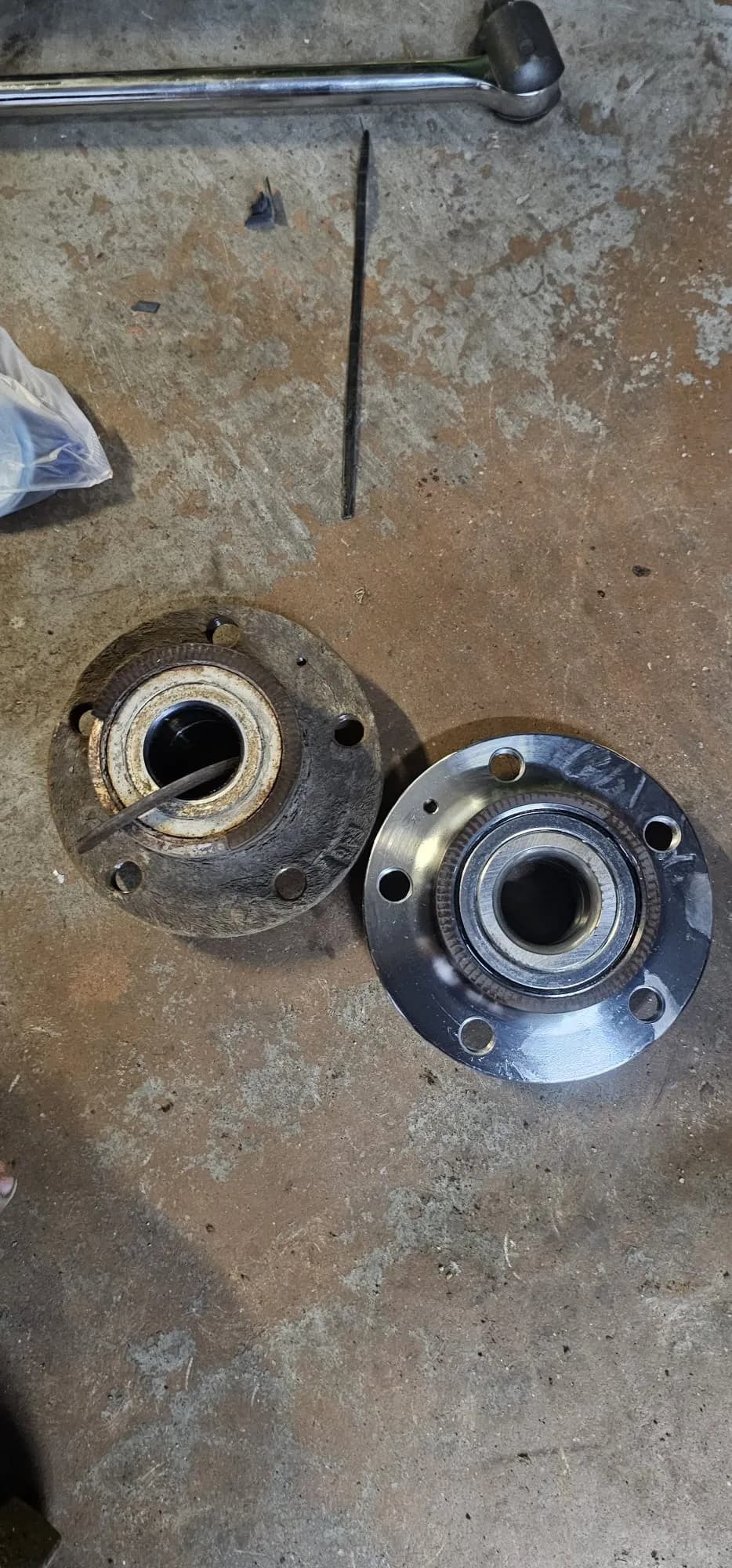
The Transporter is a heavy vehicle, so wheel bearings are under serious load. A typical wear symptom is droning that increases with speed. Sometimes the sound changes when cornering.
However, similar noise can come from winter tyres, uneven tread wear, the gearbox, differential or driveshaft. The exact source of the noise should be identified before replacing the bearing.
Driveshafts and CV joints
The diesel engine’s high torque and the vehicle’s large mass load the driveshafts. A torn CV boot should be replaced as early as possible before dirt and water damage the joint.
A fault may appear as:
- vibration under acceleration
- clicking in corners
- judder when moving off
- vibration at a certain speed
- damaged boot
Volkswagen Transporter brakes
The braking system of a commercial vehicle must cope not only with the Transporter’s own weight but also with passengers, load or trailer. In Finland salt is an additional problem.
On a heavy commercial vehicle, delaying brake repair is especially dangerous. Inspection is needed if:
- vibration appears when braking
- metallic noise is heard
- the vehicle pulls to one side
- a wheel gets very hot
- braking distance has increased
- the handbrake no longer holds the vehicle
Cooling system
A Transporter may operate under high load, so cooling system condition matters greatly. If coolant has to be topped up regularly, the cause must be found.
Running for long periods with a leak can lead to overheating and a much more expensive repair. Coolant level may drop because of:
- water pump
- hoses
- radiator
- thermostat
- EGR cooler
- heat exchanger
- expansion tank
- coolant leak detection
Battery and alternator
A Transporter often has a lot of additional electrical equipment: lighting, heating, refrigeration, inverter, chargers and tools. As a result load on the battery and charging system can be higher than usual.
A weak battery can cause poor starting, Start-Stop faults, random warnings and electronic system glitches. Before winter it is worth checking battery condition and alternator charging.
Webasto and auxiliary heater
Auxiliary and additional heaters are especially relevant for Transporters in Finland. The cause may be the heater itself, fuel pump, glow plug, circulation pump, weak battery or lockout after several failed start attempts.
A heater fault may appear as follows:
- the system will not start
- it starts and stops immediately
- heavy smoke
- it runs for only a few minutes
- a fault appears
- the battery discharges quickly
Sliding doors
The Transporter sliding side door is used far more often than a door on a normal car. In winter salt, snow and ice get into the mechanisms.
If the door starts closing with effort or sags, it is better to fix the problem before the guide or lock is damaged. On vehicles with electric doors, position sensors, wiring and the motor are also checked.
Over time the following may wear:
- rollers
- guides
- locks
- handles
- cables
- electric drive
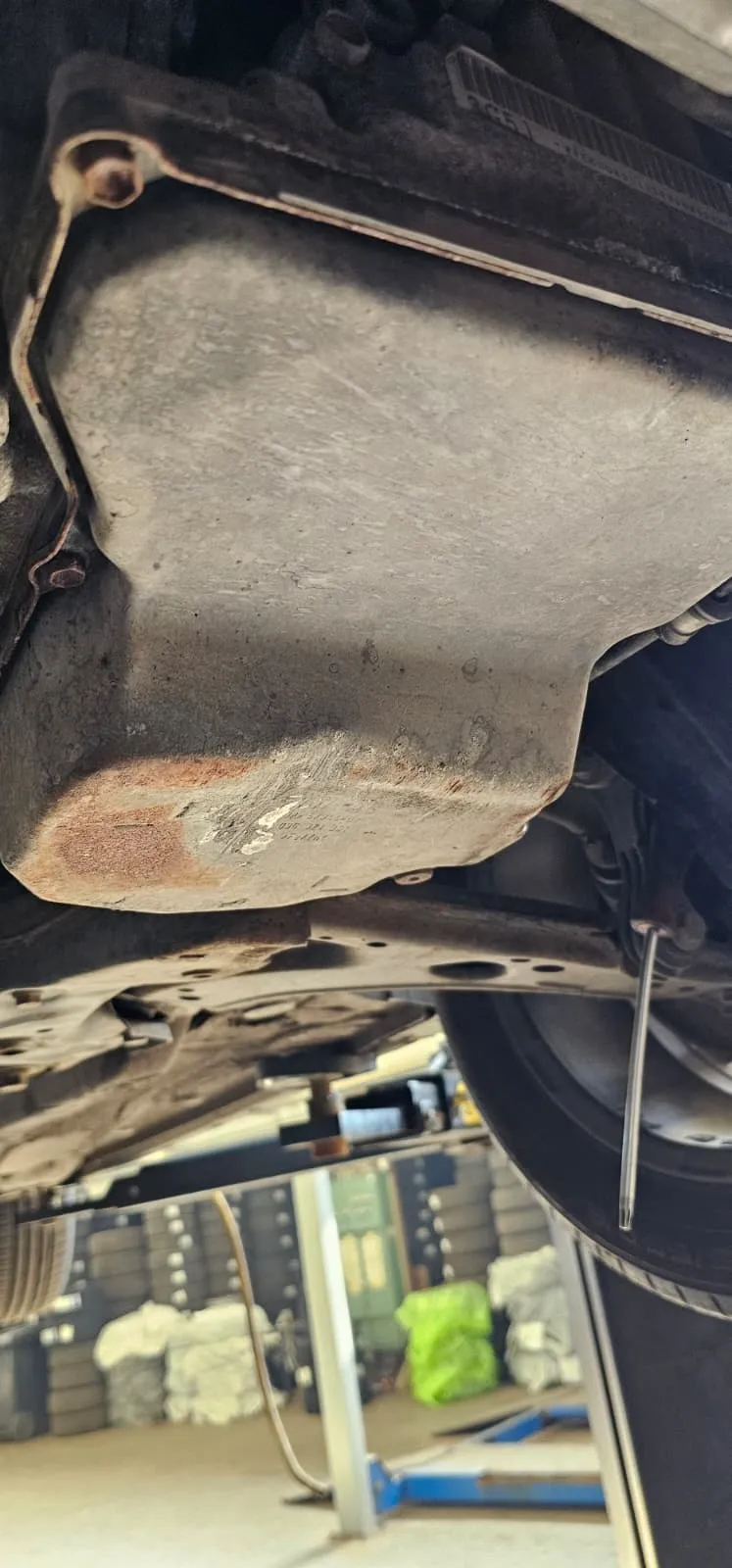
Volkswagen Transporter body and corrosion
On older Transporters corrosion can become a serious repair cost factor. Commercial vehicles also often have paint damage from loading, tools and daily use. Small rust spots are better fixed before major welding is needed.
It is especially worth checking:
- sills
- wheel arches
- lower door edges
- rear doors
- underbody
- jacking points
- suspension mountings
- crossmembers
- areas around the windscreen
- previous body repair areas
Volkswagen Transporter and trailer towing
The Transporter is often used for towing. Depending on version, the new Transporter can tow a trailer of up to 2.8 tonnes, but the exact limit depends on the powertrain and vehicle configuration.
The permitted towing weight must always be checked in the specific vehicle’s registration data. If the vehicle regularly tows a trailer, it is worth checking more often:
- brakes
- DSG or clutch
- cooling system
- rear suspension
- tyres
- tow bar
- trailer electrics
New electric e-Transporter
The modern Transporter now also exists as a fully electric e-Transporter. Servicing such a vehicle is closer to the ID. Buzz than to a diesel T6.
The electric version does not need engine oil changes or DPF, EGR and AdBlue servicing. Main service areas become:
- high-voltage battery
- charging port
- AC and DC charging
- electric drive
- battery cooling
- 12V battery
- brakes
- suspension
- tyres
- computer diagnostics
New Transporter eHybrid
The current range also includes a Transporter with plug-in hybrid eHybrid powertrain. Such a vehicle combines an internal combustion engine and a high-voltage electrical system.
Work on the high-voltage system requires appropriate qualifications. Servicing must cover both parts:
- engine
- cooling system
- hybrid transmission
- high-voltage battery
- charging equipment
- power electronics
- computer diagnostics
Volkswagen Transporter pre-purchase inspection
For a used Transporter, pre-purchase diagnostics is especially important. A commercial vehicle may look relatively attractive but have several hundred thousand kilometres of intensive use.
On a test drive pay attention to vibration under acceleration, DSG smoothness, unusual droning, smoke, suspension knocking and braking behaviour. For a Transporter, service history is often more important than the mileage figure.
It is worth checking:
- cold start
- engine
- turbo
- DPF
- EGR
- AdBlue
- injectors
- timing belt
- DSG or clutch
- dual-mass flywheel
- 4MOTION
- driveshafts
- suspension
- wheel bearings
- brakes
- electrics
- auxiliary heater
- body and underbody
- computer diagnostics
Volkswagen Transporter services we provide
At Volkkarihuolto Espoo you can book:
- Transporter scheduled maintenance
- engine oil and filter change
- computer diagnostics
- TDI servicing
- turbo diagnostics
- DPF diagnostics
- EGR inspection
- AdBlue diagnostics
- timing belt replacement
- DSG servicing
- manual gearbox diagnostics
- clutch replacement
- dual-mass flywheel diagnostics
- 4MOTION servicing
- brake repair
- suspension diagnostics
- wheel bearing replacement
- driveshaft diagnostics
- coolant leak detection
- electrical diagnostics
- auxiliary heater inspection
- sliding door diagnostics
- MOT preparation
- Transporter pre-purchase inspection
Common Volkswagen Transporter fault signs
Book diagnostics if:
- the Transporter has lost power
- Check Engine is on
- the vehicle is in limp mode
- a DPF fault appears
- regeneration starts too often
- an EGR or AdBlue fault appears
- turbo whistle is heard
- coolant level is dropping
- DSG changes gears with jerks
- the clutch slips
- flywheel knocking appears
- the vehicle vibrates under acceleration
- wheel droning appears
- suspension knocks
- brakes vibrate
- the battery discharges quickly
- the auxiliary heater will not start
Volkswagen Transporter repair in Espoo
Need repair or scheduled maintenance for your Volkswagen Transporter? Contact Volkkarihuolto Espoo at Ruukinmestarintie 7, 02330 Espoo.
We can diagnose the engine, DPF, EGR, AdBlue, turbo, DSG, 4MOTION, brakes, suspension, electrics and other vehicle systems.
When servicing a Volkswagen Transporter it is especially important to consider the specific generation, engine, gearbox and use pattern. A working van with high annual load needs a different preventive approach than a passenger Transporter with low mileage.
FAQ
Which Volkswagen Transporter generations exist?
The family history uses the designations T1, T2, T3, T4, T5 and T6. After T6 came the updated T6.1 and then an entirely new Transporter generation. The Multivan T7 is a separate model line and is not a direct continuation of the commercial T6.1 Transporter.
Which Volkswagen Transporter is most common in Finland?
The used market has especially many T5, T6 and T6.1 models with 2.0 TDI diesel engines. The specific condition of the vehicle is more important than the generation itself.
Does Transporter DSG oil need to be changed?
Yes, for DSG gearboxes with specified oil servicing. The exact schedule depends on the specific transmission, so the gearbox should be identified by VIN or code.
Why does a Transporter TDI lose power?
Possible causes include DPF, EGR, turbocharging, hoses, sensors, injectors and the fuel system. The exact cause should be determined by diagnostics, not by replacing parts at random.
Why does a Transporter often run DPF regeneration?
The cause may be short trips, soot build-up or another engine fault that increases soot production.
Why does a Volkswagen Transporter vibrate under acceleration?
Driveshafts, inner CV joints, wheels, engine mounts, flywheel and transmission should be checked.
Does 4MOTION need servicing?
Yes. The scope of servicing depends on the generation and all-wheel-drive design. It is also important to keep tyre size and condition consistent.
Can a Transporter be inspected before purchase?
Yes. For a used commercial vehicle this is especially recommended. The engine, transmission, DPF, EGR, 4MOTION, suspension, brakes, electrics and body should be checked.
Is there an electric Volkswagen Transporter?
Yes. The new generation is available as a fully electric e-Transporter, as well as with turbo diesel and plug-in hybrid powertrains.
How does the new Transporter differ from the Multivan T7?
These are different model lines. The Multivan is aimed primarily at passenger use, while the Transporter keeps its commercial focus and is built as Panel Van, Kombi and Shuttle.
Detailed Services
Professional fault diagnostics for Volkswagen Transporter.
Oil ChangeEngine oil and filter replacement for Volkswagen Transporter.
Annual maintenanceComprehensive annual maintenance for Volkswagen Transporter.
Regular MaintenanceScheduled maintenance for Volkswagen Transporter according to service needs.
Engine RepairEngine diagnostics and repair for Volkswagen Transporter.
Diesel Engine RepairDiesel engine service and repair for Volkswagen Transporter.
Electrical RepairElectrical fault tracing and repair for Volkswagen Transporter.
ECU ProgrammingControl unit programming and coding for Volkswagen Transporter.
DSG RepairDSG transmission diagnostics and repair for Volkswagen Transporter.
Transmission RepairTransmission diagnostics and repair for Volkswagen Transporter.
Transmission Oil ChangeTransmission oil change for Volkswagen Transporter.
Timing Belt ReplacementTiming belt and related component replacement for Volkswagen Transporter.
Timing Chain ReplacementTiming chain, tensioner, and guide replacement for Volkswagen Transporter.
Cooling System RepairCooling system service and repair for Volkswagen Transporter.
AC RepairAir conditioning service and repair for Volkswagen Transporter.
Engine Heater InstallationEngine heater installation and service for Volkswagen Transporter.
Cabin OzonationCabin ozonation and odor removal for Volkswagen Transporter.








.webp&w=3840&q=75)
.webp&w=3840&q=75)