
Volkswagen Jetta — service and repair in Espoo
Volkswagen Jetta is a practical sedan built on the technical base of the Volkswagen Golf. The model combines familiar Volkswagen engineering with a separate boot, a spacious cabin and comfort for longer journeys. In Finland the fifth and sixth generations are most common, with petrol TSI engines, naturally aspirated petrol engines, diesel TDI units, and either a manual gearbox or DSG.
Although the Jetta largely uses proven Golf components, the condition of a given car depends on generation, engine, gearbox and service history. On higher-mileage cars it is especially important to watch the timing drive, turbocharger, cooling system, DSG gearbox, diesel DPF and EGR systems, suspension and brakes.
At Volkkarihuolto Espoo we carry out scheduled maintenance, computer diagnostics and repair of Volkswagen Jetta cars. Our workshop is at Ruukinmestarintie 7, 02330 Espoo.
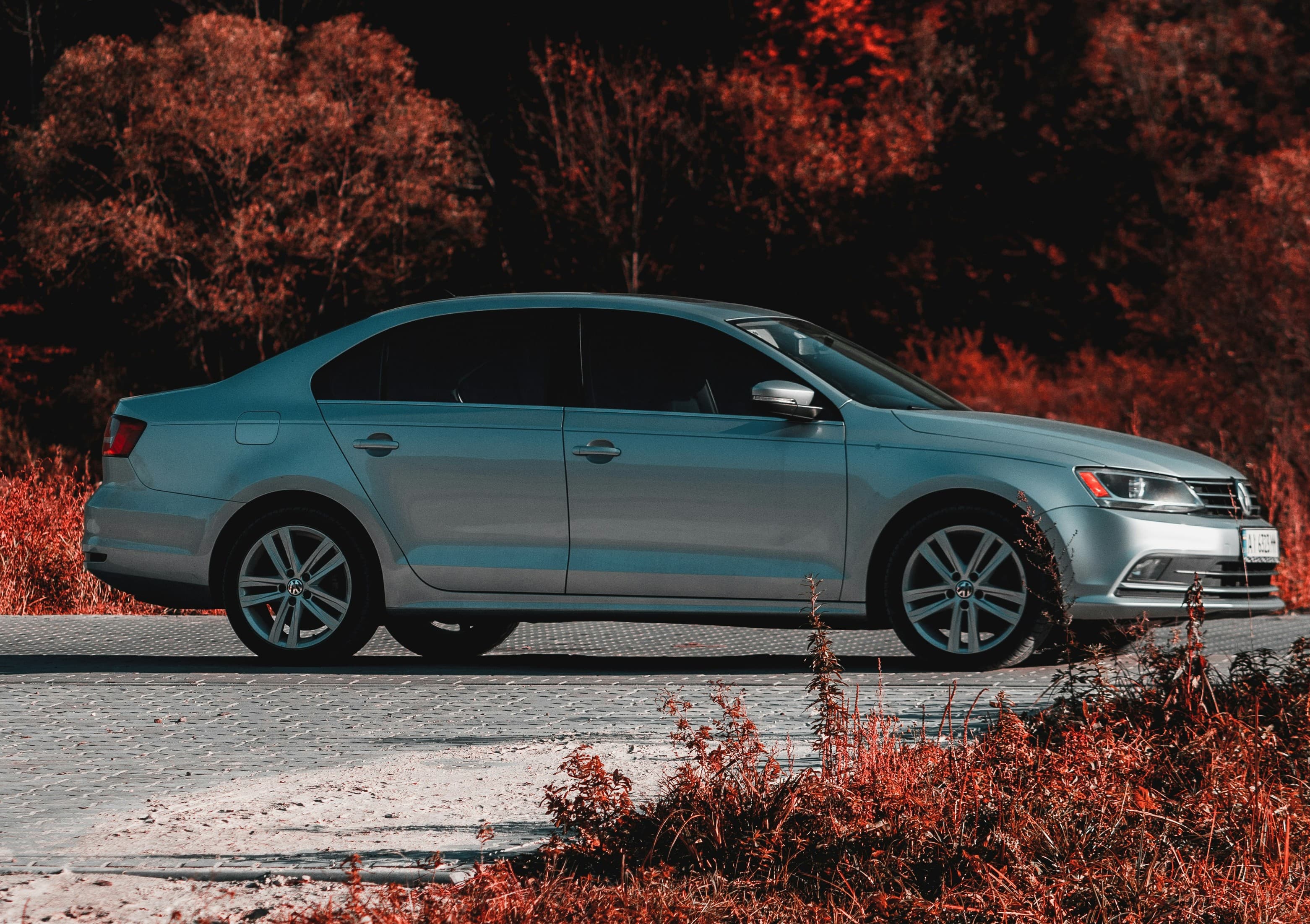
History of the Volkswagen Jetta
The first Volkswagen Jetta appeared in 1979. In concept it was a Golf with a separate boot, aimed at buyers who wanted a practical compact sedan. On some markets the model was sold under other names, including Vento and Bora, but the Jetta name remained in continuous use in North America.
The second generation arrived in 1984, and the third in the early 1990s. In Europe the third generation was known as the Volkswagen Vento. The fourth generation, launched in 1998, was sold in Europe as the Bora. It became the most successful generation of the family at that time: Volkswagen reports 4.6 million cars produced.
In 2005 the European model regained the Jetta name. The fifth-generation car shared its technical base with Golf V and was offered with petrol FSI and TSI engines, diesel TDI units, a manual gearbox and DSG.
The sixth generation arrived in 2010–2011. Unlike the previous model, it received a more independent design and larger dimensions. It is the sixth-generation Jetta that is most often seen among relatively modern used cars in Europe. Strengths cited included economical engines, a spacious cabin and good equipment.
The seventh-generation Volkswagen Jetta was introduced in 2018. It was developed primarily for North America and other regions and did not officially become a full continuation of the European line-up. The current Jetta continues to be sold, notably in the USA, where the model remains a distinct Volkswagen compact sedan.
Main Volkswagen Jetta generations:
- Jetta I — 1979–1984
- Jetta II — 1984–1992
- Jetta III / Vento — 1992–1998
- Jetta IV / Bora — 1998–2005
- Jetta V — 2005–2010
- Jetta VI — 2010–2018
- Jetta VII — from 2018 on selected markets
Volkswagen Jetta service in Espoo
Regular Volkswagen Jetta maintenance helps avoid serious faults in the engine, transmission and diesel systems. In Finland the car faces extra load from cold starts, short trips, winter salt and prolonged humidity.
Even with low annual mileage, engine oil should ideally be changed at least once a year. Short winter trips do not always allow the engine to warm up fully, so moisture and fuel can build up in the oil.
The exact schedule depends on the engine, gearbox, model year and the car VIN.
During scheduled Jetta service it is worth checking:
- engine oil and filters
- timing belt or timing chain condition
- spark plugs and ignition coils
- brake discs, pads and calipers
- suspension and steering
- battery and alternator
- cooling system
- DSG gearbox
- DPF and EGR on diesel cars
- air conditioning and climate system
- Volkswagen Jetta scheduled maintenance
- oil and filter change
- annual maintenance
Volkswagen Jetta petrol engines
Different Jetta generations used a wide range of petrol engines. In Finland you may encounter naturally aspirated 1.6 MPI units, 1.4 and 1.6 FSI engines, and turbocharged 1.2 TSI, 1.4 TSI and 2.0 TSI engines.
The naturally aspirated 1.6 MPI has a relatively simple design, but with age spark plugs, coils, the throttle body, sensors and crankcase ventilation parts can wear.
FSI and TSI engines offer better performance and economy, but need quality oil and timely diagnostics. Possible faults can relate to the ignition system, turbocharger, direct injection, intake carbon, the cooling system and the timing drive.
A flashing Check Engine light often indicates active misfires. In that case continued driving can damage the catalytic converter.
Book diagnostics if:
- the engine runs unevenly
- the Jetta jerks under acceleration
- EPC or Check Engine is on
- fuel consumption has increased
- power has dropped
- there is a metallic noise on start-up
- regular oil top-ups are needed
- coolant level is dropping
- a whistle is heard from the engine bay
- computer diagnostics
- petrol engine repair
- oil change
Timing chain and timing belt on Volkswagen Jetta
The type of timing drive depends on the fitted engine. Some petrol engines use a chain, while many naturally aspirated petrol and diesel engines use a toothed belt.
On some early TSI engines, chain stretch can show as a metallic rattle after a cold start, timing errors and unstable running. That noise must not be ignored: if the chain jumps, valves can meet pistons.
For engines with a timing belt, the replacement interval and the age of the kit must be respected. Together with the belt, rollers, the tensioner and the water pump are usually checked or replaced if driven by the same belt.
Reviews of Jetta models from 2006–2011 also mentioned timing belt tensioner faults on some 1.6 petrol engines.
If the service history is unknown, identify the engine from the VIN and check when the timing drive was last serviced.
Volkswagen Jetta TDI diesel engines
Diesel Jetta cars often use 1.6 TDI, 1.9 TDI or 2.0 TDI engines. They are economical and suit long journeys, but at higher mileage need attention to the fuel system, turbocharger, DPF, EGR and dual-mass flywheel.
On older diesel cars fuel leaks and issues with the pump, injectors, vacuum system or turbo can appear. For Jetta models from 2006–2011, cases of diesel fuel pump leakage were also mentioned.
On more modern TDI engines, frequent short trips can clog the DPF particulate filter. Regeneration does not finish in time, soot builds up, and the car more often raises idle speed and runs the cooling fan.
Diagnostics check DPF loading, differential pressure, EGR operation, temperature sensor readings, injector corrections and stored engine faults.
A check is needed if:
- the engine has lost power
- the car has entered limp mode
- the DPF warning is on
- regeneration happens too often
- fuel consumption has increased
- black or white smoke appears
- the engine is hard to start
- a turbo whistle is heard
- oil level is rising
- Check Engine is on
- TDI diesel engine repair
- engine diagnostics
DSG gearbox on Volkswagen Jetta
Many Volkswagen Jetta cars use a DSG dual-clutch gearbox. Different engines use different transmission versions — with dry or wet clutches.
A healthy DSG shifts quickly without heavy jolts. A slight characteristic in slow traffic is possible due to the dual-clutch design, but constant jerking, vibration and delayed gear engagement need checking.
Causes can include worn clutches, adaptation faults, mechatronics, the dual-mass flywheel, oil condition, or engine and gearbox mounts.
The service interval depends on the specific DSG version. Before an oil change the gearbox code must be identified, because one interval cannot be applied to all Volkswagen transmissions.
Main symptoms:
- the Jetta jerks when moving off
- vibration appears in traffic queues
- a gear engages with a delay
- jolts are felt when shifting
- revs rise without normal acceleration
- the gearbox enters limp mode
- the gear indicator flashes
- noise is heard from the flywheel
- DSG service and repair
- gearbox oil change
Manual gearbox and clutch
A Jetta with a manual gearbox usually has a simple and reliable transmission. At higher mileage, however, the clutch, release bearing and dual-mass flywheel can wear.
On diesel cars the dual-mass flywheel takes especially high load because of the high torque. Prolonged driving with strong knocking or vibration can damage other transmission parts.
Possible signs of a fault:
- the clutch bites too high
- revs rise but the car accelerates poorly
- vibration appears when moving off
- knocking is heard at idle
- gears engage with effort
- noise appears when pressing the pedal
- gearbox oil change
Volkswagen Jetta suspension
Jetta suspension design is closely linked to the matching Golf generations. It provides good stability and comfort, but individual parts wear with age.
In Finnish conditions potholes, frost, road salt and large wheels increase the load. Most often stabilizer links, bushes, ball joints, dampers, top mounts, springs and wheel bearings need checking.
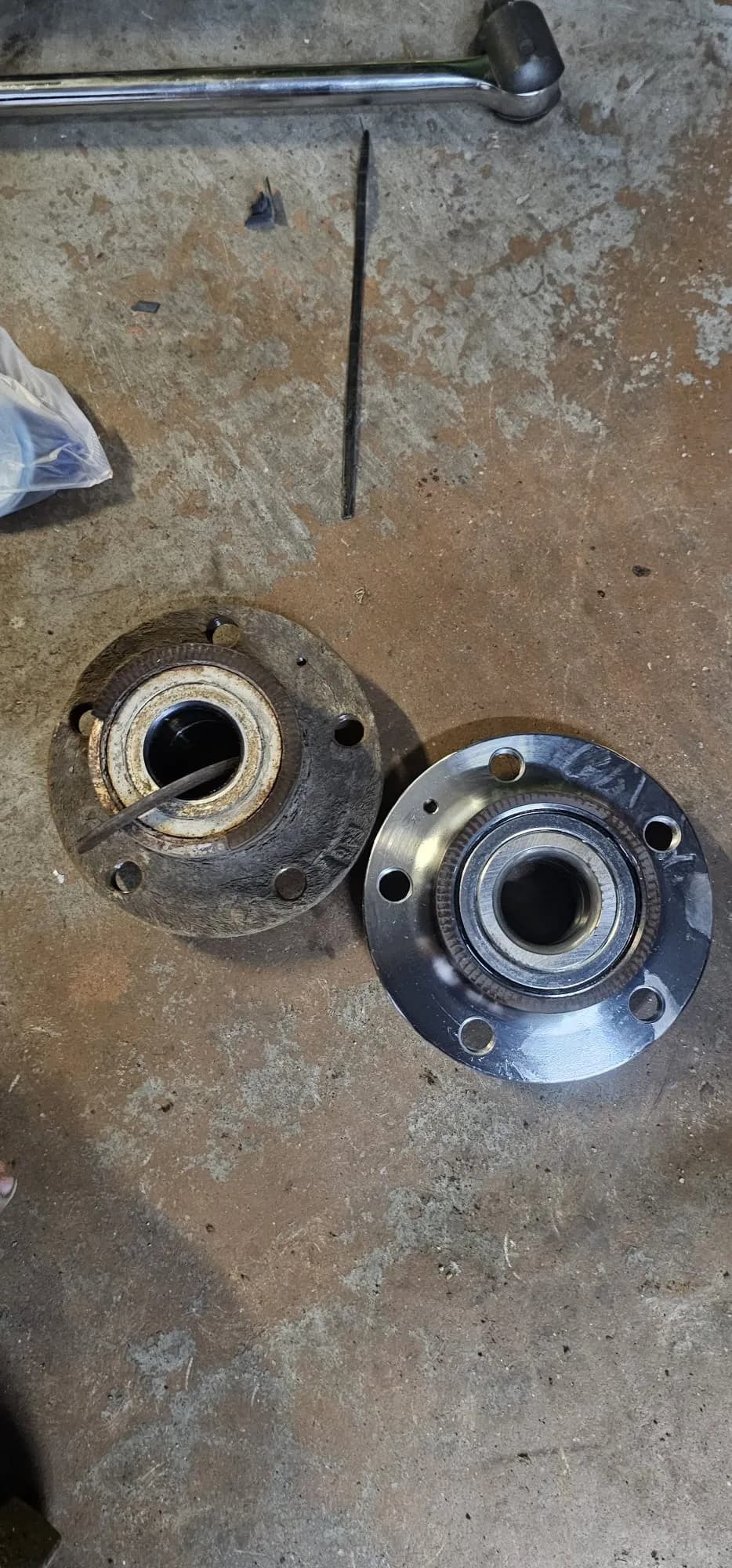
For Jetta models from 2011–2017 there was a recall related to possible cracks in wheel-bearing housings. When buying a used car it is useful to check by VIN whether applicable recall work has been completed.
Wheel alignment should be carried out after play in the suspension has been corrected and the tyres checked.
Reasons for diagnostics can include:
- knocking on uneven surfaces
- a hum that grows with speed
- play in the steering wheel
- the car pulls to one side
- tyres wear unevenly
- the body rocks
- vibration appears in the steering
Volkswagen Jetta braking system
In city use Jetta brakes work with frequent stops, and in winter they face salt and moisture. As a result discs can rust, caliper guides can seize and pads can wear unevenly.
During service both sides of the brake disc, caliper guides, dust boots, brake hoses and fluid condition must be checked.
Have the brakes checked if:
- squealing or a metallic sound is heard
- vibration appears under braking
- the car pulls to one side
- one wheel gets hotter than the others
- braking distance has increased
- the handbrake does not work correctly
- rear discs show deep corrosion
Cooling system
Coolant loss can relate to the water pump, thermostat, hoses, radiator, expansion tank or heat exchanger.
On some TSI engines the pump and thermostat are combined in a complex module. A small leak may at first show only as an antifreeze smell or a gradual drop in the expansion-tank level.
Simply topping up without finding the source is not enough. With a serious leak the engine can overheat.
Book a check if:
- coolant needs regular topping up
- traces appear under the car
- the engine takes a long time to warm up
- temperature becomes unstable
- the heater works less well
- an antifreeze smell is noticed after a drive
- cooling system repair
Volkswagen Jetta electrics
With age a Jetta can develop faults in the central locking, window regulators, lighting, ABS sensors, multimedia and climate system. For fifth-generation Jetta cars, minor electrical faults and headlight issues were also mentioned.
A weak battery can trigger several dashboard warnings at once. This is especially common after frost or a long period parked.
Before replacing an electronic control unit, check the battery, alternator, fuses, wiring and stored faults.
Diagnostics may be needed if:
- the battery discharges quickly
- the engine is hard to start
- random ABS and ESP faults appear
- central locking does not work
- window regulators move incorrectly
- headlights switch on unreliably
- the climate system does not respond
- multimedia restarts
- computer diagnostics
- electrical repair
Air conditioning and heating
A working climate system matters in Finland all year. Air conditioning cools the cabin in summer and helps clear moisture from the glass in winter.
If the system no longer cools, the cause may be a refrigerant leak, condenser, compressor, pressure sensor or fan. A simple recharge only helps when the system is sealed.
Poor heating can relate to the thermostat, low coolant level, a clogged heater matrix or a faulty climate flap.
Volkswagen Jetta body and corrosion
The Jetta body is usually well protected, but older cars can show corrosion on the underbody, sills, arches, lower door edges and boot lid. Risk increases after poor body repairs or damage to the protective coating.
Small coating damage is best repaired before deep rust forms.
After winter it is worth inspecting:
- sills and jacking points
- wheel arches
- underbody
- door edges
- lower edge of the boot lid
- brake lines
- suspension mounting points
- areas with paint chips
Volkswagen Jetta services we provide
At Volkkarihuolto Espoo you can book:
- engine oil and filter change
- computer diagnostics
- petrol TSI, FSI and MPI service
- diesel TDI service
- DPF and EGR diagnostics
- timing belt or timing chain replacement
- spark plug and coil replacement
- turbo diagnostics
- DSG service and repair
- clutch and flywheel replacement
- suspension repair
- wheel bearing replacement
- brake system repair
- coolant leak tracing
- battery and alternator checks
- air conditioning service
- preparation for inspection (katsastus)
- Jetta pre-purchase inspection
Volkswagen Jetta pre-purchase inspection
A used Jetta can be a practical and economical car, especially with a clear service history. The mechanical components are largely based on proven Volkswagen Golf parts.
Before buying it is important to check the engine, gearbox, timing drive, suspension, brakes, electronics and body. On a diesel Jetta assess DPF, EGR, injectors and the dual-mass flywheel. On a DSG car check smoothness when moving off and any gearbox faults.
It is also worth checking the VIN for unfinished recall campaigns.
On a test drive pay attention to:
- noise on cold start
- idle stability
- DSG smoothness
- vibration under acceleration
- wheel-bearing hum
- suspension knocking
- air conditioning operation
- absence of dashboard warnings
- even tyre wear
- computer diagnostics
Common Volkswagen Jetta fault signs
Book diagnostics if:
- Check Engine or EPC is on
- the engine misfires
- timing chain noise appears
- DSG jerks when moving off
- dual-mass flywheel knocking is heard
- the diesel has lost power
- the DPF warning is on
- coolant level is dropping
- a wheel-bearing hum is heard
- the suspension knocks
- vibration appears under braking
- the battery discharges quickly
- the air conditioning no longer cools
Volkswagen Jetta repair in Espoo
Need Volkswagen Jetta repair or servicing? Contact Volkkarihuolto Espoo at Ruukinmestarintie 7, 02330 Espoo. We will diagnose the fault, find the cause and propose suitable service or repair based on generation, engine, gearbox, mileage and the technical condition of the car.
FAQ
When did the Volkswagen Jetta appear?
The first-generation Volkswagen Jetta appeared in 1979 as a sedan based on the Volkswagen Golf.
Why are some older Jetta cars called Vento or Bora?
On the European market the third generation was sold as the Volkswagen Vento and the fourth as the Volkswagen Bora. On other markets the Jetta name was retained.
Which engines were fitted to the Volkswagen Jetta?
Depending on generation, petrol MPI, FSI and TSI engines were used, as well as diesel TDI units. The most common capacities are from 1.2 to 2.0 litres.
Does the Volkswagen Jetta have a timing belt or a timing chain?
It depends on the engine. Some engines use a chain, others a toothed belt. The exact type and interval should be checked from the VIN.
Why does a Volkswagen Jetta DSG jerk?
Causes can include clutches, mechatronics, adaptations, the flywheel, oil condition, or engine and gearbox mounts. Diagnostics are needed for an accurate diagnosis.
Why does a diesel Jetta lose power?
Possible causes include a loaded DPF, a faulty EGR, turbocharger, injectors, pressure sensors or the fuel system.
How often should a Volkswagen Jetta be serviced?
The interval depends on the engine and operating conditions. In Finland engine oil and a general inspection are best done at least once a year.
Can a Volkswagen Jetta be checked before purchase?
Yes. Before buying it is recommended to check the engine, DSG or clutch, timing drive, DPF, suspension, brakes, electronics, body and service history.
Detailed Services
Professional fault diagnostics for Volkswagen Jetta.
Oil ChangeEngine oil and filter replacement for Volkswagen Jetta.
Annual maintenanceComprehensive annual maintenance for Volkswagen Jetta.
Regular MaintenanceScheduled maintenance for Volkswagen Jetta according to service needs.
Engine RepairEngine diagnostics and repair for Volkswagen Jetta.
Diesel Engine RepairDiesel engine service and repair for Volkswagen Jetta.
Electrical RepairElectrical fault tracing and repair for Volkswagen Jetta.
ECU ProgrammingControl unit programming and coding for Volkswagen Jetta.
DSG RepairDSG transmission diagnostics and repair for Volkswagen Jetta.
Transmission RepairTransmission diagnostics and repair for Volkswagen Jetta.
Transmission Oil ChangeTransmission oil change for Volkswagen Jetta.
Timing Belt ReplacementTiming belt and related component replacement for Volkswagen Jetta.
Timing Chain ReplacementTiming chain, tensioner, and guide replacement for Volkswagen Jetta.
Cooling System RepairCooling system service and repair for Volkswagen Jetta.
AC RepairAir conditioning service and repair for Volkswagen Jetta.
Engine Heater InstallationEngine heater installation and service for Volkswagen Jetta.
Cabin OzonationCabin ozonation and odor removal for Volkswagen Jetta.







.webp&w=3840&q=75)
.webp&w=3840&q=75)