
Volkswagen ID.3 — diagnostics and service in Espoo
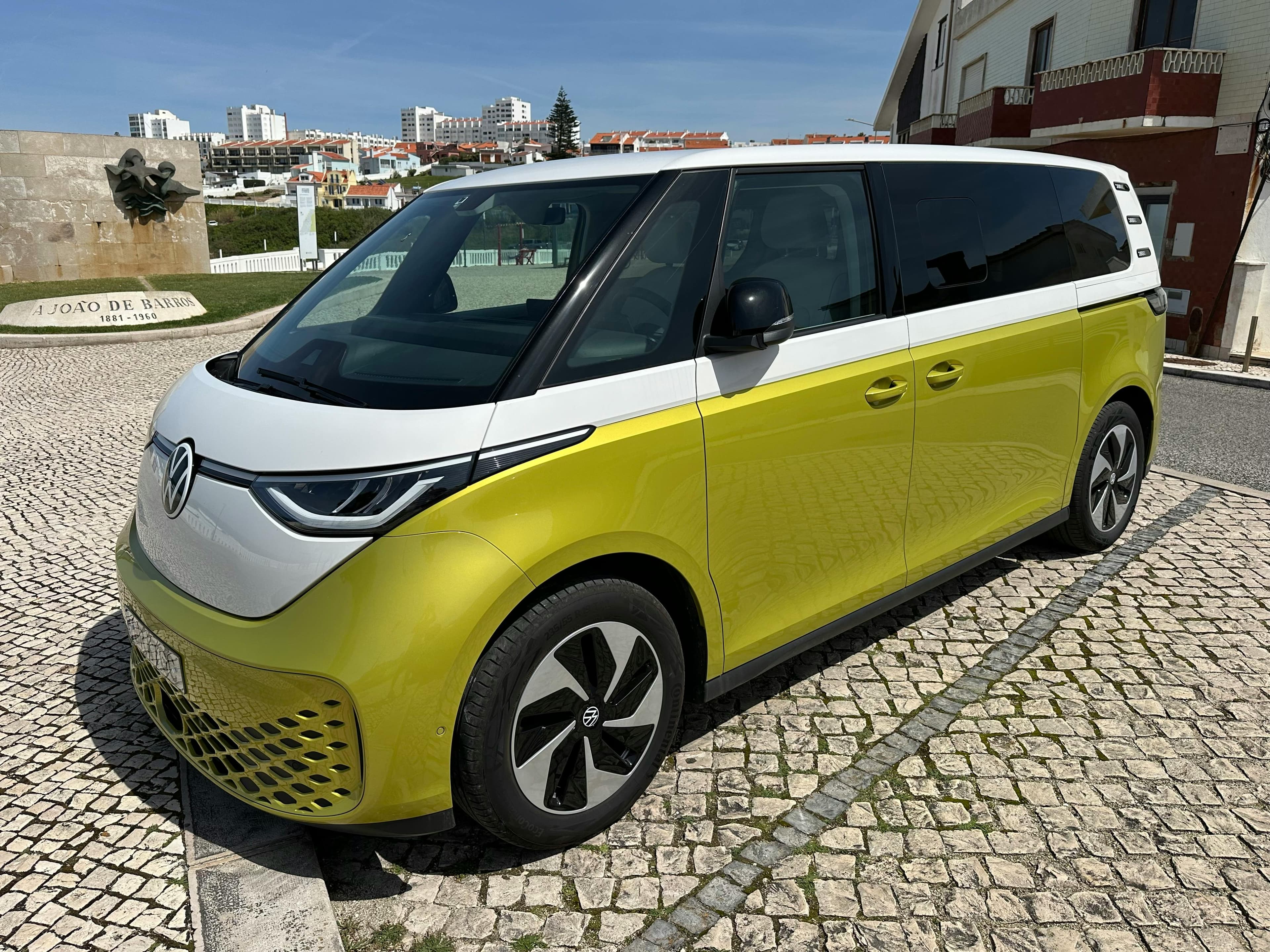
Volkswagen ID.3 is a compact electric car developed by Volkswagen on the specialized MEB electric platform. The model combines the dimensions of a city hatchback, a spacious interior, rear-wheel drive and an all-electric powertrain.
An electric car does not have the usual internal combustion engine, motor oil, spark plugs or exhaust system. However, the Volkswagen ID.3 still requires regular technical inspection. The high-voltage battery, charging system, 12-volt battery, software, cooling system, brakes, suspension, air conditioning and electronic assistants require special attention.
At Volkkarihuolto Espoo we diagnose and service Volkswagen ID.3 at Ruukinmestarintie 7, 02330 Espoo. Work on the high-voltage system should only be carried out by specialists with the appropriate qualifications and equipment.

History of the Volkswagen ID.3
Volkswagen introduced the production ID.3 in 2019 as the first model of the new electric ID family. It was the first Volkswagen to be originally developed as an electric car on the MEB platform, rather than converted from a petrol or diesel engine car.
The first cars arrived to European customers in 2020. At the start, Volkswagen offered batteries with useful capacities of 58 and 77 kWh, and later a more affordable version with a smaller battery appeared. Depending on the version, the declared power reserve of the first versions reached approximately 549 kilometers on the WLTP cycle.
For 2023, the ID.3 receives notable updates to its design, interior materials and software. For 2024, Volkswagen has further upgraded the multimedia system, controls, electric drive and charging characteristics. The line now includes Pure, Pro, Pro S versions and the sporty ID.3 GTX. For example, the updated ID.3 Pro received a battery with a usable capacity of 59 kWh, and the ID.3 Pure received a battery of 52 kWh.
In April 2026, Volkswagen unveiled a deeply updated successor called the ID.3 Neo. The new version uses an upgraded MEB+ platform, batteries with a useful capacity of 50, 58 and 79 kWh and provides a range of up to 630 kilometers WLTP in the longest range version.
Therefore, when servicing, it is important to take into account the year of manufacture and the specific modification of the car:
- Volkswagen ID.3 of the first years of production - from 2020
- updated Volkswagen ID.3 - from 2023
- upgraded versions of Pure, Pro, Pro S and GTX
- Volkswagen ID.3 Neo - presented in 2026
Volkswagen ID.3 service in Espoo
An electric car requires less traditional maintenance than a petrol or diesel car. The ID.3 does not require any engine oil, oil filter, timing belt, spark plug or exhaust system changes.
However, the absence of an internal combustion engine does not mean that the car does not require maintenance. In Finnish conditions, cold weather, winter salt and short trips are of particular importance. Cold temperatures temporarily reduce available range and charging speed, while salt and humidity accelerate corrosion of brake and suspension components.
You should check regularly:
- high voltage system and stored errors
- 12 volt battery status
- charging port and charging cables
- brake discs, pads and calipers
- brake fluid
- suspension and steering
- cooling system for battery and power electronics
- air conditioning and heat pump, if installed
- tires and wheel alignment angles
- electronic assistants
- car software
- computer diagnostics
- maintenance
- annual service
- electrical equipment repair
Volkswagen ID.3 high-voltage battery
The high-voltage lithium-ion battery is the most expensive and critical component of an electric vehicle. Different versions of the ID.3 used batteries of different useful capacities - from early 45, 58 and 77 kWh to newer options at 52, 59, 79 kWh and other versions depending on the model year.
With age and mileage, the battery capacity gradually decreases. Slight degradation is normal and does not necessarily indicate a malfunction. It is important to look beyond the indicated range when assessing condition, as it depends on temperature, speed, heating, driving style and recent energy consumption.
Battery diagnostics may include reading errors, analyzing module voltage, temperature, available capacity, and battery management system parameters.
At the same time, real batteries can maintain good capacity even with long mileage. In the long-term ADAC test, the ID.3 Pro S retained approximately 91% of its original usable capacity after more than 170,000 kilometers. The result from one vehicle cannot be automatically transferred to all ID.3s, but it does show that battery health depends on specific use and is not determined by mileage alone.
Reasons for diagnosis may be:
- The range has decreased sharply for no obvious reason
- Charging ends earlier than expected
- car limits power
- high voltage system warning appears
- individual cells have noticeably different voltages
- Battery charge decreases quickly when parked
- the car does not start driving mode
- a message appears indicating that you need to visit the service
- computer diagnostics
Charging Volkswagen ID.3
The ID.3 can be charged with alternating current via a home charging station or public AC point, and with direct current via CCS fast charging stations.
Maximum charging power depends on battery, year of manufacture, software version, temperature and charge level. In early versions, the maximum DC power was approximately 100 kW for the ID.3 Pro Performance and up to 125 kW for the ID.3 Pro S.
Newer versions have improved characteristics. The 2024 ID.3 Pure gains a maximum output of up to 145 kW, while the 2026 ID.3 Neo offers up to 105 kW for the 50 and 58 kWh batteries and up to 183 kW for the 79 kWh battery.
Slow charging does not always mean a problem. Speed is affected by low battery temperature, high charge level, charging station limitations, power distribution between multiple vehicles, hardware temperature, vehicle settings, and software status.
Problems may be caused by the charging port, connector blockage, cable, on-board charger, cooling system, software, or the charging station itself.
Checking is needed if ID.3:
- does not start charging
- regularly interrupts charging
- Charging cable won't release
- Charges only from AC or only from DC
- shows charger error
- connector gets very hot
- charges noticeably slower under the same conditions
- does not recognize the connected cable
- computer diagnostics
- electrical equipment repair
Charging cable won't open or disconnect
On the ID.3, the charging connector is blocked by the vehicle during charging. If the cable does not disconnect, you must first end the charging session and unlock the car.
Do not try to pull out the cable by force - you may damage the port and connector. First, you must use the manufacturer's emergency unlocking procedure to determine the cause of the malfunction.
If the problem recurs, possible causes include:
- locking actuator malfunction
- connector freezing
- dirt or moisture
- charging station error
- 12 volt battery low voltage
- software glitch
- mechanical damage to the charging port
12 volt battery
Although the ID.3 uses a high-voltage traction battery, it also requires a conventional 12-volt battery to run the electronics, locks, lighting and control systems.
A weak 12V battery can completely immobilize the vehicle, even if the traction battery is charged. It is also capable of causing a large number of random alerts.
The first ID.3s were notorious for having software glitches and problems draining the 12-volt battery. Many issues have been resolved with software updates, so on an early car it is important to check the installed software version and the history of service campaigns.
Characteristic features:
- the car does not respond to the start button
- Central locking is unstable
- Several errors appear at the same time
- multimedia system reboots
- Car won't open after parking
- errors disappear after charging or replacing the battery
- charging system does not start
- electrical equipment repair
- computer diagnostics
Software and multimedia
The ID.3 was one of the first Volkswagen cars to feature the new software architecture. Early cars experienced freezing of the multimedia system, slow operation of the interface, random warnings and problems with certain functions.
Owners of used ID.3s continue to report frozen screens, warning messages, and the need for repeated updates. In the latest reliability review of What Car? Software glitches remain one of the most frequently cited complaints about the model.
Sometimes restarting the system or updating the software helps. However, before updating, you should check the condition of the 12V battery and stored errors, since weak power can disrupt the installation process.
Reasons for diagnosis may be:
- the center screen remains black
- the system takes a long time to boot
- navigation or communication is unstable
- settings are reset
- Mobile app doesn't work
- errors appear that are not confirmed by an actual malfunction
- the update does not install
- The car loses connection to the Internet
- digital instrument panel reboots
- programming control units
- computer diagnostics
Electric motor and drive
Most Volkswagen ID.3s are rear-wheel drive and have an electric motor mounted on the rear axle. The electric motor does not require the traditional maintenance of an internal combustion engine, but the drive includes gearboxes, bearings, cooling and power electronics.
Not every sound is a malfunction. An electric car is quieter than a conventional car, so tire, bearing or suspension noise is more noticeable.
You should seek diagnostics if:
- there was a hum associated with speed
- a clicking sound is heard when changing direction
- car vibrates when accelerating
- power limited
- electric drive error appears
- The car does not go into D or R mode
- There are jerks when moving
- there is a noticeable leak under the car
- computer diagnostics
Battery and power electronics cooling system
The high-voltage battery, electric motor, inverter and charging equipment use a thermal management system. It helps maintain the appropriate temperature of components while driving and charging.
The malfunction may be related to the pump, valve, sensor, heat exchanger, pipe or coolant leak. It is not recommended to continue operation if there is a warning from the high-voltage cooling system.
Checking is needed if:
- Fluid levels drop regularly
- fast charging has become noticeably slower
- car limits power
- fans work for a long time after a trip
- Cooling system warning appears
- There is an unusual odor in the interior or near the car
- Traces of liquid appear under the car
- cooling system repair
Heat pump, air conditioning and heating
Some ID.3s are equipped with a heat pump, which helps heat the cabin more efficiently in cold weather. However, the specific equipment depends on the version and market.
In winter, heating and preheating directly affect the range. This is a normal feature of an electric vehicle and not necessarily a sign of a malfunction.
The ID.3's climate system may be linked to the thermal management of the high-voltage battery, so maintenance must be carried out taking into account the design of the electric vehicle.
You should contact the service if:
- the interior does not warm up
- heating only works when driving
- air conditioner doesn't cool
- windows constantly fog up
- preheating does not start
- The climate system makes unusual noises
- the application shows an air conditioning error
- After refilling, the refrigerant disappears quickly
- air conditioner service
Brake system Volkswagen ID.3
When decelerating, the ID.3 uses recuperation: part of the kinetic energy is converted into electricity and returned to the battery. Because of this, mechanical brakes may be used less frequently than on a conventional car.
On the one hand, this reduces pad wear. On the other hand, discs may suffer more from corrosion, especially during quiet city driving, low mileage and use on salty winter roads.
During maintenance, it is important to check the internal surfaces of the discs, the condition of the calipers, guides, hoses and brake fluid.
The ID.3 can use drum brakes on the rear axle. This is a manufacturer's design and not a sign of an outdated or weak brake mechanism. The drums are well protected from contamination, but they also need to be checked periodically.
Checking is necessary if:
- there is deep rust on the rims
- a creaking or metallic sound is heard
- braking became uneven
- the car pulls to the side
- vibration appeared
- one wheel gets hot
- Brake warning light came on
- after parking the brakes release with a bang
Volkswagen ID.3 suspension
The high-voltage battery increases the vehicle's weight, placing significant stress on the suspension and tires. The battery is positioned low, which lowers the center of gravity and aids stability.
In Finnish conditions, suspension elements suffer from potholes, frost and road salt. For an electric vehicle, it is important to select the correct lifting points and follow the procedure for working near a high-voltage battery.
Over time, checks may require:
- stabilizer struts and bushings
- silent blocks
- ball joints
- shock absorbers
- springs
- support bearings
- wheel bearings
- steering rods
- rear suspension elements
Tires and wheel angle adjustment
The ID.3 has high torque available immediately after pressing the pedal. This can accelerate tire wear during sudden starts. The greater mass of an electric vehicle also increases the load on the tread.
To maintain your driving range, it is advisable to use tires of the appropriate size, load index and rolling resistance.
Uneven wear may be due to:
- wrong pressure
- violation of wheel alignment angles
- suspension wear
- disk damage
- different tire models on one axle
- active driving style
Electronic assistants
Volkswagen ID.3 can be equipped with Front Assist, Lane Assist, adaptive cruise control, Travel Assist, parking sensors, rear view camera and other systems.
Assistant errors can occur due to contamination of the radar, snow, ice, damage to the windshield, weak battery or miscalibration. After windshield replacement, suspension repairs, or body work, the camera and radar may need calibration.
Diagnostics is needed if:
- Travel Assist is always unavailable
- Front Assist gives an error
- camera won't turn on
- parking sensors give false signals
- adaptive cruise control turns off
- After replacing the glass, warnings appeared
- The car does not recognize road markings well
- computer diagnostics
- electrical equipment repair
Body and corrosion of Volkswagen ID.3
The ID.3 is a relatively young model, so serious age-related corrosion is still less common than with older Golfs or Passats. However, the Finnish climate still affects the underbody, brakes, suspension and fastenings.
When inspecting the underbody, it is especially important to consider the location of the high-voltage battery. Damage to the protective housing after hitting an obstacle requires professional inspection.
After winter it is worth checking:
- thresholds and lifting points
- wheel arches
- bottom and protective panels
- suspension mounts
- brake pipes and connections
- areas with chipped paint
- fastening plastic protections
Checking the high-voltage battery after an impact
If the vehicle's bottom runs into a curb, rock, ice, or other obstacle, there may be little external damage, but the battery housing must be checked.
If damage to the high-voltage battery is suspected, the vehicle should not be lifted, disassembled or charged until it can be safely assessed.
You should contact the service if:
- There is a dent on the battery protection
- After the impact, a high-voltage system error occurred
- new noise is heard
- there is liquid under the car
- the car has limited charging or power
- there is an unusual smell
- protection mounting points damaged
- computer diagnostics
Volkswagen ID.3 recall and service campaigns
For modern cars, service campaigns may concern software, electronic components, batteries or individual components. Applicability is determined by VIN, not just year of manufacture.
Volkswagen provides VIN verification of service and recall campaigns for select markets. For a vehicle registered in Finland, current information should be verified by VIN via Volkswagen or the vehicle's service history.
Before purchasing a used ID.3, it is recommended to check:
- whether software updates have been performed
- Has the 12V battery been replaced?
- are there any open service or recall campaigns?
- whether high-voltage battery errors have been reported
- Has the charging system been repaired?
What services do we provide for Volkswagen ID.3?
At Volkkarihuolto Espoo you can order:
- computer diagnostics of Volkswagen ID.3
- reading high voltage system errors
- checking the condition of the 12V battery
- AC and DC charging diagnostics
- checking the charging port
- cooling system diagnostics
- air conditioning and heating service
- electric drive diagnostics
- brake system repair
- suspension diagnostics and repair
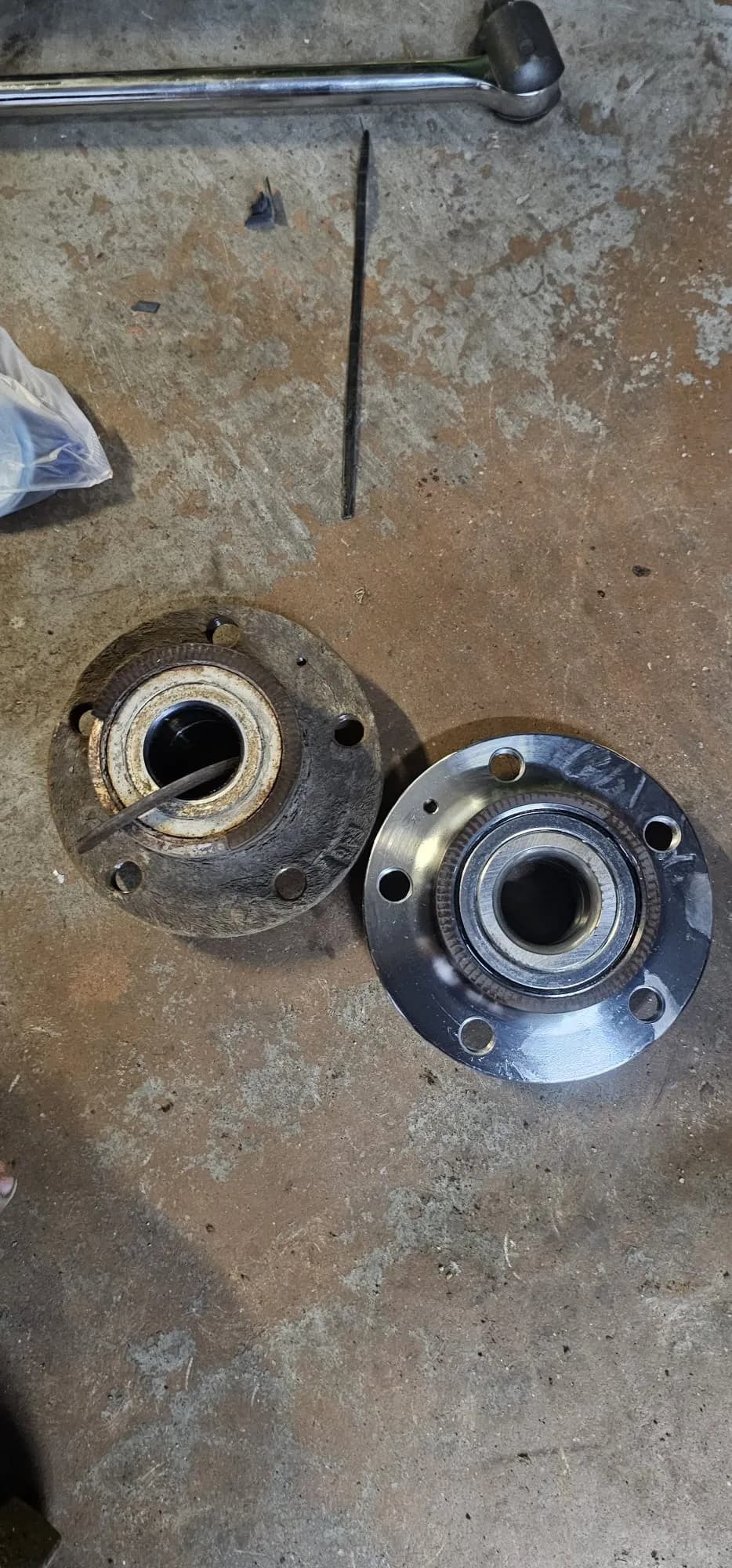
- replacing wheel bearings
- checking tires and uneven wear
- diagnostics of electronic assistants
- checking the car after an impact with the bottom
- preparation for technical inspection
- checking Volkswagen ID.3 before purchase
- programming control units and software updates
- regular maintenance
Checking Volkswagen ID.3 before purchasing
A used ID.3 can be a practical electric car for the city and everyday driving, but it's important to check more than just the range before purchasing.
It's worth checking early cars from 2020–2021 especially carefully: they were more likely to have software problems and the need for major updates. Later software usually corrects much of the earlier deficiencies, but each vehicle's condition should be assessed individually.
During a test drive, you should pay attention to the absence of errors, smooth acceleration, extraneous hum, operation of recovery, climate system and multimedia.
The check should include:
- diagnostics of all electronic units
- high voltage battery condition
- software update history
- operation of AC and DC charging
- 12V battery status
- brakes and suspension
- tire condition
- heating and air conditioning operation
- electronic assistants
- body and lower battery protection
- service history
- availability of open campaigns by VIN
- computer diagnostics
Frequent symptoms of Volkswagen ID.3 malfunction
It’s worth making an appointment for diagnostics if:
- the car does not start charging
- charging is interrupted regularly
- the cable does not disconnect
- high voltage system indicator appeared
- the power reserve has sharply decreased
- ID.3 does not enter drive mode
- multimedia screen freezes
- Several errors appear at the same time
- 12V battery discharges quickly
- the interior does not warm up
- fast charging has become significantly slower
- brakes squeak or vibrate
- the suspension is knocking
- there is a hum when driving
- Travel Assist or Front Assist errors appeared
Volkswagen ID.3 repair in Espoo
Need diagnostics or maintenance for your Volkswagen ID.3? Contact Volkkarihuolto Espoo at Ruukinmestarintie 7, 02330 Espoo. We will check the electronic systems, charging, 12-volt battery, brakes, suspension, climate system and other components of the car.
When working with the Volkswagen ID.3, it is especially important to take into account the characteristics of the electric vehicle and the safety requirements of the high-voltage system. We will determine the cause of the malfunction and offer a suitable diagnostic or repair option, taking into account the year of manufacture, battery version, software and technical condition of the vehicle.
FAQ
When did the Volkswagen ID.3 appear?
The production Volkswagen ID.3 was introduced in 2019, and deliveries of the first cars to European customers began in 2020.
What batteries are installed on the Volkswagen ID.3?
Capacity depends on year and version. Different ID.3s used batteries with usable capacities ranging from approximately 45 to 79 kWh. Before diagnosing, it is necessary to determine the specific modification of the car.
Does the Volkswagen ID.3 need to be changed?
The ID.3 does not have engine oil in the usual sense. However, the car needs to check the gearbox, cooling system, brakes, suspension, air conditioning and electronic systems.
How often does Volkswagen ID.3 need to be serviced?
The exact frequency is determined by the regulations of a particular vehicle. Even with low mileage, it is recommended to regularly check the brakes, suspension, fluids, battery and electronic systems.
Why is the ID.3 slow to charge in winter?
At low temperatures, the battery limits charging power to protect the cells. The speed also depends on the charge level, station condition, vehicle version and battery preheating.
Why won't Volkswagen ID.3 charge?
The cause may be a charging station, cable, port blockage, 12V battery, on-board charger, software error or high voltage system malfunction.
Why does ID.3 show many errors at the same time?
One possible cause is low voltage on the 12-volt battery. It is also necessary to check the software and read errors of all blocks.
Do EV brakes wear out more slowly?
Pads may wear out more slowly due to recuperation, but brake rotors may rust more due to infrequent use, especially in winter.
Is it possible to test the Volkswagen ID.3 battery before purchasing?
Yes. When checking, you can evaluate stored errors, battery parameters, voltage variation, available capacity and charging history within the data available to the diagnostic system.
What is the Volkswagen ID.3 Neo?
The ID.3 Neo is a deeply updated successor to the ID.3, unveiled in April 2026. It received the MEB+ platform, new batteries, an updated interior and a power reserve of up to 630 kilometers WLTP.
Detailed Services
Professional fault diagnostics for Volkswagen ID.3.
Oil ChangeEngine oil and filter replacement for Volkswagen ID.3.
Annual maintenanceComprehensive annual maintenance for Volkswagen ID.3.
Regular MaintenanceScheduled maintenance for Volkswagen ID.3 according to service needs.
Engine RepairEngine diagnostics and repair for Volkswagen ID.3.
Diesel Engine RepairDiesel engine service and repair for Volkswagen ID.3.
Electrical RepairElectrical fault tracing and repair for Volkswagen ID.3.
ECU ProgrammingControl unit programming and coding for Volkswagen ID.3.
DSG RepairDSG transmission diagnostics and repair for Volkswagen ID.3.
Transmission RepairTransmission diagnostics and repair for Volkswagen ID.3.
Transmission Oil ChangeTransmission oil change for Volkswagen ID.3.
Timing Belt ReplacementTiming belt and related component replacement for Volkswagen ID.3.
Timing Chain ReplacementTiming chain, tensioner, and guide replacement for Volkswagen ID.3.
Cooling System RepairCooling system service and repair for Volkswagen ID.3.
AC RepairAir conditioning service and repair for Volkswagen ID.3.
Engine Heater InstallationEngine heater installation and service for Volkswagen ID.3.
Cabin OzonationCabin ozonation and odor removal for Volkswagen ID.3.








.webp&w=3840&q=75)
.webp&w=3840&q=75)