
Volkswagen Amarok — service and repair in Espoo
Volkswagen Amarok is a mid-size pickup built for hard work, towing and rough roads. The model combines a body-on-frame design, diesel engines, high ground clearance and 4MOTION all-wheel drive. In Finland, Amarok is especially interesting for owners who need a vehicle for work, equipment transport, towing a trailer or boat, and driving on gravel and snowy roads.
On the used market you will find first-generation cars with four-cylinder 2.0 TDI engines and more powerful V6 TDI units, as well as the second-generation Amarok, which is technically very different from its predecessor.
High mass, strong torque, all-wheel drive and commercial use put extra load on the drivetrain, suspension and brakes. That is why Amarok should be maintained according to real operating conditions.
At Volkkarihuolto Espoo we perform diagnostics, maintenance and repair of Volkswagen Amarok at Ruukinmestarintie 7, 02330 Espoo.
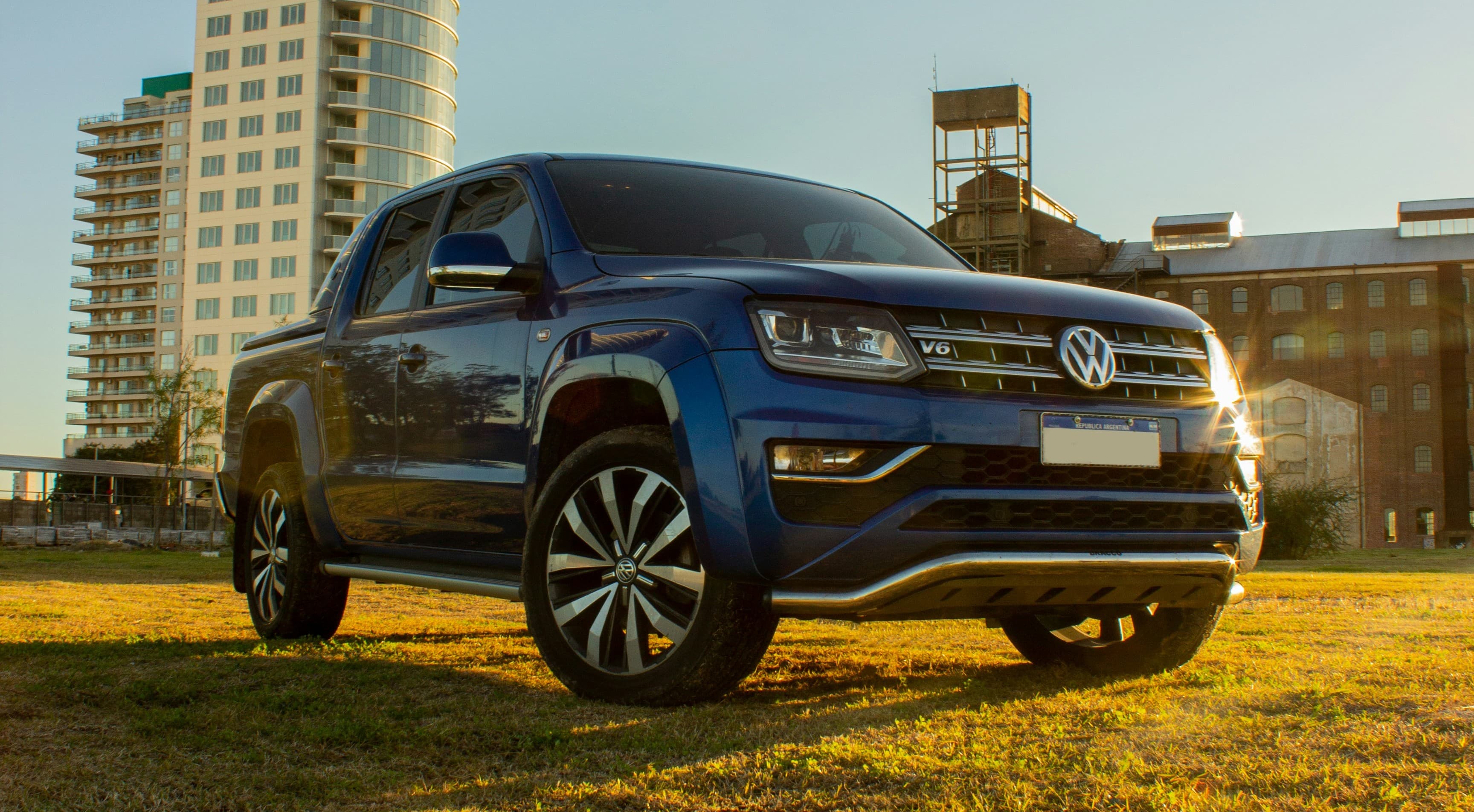
History of Volkswagen Amarok
Volkswagen introduced the Amarok in late 2009, and first-generation sales began in 2010. It was Volkswagen Commercial Vehicles’ own mid-size pickup for markets that need body-on-frame vehicles with high payload and towing capability.
The first generation was offered as Single Cab and Double Cab. The main engines were TDI diesels, and drive could be rear-wheel or 4MOTION all-wheel drive.
In 2016 the model received a major update. The key change was the 3.0 V6 TDI engine, which replaced four-cylinder diesels on many European markets. The Amarok V6 became noticeably more powerful and delivered high torque, making it especially suitable for towing and heavy use.
The second-generation Volkswagen Amarok was unveiled in 2022. The new vehicle was developed with Ford and is technically related to the Ford Ranger. Volkswagen still received its own design, tuning, equipment and specific versions for the European market.
This is an important repair difference: first- and second-generation Amarok models are technically very different vehicles, so parts and service procedures cannot be transferred automatically from one generation to the other.
Volkswagen Amarok generations
In Finland, used cars are especially often first-generation models with 2.0 BiTDI and V6 TDI engines. The main generations are:
- Volkswagen Amarok I — 2010–2020 on most European markets
- updated Amarok I with V6 TDI — from 2016
- Volkswagen Amarok II — from 2022
Volkswagen Amarok service in Espoo
Amarok is often used much harder than a typical Volkswagen passenger car. The vehicle may regularly carry loads, tow a trailer, drive on gravel roads, work in winter, move through deep snow, operate on construction sites and cover long highway distances.
If the Amarok regularly tows or runs under heavy load, preventive inspection intervals should reasonably be shortened. In such conditions it is especially important to check regularly:
- engine oil
- fuel and air filters
- timing drive
- turbocharging
- DPF
- EGR
- AdBlue
- automatic or manual gearbox
- transfer case of the all-wheel drive system
- propshafts
- differentials
- suspension
- brakes
- tyres
- cooling system
- scheduled maintenance
- oil and filter change
- computer diagnostics
- annual service
Volkswagen Amarok 2.0 TDI and BiTDI
Early first-generation Amarok models widely used 2.0 TDI diesel engines. The 2.0 BiTDI with two turbochargers is especially well known. It delivers strong pull, but the boost system is more complex than a conventional single-turbo engine.
On BiTDI it is especially important not to replace turbos without a full inspection. The issue may be related to pipes, control valves, the vacuum system or sensors.
Diagnostics are recommended if:
- the vehicle has lost power
- limp mode appears
- the engine smokes
- fuel consumption has increased
- an unusual whistling noise is heard
- Check Engine is on
- boost pressure faults appear
- the engine runs unevenly
- TDI diesel engine repair
- computer diagnostics
Volkswagen Amarok V6 TDI
After the first-generation update, Volkswagen began fitting the Amarok with a 3.0 V6 TDI diesel. This engine delivers significantly more torque and suits a heavy pickup well. A more powerful engine also places greater load on the transmission and cooling system.
Pay attention to engine oil, the cooling system, EGR, DPF, AdBlue, the turbo, the intake system and the automatic gearbox. Book diagnostics if:
- the engine loses power
- EGR or AdBlue faults appear
- DPF regeneration happens too often
- coolant level drops
- smoke appears
- the engine runs unevenly
- the vehicle goes into limp mode
- TDI diesel engine repair
- computer diagnostics
Volkswagen Amarok timing drive
The type and service schedule of the timing drive depend on the engine. First-generation four-cylinder 2.0 TDI engines use a system that must be serviced according to that engine’s schedule. On V6 TDI the design is different.
Therefore one universal interval cannot be used for all Amarok models. If the history is unknown, the timing drive should be checked among the first items.
Before service it is necessary to identify:
- engine code
- VIN
- year of manufacture
- previous repair history
- timing belt replacement
- timing chain replacement
Volkswagen Amarok DPF
The DPF particulate filter is used on diesel Amarok models to clean exhaust gases. If the vehicle regularly drives on the highway, regeneration conditions are usually good. But with short trips, frequent idling or low-speed operation, regeneration may be interrupted.
Before cleaning or replacing the filter, check actual soot load, ash quantity, pressure before and after the DPF, temperature sensors, EGR and engine operation.
Possible signs:
- regenerations that are too frequent
- raised idle speed
- fans running after shutdown
- DPF indicator illuminated
- the vehicle has lost power
- fuel consumption has increased
- DPF diagnostics
Volkswagen Amarok EGR
The EGR system gradually becomes contaminated with soot. On some diesel versions the EGR cooler should be checked separately, especially if coolant level is dropping at the same time.
A fault may be indicated by:
- Check Engine
- loss of power
- jerking
- unstable idle
- limp mode
- frequent DPF regenerations
- EGR diagnostics
AdBlue and SCR
Newer Amarok models use an SCR system and AdBlue fluid. If a message appears on the dash that starting will be blocked after a certain number of kilometres, diagnostics should not be postponed.
The fault may be caused by:
- insufficient fluid level
- NOx sensor
- pump
- injector
- heater
- wiring
- AdBlue diagnostics
Volkswagen Amarok automatic gearbox
On first-generation Amarok models, especially V6, an automatic gearbox is widely used. For a pickup that tows or regularly works under heavy load, transmission condition is especially important.
Also check oil condition, gearbox cooling, mounts and the propshaft drive. Inspection is needed if:
- engaging D or R is delayed
- strong shocks appear
- the gearbox shifts harshly
- vibration occurs
- the vehicle slips
- a gearbox fault appears
- the transmission overheats
- transmission oil change
Manual gearbox and clutch
Some Amarok models are fitted with a manual gearbox. A heavy vehicle and high torque place serious load on the clutch and flywheel.
If the vehicle regularly towed a heavy trailer, the clutch should be checked especially carefully. Signs of possible wear:
- the clutch slips
- the vehicle vibrates on take-off
- the biting point has become high
- a knocking noise is heard
- gears engage with resistance
- noise appears when pressing the pedal
- manual gearbox diagnostics
Volkswagen Amarok 4MOTION
All-wheel drive is one of Amarok’s key features. Different first-generation versions used different 4MOTION systems. There were vehicles with selectable all-wheel drive and versions with continuous torque distribution.
For the drivetrain it is also important to use tyres of the same size and similar wear. Diagnostics are needed if:
- a humming noise appears
- the vehicle vibrates
- all-wheel drive does not engage
- a 4MOTION fault appears
- shocks are heard when changing modes
- noises come from the propshaft
Transfer case and differentials
Amarok has a more complex drivetrain than a typical Volkswagen passenger car. Oil and condition of the transfer case and differentials must be monitored according to the schedule and usage.
If the vehicle regularly works off-road or tows, drivetrain load is especially high. A problem may be indicated by:
- humming
- vibration
- shocks
- oil leaks
- metallic sounds
- all-wheel-drive faults
Propshaft
The Amarok propshaft drive runs continuously or when all-wheel drive is engaged, depending on the version. Similar vibration can also come from wheels or drive components, so inspection is required.
Possible fault signs:
- vibration under acceleration
- humming
- metallic knocking
- a jolt at take-off
- vibration at a certain speed
Volkswagen Amarok suspension
Amarok has a body-on-frame design and suspension built for serious load. The rear axle uses solutions intended for cargo, so an empty vehicle may feel firmer than a typical SUV.
Book diagnostics if knocking appears, the vehicle pulls to one side, the body rolls heavily, steering feels less precise, tyres wear unevenly or a humming noise appears. Over time the following wear:
- shock absorbers
- bushes
- ball joints
- control arms
- tie-rod ends
- wheel bearings
- rear suspension components
Leaf springs and rear suspension
On Amarok the rear suspension is designed primarily for cargo use. A sagging rear end may indicate fatigued suspension components or past continuous overloading.
If the vehicle regularly carried heavy materials, check:
- leaf springs
- bushes
- mountings
- shock absorbers
- bump stops
Wheel bearings
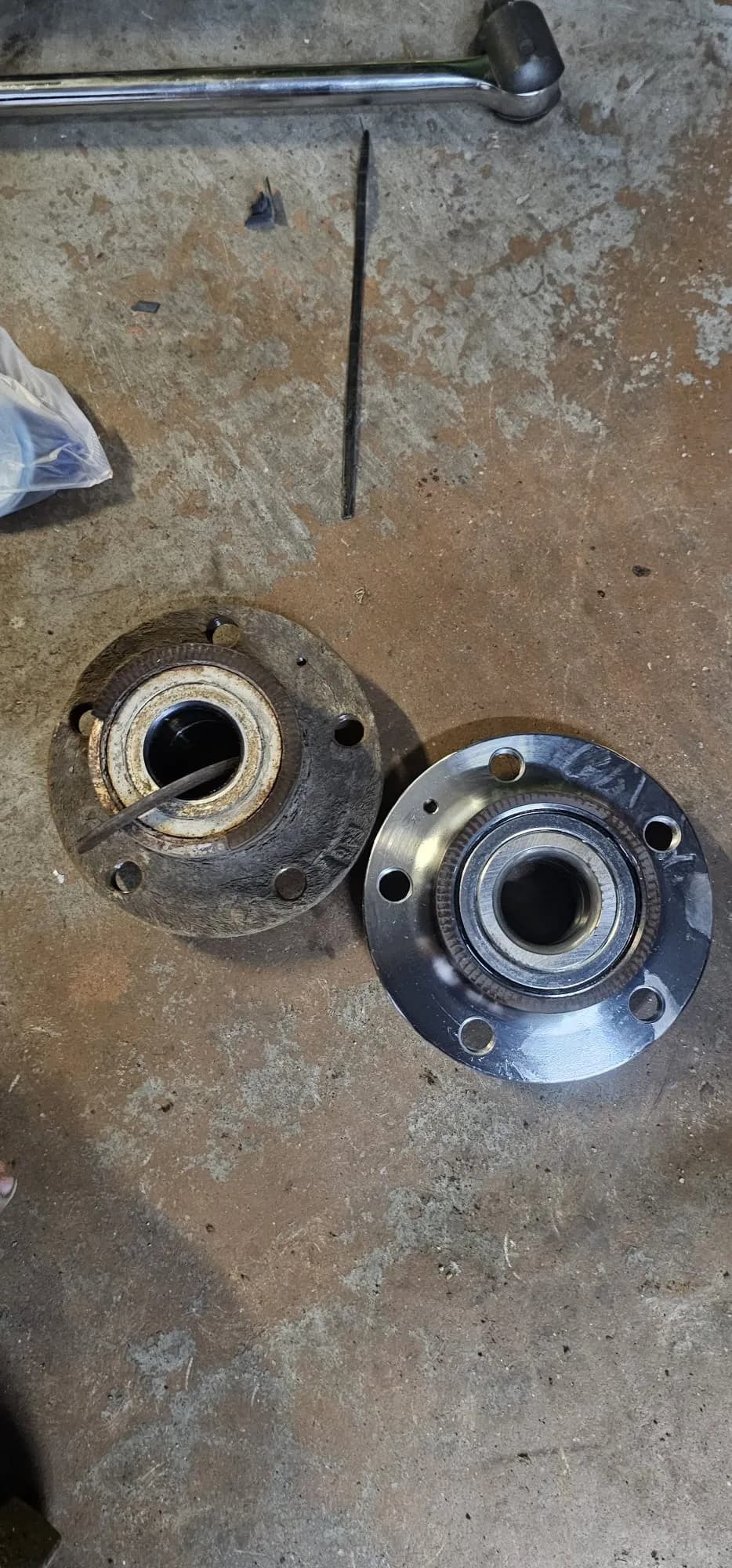
Large wheels and the high mass of Amarok place serious load on wheel bearings. The main symptom is a humming noise that increases with speed.
A similar sound can also come from off-road or winter tyres, so the exact source must be identified before replacement.
Volkswagen Amarok brakes
Amarok can have a significant gross mass and tow a heavy trailer, so the braking system must be in good condition. In Finland, road salt also accelerates corrosion of brake parts.
If the vehicle is used with a trailer, also check the trailer braking system and electrical connection. Inspection is needed if:
- vibration appears
- squealing or a metallic sound is heard
- the vehicle pulls to one side
- one wheel overheats
- braking distance has increased
- the parking brake works incorrectly
Cooling system
A heavy diesel vehicle especially stresses the cooling system when towing and driving in summer. Regular coolant top-ups should not be treated as normal.
Before heavy towing or a long trip, make sure the system is fully sound. Fluid loss may be related to:
- water pump
- thermostat
- radiator
- hoses
- EGR cooler
- heat exchanger
- coolant leak diagnosis
Battery and alternator
Amarok may be fitted with extra electrical equipment: work lights, a winch, a heater, additional sockets and charging gear. This creates extra load on the battery and alternator.
In Finnish winters a weak battery shows especially quickly on a cold diesel start. Signs include:
- slow starter
- random faults
- Start-Stop problems
- voltage drop on start
- electrical repair
Webasto and auxiliary heater
For a diesel Amarok in Finland, an auxiliary heater is a useful system. The cause may be weak power supply, the fuel pump, the glow plug or contamination of the heater itself.
A fault may show as follows:
- the heater does not start
- starts and then switches off
- smokes heavily
- runs for a few minutes
- drains the battery
Volkswagen Amarok body and frame
Unlike most Volkswagen passenger cars, Amarok has a separate frame. For a used pickup in Finland its condition is especially important.
A vehicle used on a construction site or off-road may have underside damage even when the exterior looks good. Winter salt accelerates corrosion of metal parts, so the frame should be washed and inspected regularly.
Check:
- frame
- welded joints
- suspension mounts
- underbody
- sills
- wheel arches
- body mounts
- engine and drivetrain protection
- load bed body
Pickup body and load bed
The Amarok load bed often suffers mechanical damage. If water remains under a bed liner, corrosion can develop there over time.
Check:
- bed coating
- fastenings
- tailgate
- lock
- hinges
- drains
- canopy or cover mounting points
Volkswagen Amarok and towing
Amarok is often bought specifically for towing. Permissible trailer mass depends on generation, engine and the exact vehicle version.
Rely on the registration data of the specific Amarok, not only on general model figures. With regular towing, also monitor:
- brakes
- gearbox
- cooling system
- propshaft drive
- rear suspension
- tyres
- tow hitch
New second-generation Volkswagen Amarok
The second-generation Amarok is technically different from the previous one. It was developed with Ford and shares much with the corresponding Ford Ranger generation. Therefore when ordering parts it is especially important to use the VIN, not only the Amarok name.
The vehicle received modern diesel powertrains, a new generation of all-wheel drive, more electronic assistants and a modern interior. Repair recommendations from the first generation cannot be applied automatically to the new Amarok.
When diagnosing a new Amarok, especially important are:
- electronic control units
- driver assistance systems
- multimedia
- SCR/AdBlue
- gearbox
- all-wheel drive
- computer diagnostics
Electronics and assistants
Modern Amarok models are fitted with far more electronic systems than early vehicles. After suspension, windscreen or front-end repair, some systems may need calibration.
Faults can appear due to a weak battery, sensor damage, snow or dirt, calibration issues or wiring problems. Possible systems include:
- adaptive cruise control
- Lane Assist
- Front Assist
- cameras
- parking sensors
- trailer control systems
- computer diagnostics
Volkswagen Amarok pre-purchase inspection
For a used Amarok it is especially important to understand how the vehicle was used before. A pickup may have relatively low mileage but have constantly driven off-road, towed a heavy trailer, carried building materials or worked at full load.
On V6 TDI also check the service history of the engine and gearbox. Before purchase, check:
- cold start
- engine
- turbo or BiTDI system
- DPF
- EGR
- AdBlue
- gearbox
- 4MOTION
- transfer case
- differentials
- propshaft
- suspension
- brakes
- frame
- underbody
- off-road traces
- electrics
- computer diagnostics
Volkswagen Amarok services we provide
At Volkkarihuolto Espoo you can come for:
- Amarok scheduled maintenance
- engine oil and filter change
- computer diagnostics
- 2.0 TDI and V6 TDI service
- BiTDI diagnostics
- turbocharging diagnostics
- DPF inspection
- EGR diagnostics
- AdBlue diagnostics
- timing drive inspection
- automatic gearbox diagnostics
- clutch replacement
- 4MOTION diagnostics
- transfer case inspection
- propshaft diagnostics
- brake repair
- suspension diagnostics
- wheel bearing replacement
- coolant leak diagnosis
- battery check
- auxiliary heater diagnostics
- frame and underbody inspection
- inspection preparation
- Amarok pre-purchase inspection
Common Volkswagen Amarok fault signs
Book diagnostics if:
- Check Engine is on
- Amarok has lost power
- limp mode appears
- DPF light is on
- regeneration starts too often
- an EGR or AdBlue fault appears
- turbo whistle is heard
- smoke appears
- coolant level drops
- the automatic shifts with shocks
- the clutch slips
- drivetrain humming appears
- the vehicle vibrates under acceleration
- 4MOTION works incorrectly
- the propshaft knocks
- the suspension knocks
- wheel bearing humming appears
- the brakes vibrate
- Webasto does not start
Volkswagen Amarok repair in Espoo
Need repair or maintenance for a Volkswagen Amarok? Contact Volkkarihuolto Espoo at Ruukinmestarintie 7, 02330 Espoo.
We can diagnose the diesel engine, turbocharging, DPF, EGR, AdBlue, automatic or manual gearbox, 4MOTION, transfer case, propshaft drive, brakes, suspension and other vehicle systems.
When servicing a Volkswagen Amarok it is especially important to consider generation, engine and usage pattern. A pickup that regularly tows a heavy trailer or is used on construction sites needs more careful inspection of the drivetrain, suspension and cooling system than a vehicle used mainly for ordinary driving.
FAQ
When was the Volkswagen Amarok introduced?
The first-generation Volkswagen Amarok went on sale in 2010. The second generation was unveiled in 2022.
Which engines are fitted to Volkswagen Amarok?
The first generation used four-cylinder 2.0 TDI and BiTDI engines, and after the update a 3.0 V6 TDI. The second generation has a different diesel lineup depending on the market.
How does Amarok V6 differ from 2.0 TDI?
The V6 has larger displacement, power and torque. It is better suited to heavy towing, but has a different design and its own service requirements.
Does Volkswagen Amarok have all-wheel drive?
Yes. 4MOTION is one of the model’s main features, but all-wheel-drive design differs between generations and versions.
Does Amarok all-wheel drive need servicing?
Yes. Monitor oils, the transfer case, differentials and propshaft drive according to the design of the specific vehicle.
Why does Amarok vibrate under acceleration?
The cause may be the propshaft, joints, wheels, differential, mounts or automatic gearbox. Diagnostics are required.
Why does a diesel Amarok lose power?
Possible causes include turbocharging, DPF, EGR, AdBlue/SCR, the fuel system, injectors or sensors.
Why does Amarok start DPF regeneration often?
The cause may be short trips, high DPF load or an engine fault that increases soot formation.
Should the Volkswagen Amarok frame be inspected?
Yes. Especially on vehicles used off-road, on construction sites or in Finnish winters. Check corrosion, damage and suspension mounting points.
Can a Volkswagen Amarok be inspected before purchase?
Yes. For a used pickup it is especially recommended to check the engine, drivetrain, all-wheel drive, propshaft, suspension, brakes, frame and history of towing or commercial use.
Detailed Services
Professional fault diagnostics for Volkswagen Amarok.
Oil ChangeEngine oil and filter replacement for Volkswagen Amarok.
Annual maintenanceComprehensive annual maintenance for Volkswagen Amarok.
Regular MaintenanceScheduled maintenance for Volkswagen Amarok according to service needs.
Engine RepairEngine diagnostics and repair for Volkswagen Amarok.
Diesel Engine RepairDiesel engine service and repair for Volkswagen Amarok.
Electrical RepairElectrical fault tracing and repair for Volkswagen Amarok.
ECU ProgrammingControl unit programming and coding for Volkswagen Amarok.
DSG RepairDSG transmission diagnostics and repair for Volkswagen Amarok.
Transmission RepairTransmission diagnostics and repair for Volkswagen Amarok.
Transmission Oil ChangeTransmission oil change for Volkswagen Amarok.
Timing Belt ReplacementTiming belt and related component replacement for Volkswagen Amarok.
Timing Chain ReplacementTiming chain, tensioner, and guide replacement for Volkswagen Amarok.
Cooling System RepairCooling system service and repair for Volkswagen Amarok.
AC RepairAir conditioning service and repair for Volkswagen Amarok.
Engine Heater InstallationEngine heater installation and service for Volkswagen Amarok.
Cabin OzonationCabin ozonation and odor removal for Volkswagen Amarok.








.webp&w=3840&q=75)
.webp&w=3840&q=75)