
Volkswagen ID. Buzz — diagnostics and service in Espoo
The Volkswagen ID. Buzz is a fully electric people carrier created as a modern interpretation of the legendary Volkswagen Transporter and Bulli. The model combines a distinctive design, a spacious cabin and the MEB electric platform also used in other Volkswagen ID family cars.
The ID. Buzz is produced as a passenger vehicle and as the commercial ID. Buzz Cargo. There are also long-wheelbase versions and the powerful all-wheel-drive ID. Buzz GTX 4MOTION.
An electric car has no conventional combustion engine, timing belt, spark plugs or exhaust system. Even so, the large and heavy ID. Buzz still needs regular technical checks. Special attention is required for the high-voltage battery, charging system, electric drive, 12-volt battery, brakes, suspension, cooling system, climate control and electronic assistants.
At Volkkarihuolto Espoo you can book Volkswagen ID. Buzz diagnostics and service at Ruukinmestarintie 7, 02330 Espoo. Work directly on high-voltage components is carried out only with the required qualification and equipment.
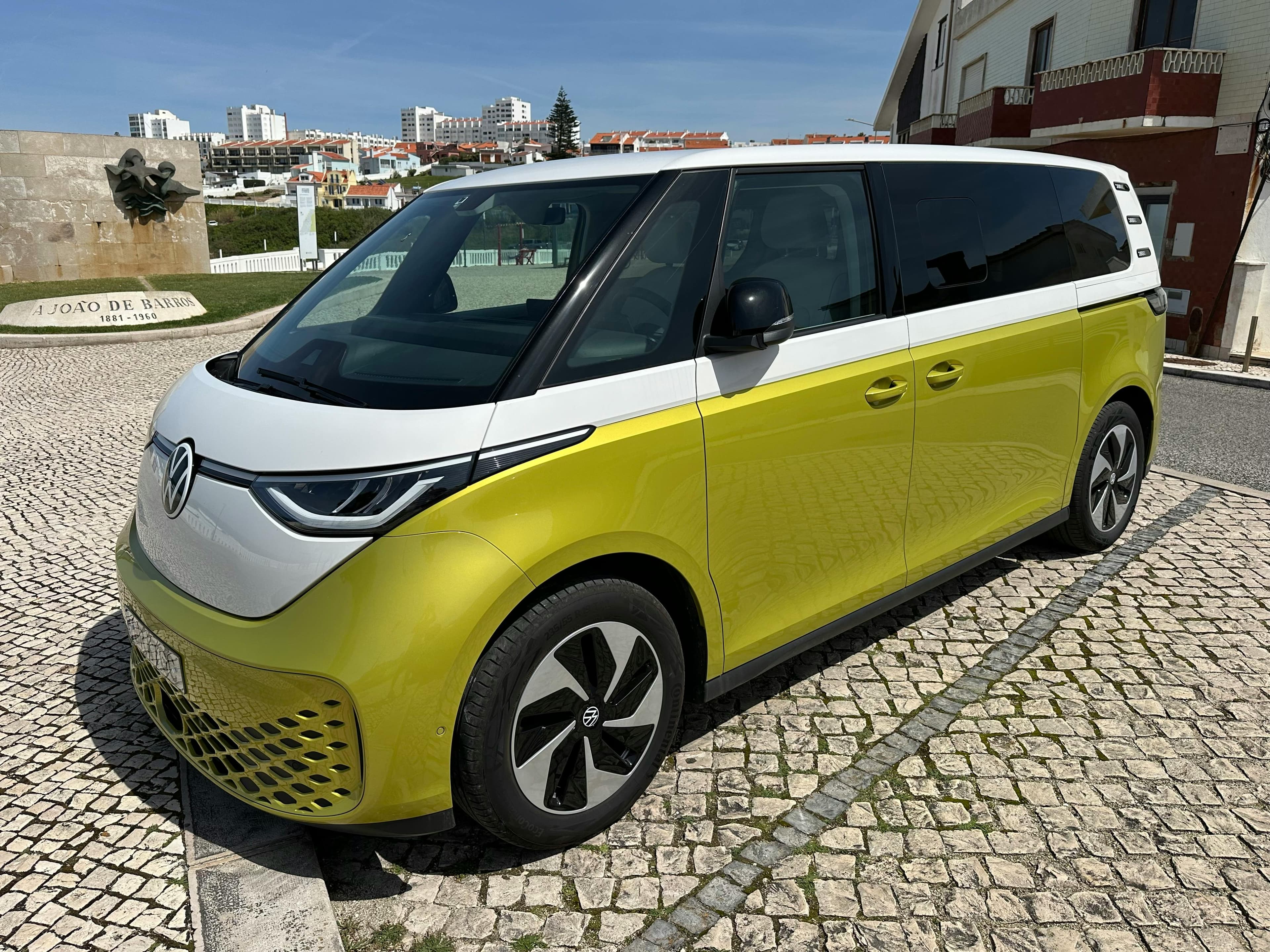
History of the Volkswagen ID. Buzz
The world premiere of the production Volkswagen ID. Buzz and ID. Buzz Cargo took place in March 2022 in Hamburg. Volkswagen presented passenger and commercial versions of the electric Bulli at the same time.
The first European ID. Buzz models received a high-voltage battery with 77 kWh usable capacity and a rear electric motor producing 150 kW, or 204 hp. At launch the passenger version was offered with five seats, while ID. Buzz Cargo was created as an electric commercial van.
In 2023 Volkswagen presented an ID. Buzz with a longer wheelbase. That version was developed for Europe and North America and allowed more spacious cabin configurations.
In 2024 the range was expanded by the ID. Buzz GTX. It received two electric motors, 4MOTION all-wheel drive and a combined output of 250 kW, or 340 hp. GTX is offered with two wheelbases, two batteries and five-, six- or seven-seat cabins.
Main versions of the model:
- Volkswagen ID. Buzz
- Volkswagen ID. Buzz with long wheelbase
- Volkswagen ID. Buzz Cargo
- Volkswagen ID. Buzz GTX
- rear-wheel-drive versions
- 4MOTION all-wheel-drive versions
Volkswagen ID. Buzz service in Espoo
The electric ID. Buzz needs fewer traditional jobs than a diesel Volkswagen Multivan, Transporter or Caravelle. There is no regular need to change engine oil, oil filter, spark plugs, timing belt or exhaust parts.
Maintenance is still important. The ID. Buzz is a large car with high mass, large wheels and complex electronics. On the commercial ID. Buzz Cargo, suspension, brakes and tyres are especially important because the vehicle may regularly run with a heavy load.
It is worth checking regularly:
- high-voltage system condition
- 12-volt battery
- charging port
- AC and DC charging
- battery cooling system
- brake system
- suspension
- wheel bearings
- steering
- tyres
- air conditioning and heating
- cameras and radars
- electric doors and tailgate
- vehicle software
- computer diagnostics
- scheduled maintenance
- annual service
- electrical repair
Volkswagen ID. Buzz high-voltage battery
The first European ID. Buzz models received a battery with 77 kWh usable capacity. The range later expanded, and GTX became available with two battery options depending on wheelbase.
As with other electric cars, available battery capacity gradually decreases with use. Mild degradation is a normal process.
The range shown on the instrument cluster should not be used as the only indicator of battery condition. It is strongly affected by air temperature, cabin heating, speed, cargo mass, number of passengers, tyre pressure, headwind and recent driving style. On the ID. Buzz these factors are especially noticeable because of the large body area and vehicle mass.
Diagnostics can check battery control unit faults, temperature, voltages of individual cell groups and other available high-voltage system parameters.
Book diagnostics if:
- actual range has dropped sharply
- charge percentage falls unusually quickly
- the car limits power
- a high-voltage warning appears
- charging finishes earlier than expected
- the car will not enter drive mode
- a fault appeared after an underbody impact
- computer diagnostics
Charging the Volkswagen ID. Buzz
The ID. Buzz can be charged at AC stations and fast DC stations. Maximum power depends on model year, battery and version, so the exact configuration should be identified before judging charging speed.
Actual charging speed also depends on battery temperature, current state of charge, station power, station load, ambient temperature, battery preconditioning and vehicle software.
In winter a cold battery may accept substantially lower power. That does not necessarily mean a fault.
Inspection is needed if:
- the ID. Buzz does not start charging
- charging is regularly interrupted
- the car charges only via AC or only via DC
- the charging cable is not recognised
- a charging system fault appears
- the connector becomes unusually hot
- the cable will not release after charging
- power is significantly lower under similar conditions
- computer diagnostics
- electrical repair
Charging cable will not disconnect
During charging the ID. Buzz locks the connector. After the charging session ends and the car is unlocked, the cable should release.
Do not pull the cable out by force. The lock mechanism and charging port can be damaged. If the problem repeats, the system must be diagnosed.
If it does not release, the cause may be:
- a frozen mechanism
- moisture or dirt
- port lock fault
- weak 12V battery
- software fault
- damage to the charging connector
- electrical repair
12-volt battery
Despite the large traction battery, the ID. Buzz uses a conventional 12-volt battery. It is needed for central locking, control units, lighting and enabling the high-voltage system.
A car with a fully charged traction battery may therefore fail to start if the 12V battery is faulty. When many random electronic faults appear, the 12V system should be one of the first checks.
Possible signs:
- the car will not go into Ready
- doors open unreliably
- many faults appear on the cluster at once
- the central display restarts
- charging does not start
- the car stops responding after a long standstill
- electrical repair
- computer diagnostics
Volkswagen ID. Buzz electric drive
The first ID. Buzz models received a 150 kW rear electric motor. Later Volkswagen introduced newer drive generations and expanded the range with more powerful versions.
The electric motor itself needs far less traditional servicing than a Transporter diesel engine. The powertrain still includes the motor, reduction gear, bearings, inverter, high-voltage wiring and cooling system.
Without combustion-engine noise, wheel bearings and tyres are especially audible. When a drone appears, the source should be identified first.
Inspection is needed if:
- a new drone appears
- vibration is felt on acceleration
- a knock is heard when selecting D/R
- the car limits power
- an electric drive fault appears
- the car will not enter drive mode
- a fluid leak is found
- computer diagnostics
Volkswagen ID. Buzz GTX 4MOTION
The ID. Buzz GTX is the most powerful production version of the electric Bulli. Two electric motors produce a combined 250 kW, or 340 hp, and 4MOTION all-wheel drive provides traction on both axles.
Unlike diesel Volkswagens with a conventional 4Motion system, there is no traditional propshaft between the axles and no Haldex clutch. The front and rear axles are driven by separate electric machines.
On the all-wheel-drive version it is also important to monitor tyre condition on both axles.
The system should be checked if:
- a 4MOTION fault appears
- power is limited
- the front axle does not engage
- jerks appear during hard acceleration
- the car vibrates
- front motor faults appear
- computer diagnostics
Battery and electronics cooling system
The battery, electric motor, inverter and charging equipment must operate within a defined temperature range. The ID. Buzz therefore uses a liquid thermal-management system.
It includes electric pumps, valves, sensors, heat exchangers, pipework and electronic control.
If there is a serious high-voltage cooling fault, driving or charging should not continue until diagnostics are carried out.
Inspection is needed if:
- coolant level is falling
- fluid traces appear under the car
- the car limits power
- charging has become much slower
- fans run unusually long
- a temperature warning appears
- cooling system repair
ID. Buzz air conditioning and heating
The large cabin volume means heating can use a noticeable amount of energy in winter. This is especially relevant in Finland. A shorter winter range is normal in itself.
On a large passenger vehicle it is also important to check ventilation of the rear cabin.
Book diagnostics if:
- the cabin barely warms up
- pre-heating will not start
- the air conditioning does not cool
- windows constantly mist up
- climate control is unstable
- front and rear temperatures differ strongly
- unusual noises appear
- a climate system fault is displayed
- air conditioning service
Volkswagen ID. Buzz brake system
When slowing, the ID. Buzz uses recuperation: the electric motor converts part of the kinetic energy back into electricity and returns it to the battery. Mechanical brakes may therefore be used less often.
In Finland the downside is that brake surfaces can corrode because of salt, moisture and insufficiently intensive use. This is especially important on the heavy ID. Buzz.
During service, pad thickness should be assessed together with friction surfaces, calipers and sliders.
Brakes should be checked if:
- squealing appears
- discs show heavy corrosion
- braking is accompanied by vibration
- the car pulls to one side
- one wheel gets hotter than the others
- the brakes release with a knock after standing
- a brake system fault appears
Volkswagen ID. Buzz suspension
The ID. Buzz is a heavy vehicle with a long wheelbase. The high-voltage battery further increases load on the suspension, wheel bearings and tyres.
On the commercial ID. Buzz Cargo the load can be even higher because of regular transport of equipment and goods.
Book diagnostics if knocking, squeaking, a drone, reduced stability or uneven tyre wear appears.
In Finnish conditions the following may need attention over time:
- anti-roll bar links and bushes
- bushes
- ball joints
- shock absorbers
- springs
- wheel bearings
- steering parts
- rear suspension mountings
Volkswagen ID. Buzz tyres
The ID. Buzz needs tyres rated for the vehicle's high mass. Cargo and passenger versions may differ depending on load and wheel size.
The electric motor's high torque can accelerate tread wear if starts are often aggressive. If the inner or outer shoulder wears much faster, the suspension and wheel alignment should be checked.
It is especially important to check regularly:
- pressure
- tread depth
- load index
- inner tyre face
- evenness of wear
- wheel damage
Volkswagen ID. Buzz Cargo
ID. Buzz Cargo is the commercial version of the electric people carrier, presented together with the passenger ID. Buzz in 2022. The original Cargo offers about 3.9 m³ of load space.
Constant transport of heavy goods increases chassis load. Visual inspection intervals may therefore reasonably be shortened compared with a vehicle used only for private trips.
In commercial use it is especially important to check regularly:
- tyres
- brakes
- rear suspension
- shock absorbers
- wheel bearings
- sliding-door mechanism
- charging system
- load compartment condition
- cargo lashing points
Sliding doors and tailgate
Large side sliding doors are one of the ID. Buzz trademarks. Depending on specification they may have an electric drive.
The mechanism should not be forced closed if there is clear resistance.
Over time or after winter, problems can relate to dirty tracks, freezing, the electric drive, limit switches, the lock, rollers and wiring.
Diagnostics are needed if the door:
- does not close fully
- returns by itself
- makes an unusual noise
- opens in jerks
- does not respond to the button
- shows a warning on the instrument cluster
- electrical repair
Software and multimedia
The ID. Buzz uses the Volkswagen ID family software architecture. The car may have a digital instrument cluster, a large central display, online services, navigation and OTA updates.
Before suspecting an expensive control unit, the 12-volt battery and stored faults should be checked.
Book diagnostics if:
- the screen will not switch on
- multimedia restarts regularly
- settings reset
- the app loses connection with the car
- an update will not install
- navigation is unstable
- many warnings appear at once
- control unit programming
- computer diagnostics
Travel Assist, Front Assist and cameras
The ID. Buzz can be equipped with modern driver-assistance systems, including Travel Assist and automated parking functions. Volkswagen has also introduced assisted lane changing and functions that use collective vehicle data.
After windscreen replacement or front-end repair, the camera and radar may need calibration.
Assistant faults can be caused by:
- snow and ice
- a dirty radar
- a dirty camera
- a weak 12V battery
- windscreen damage
- suspension geometry change
- missing calibration
- computer diagnostics
- electrical repair
Volkswagen ID. Buzz body and underbody
The ID. Buzz is a relatively young model, so severe age-related corrosion is not yet the main issue. Finnish salt still affects the underbody, brakes, suspension and metal fittings.
Small coating damage is best repaired before deep corrosion forms.
After winter it is worth checking:
- underbody
- wheel arches
- sills
- jacking points
- door tracks
- suspension mountings
- brake parts
- high-voltage battery housing
- damage to protective panels
Checking the high-voltage battery after an underbody impact
The battery sits under the cabin floor. After a hard impact on a kerb, ice, a stone or another obstacle, the housing and protection should be assessed.
If physical battery damage is suspected, the car should not be dismantled by the owner and fast charging should not continue until safe diagnostics are carried out.
A check is especially important if:
- a visible dent appears
- a high-voltage warning appears
- fluid appears under the car
- charging starts to be limited
- the car reduces power
- an unusual smell appears
- computer diagnostics
Volkswagen ID. Buzz services we provide
At Volkkarihuolto Espoo you can book ID. Buzz diagnostics and service. Work directly on high-voltage components is assessed according to qualification, equipment and the nature of the fault.
- Volkswagen ID. Buzz computer diagnostics
- electronic system fault reading
- 12V battery check
- charging system diagnostics
- charging port inspection
- electric drive diagnostics
- GTX all-wheel drive check
- cooling diagnostics
- air conditioning service
- brake system inspection
- suspension diagnostics
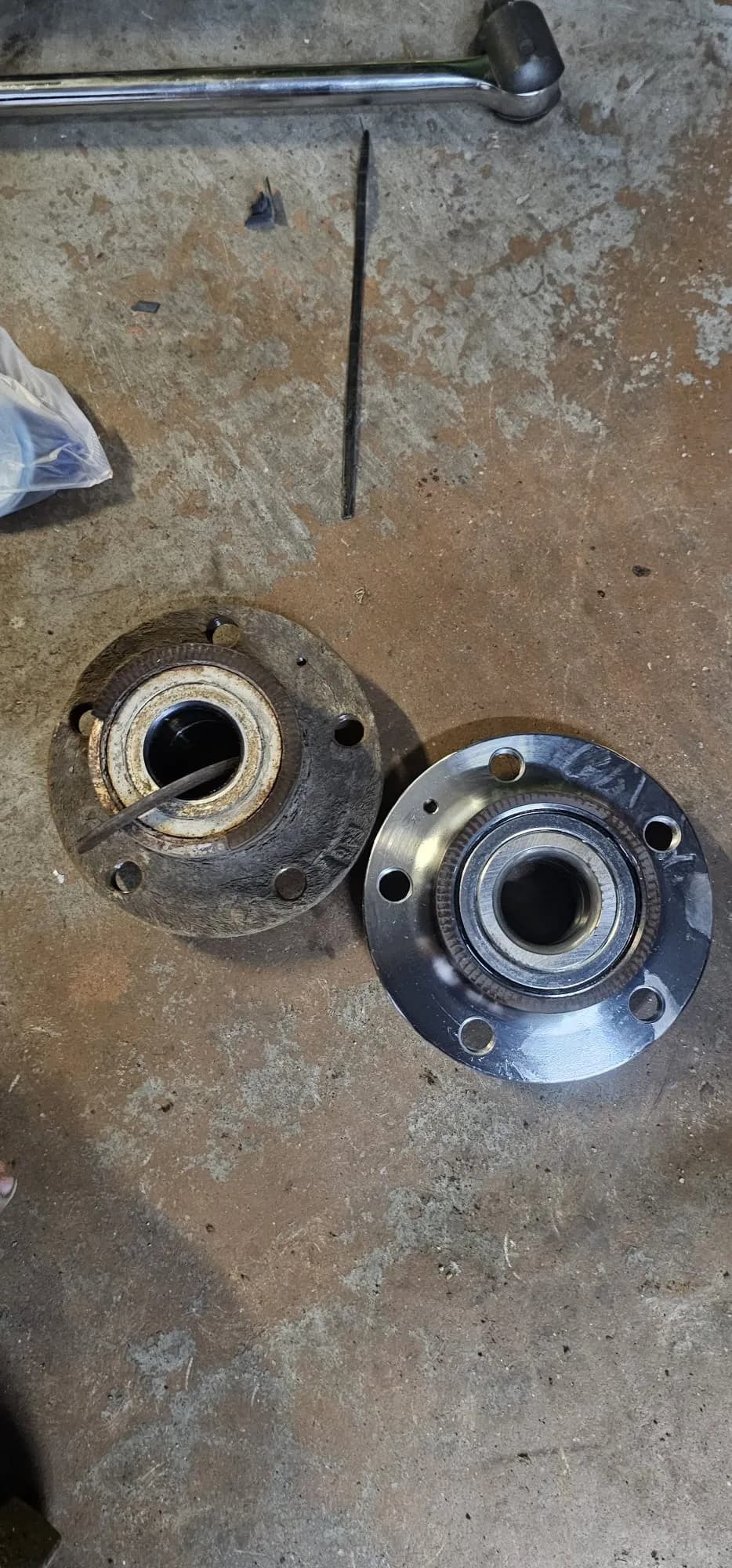
- wheel bearing replacement
- tyre condition check
- sliding-door diagnostics
- electronic assistant diagnostics
- inspection after an underbody impact
- MOT preparation
- ID. Buzz pre-purchase inspection
- control unit programming
- scheduled maintenance
Volkswagen ID. Buzz pre-purchase inspection
A used ID. Buzz can be an attractive option for a family or a business, but the high cost of the battery and electronics makes a pre-purchase inspection especially useful.
On ID. Buzz Cargo, the effects of commercial use and constant cargo transport should also be assessed. On GTX, both electric motors and the electric 4MOTION all-wheel drive are checked.
We recommend checking:
- high-voltage battery
- faults in all control units
- AC charging operation
- DC charging
- 12V battery
- electric drive
- brakes
- suspension
- wheel bearings
- tyres
- climate system
- sliding doors
- cameras and assistants
- underbody and battery housing
- service history
- computer diagnostics
Common Volkswagen ID. Buzz fault signs
Book diagnostics if:
- the car will not charge
- charging is regularly interrupted
- the charging cable will not disconnect
- a high-voltage system fault appears
- range has dropped noticeably
- the car will not go into D or R
- power is limited
- many electronic faults appear at once
- the 12V battery discharges quickly
- the cabin heats poorly
- the brakes squeal
- vibration appears when braking
- the suspension knocks
- a drone appears while driving
- the electric door is unstable
- Travel Assist or Front Assist is constantly unavailable
Volkswagen ID. Buzz repair in Espoo
Need Volkswagen ID. Buzz diagnostics or service? Contact Volkkarihuolto Espoo at Ruukinmestarintie 7, 02330 Espoo.
We can check the charging system, 12-volt battery, electric drive, brakes, suspension, climate system, sliding doors, electronic assistants and other vehicle components.
When diagnosing a Volkswagen ID. Buzz it is important to consider the exact version — passenger ID. Buzz, ID. Buzz Cargo, long-wheelbase version or ID. Buzz GTX 4MOTION — because battery, drive, mass and technical configuration can differ.
FAQ
When did the Volkswagen ID. Buzz appear?
The world premiere of the production Volkswagen ID. Buzz and ID. Buzz Cargo took place on 9 March 2022.
How does the ID. Buzz differ from the Transporter?
The ID. Buzz was designed from the start as an electric car on the MEB platform. The Transporter is traditionally a commercial model with a different technical architecture. The ID. Buzz also exists as a commercial Cargo version.
Is there a seven-seat Volkswagen ID. Buzz?
Yes. Long-wheelbase versions and some ID. Buzz configurations can be offered with seven seats. For GTX, Volkswagen states five-, six- and seven-seat options.
Is there an all-wheel-drive ID. Buzz?
Yes. The Volkswagen ID. Buzz GTX has two electric motors and electric 4MOTION all-wheel drive.
What is the power of the Volkswagen ID. Buzz GTX?
Combined output of the two electric motors is 250 kW, or 340 hp.
Does the Volkswagen ID. Buzz need engine oil changes?
No. The electric motor does not have engine oil in the sense of a conventional combustion engine. The car still needs service of the brakes, suspension, cooling, climate and charging systems.
Why does the ID. Buzz charge slowly in winter?
The main reason is often the low temperature of the high-voltage battery. Power also depends on state of charge and the charging station itself.
Why will the ID. Buzz not charge?
The cause can be the charging station, cable, connector lock, 12V battery, onboard charger, software or the high-voltage system.
Why does the ID. Buzz show many faults at once?
One possible cause is low 12-volt battery voltage. Diagnostics should start with a power-supply check and reading of fault codes.
Do electric-car brakes need service?
Yes. Because of recuperation, mechanical brakes may be used less often, so pads wear slowly, but brake surfaces can corrode more.
Can the ID. Buzz battery be checked before purchase?
Yes. Stored faults and available high-voltage battery diagnostic parameters can be checked, along with charging-system operation.
How does ID. Buzz Cargo differ from a regular ID. Buzz?
Cargo is intended mainly for commercial use and has a load compartment instead of a passenger cabin. On the original version the volume was about 3.9 m³.
Detailed Services
Professional fault diagnostics for Volkswagen ID.Buzz.
Oil ChangeEngine oil and filter replacement for Volkswagen ID.Buzz.
Annual maintenanceComprehensive annual maintenance for Volkswagen ID.Buzz.
Regular MaintenanceScheduled maintenance for Volkswagen ID.Buzz according to service needs.
Engine RepairEngine diagnostics and repair for Volkswagen ID.Buzz.
Diesel Engine RepairDiesel engine service and repair for Volkswagen ID.Buzz.
Electrical RepairElectrical fault tracing and repair for Volkswagen ID.Buzz.
ECU ProgrammingControl unit programming and coding for Volkswagen ID.Buzz.
DSG RepairDSG transmission diagnostics and repair for Volkswagen ID.Buzz.
Transmission RepairTransmission diagnostics and repair for Volkswagen ID.Buzz.
Transmission Oil ChangeTransmission oil change for Volkswagen ID.Buzz.
Timing Belt ReplacementTiming belt and related component replacement for Volkswagen ID.Buzz.
Timing Chain ReplacementTiming chain, tensioner, and guide replacement for Volkswagen ID.Buzz.
Cooling System RepairCooling system service and repair for Volkswagen ID.Buzz.
AC RepairAir conditioning service and repair for Volkswagen ID.Buzz.
Engine Heater InstallationEngine heater installation and service for Volkswagen ID.Buzz.
Cabin OzonationCabin ozonation and odor removal for Volkswagen ID.Buzz.





.webp&w=3840&q=75)
.webp&w=3840&q=75)