
Audi TT — service and repair in Espoo
Audi TT is a compact sports coupe and roadster that has become one of the most recognisable Audi models. Over 25 years the model went through three generations and was built with TFSI petrol engines, TDI diesels, manual gearboxes, S tronic and quattro all-wheel drive.
The first production Audi TT appeared in 1998, and the Roadster a year later. Across three generations Audi built 662,762 TT cars. Production of the model ended in 2023, so today the Audi TT is exclusively a used-car market vehicle.
In Finland you can find all three generations: from early TT 8N cars to modern TT, TTS and TT RS models of the 8S generation. Despite its sporting character, many technical solutions in the TT are based on mass-market Volkswagen Group platforms, so quality diagnostics and correct servicing help keep the car in good condition even with high mileage.
At Volkkarihuolto Espoo we carry out diagnostics, maintenance and repair of Audi TT at Ruukinmestarintie 7, 02330 Espoo.
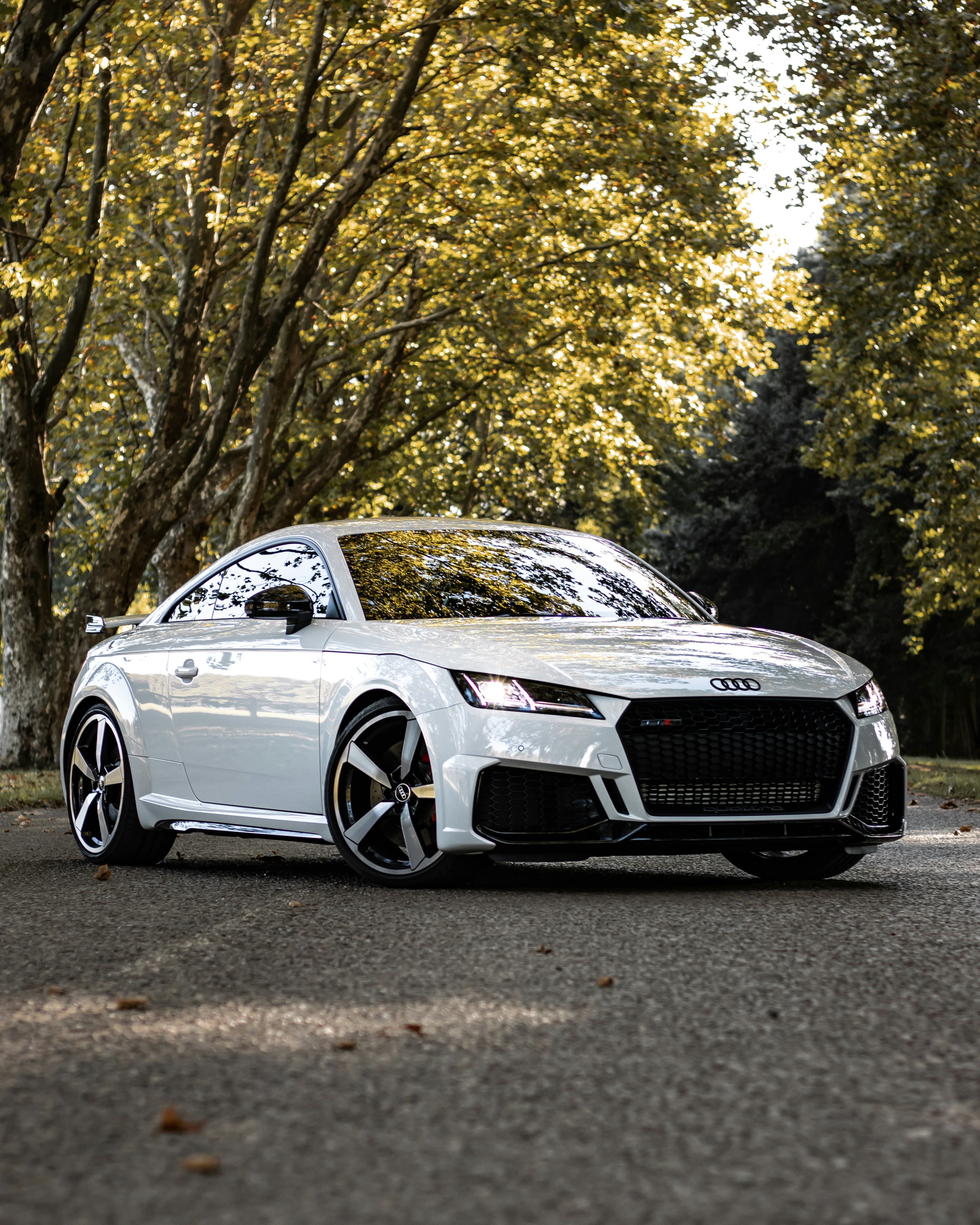
History of the Audi TT
The Audi TT concept was presented in 1995 at the Frankfurt Motor Show. Series production of the TT Coupé began in 1998 at the Audi Hungaria plant in Győr, and the TT Roadster appeared in 1999. The first TT used a transverse platform related to the Volkswagen Golf IV and Audi A3.
Over the years there were three generations. The first generation was offered with turbocharged four-cylinder engines from 150 to 225 hp, as well as a V6. The rarer TT quattro Sport developed 240 hp.
In the second generation more modern TFSI engines, the diesel TT TDI, TTS and the first TT RS appeared. The third generation continued the development of TFSI, quattro, S tronic and the five-cylinder TT RS.
- Audi TT 8N — 1998–2006
- Audi TT 8J — 2006–2014
- Audi TT 8S — 2014–2023
Audi TT 8N
The first TT can already be considered a modern classic. It appears with the 1.8 Turbo, 3.2 VR6, manual gearboxes, automatic transmissions and quattro on selected versions.
When buying and servicing a TT 8N it is especially important to consider the age of the car. Many cars have already been tuned, so factory power and the actual condition of the engine can differ greatly.
It is worth checking:
- turbocharger
- cooling system
- timing drive
- clutch
- gearbox
- all-wheel-drive system
- suspension
- brakes
- corrosion
- electrics
- computer diagnostics
Audi TT 8J
The second generation appeared in 2006. Audi used an aluminium-steel Audi Space Frame body structure and expanded the engine line-up.
In the 8J generation the 1.8 TFSI, 2.0 TFSI, 2.0 TDI, 3.2 V6, TTS and TT RS appeared. The second TT was also the first Audi sports car with a TDI diesel engine.
For cars of this age, oil consumption on certain TFSI engines, chain or belt drive depending on the engine, S tronic, the all-wheel-drive clutch, suspension and magnetic dampers on corresponding versions are especially relevant.
Audi TT 8S
The third generation appeared in 2014. The TT 8S received a more modern electronic architecture and the Audi virtual cockpit, which became one of the most noticeable interior features.
Audi also continued the development of the 2.0 TFSI, S tronic, quattro, TTS and TT RS. In 2023 production of the TT ended.
So even the newest examples are gradually moving from the category of new sports cars into the used-car category, where service history becomes especially important.
Audi TT servicing in Espoo
The Audi TT is often used differently from an ordinary family car. Some owners use it only in summer, others daily all year round.
In Finland this means different typical loads: long storage periods, short city trips, cold starts, high load in summer, road salt in winter and sporting driving.
It is worth checking regularly:
- engine oil
- spark plugs
- timing drive
- cooling system
- turbocharger
- S tronic
- clutch
- quattro
- brakes
- suspension
- battery
- air conditioning
- Audi TT scheduled maintenance
- oil and filter change
- annual service
Audi TT petrol engines
Most Audi TT cars are fitted with turbocharged petrol engines. Across generations you find the 1.8 Turbo, 1.8 TFSI, 2.0 TFSI, 3.2 VR6 and the 2.5 TFSI on the TT RS.
When servicing it is worth monitoring engine oil, spark plugs, coils, turbocharging, crankcase ventilation, the cooling system and the timing drive.
Diagnostics are needed if:
- Check Engine appears
- EPC lights up
- the engine misfires
- the car jerks
- power has dropped
- oil consumption has increased
- an unusual metallic noise appears
- petrol engine repair
- computer diagnostics
Audi TT 1.8 Turbo
The first generation is often found with the 1.8 Turbo. This engine is well known from other Volkswagen Group models and exists in many versions.
At high mileage it is worth monitoring oil condition, the turbocharger, vacuum and boost hoses, the crankcase ventilation system, coils and the cooling system.
On tuned cars it is especially important to understand which software is used and what modifications have been made.
Audi TT 1.8 and 2.0 TFSI
In the second and third generations TFSI became the main engines. It is worth checking oil consumption, the ignition system, the turbocharger, cooling, the timing drive and crankcase ventilation.
If the car loses power, a boost-pressure fault does not automatically mean a turbocharger failure. The cause can also be a leaking pipe, actuator, valve, sensor or wiring. So diagnostics are needed first.
Audi TT oil consumption
On certain generations of the 1.8 and 2.0 TFSI increased oil consumption can occur. Causes can include external leaks, crankcase ventilation, the turbocharger, the piston group or engine wear.
If consumption becomes noticeable, the cause should be identified. Constant oil top-ups do not replace diagnostics.
Audi TT timing drive
Different engines are used in the TT, so both belt and chain systems occur. One universal interval cannot be applied to every Audi TT.
For correct servicing you need to determine the VIN, engine code, year of manufacture and previous service history.
On a chain-driven engine, metallic noise at start-up, timing faults, poor starting and unstable running can be reasons for diagnostics.
Diesel Audi TT 2.0 TDI
The second generation was the first TT to receive a diesel. The Audi TT 2.0 TDI combined a sporting body with a diesel engine and quattro. Audi separately highlighted the second-generation TT as the brand’s first sports car with TDI technology.
Today such cars need attention to the DPF, EGR, turbocharger, injectors, timing drive and all-wheel drive. If the car is driven mainly on short routes, the DPF can have regeneration problems.
Audi TT DPF
The particulate filter gradually accumulates soot and ash. Before cleaning it is worth checking soot quantity, ash quantity, differential pressure, temperature sensors, EGR and engine operation.
Problems may be indicated by:
- too frequent regenerations
- elevated idle speed
- fans after shut-down
- increased consumption
- DPF fault
- loss of power
- DPF diagnostics
Audi TT EGR
On the diesel TT the EGR system can become contaminated. An EGR fault can increase soot quantity and speed up DPF filling.
Possible symptoms:
- Check Engine
- loss of power
- uneven running
- frequent regenerations
- limp mode
- EGR diagnostics
Audi TT S tronic
On the second and third generations S tronic is widely used. The specific gearbox depends on the engine and car version. The service schedule must be determined for the concrete gearbox.
It is worth seeking diagnostics if the car jerks on take-off, D or R engages with a delay, vibration appears, shifts happen with jolts or a transmission fault appears.
The cause can be clutches, the mechatronic unit, oil, adaptations or the mechanical part.
Manual gearbox and clutch
The Audi TT is often found with a manual gearbox, especially the first and second generations. On corresponding engines the dual-mass flywheel should also be considered.
Sporting use and power increased after tuning significantly accelerate clutch wear. Clutch wear can show as:
- slipping
- high biting point
- vibration
- difficult gear engagement
- manual gearbox diagnostics
Audi TT quattro
Quattro is available on different TT generations. However, the TT uses a transverse engine layout, so its all-wheel-drive system differs from classic quattro on the Audi A4, A6 or A8.
The TT uses an electronically controlled multi-plate clutch that transfers torque to the rear axle. In everyday speech such systems are often called Haldex, because different TT generations did use clutches of this architecture.
When servicing it is important to consider the specific generation of the system.
Audi TT Haldex / quattro service
The all-wheel-drive system needs its own servicing. It is worth checking fluid condition, the pump, system contamination, electronic control and all-wheel-drive faults.
For all-wheel drive it is important to use four tyres of the same size and similar wear. Signs of problems:
- rear wheels do not engage
- the car mainly wheelslips on the front wheels
- a quattro fault appears
- jolts or vibration occur
- computer diagnostics
- transmission oil change
Audi TT turbocharger
Most popular TT models are turbocharged. Possible problems can be indicated by loss of power, whistling, smoke, increased oil consumption or a boost-pressure fault.
But you should not replace the turbocharger based only on a boost fault. First check pipe sealing, the actuator, valves, vacuum, sensors and actual pressure.
Audi TT cooling system
Sporting use places extra load on cooling. If the level gradually drops, the problem must be found. Cooling on tuned cars deserves especially close attention.
Causes of coolant loss can be the water pump, thermostat, thermostat housing, hoses, radiator or heat exchanger.
Audi TT suspension
The TT has more sporting suspension settings than a regular A3. Over time bushes, ball joints, anti-roll bar links, dampers, top mounts and wheel bearings may need attention.
Before wheel alignment, play must first be ruled out. It is worth seeking diagnostics if:
- knocking appears
- the car has become unstable
- the steering pulls
- tyres wear unevenly
- squeaking appears
- computer diagnostics
Audi magnetic ride
Some TTS and TT RS models, as well as selected TT equipment levels, can be fitted with Audi magnetic ride. Audi notes this technology as one of the innovations that developed alongside the TT. In such dampers the characteristics change electronically.
Replacing a conventional damper and magnetic ride are different jobs in cost and construction. If a suspension fault appears, the dampers, wiring, connectors, sensors and control unit must be checked.
Wheel bearings
A worn bearing usually starts to hum as speed increases. On quattro a similar noise can come from tyres, the rear differential or all-wheel-drive components.
Before replacement the exact source must be identified.
Audi TT brakes
A sports car places higher demands on the brakes. In Finland corrosion from road salt should also be considered. On TTS and TT RS the brakes are larger and more expensive, so a check before purchase is especially useful.
A check is needed if:
- vibration appears
- squeaking or a metallic sound is heard
- the car pulls to one side
- one wheel gets very hot
- the pedal feel has changed
Audi TT battery
Many TT cars are used seasonally. If the car stands for several months, the battery can gradually discharge. If the TT is stored in winter, battery care during storage should be considered.
A weak battery can cause poor starting, numerous faults, central locking problems, multimedia glitches and unavailable Start-Stop on newer cars.
Audi Virtual Cockpit
The third-generation TT received an unusual interior without a traditional central multimedia screen. Most information is shown on the Audi virtual cockpit in front of the driver. Audi associates Virtual Cockpit with technological innovations closely linked to TT history.
If the display reboots, does not switch on, shows faults or loses communication with other units, it is worth checking power supply, wiring and diagnostic faults before replacing an expensive panel.
Audi TT air conditioning
Even on a small two-seater the climate system matters all year. If the system regularly needs recharging, the leak must be found.
If the air conditioning does not cool, refrigerant quantity, leaks, the compressor, condenser, sensors and fans are checked.
Audi TT Roadster
The Roadster needs extra attention to the folding roof. It is worth checking the electric drive, the hydraulic or electromechanical part depending on generation, position sensors, locks, seals and drains.
If the roof stops during opening or closing, do not continue forcing the mechanism. The cause must be identified first.
Water in the Audi TT cabin
On the coupe and especially the Roadster it is worth watching seals, doors, drains, the roof and the rear of the cabin. Water ingress is dangerous not only for the trim.
Moisture can cause connector corrosion, electrical faults and control-unit damage.
Audi TTS
TTS is a more powerful TT version. In the second generation the TTS developed 200 kW / 272 hp. The TTS has a more powerful TFSI, quattro, sporting suspension and high-performance brakes.
Before purchase it is especially worth checking the turbocharger, S tronic or clutch, all-wheel drive, brakes, cooling and suspension. It is also important to find out whether the car has been chip-tuned.
Audi TT RS
The TT RS is the peak of the family. In the second and third generations the model uses the characteristic five-cylinder engine.
The third-generation TT RS received a 2.5 TFSI with 294 kW / 400 hp and 480 Nm, a seven-speed S tronic and quattro with an electro-hydraulic multi-plate clutch.
For the TT RS it is especially important to monitor the 2.5 TFSI, turbocharger, S tronic, quattro, cooling system, brakes and suspension. Component costs are significantly higher than on a regular TT, so diagnostics before purchase are especially useful.
Audi TT tuning
The TT is one of those models that are often modified. You can find Stage 1, Stage 2, enlarged turbochargers, modified intake, altered exhaust, reprogrammed S tronic and lowered suspension.
Tuning itself does not mean a bad car. But as power increases, load rises on the engine, turbocharger, clutches, gearbox, all-wheel drive and cooling. Before buying a tuned TT it is useful to understand what changes were made and by whom.
Audi TT pre-purchase inspection
Before buying a used TT it is worth checking cold start, electronic control-unit faults, the engine, oil consumption, turbocharger, timing drive, cooling system, manual gearbox or S tronic, clutch, quattro, fluid and clutch-pump condition, suspension, magnetic ride, wheel bearings, brakes, battery and air conditioning.
For the Roadster the roof, drive mechanism, seals and water ingress are additionally checked. For TTS and TT RS it is especially important to establish any tuning and assess transmission condition.
Which Audi TT services we provide
At Volkkarihuolto Espoo you can come to us for:
- Audi TT scheduled maintenance
- oil and filter change
- computer diagnostics
- TFSI service
- TDI service
- turbocharging diagnostics
- timing drive check
- DPF diagnostics
- EGR check
- S tronic service
- clutch repair
- quattro diagnostics
- all-wheel-drive clutch service
- cooling system diagnostics
- brake repair
- suspension diagnostics
- Audi magnetic ride diagnostics
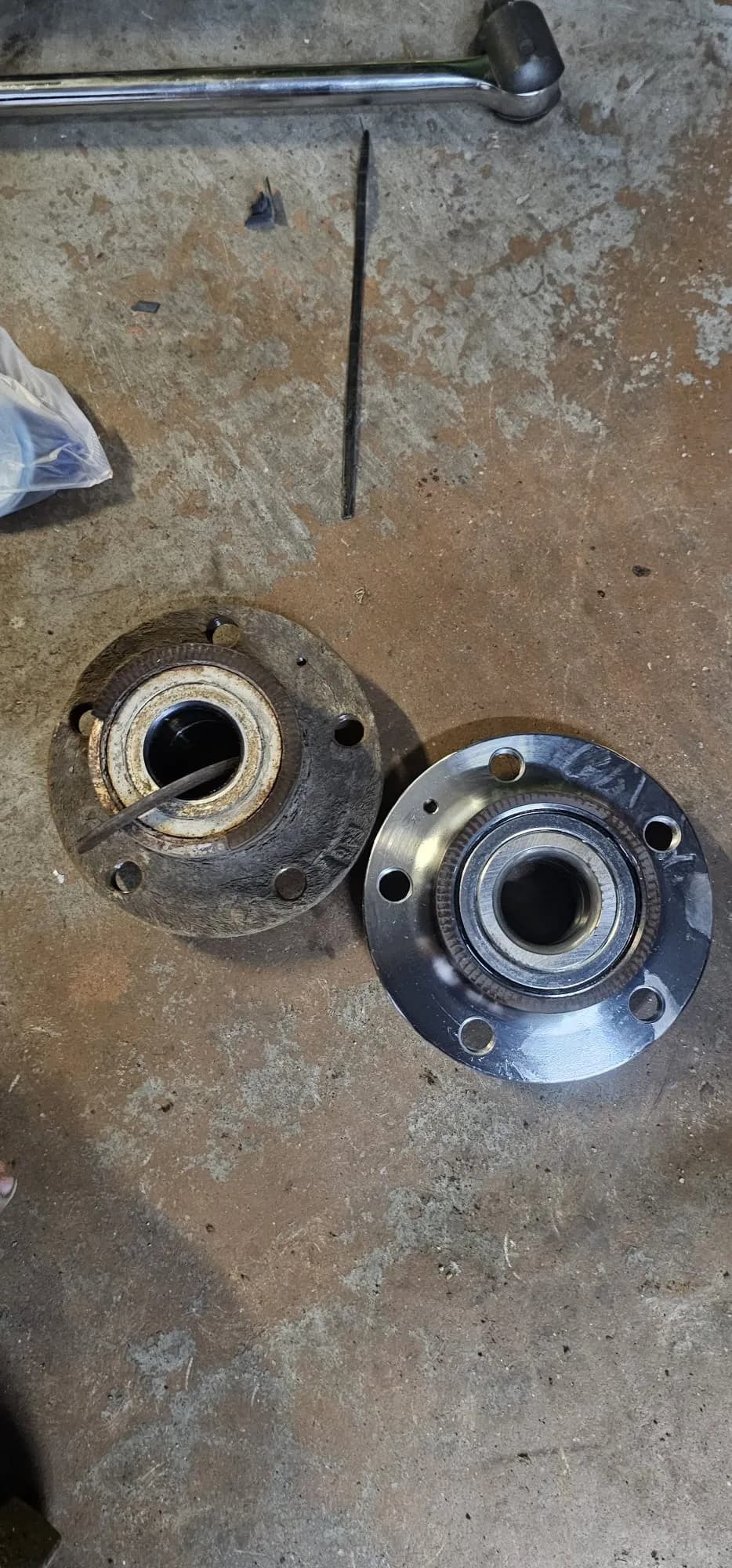
- wheel bearing replacement
- battery check
- air conditioning service
- electronics diagnostics
- Roadster roof mechanism diagnostics
- preparation for inspection
- Audi TT pre-purchase inspection
Common Audi TT fault symptoms
It is worth booking diagnostics if:
- Check Engine or EPC is on
- the engine misfires
- the car has lost power
- oil consumption has risen
- a metallic noise appears after start-up
- coolant level is dropping
- the turbocharger behaves unusually
- S tronic jerks
- D or R engages with a delay
- the clutch slips
- quattro no longer engages the rear axle normally
- vibration appears
- the suspension knocks
- a hum appears
- magnetic ride reports a fault
- the brakes vibrate
- Virtual Cockpit reboots
- the Roadster roof does not open or close
Audi TT repair in Espoo
Need repair or maintenance of an Audi TT? Contact Volkkarihuolto Espoo at Ruukinmestarintie 7, 02330 Espoo.
We can diagnose petrol TFSI and diesel TDI engines, turbocharging, S tronic, the clutch, quattro, the all-wheel-drive system, DPF, EGR, the timing drive, brakes, suspension, magnetic ride, cooling and electronic systems.
When servicing an Audi TT it is especially important to consider the generation and specific equipment. A TT 8N 1.8 Turbo quattro, TT 8J 2.0 TDI, TT 8S TFSI and TT RS with the five-cylinder 2.5 TFSI have different designs and need different approaches to diagnostics and preventive maintenance.
FAQ
When did the Audi TT appear?
The production Audi TT Coupé appeared in 1998, and the Roadster in 1999. The concept was shown as early as 1995.
How many Audi TT generations are there?
There are three generations: 8N, 8J and 8S. Production of the third generation ended in 2023.
Is the Audi TT still in production?
No. Production of the TT ended in 2023. Over 25 years Audi built 662,762 cars across three generations.
Which engines were fitted to the Audi TT?
Over the model’s history the 1.8 Turbo, 1.8 and 2.0 TFSI, 2.0 TDI, V6 and the five-cylinder 2.5 TFSI on the TT RS were used.
Is there a diesel Audi TT?
Yes. The second generation was built with the 2.0 TDI and became the first Audi sports car with TDI diesel technology.
Is there an Audi TT with quattro?
Yes. Quattro was offered on all generations depending on engine and version.
How does Audi TT quattro work?
Because of the transverse engine layout the TT uses an electronically controlled multi-plate clutch to engage the rear axle. This differs from classic quattro on larger Audi models with a longitudinal engine.
Does Haldex / quattro need servicing?
Yes. Depending on generation the system fluid must be serviced and the pump and clutch operation checked. The exact schedule is determined for the specific car.
Which gearbox is on the Audi TT?
Depending on generation and engine, manual gearboxes and S tronic are used.
Why does Audi TT S tronic jerk?
The cause can be clutches, the mechatronic unit, oil condition, adaptations or a mechanical fault.
What is Audi magnetic ride?
It is an electronically adjustable damper system that changes suspension stiffness. It was used on selected TT versions, including sporting variants.
How much power does the Audi TT RS have?
The third-generation TT RS uses a 2.5 TFSI with 294 kW / 400 hp and 480 Nm of torque.
Should you inspect an Audi TT before buying?
Yes. It is especially important to check the engine, turbocharger, timing drive, gearbox, quattro, suspension, brakes and tuning history. On the Roadster the roof, seals and absence of water in the cabin are additionally checked.
Detailed Services
Professional fault diagnostics for Audi TT.
Oil ChangeEngine oil and filter replacement for Audi TT.
Annual maintenanceComprehensive annual maintenance for Audi TT.
Regular MaintenanceScheduled maintenance for Audi TT according to service needs.
Engine RepairEngine diagnostics and repair for Audi TT.
Diesel Engine RepairDiesel engine service and repair for Audi TT.
Electrical RepairElectrical fault tracing and repair for Audi TT.
ECU ProgrammingControl unit programming and coding for Audi TT.
DSG RepairDSG transmission diagnostics and repair for Audi TT.
Transmission RepairTransmission diagnostics and repair for Audi TT.
Transmission Oil ChangeTransmission oil change for Audi TT.
Timing Belt ReplacementTiming belt and related component replacement for Audi TT.
Timing Chain ReplacementTiming chain, tensioner, and guide replacement for Audi TT.
Cooling System RepairCooling system service and repair for Audi TT.
AC RepairAir conditioning service and repair for Audi TT.
Engine Heater InstallationEngine heater installation and service for Audi TT.
Cabin OzonationCabin ozonation and odor removal for Audi TT.











.webp&w=3840&q=75)
.webp&w=3840&q=75)