
Audi Q8 — service and repair in Espoo
Audi Q8 is a large premium SUV coupe that combines the dimensions and technical architecture of the Q7 with a more sporting body and a five-seat cabin. The model is fitted with powerful TFSI petrol and TDI diesel engines, an eight-speed Tiptronic, permanent quattro all-wheel drive, a 48-volt mild-hybrid system and, on selected versions, a plug-in hybrid TFSI e powertrain.
For Finland the Q8 is especially interesting thanks to all-wheel drive, generous ground clearance and a high level of winter comfort. But it is a heavy and technically complex car, so the condition of the transmission, suspension, brakes, cooling systems and electronics is especially important.
At Volkkarihuolto Espoo we carry out diagnostics, maintenance and repair of Audi Q8 at Ruukinmestarintie 7, 02330 Espoo.
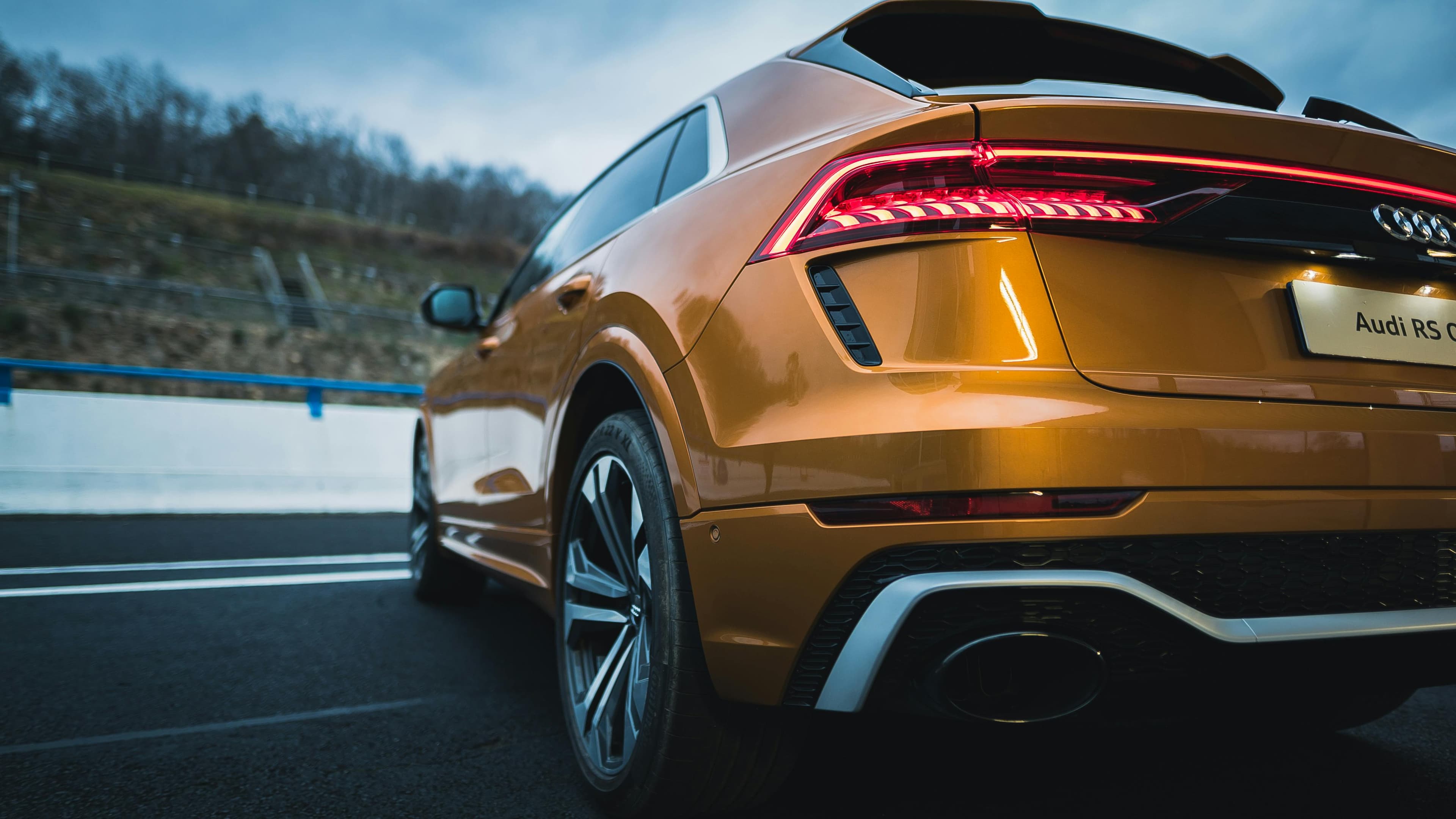
History of the Audi Q8
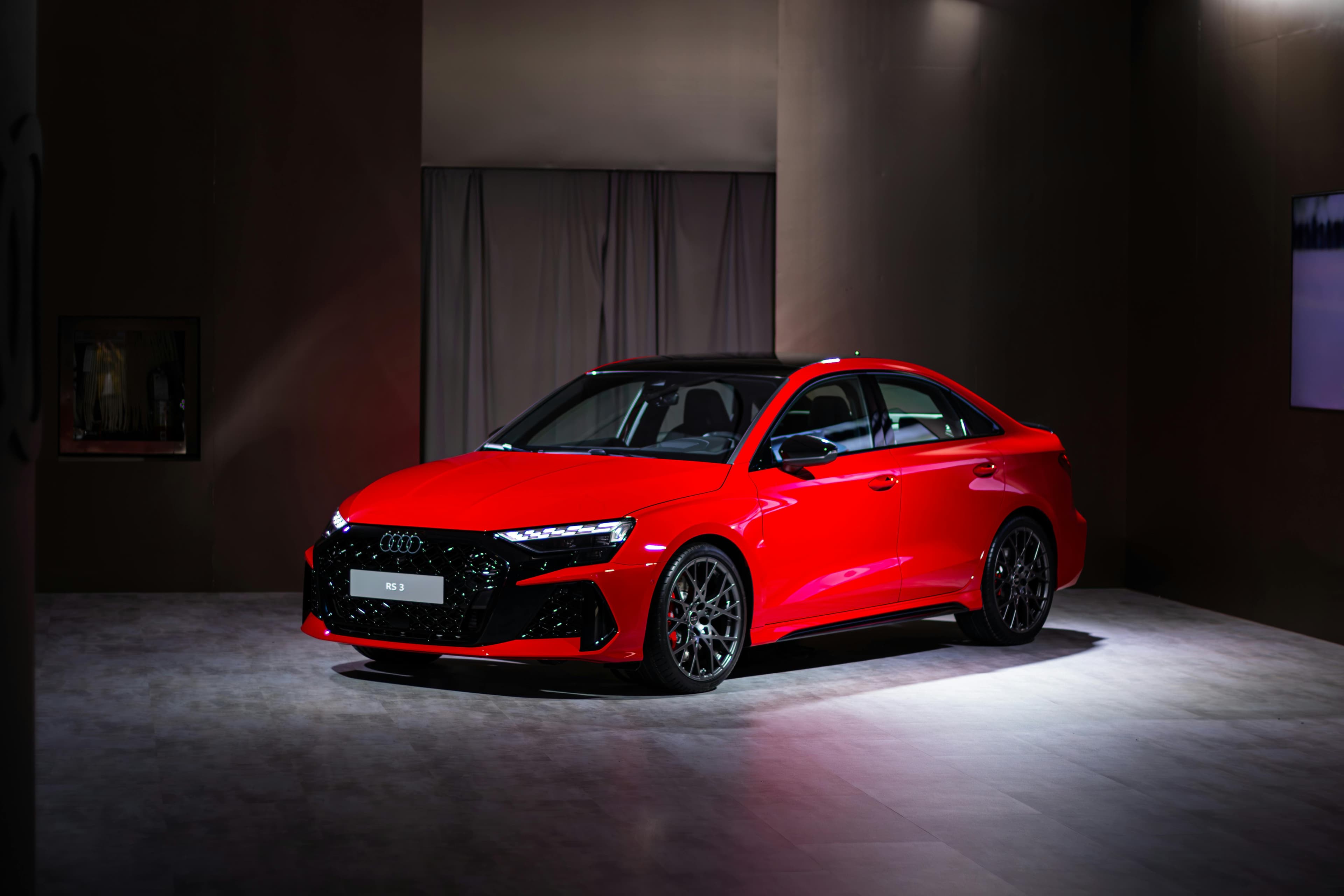
Audi presented the production Q8 in 2018. The model became the new flagship of the brand’s SUV line-up and was created as a more sporting alternative to the Q7.
At launch the Q8 was about 4.99 m long, about 2 m wide and had a wheelbase of almost 3 m. Despite a lower roof line than the Q7, the car retained a spacious five-seat cabin and a boot of up to 1755 litres with the rear seats folded.
The first European version was the 3.0 TDI with 210 kW, or 286 hp. From the start the car already received permanent quattro and a 48-volt mild-hybrid system.
In 2023 Audi thoroughly updated the Q8. The facelift received revised design, HD Matrix LED, digital light signatures and OLED rear lights on corresponding equipment levels. The Q8 has been built in Bratislava at the Volkswagen Slovakia plant since 2018.
Audi Q8 and Q8 e-tron are different cars
The name can cause confusion. Audi Q8 is a large SUV with petrol, diesel and plug-in hybrid powertrains.
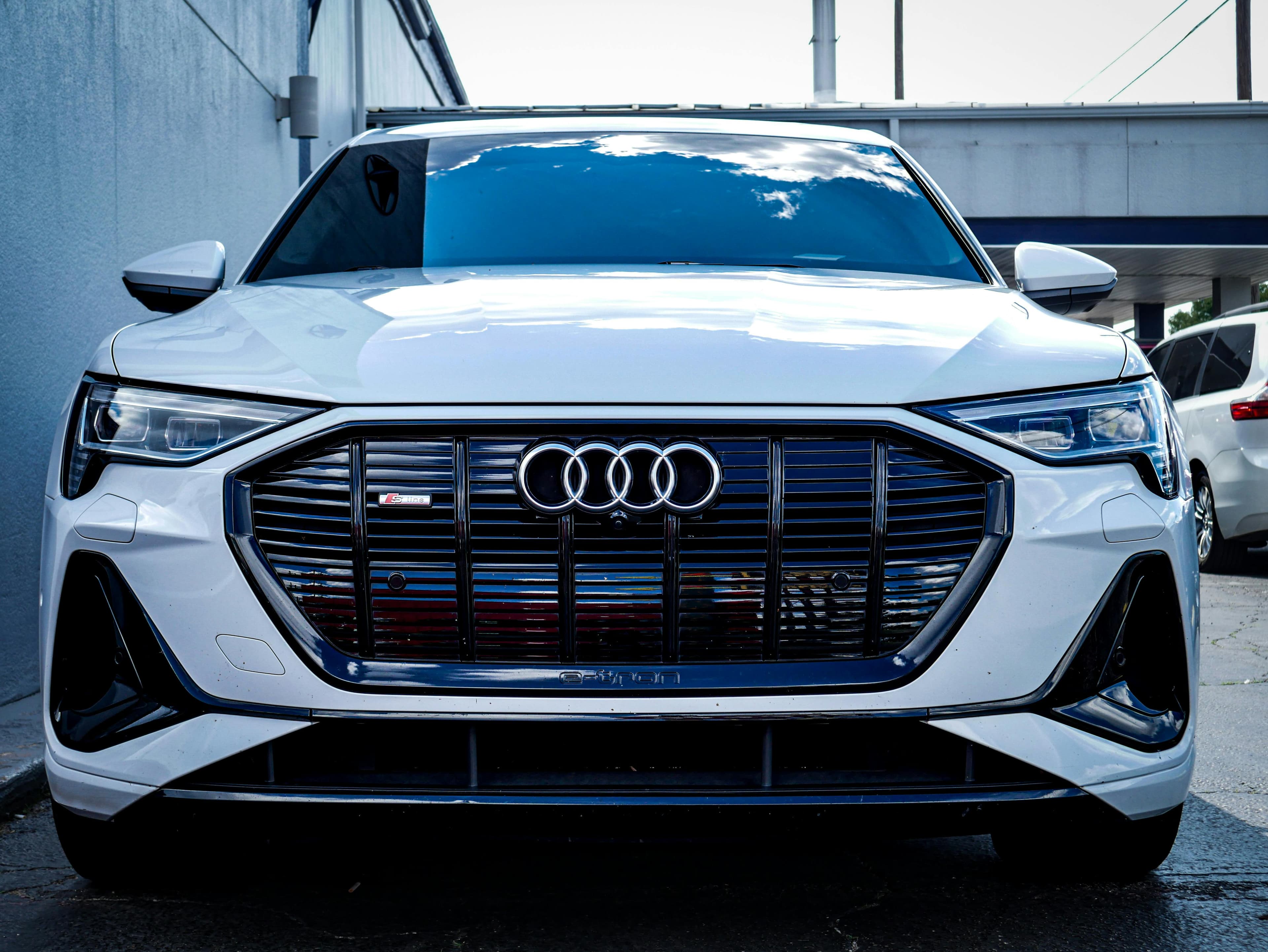
Audi Q8 e-tron is a separate fully electric car that was originally called Audi e-tron and after an update received the name Q8 e-tron.
Q8 e-tron is not an electric version of the regular Q8 in a direct technical sense. It has a different platform, high-voltage architecture and powertrain design. Audi renamed the updated e-tron to Q8 e-tron in 2022. So diagnostics and servicing of these models differ substantially.
Audi Q8 servicing in Espoo
The Q8 has high mass and powerful drivetrains. The car is often used for long trips, in winter, with large wheels, with a trailer and under high load.
On such a car prevention often costs far less than repair after a serious fault. It is worth checking regularly:
- engine oil and filters
- cooling system
- timing chain drive
- Tiptronic
- quattro
- propshaft and differentials
- DPF
- EGR
- AdBlue
- 48V system
- brakes
- suspension
- air suspension
- batteries
- air conditioning
- electronic assistants
- Audi Q8 scheduled maintenance
- oil and filter change
- annual service
Audi Q8 TFSI petrol engines
The Q8 is fitted with powerful turbocharged petrol engines. The most typical is the 3.0 TFSI V6, while the sporting SQ8 and RS Q8 use more powerful drivetrains.
When servicing TFSI it is worth monitoring engine oil, spark plugs, coils, turbocharging, the cooling system, crankcase ventilation and the timing chain drive.
Diagnostics are needed if:
- Check Engine lights up
- EPC appears
- the engine misfires
- power has dropped
- oil consumption has increased
- a metallic noise appears after start-up
- coolant level is dropping
- petrol engine repair
- computer diagnostics
Audi Q8 55 TFSI
The 55 TFSI version uses the 3.0 V6 TFSI. This engine is combined with an eight-speed Tiptronic, quattro and a 48-volt mild-hybrid system.
High power and vehicle mass create significant thermal load, so it is especially important to monitor cooling, oil condition, turbocharging, the gearbox and engine mounts.
If the car starts to jerk or has lost power, the cause must first be diagnosed from actual parameters.
Diesel Audi Q8 50 TDI
One of the most common Q8 versions in Europe is the 50 TDI quattro. Current Audi technical data list a 3.0 V6 TDI, 210 kW / 286 hp, 600 Nm, eight-speed Tiptronic, permanent quattro, 48V mild-hybrid, DPF, EGR and SCR.
Such an engine suits a heavy SUV and long trips well, but a modern diesel exhaust aftertreatment system needs correct operation.
Audi Q8 DPF
The diesel Q8 has a particulate filter. The DPF traps soot, which is periodically burned during regeneration. For a car driven regularly on the motorway the conditions are usually good. If the Q8 is mainly used for short city trips, regeneration may be interrupted.
Forced regeneration is not always suitable. If the filter is filled with ash or the engine produces too much soot, the root cause must be resolved.
Possible symptoms:
- raised idle speed
- fans continue running after shutdown
- fuel consumption has risen
- regenerations have become too frequent
- a DPF indicator lights up
- power has dropped
- DPF diagnostics
Audi Q8 EGR
The EGR system is used to reduce NOx emissions. On the diesel Q8 it works together with DPF and SCR. For the Q8 50 TDI Audi explicitly lists EGR, DPF and SCR as part of the exhaust aftertreatment system.
If coolant level is also dropping, it is worth additionally checking the EGR cooler.
Possible fault symptoms:
- Check Engine
- loss of power
- unstable running
- frequent DPF regenerations
- limp mode
- EGR diagnostics
Audi Q8 AdBlue and SCR
Diesel versions use SCR and AdBlue. The cause of a fault may be low fluid level, a NOx sensor, pump, injector, heater, level sensor or wiring.
If the car shows a countdown to a no-start condition, the problem is best diagnosed early. Simply topping up the fluid will not fix a pump, sensor or electronics fault.
Audi Q8 timing chain drive
Common Q8 V6 engines use a chain drive. The design is fairly complex, so the source of the problem must be identified accurately before repair.
A brief noise does not always mean a full timing chain kit replacement is required. First it is worth checking faults and synchronisation parameters.
Reasons for a check include:
- metallic noise after a cold start
- synchronisation faults
- Check Engine
- difficult starting
- unstable running
- timing chain replacement
- computer diagnostics
Audi Q8 Tiptronic
The main automatic gearbox of the Audi Q8 is an eight-speed Tiptronic with torque converter. For example, the Q8 50 TDI has exactly an eight-speed Tiptronic with a lock-up torque converter.
The cause may not only be inside the gearbox. Mounts, propshaft, driveshafts, engine and electronic control are also checked. On a high-mileage car the transmission fluid service history is very important.
Diagnostics are worth seeking if:
- D or R engages with a delay
- shocks appear
- the car vibrates
- the gearbox slips
- shifts have become unusually harsh
- a transmission fault appears
- transmission oil change
- computer diagnostics
Audi Q8 quattro
The Q8 uses permanent quattro all-wheel drive. For example, current technical data for the Q8 50 TDI and Q8 TFSI e list permanent all-wheel drive with a self-locking centre differential.
This matters: the Q8 system cannot automatically be compared with quattro on compact Audi Q2 or Q3 models, which use a different architecture.
Diagnostics are worth seeking if:
- a drone appears
- vibration appears
- shocks appear in the driveline
- oil leaks are found
- the car behaves unusually under acceleration
- computer diagnostics
- driveline oil change
Propshaft and differentials
Permanent all-wheel drive includes the propshaft, centre differential, rear differential and driveshafts.
A similar drone can also come from large tyres or a wheel bearing, so it is important to localise the source first.
Possible fault signs:
- vibration
- metallic knock
- drone
- a knock when moving from braking to acceleration
- oil leak
- computer diagnostics
48-volt mild-hybrid system
The V6 Q8 uses a 48-volt electrical architecture. On the Q8 50 TDI Audi technical data list both 12V and 48V on-board systems.
MHEV helps reduce fuel consumption and enables extended Start-Stop and recuperation functions. But it also means additional components: a 48V battery, starter-generator, voltage converter and control electronics.
If a large number of electrical faults appear on the car, it is necessary to check more than just the ordinary 12V battery.
Audi Q8 TFSI e
The Q8 is also built as a plug-in hybrid. The current Q8 TFSI e combines a 3.0 V6 TFSI, an electric motor, a high-voltage battery, an eight-speed Tiptronic and permanent quattro.
Audi technical data for the 290 kW version list: 3.0 TFSI — 250 kW / 340 hp; system output — 290 kW / 394 hp; battery — 25.9 kWh gross and 22.0 kWh net capacity; AC charging up to 7.4 kW.
So TFSI e is technically substantially more complex than a regular 55 TFSI.
If the Audi Q8 TFSI e will not charge
A charging failure does not automatically mean a high-voltage battery fault. It is worth checking the charge point, cable, charge port, connector lock, 12V battery, on-board charger, high-voltage faults and the battery cooling system.
Audi states a maximum AC charging power of 7.4 kW for the Q8 TFSI e and a full charge time of about 3 hours 45 minutes with a suitable connection. Work directly on high-voltage components requires appropriate qualification.
Audi Q8 cooling system
The Q8 has a complex thermal management system. On regular TFSI and TDI it serves the engine, gearbox and related components. On TFSI e, high-voltage system circuits are added.
If fluid has to be topped up regularly, the cause must be found. Coolant level drop may be caused by:
- pump
- thermostat
- valves
- radiator
- EGR cooler
- heat exchangers
- hoses
- coolant leak diagnosis
Audi Q8 suspension
The Q8 uses a complex five-link suspension front and rear. Audi also lists this layout for current 50 TDI and TFSI e models.
High vehicle mass and large wheels place heavy load on control arms, bushes, ball joints, dampers, anti-roll bar links and wheel bearings.
Diagnostics are needed if:
- the suspension knocks
- a squeak appears
- the car pulls to one side
- stability has worsened
- tyres wear unevenly
Audi Q8 adaptive air suspension
Adaptive air suspension is available for the Q8. It raises comfort and allows ground clearance to change with the driving mode. The system includes air struts, a compressor, a valve block, air lines and ride-height sensors.
If the compressor constantly compensates for a leak, it can also fail over time. So the cause of pressure loss must be found first.
Fault signs:
- the Q8 sits lower after parking
- one side is lower
- the compressor runs too often
- a suspension fault appears
- the car does not change height
- computer diagnostics
Four-wheel steering chassis
The Q8 may use a rear-wheel steering system. At low speed the rear wheels help reduce the turning circle, and at high speed they improve stability.
After suspension, steering or rear axle repair it is necessary to consider geometry and possible system calibration.
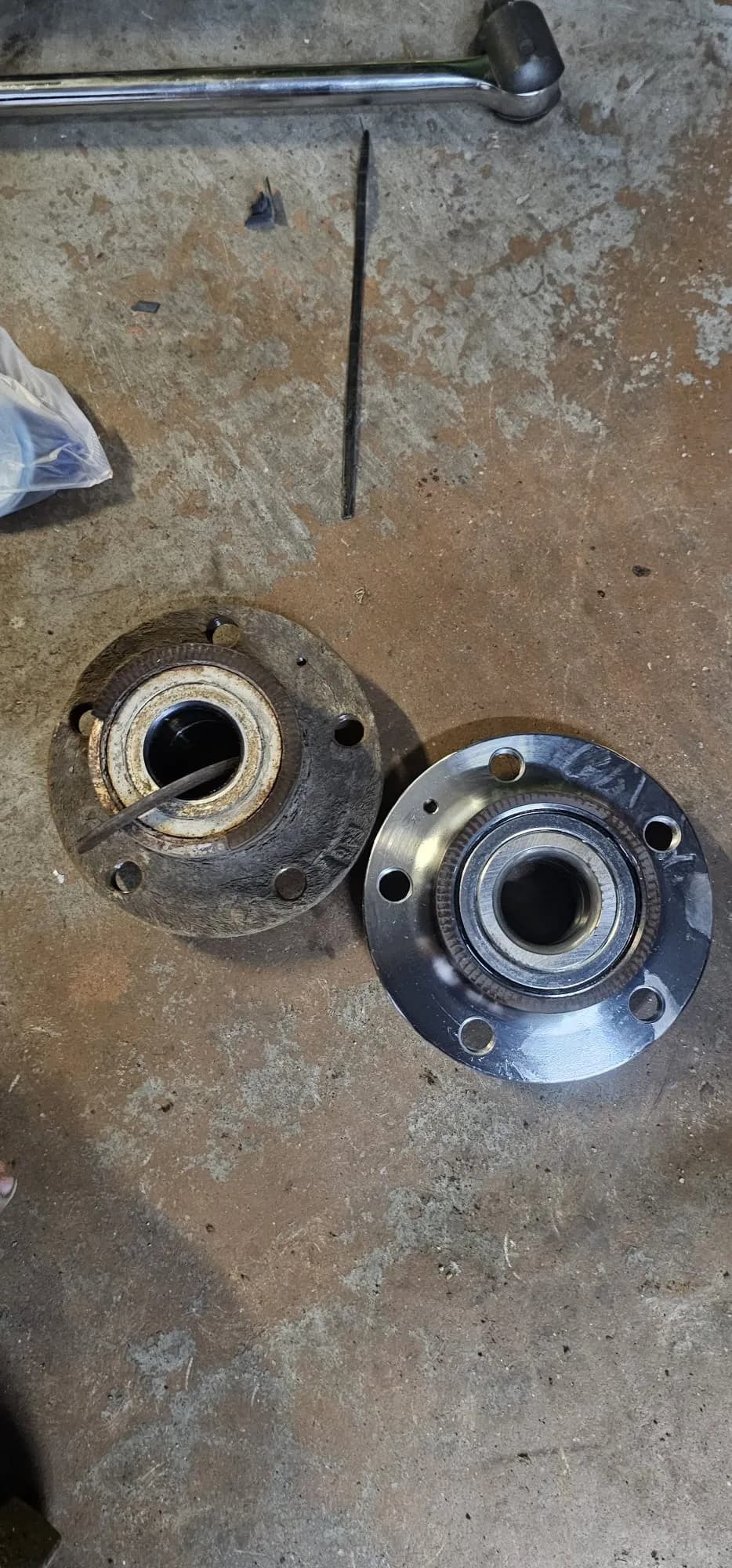
Wheel bearings
High mass and wide wheels place heavy load on wheel bearings. Wear usually shows as a drone that increases with speed.
On quattro a similar noise can also come from tyres, the propshaft or a differential. So a bearing should not be replaced on sound character alone.
Audi Q8 braking system
The Q8 is a heavy and powerful car, so the brakes matter a great deal. Even a standard Q8 50 TDI uses large brake discs: official technical data list 375 mm at the front and 350 mm at the rear.
In Finland salt also accelerates corrosion of discs and mechanisms. Diagnostics are worth seeking if:
- vibration appears
- the brakes squeal
- the car pulls
- a wheel overheats
- braking distance has increased
- the electronic parking brake reports a fault
Audi Q8 wheels and tyres
The Audi Q8 is often fitted with large 20–22-inch wheels and even larger ones on sporting versions. A large wheel is more expensive, heavier, loads the suspension more and is more sensitive to damage.
For quattro it is especially important to fit four tyres of matching size with similar wear. A large difference in rolling circumference creates unwanted load on the transmission.
Audi Q8 batteries
The Q8 has a large number of electronic control units and power consumers. A weak 12V battery can cause slow starting, unavailable Start-Stop, assistant faults, suspension faults, MMI issues and numerous warnings.
On mild-hybrid versions a 48V system is also present. So with many random faults it is important to check the vehicle power supply first.
MMI and digital interior
The Q8 received a nearly fully digital interior with several displays. Most vehicle functions are controlled via MMI touch response.
Before replacing the multimedia unit it is worth checking power supply, faults and software.
Possible problems:
- the screen stays black
- the system reboots
- sound disappears
- Bluetooth is unstable
- the camera does not switch on
- the climate system shows a fault
- computer diagnostics
- electrical repair
Cameras, radars and assistants
The Audi Q8 can be fitted with a large number of driver assistance systems: adaptive cruise control, Audi pre sense, Lane Assist, blind-spot monitoring, 360° cameras and parking assistants.
In winter sensors can be temporarily blocked by snow and ice. After windscreen replacement, body repair, suspension repair or a geometry change, camera and radar calibration may be required.
Audi Q8 headlights
After the 2023 facelift the Q8 received more complex lighting technology. Audi offers HD Matrix LED with additional laser high beam and digital daytime light signatures, and Digital OLED rear lights are available at the rear.
If a lighting fault appears, the problem may not only be in the headlamp itself. Control units, power supply, wiring, ride-height sensors and communication between units are checked.
The cost of a complete headlamp is high, so diagnostics are especially important.
Air conditioning and climate
The Q8 has a complex multi-zone climate system. On TFSI e the climate system also interacts with the high-voltage system.
Possible fault causes: refrigerant leak, compressor, condenser, pressure sensor, flap actuators or valves.
A check is needed if:
- one side of the cabin does not cool
- the air conditioning works weakly
- clicks are heard from the dash
- the rear climate zone works incorrectly
- the windows fog heavily
- air conditioning repair and service
Powered tailgate
The large rear door of the Q8 is fitted with a power drive. Over time problems can appear with drives, the latch, sensors, buttons, wiring and the hands-free opening system.
If the door stops or reverses, both the mechanics and the electronics must be checked.
Panoramic roof and water ingress
On cars with a panoramic roof it is important to monitor the drains. If water enters the car, problems can appear with trim, connectors and electronic units.
If moisture appears after heavy rain or a wash, the source should be found before the electronics are damaged.
Audi SQ8
The SQ8 is a higher-performance version of the Q8. It differs with a powerful engine, a reinforced transmission, more capable brakes, a sporting chassis and quattro.
If the car has been software-modified, the load on the transmission may have been significantly higher than factory. When buying an SQ8 it is especially worth checking:
- turbochargers
- cooling system
- Tiptronic
- all-wheel drive
- suspension
- active chassis systems
- brakes
- presence of tuning
- computer diagnostics
Audi RS Q8
The RS Q8 is the most powerful version of the family. It uses a 4.0 TFSI V8, Tiptronic and quattro. For the RS Q8 Audi lists an eight-speed Tiptronic; the car also uses large 22-inch wheels already in the base technical configuration of the relevant model year.
For such a car the service history is especially important. The cost of buying the wrong RS Q8 can be very high. It is worth checking:
- engine
- turbos
- cooling
- gearbox
- quattro
- brakes
- suspension
- active anti-roll bars
- tuning
- computer diagnostics
Audi Q8 e-tron
The Q8 e-tron should be treated separately from the regular Q8. It is a fully electric car. It has no TFSI, TDI, engine oil, DPF, EGR or AdBlue.
Instead the main service areas relate to the high-voltage battery, electric motors, AC/DC charging, battery thermal management, the 12V system, brakes, suspension and electronics.
After the update the Q8 e-tron offered a range of up to 582 km for the SUV and up to 600 km for the Sportback under WLTP depending on version. It makes sense to create a separate service page for the Q8 e-tron, because search queries and technical issues differ substantially from the regular Q8.
Towing and high load
The Q8 can be used for trailer towing. The permitted trailer mass should always be checked from the registration data of the specific car.
If the car regularly tows a large mass, extra load falls on:
- Tiptronic
- engine
- cooling system
- brakes
- propshaft
- rear suspension
Body and underbody
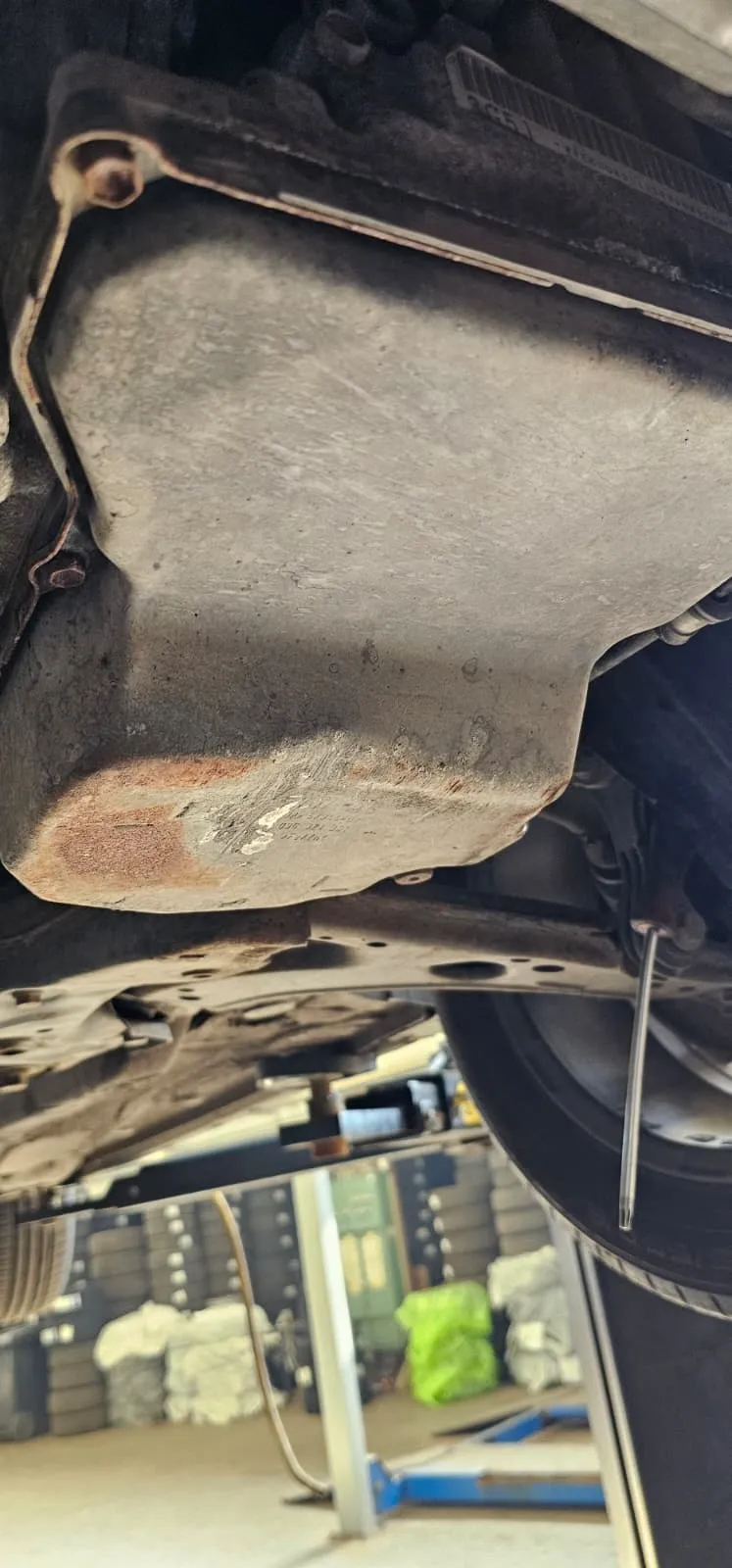
Despite good factory protection, Finnish conditions gradually affect the underside of the car.
It is especially worth checking the car carefully after an accident or previous body repair. After several winters it is worth inspecting:
- subframes
- suspension components
- brake lines
- mounts
- underbody protection
- exhaust system
Pre-purchase inspection of an Audi Q8
A used Q8 should be checked comprehensively. For TFSI e the high-voltage battery, charge port, charger, hybrid mode and high-voltage faults are also checked. For SQ8 and RS Q8 it is especially useful to determine whether previous tuning is present.
It is recommended to check:
- cold engine start
- all electronic units
- chain drive
- turbocharging
- cooling system
- DPF
- EGR
- AdBlue
- Tiptronic
- quattro
- propshaft and differentials
- 12V and 48V systems
- suspension
- air suspension
- brakes
- MMI
- lighting
- cameras and radars
- body and underbody
- computer diagnostics
Which Audi Q8 services we provide
At Volkkarihuolto Espoo you can come for:
- regular Audi Q8 maintenance
- engine oil and filter change
- computer diagnostics
- TFSI servicing
- TDI servicing
- turbocharging diagnostics
- timing chain drive inspection
- DPF diagnostics
- EGR inspection
- AdBlue diagnostics
- Tiptronic diagnostics
- quattro inspection
- propshaft and differential diagnostics
- TFSI e diagnostics
- 12V and 48V system checks
- brake repair
- suspension diagnostics
- air suspension diagnostics
- wheel bearing replacement
- coolant leak diagnosis
- air conditioning service
- MMI diagnostics
- lighting diagnostics
- camera and assistant checks
- inspection preparation
- pre-purchase Audi Q8 inspection
Common Audi Q8 fault signs
It is worth booking diagnostics if:
- Check Engine or EPC is illuminated
- the engine has lost power
- the engine misfires
- a metallic noise appears after start-up
- oil consumption has increased
- coolant level is dropping
- the diesel regenerates the DPF too often
- an EGR or AdBlue fault appears
- Tiptronic shifts with shocks
- D or R engages with a delay
- vibration appears under acceleration
- a driveline drone appears
- the air suspension drops after parking
- the compressor switches on often
- the brakes vibrate
- 12V or 48V system faults appear
- MMI reboots
- a headlamp or assistant fault appears
- the TFSI e will not charge
Audi Q8 repair in Espoo
Need repair or maintenance of an Audi Q8? Contact Volkkarihuolto Espoo at Ruukinmestarintie 7, 02330 Espoo.
We can diagnose petrol TFSI and diesel TDI engines, Tiptronic, quattro, DPF, EGR, AdBlue, turbocharging, the timing chain drive, brakes, suspension, the air system, 12V/48V electrics, cooling, MMI and electronic assistants.
For Audi Q8 TFSI e you can come for charging and related system diagnostics; whether specific work directly on high-voltage components is possible is determined with safety requirements and the necessary qualification in mind.
When servicing an Audi Q8 it is especially important to consider the specific powertrain. The Q8 50 TDI, 55 TFSI, TFSI e and RS Q8 have different engines and systems, so they require different approaches to diagnostics and preventive maintenance.
FAQ
When did the Audi Q8 appear?
The Audi Q8 appeared in 2018 and became the brand’s flagship SUV coupe. The first European version used a 3.0 TDI with 210 kW.
How many Audi Q8 generations exist?
The classic combustion-engine Q8 so far belongs to one main generation, introduced in 2018 and substantially updated in 2023.
How does the Audi Q8 differ from the Q7?
Both models are technically close, but the Q8 has a more sporting body with a sloping roof line and is designed for five passengers, while the Q7 is more oriented towards maximum practicality and can have seven seats.
Are the Q8 and Q8 e-tron the same model?
No. The regular Q8 uses TFSI, TDI or plug-in hybrid TFSI e engines. The Q8 e-tron is a separate fully electric car that was previously called Audi e-tron.
Which engines are used on the Audi Q8?
The main versions include 3.0 TDI and 3.0 TFSI. There are also TFSI e, SQ8 and RS Q8.
Which gearbox is fitted to the Audi Q8?
Common Q8 models use an eight-speed Tiptronic with torque converter. For example, this gearbox is used on the Q8 50 TDI and Q8 TFSI e.
Does the Audi Q8 have permanent quattro?
Yes. For example, Audi technical data for the 50 TDI and the current TFSI e list permanent quattro with a self-locking centre differential.
Does quattro need servicing?
Yes. Transmission fluids, the propshaft, differentials, driveshafts and tyre condition must be considered.
Why does the Audi Q8 sit lower after parking?
On a car with air suspension there may be a leak from an air strut, line or valve block. If the compressor runs too often, it must also be checked.
Why does a diesel Audi Q8 regenerate the DPF often?
Causes can include short trips, high filter loading, an EGR fault, injectors, temperature sensors or the engine itself.
Is there a plug-in hybrid Audi Q8?
Yes. The current TFSI e version uses a 3.0 TFSI, an electric motor and a battery with 25.9 kWh gross and 22.0 kWh net capacity.
How is the Audi Q8 TFSI e charged?
Maximum AC power is 7.4 kW. A full charge with a suitable three-phase connection takes about 3 hours 45 minutes.
Can an Audi Q8 be inspected before purchase?
Yes. It is especially useful to check the engine, Tiptronic, quattro, 48V system, air suspension, cooling system, brakes and electronics. On a diesel, DPF, EGR and AdBlue are also checked, and on TFSI e the high-voltage and charging systems.
Detailed Services
Professional fault diagnostics for Audi Q8.
Oil ChangeEngine oil and filter replacement for Audi Q8.
Annual maintenanceComprehensive annual maintenance for Audi Q8.
Regular MaintenanceScheduled maintenance for Audi Q8 according to service needs.
Engine RepairEngine diagnostics and repair for Audi Q8.
Diesel Engine RepairDiesel engine service and repair for Audi Q8.
Electrical RepairElectrical fault tracing and repair for Audi Q8.
ECU ProgrammingControl unit programming and coding for Audi Q8.
DSG RepairDSG transmission diagnostics and repair for Audi Q8.
Transmission RepairTransmission diagnostics and repair for Audi Q8.
Transmission Oil ChangeTransmission oil change for Audi Q8.
Timing Belt ReplacementTiming belt and related component replacement for Audi Q8.
Timing Chain ReplacementTiming chain, tensioner, and guide replacement for Audi Q8.
Cooling System RepairCooling system service and repair for Audi Q8.
AC RepairAir conditioning service and repair for Audi Q8.
Engine Heater InstallationEngine heater installation and service for Audi Q8.
Cabin OzonationCabin ozonation and odor removal for Audi Q8.

.webp&w=3840&q=75)
.webp&w=3840&q=75)