Audi RS — repair and service in Espoo
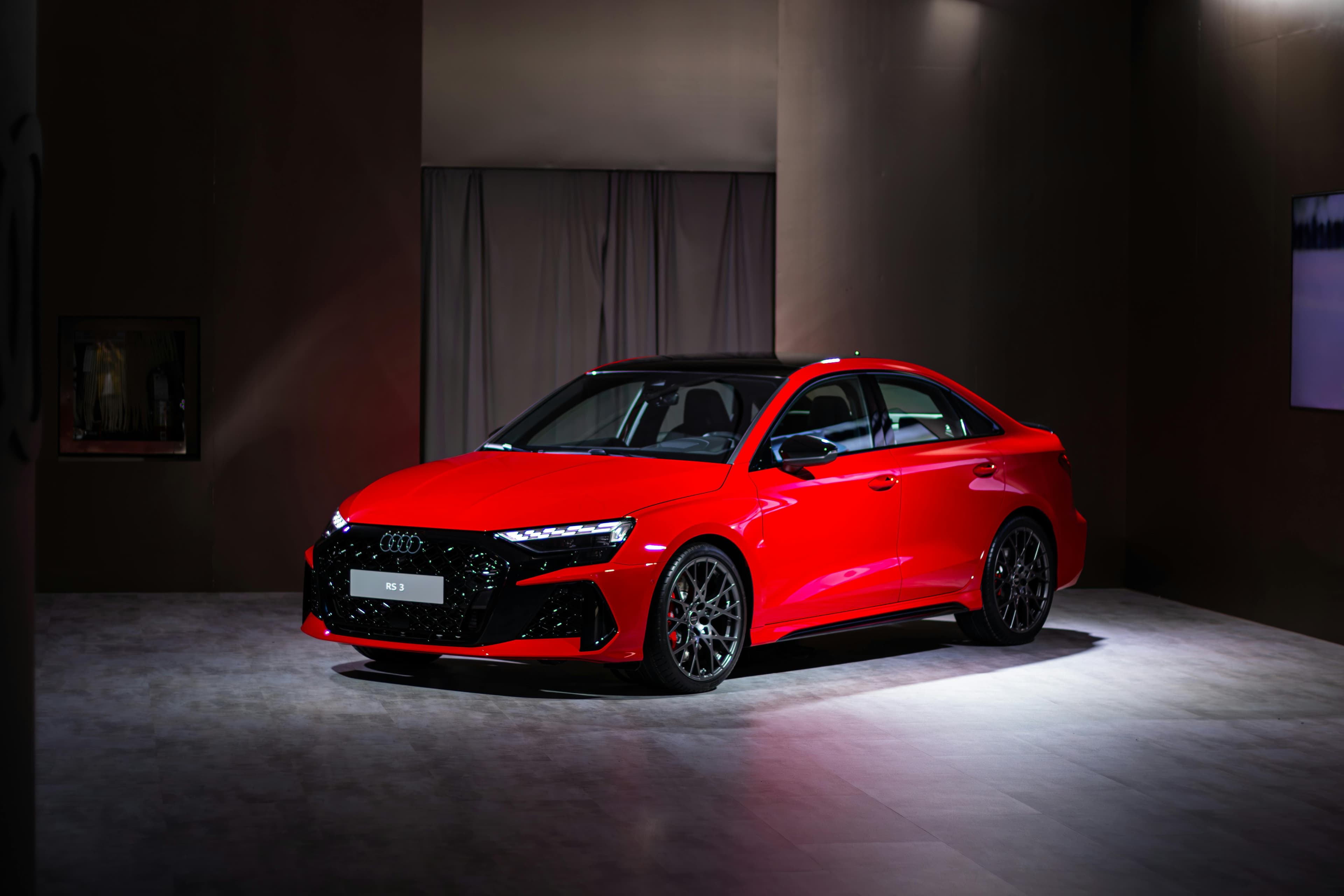
Audi RS is the most performance-focused production line from Audi, developed by Audi Sport. These cars differ from ordinary Audi and S models not only in engine power: RS models receive their own quattro all-wheel-drive calibration, transmissions, brakes, suspension, cooling and electronics.
The RS badge covers very different cars. The compact RS3 uses the five-cylinder 2.5 TFSI, the latest RS6 and RS7 generations use a V8 biturbo, the RS Q8 combines a powerful V8 with a heavy SUV, and the RS e-tron GT performance represents the fully electric part of the line-up. In 2026 they were joined by the new RS5 — the first high-performance plug-in hybrid from Audi Sport. Audi Sport states that the current portfolio includes eight models.
High power makes correct diagnostics and preventive maintenance especially important. A fault that can remain almost unnoticed for a long time on an ordinary car can, on an RS under high load, lead more quickly to expensive repairs of the engine, gearbox, all-wheel drive or braking system.
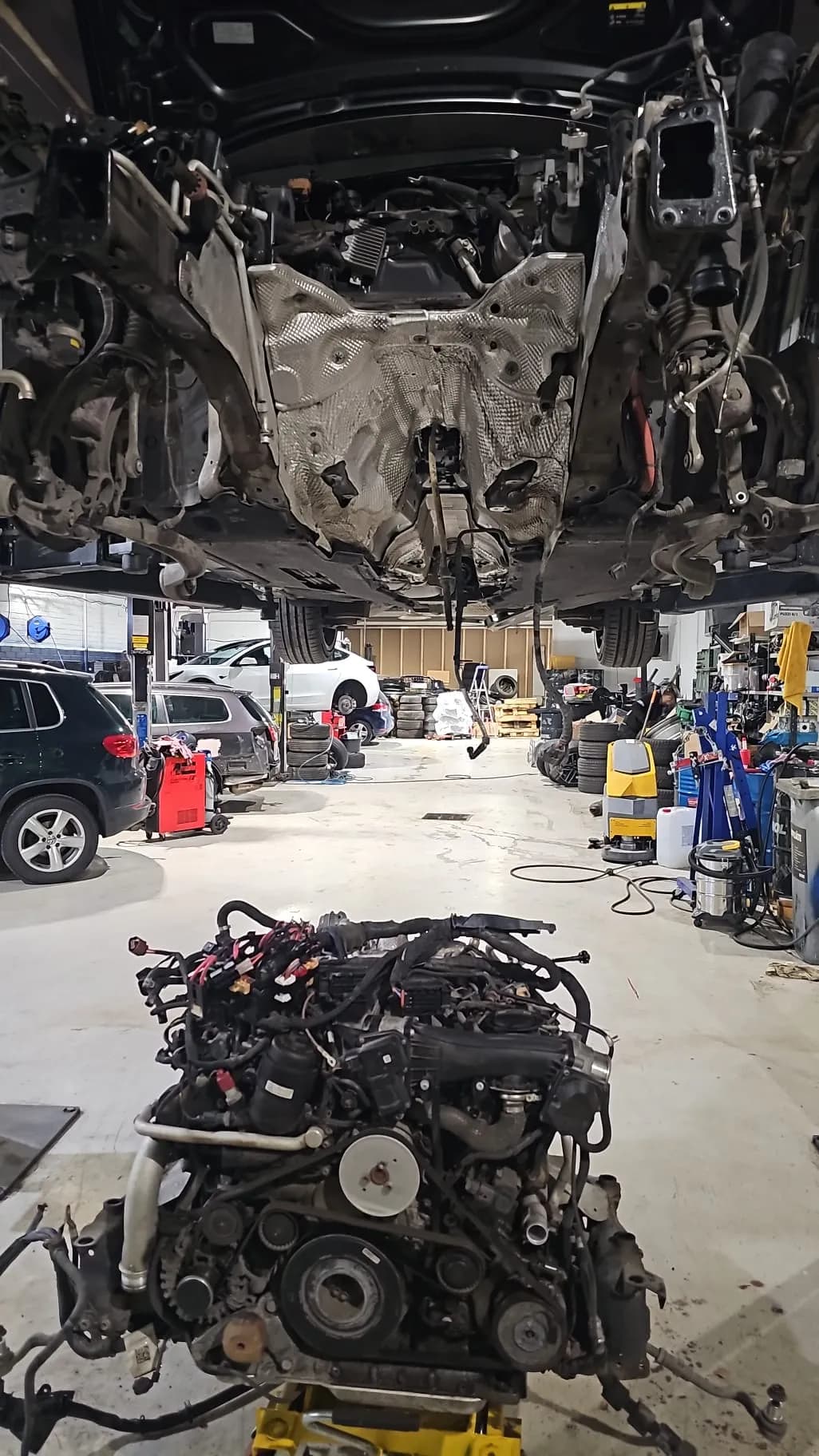
At Volkkarihuolto Espoo we carry out diagnostics, maintenance and repair of Audi RS cars at Ruukinmestarintie 7, 02330 Espoo.
What does Audi RS mean?
RS comes from the German RennSport — the sports line sits at the top of the Audi model hierarchy. Audi Sport emphasises that the R and RS designations are used only for the company's most sporting models. Today the division is responsible both for high-performance cars and for the Audi exclusive programme and a range of Audi Sport projects.
A typical hierarchy looks like this: Audi A/Q → Audi S/SQ → Audi RS. But an RS is not simply an ordinary Audi with a more powerful engine. That is why servicing an RS requires taking the specific RS specification of the car into account.
Depending on the model, the following change:
- engine
- gearbox
- all-wheel drive
- differentials
- cooling
- suspension
- brakes
- steering
- software
- body components
Which Audi RS models exist?
Some models have already gone out of production, others remain current or have received a new generation. For example, in the previous broad Audi Sport portfolio RS3, RS4, RS5, RS6, RS7, TT RS, RS Q3, RS Q8 and RS e-tron GT were built at the same time.
In 2026 the line-up is changing: the new RS5 became a plug-in hybrid, and the fully electric RS e-tron GT continues Audi Sport's electric direction.
Over the years Audi has built:
- RS2 Avant
- RS3
- RS4 Avant
- RS5 Coupé, Sportback, Sedan and Avant depending on generation
- RS6 Avant
- RS7 Sportback
- TT RS
- RS Q3
- RS Q8
- RS e-tron GT
Audi RS3
The RS3 is one of the most distinctive modern Audi RS models thanks to its five-cylinder 2.5 TFSI engine. It is especially valued for the unusual five-cylinder sound, high power, compact body, quattro and very strong acceleration.
Recent RS3 generations use a more complex rear-axle torque distribution system that can actively vary drive between the wheels. The RS3 is also very often tuned, so when buying it is important to establish the actual engine and gearbox configuration.
When servicing an RS3, particular attention is needed for:
- engine oil
- spark plugs
- ignition coils
- 2.5 TFSI
- turbocharger
- cooling system
- S tronic
- all-wheel drive
- rear torque distribution mechanism
- brakes
- petrol engine repair
- S tronic service and repair
- computer diagnostics
Audi RS4
Historically the RS4 is one of the best-known Audi sports estates. Completely different engines were used across generations: V6 biturbo, naturally aspirated V8 and the modern V6 biturbo. That is why recommendations for an early RS4 B5 cannot automatically be applied to later RS4 models.
With a sports estate it is also important to understand the nature of previous use — a family daily driver and a car regularly used on track can have the same mileage but completely different technical condition.
On high-mileage cars it is especially worth checking:
- turbocharging
- chain drive on corresponding engines
- cooling
- gearbox
- quattro
- differential
- suspension
- brakes
- petrol engine repair
- computer diagnostics
Audi RS5
The RS5 has existed as the sporting version of the A5 family across several generations. Previously you could find a naturally aspirated V8, the V6 2.9 TFSI biturbo, as well as Coupé and Sportback body styles.
In 2026 Audi began a new chapter in the model's history. The new RS5 became the first high-performance plug-in hybrid from Audi Sport and is offered as Sedan and Avant. European deliveries of the new generation were planned from summer 2026.
This means that under the RS5 name you can now find technically completely different cars. On the new generation you must consider the combustion engine, electric motor, high-voltage battery, charging system, cooling, quattro and braking system at the same time. Work directly on high-voltage components requires appropriate qualifications.
Audi RS6 Avant
The RS6 is one of the best-known Audi Sport models. The car combines an estate body with supercar power. Modern generations use the 4.0 TFSI V8 biturbo, an eight-speed Tiptronic and permanent quattro.
The C8-generation RS6 Avant performance develops 463 kW / 630 hp and 850 Nm, and 0–100 km/h takes 3.4 seconds. Even a small disruption in cooling or lubrication on a V8 biturbo must not be ignored.
These characteristics mean enormous load on:
- engine
- turbochargers
- Tiptronic
- quattro
- cooling system
- suspension
- brakes
- petrol engine repair
- computer diagnostics
Audi RS7
The RS7 is closely related technically to the RS6 but uses a Sportback body. Modern RS7 models also use the 4.0 TFSI V8 biturbo, Tiptronic, quattro, a sporting chassis and high-performance brakes.
That is why many diagnostic priorities for RS6 and RS7 are similar. Particular attention should be paid to turbochargers, cooling, the 48V system, the gearbox, quattro, air or other sporting suspension, and brakes.
Audi RS Q3
The RS Q3 combines a compact SUV body with a five-cylinder engine. The model uses the 2.5 TFSI and all-wheel drive that differs technically from the classic quattro of larger longitudinal Audi models.
The RS Q3 is often software-tuned, so before buying it is useful to check not only fault codes but also the actual configuration of the car. It is especially important to service:
- engine
- turbocharger
- S tronic
- multi-plate all-wheel-drive system
- brakes
- suspension
- petrol engine repair
- S tronic service and repair
- computer diagnostics
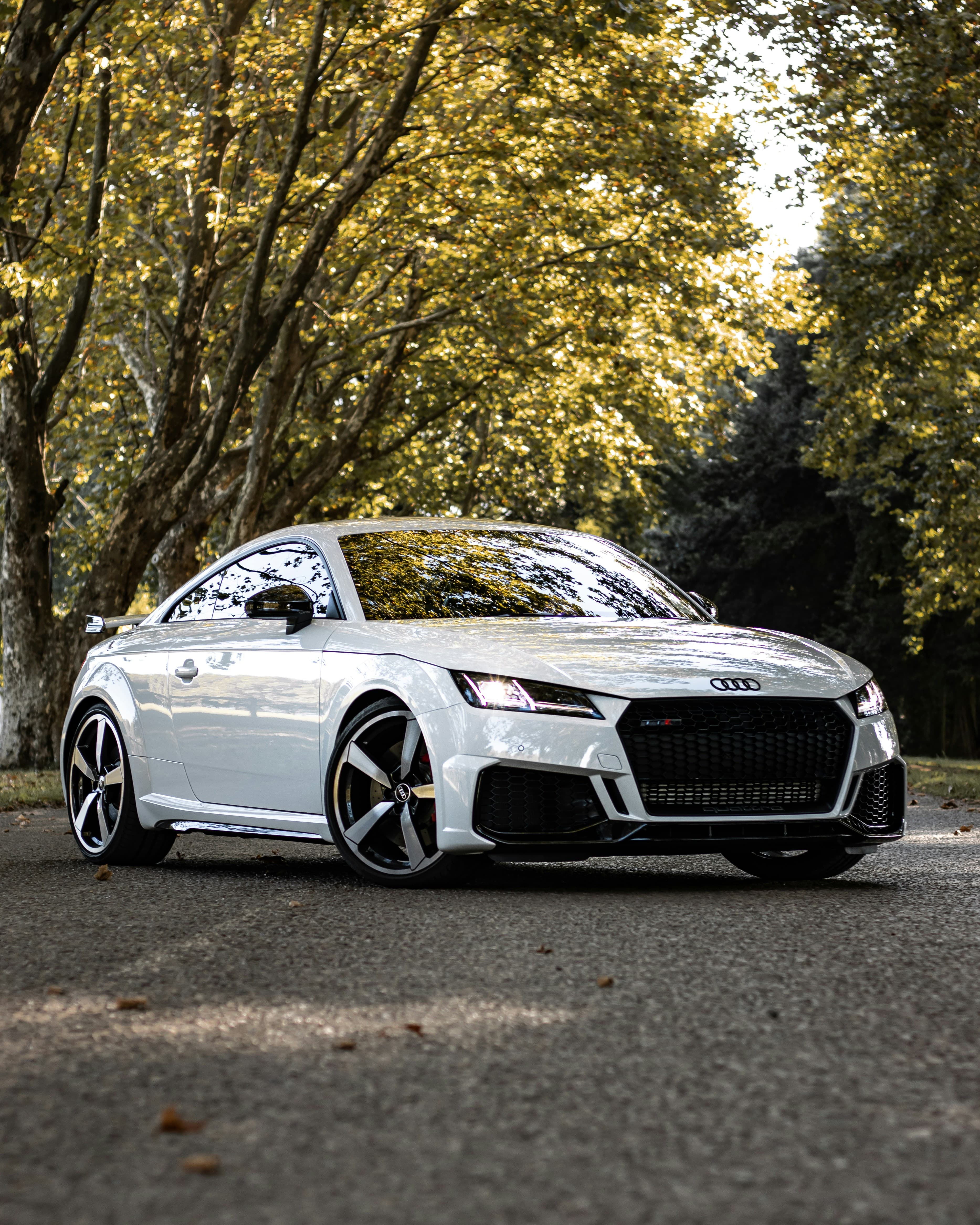
Audi TT RS
The TT RS is already out of production but remains an interesting used-market model. It uses the famous 2.5 TFSI.
The last TT RS generation developed 294 kW / 400 hp and 480 Nm, used a seven-speed S tronic and quattro with an electro-hydraulic multi-plate clutch.
On such a car it is especially worth checking tuning history, the turbocharger, S tronic, all-wheel drive, cooling, brakes and magnetic ride if fitted.
Audi RS Q8
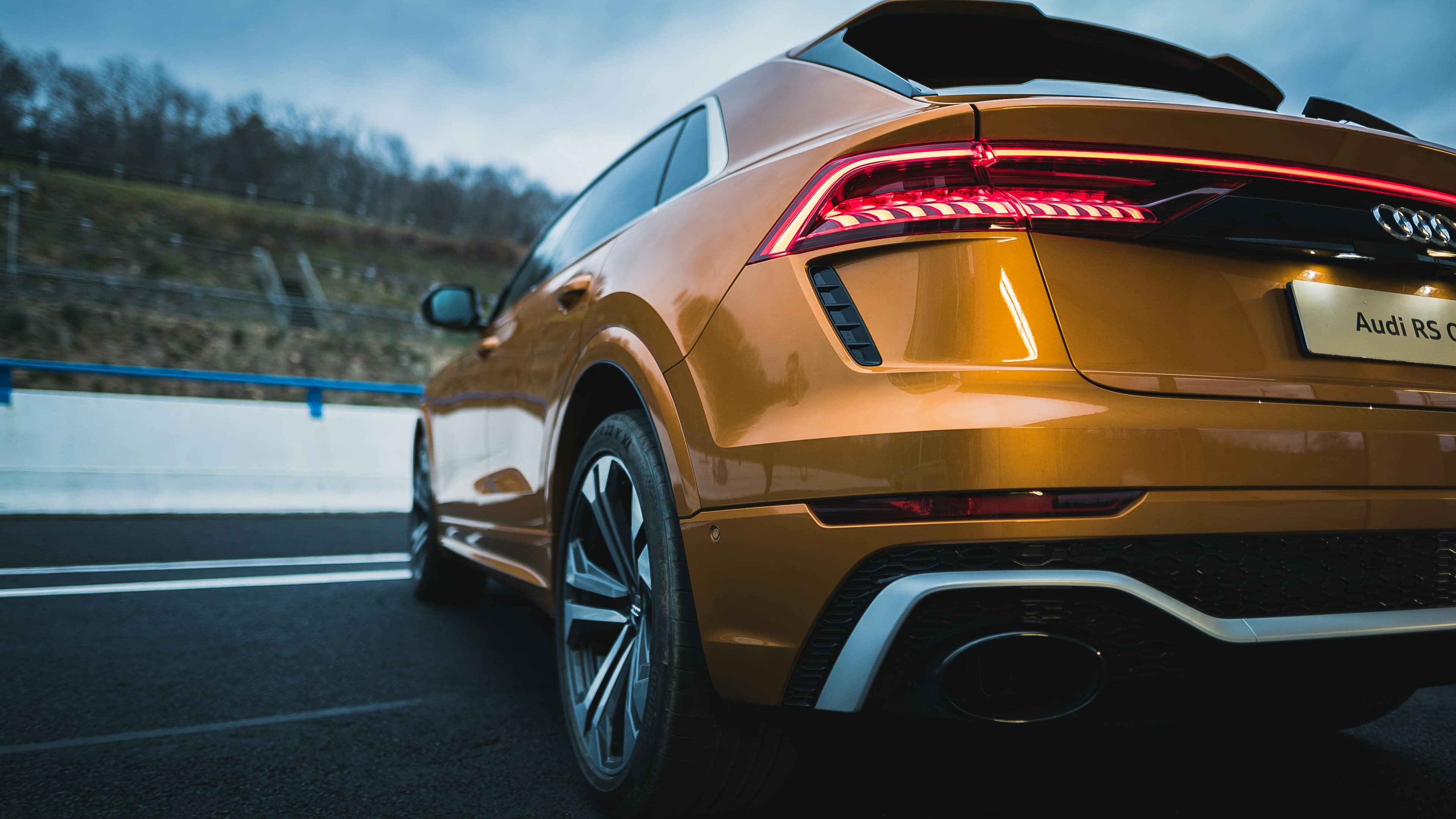
The RS Q8 is one of the most powerful production Audi SUVs. The updated RS Q8 performance uses a 4.0 TFSI V8 biturbo with 471 kW / 640 hp and 850 Nm. Audi called this version the most powerful production Audi with a combustion engine at the time of its launch.
The RS Q8 performance also uses quattro, sporting air suspension, rear-wheel steering and electromechanical active roll stabilisation on corresponding configurations.
High mass combined with 640 hp creates especially high load on brakes, tyres and suspension.
Audi RS e-tron GT
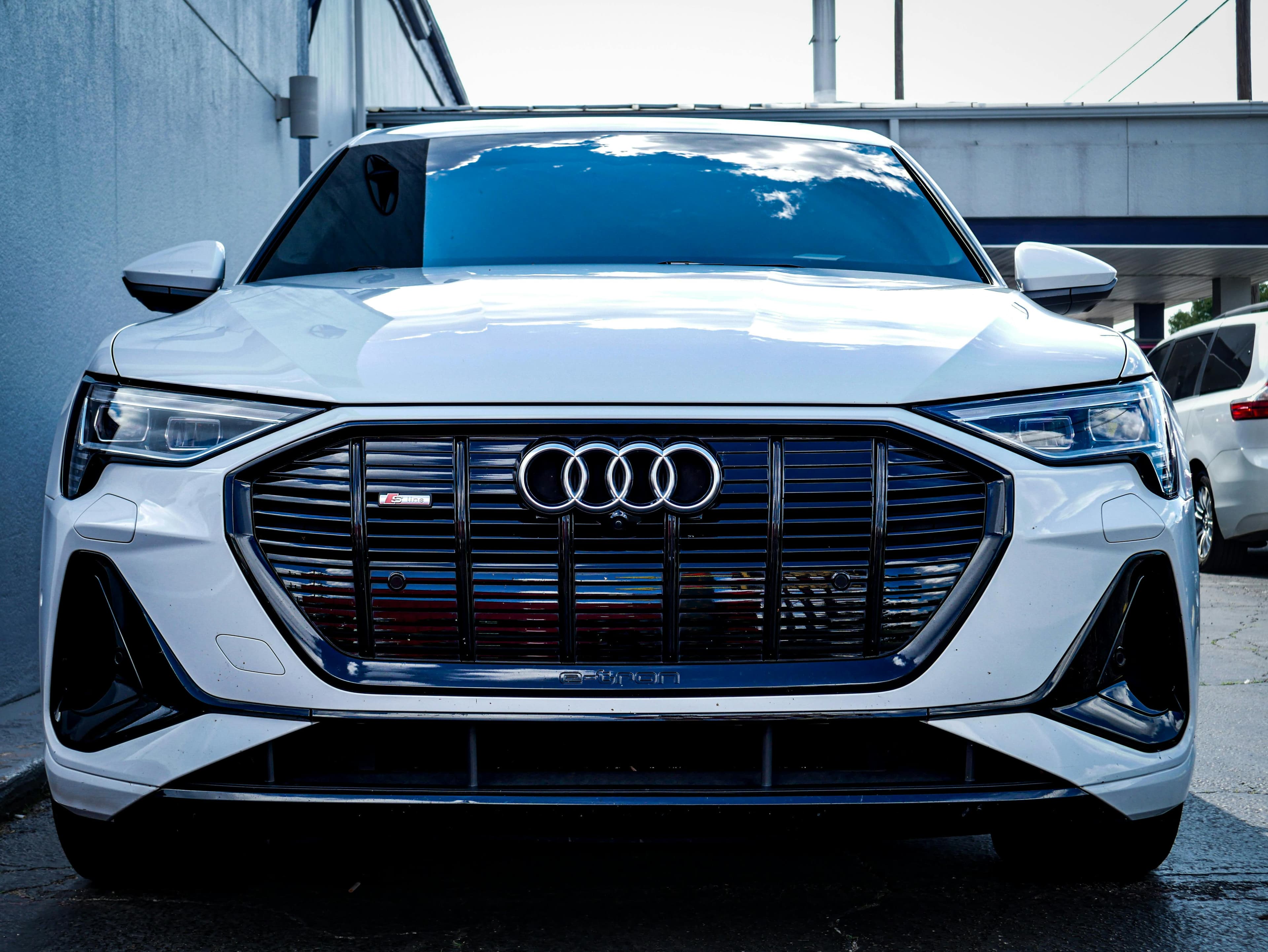
The RS line is no longer limited to petrol engines. The RS e-tron GT is a fully electric Gran Turismo.
The modern RS e-tron GT performance develops up to 680 kW / 925 hp in boost mode and accelerates to 100 km/h in about 2.5 seconds. Audi called it the most powerful production car in the brand's history.
The high-voltage battery has 105 kWh total capacity, 97 kWh usable, an 800-volt architecture and DC charging up to 320 kW. There is no TFSI, combustion-engine oil, spark plugs or turbochargers here.
For the RS e-tron GT completely different service priorities apply:
- HV battery
- AC/DC charging
- electric motors
- cooling
- 12V system
- suspension
- brakes
- electronics
- computer diagnostics
- electrical system repair
Why is Audi RS service different from a normal Audi?
The main reason is the load level. For example, the RS6 Avant performance develops 630 hp and 850 Nm. So a technical fault that on an ordinary car shows only as a slight deterioration can, on an RS at full load, have far more serious consequences.
On an RS the following are higher:
- power
- torque
- component temperatures
- gearbox load
- brake load
- tyre load
- wear rate under active use
Audi RS oil change
For powerful turbocharged engines the condition of the engine oil is especially important. Oil lubricates the engine, cools loaded components, takes part in hydraulic systems and lubricates turbochargers.
You should not use unsuitable oil simply because it has a similar viscosity. The specification must be determined for the specific engine.
If the car is used actively on a regular basis, the following are especially important:
- correct oil specification
- level
- change history
- absence of leaks
- oil and filter change
- scheduled maintenance
Audi RS turbochargers
Most modern petrol RS models are turbocharged. The 2.5 TFSI uses a single turbocharger, while modern V6 and V8 engines use other boost configurations. On an RS turbocharger costs can be high, so correct diagnostics are especially important.
A possible problem is indicated by loss of power, a boost-pressure fault, smoke, an unusual whistle, increased oil consumption or limp mode. But a boost-pressure fault does not automatically mean a faulty turbocharger.
Also checked are:
- hoses
- actuators
- valves
- sensors
- wiring
- system integrity
- petrol engine repair
- computer diagnostics
Audi RS cooling system
High power means a large amount of heat. The system can include several radiators, pumps, heat exchangers, cooling circuits and valves.
Coolant loss must not be ignored. If temperature starts to behave unusually during active driving, the car should be checked before further high load.
The cause may be:
- pump
- thermostat
- hoses
- radiator
- heat exchanger
- internal system components
- coolant leak detection
S tronic Audi RS
Some RS models use S tronic. Such cars include, for example, the RS3 and a number of other compact or mid-size models. The exact service schedule depends on the specific transmission version.
Signs of a possible fault: jerking, vibration, delayed D or R engagement, knocks, a gearbox fault or limp mode. The cause may be clutches, mechatronics, oil, adaptations or the mechanical part of the gearbox.
Tiptronic Audi RS
Powerful RS6, RS7 and RS Q8 models use an eight-speed Tiptronic. The RS6 Avant performance, for example, combines a V8 biturbo with an eight-speed Tiptronic and permanent quattro. The high torque of an RS places especially serious load on the gearbox.
You should seek diagnostics if:
- knocks have appeared
- D or R engages with a delay
- vibration has appeared
- shifts have become unusually harsh
- a transmission fault has appeared
- transmission oil change
- computer diagnostics
Quattro Audi RS
Almost the entire RS philosophy is closely linked to quattro all-wheel drive. But the systems differ. So the word quattro does not mean the same design on every RS. Service is always determined by the specific model and generation.
For example, the RS3 uses a transverse architecture and active rear-axle torque distribution; the RS6 and RS7 have a longitudinal powertrain; the RS Q8 uses its own large-SUV transmission configuration; the RS e-tron GT realises all-wheel drive with electric motors.
Differentials and torque distribution
Sporting RS models can have more complex torque-distribution systems than ordinary Audis. They make it possible to actively change the car's behaviour in a corner. Suitable tyres are especially important. Different sizes or a large difference in wear can create extra load on the all-wheel drive.
A fault may show as:
- a quattro fault
- unusual behaviour under acceleration
- knocks
- vibration
- unusual noise
- computer diagnostics
Audi RS brakes
The braking system is one of the most expensive parts of RS servicing. Because of power and mass the cars use large brake assemblies. Carbon-ceramic brakes are available on some models.
For example, for the modern RS e-tron GT Audi also offers carbon-ceramic discs; standard and alternative systems use large multi-piston assemblies. Replacing carbon-ceramic components can be especially expensive.
Before buying an RS you need to assess:
- pad remaining thickness
- disc thickness
- surface condition
- absence of cracks
- caliper condition
Brake corrosion in Finland
Even a very powerful braking system suffers from road salt. If an RS is used in winter, the brakes should be inspected regularly even with low annual mileage.
Problems can include:
- disc corrosion
- seized guide pins
- uneven wear
- a sticking caliper
Audi RS air suspension
RS6, RS7 and RS Q8 models can be fitted with complex suspension systems, including adaptive air suspension depending on model and equipment. The RS Q8 performance, for example, is standard with sporting adaptive air suspension and electronically controlled damping.
If there is a leak, its cause must be found before replacing the compressor. Possible fault signs:
- the car sags
- one corner is lower
- the compressor runs constantly
- a chassis fault has appeared
- the car has become too firm
- computer diagnostics
Dynamic Ride Control and sporting suspensions
Some RS models use Dynamic Ride Control — DRC. This is a fundamentally different system from ordinary air suspension.
When diagnosing a sporting chassis it is first important to establish which suspension is fitted to the specific car. Unusual firmness, knocking or pitching can have different causes depending on the design.
Active stabilisers and rear-wheel steering
On the RS Q8 and some larger RS models additional chassis systems are used. The RS Q8 performance can combine air suspension, electromechanical active roll stabilisation and rear-wheel steering.
After repair of such a suspension the following may be required:
- wheel alignment
- basic settings
- calibrations
- diagnostic check
- computer diagnostics
Audi RS tyres
Correct tyres on an RS are especially important. Size, load index, speed index and the requirements of the specific equipment must be observed. On quattro it is desirable to have four tyres with similar tread depth.
RS models also tend to wear tyres quickly because of high power, high torque, tyre width and aggressive wheel alignment. Uneven wear is a reason to check the suspension and alignment.
Battery and electronic systems
Modern RS models contain a large amount of electronics. Some cars also use 48-volt systems. Before replacing an expensive control unit it is worth checking the car's power supply.
A weak 12V battery can cause:
- many fault codes
- unavailable driver aids
- multimedia glitches
- transmission warnings
- starting problems
- electrical system repair
- computer diagnostics
Cameras, radars and driver aids
Modern RS models remain full road cars and are fitted with driver assistance systems. On cars with non-standard lowered suspension correct calibration becomes especially important.
After glass replacement, body repair, suspension repair or a change in alignment, calibration of cameras or radars may be required.
Audi RS tuning
RS cars are often bought specifically for more power. Quality tuning can work well. But when buying a car you need to know exactly what has been changed. If the car is sold already with "factory" software but was previously tuned and returned to stock, that is also useful to take into account.
On the used market you find Stage 1, Stage 2, larger turbochargers, modified intake, sports exhaust, remapped gearbox and fuel-system modifications.
Increasing power creates additional load on:
- engine
- turbochargers
- gearbox
- all-wheel drive
- cooling
- brakes
- computer diagnostics
RS after track use
Some RS cars are used regularly on track. That is not necessarily bad if the car was serviced correctly. But track use creates significantly higher load on oil, brakes, tyres, cooling, gearbox and suspension.
Before buying it is worth inspecting:
- brakes
- tyres
- wheels
- underside of the body
- radiators
- signs of overheating
- condition of operating fluids
- computer diagnostics
Audi RS pre-purchase inspection
A pre-purchase inspection is especially worthwhile for an RS because of the high cost of components. For the new RS5 the high-voltage plug-in hybrid system must also be considered. For the RS e-tron GT the HV battery, AC/DC charging, electric motors and high-voltage cooling are checked.
It is recommended to check cold start, faults in all modules, the engine, turbocharging, oil consumption, the cooling system, S tronic or Tiptronic, quattro, differentials, suspension, brakes, alignment, tyres, the 12V/48V system, the body and service history.
It is also necessary to establish:
- whether the car has been tuned
- whether it has been used on track
- which modifications are currently fitted
- whether the software has been returned to factory state
- computer diagnostics
Which Audi RS services we provide
At Volkkarihuolto Espoo you can come for diagnostics and servicing. For RS plug-in hybrid and RS e-tron GT models, work directly on high-voltage components is possible only with the appropriate qualifications and conditions for safe performance of the specific operation.
- regular Audi RS maintenance
- oil and filter changes
- computer diagnostics
- TFSI diagnostics
- turbocharging checks
- cooling system diagnostics
- S tronic service
- Tiptronic diagnostics
- quattro checks
- differential diagnostics
- brake system repair
- diagnostics of standard and sporting suspension
- air suspension checks
- DRC diagnostics
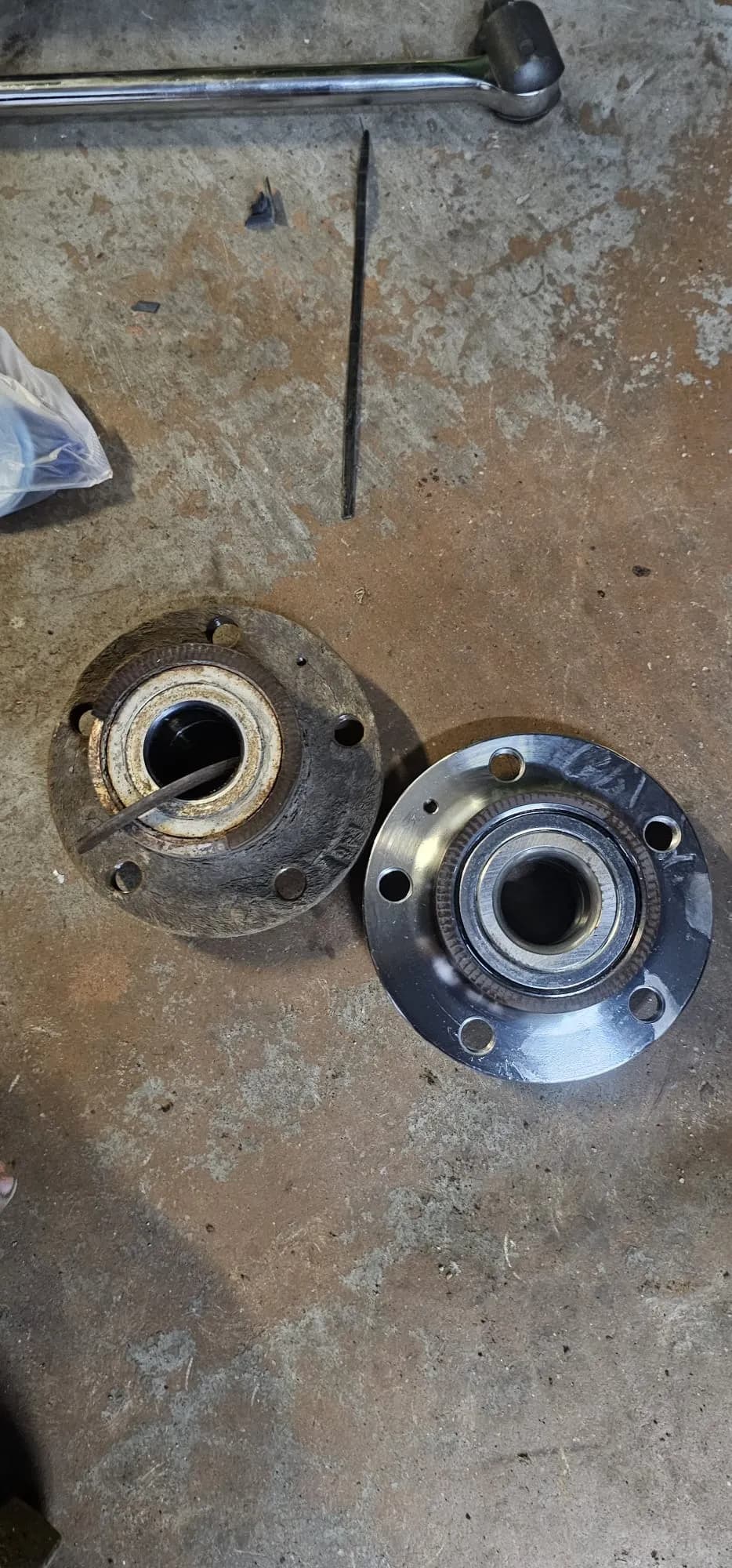
- hub bearing checks
- 12V and 48V system diagnostics
- air conditioning service
- electronic system diagnostics
- pre-purchase vehicle inspection
Common Audi RS fault symptoms
It is worth booking diagnostics if:
- Check Engine or EPC is on
- the car has lost power
- the engine is misfiring
- smoke has appeared
- oil consumption has increased
- a boost-pressure fault has appeared
- coolant level is falling
- S tronic is jerking
- Tiptronic shifts with knocks
- a quattro fault has appeared
- vibration has appeared under acceleration
- transmission hum has appeared
- the suspension is knocking
- the air suspension is sagging
- the brakes are vibrating
- a wheel is overheating
- several electronic faults appear at once
Audi RS repair and service in Espoo
Need diagnostics, repair or technical servicing of an Audi RS? Contact Volkkarihuolto Espoo at Ruukinmestarintie 7, 02330 Espoo.
An Audi RS requires a more careful approach than an ordinary production model. High power increases load on the engine, turbochargers, transmission, all-wheel drive, cooling, brakes and suspension.
We work with VAG cars and can carry out diagnostics and servicing of the main Audi RS systems — from TFSI, S tronic, Tiptronic and quattro to brakes, suspension and electronics.
It is especially important to consider the specific model. An RS3 with a five-cylinder 2.5 TFSI, an RS6 with a V8 biturbo, an RS Q8 performance with 640 hp, the new plug-in hybrid RS5 and the electric RS e-tron GT are technically completely different cars.
Correct Audi RS servicing does not start with a generic list of jobs, but with a precise understanding of the specific engine, transmission, equipment and history of the car.
FAQ
What does RS mean on an Audi?
RS denotes the most performance-focused road models from Audi Sport. Audi Sport states that the R and RS designations are intended exclusively for the company's most sporting cars.
How does an Audi RS differ from an Audi S?
An S model is a sporting version of an ordinary Audi, while an RS sits even higher in performance. An RS usually receives a more powerful engine and a seriously revised chassis, brakes and other components.
Which Audi RS models exist?
Over the history of the family RS2, RS3, RS4, RS5, RS6, RS7, TT RS, RS Q3, RS Q8 and RS e-tron GT have been built. The composition of the current line-up changes depending on generation and market.
Which engine is in the Audi RS3?
The modern RS3 is known for its five-cylinder 2.5 TFSI.
Which engine is in the Audi RS6?
The modern RS6 Avant performance uses a 4.0 TFSI V8 biturbo with 463 kW / 630 hp and 850 Nm.
What is the most powerful petrol Audi RS Q8?
The RS Q8 performance develops 471 kW / 640 hp and 850 Nm.
Is there an electric Audi RS?
Yes. The RS e-tron GT and RS e-tron GT performance are fully electric models. The RS e-tron GT performance can develop up to 680 kW / 925 hp in boost mode.
Is there a hybrid Audi RS?
Yes. The new RS5 introduced in 2026 became the first high-performance plug-in hybrid from Audi Sport.
Which gearbox is used in an Audi RS?
It depends on the model. The RS3 uses S tronic, while modern RS6, RS7 and RS Q8 models use an eight-speed Tiptronic.
Does an Audi RS need oil changes more often?
You must follow the requirements of the specific engine and the operating conditions. Under intensive use, tuning or track loads the condition of the oil becomes especially important.
Can an Audi RS be serviced outside an official dealer?
Yes. The main thing is to use the correct technical data, fluids, equipment and procedures for the specific model and engine.
Is it worth inspecting an RS before purchase?
Yes. Because of the high cost of the engine, gearbox, brakes, suspension and all-wheel drive, a comprehensive pre-purchase inspection is especially useful.
Should tuning be checked?
Yes. For an RS this is one of the most important used-car inspection points. Even if the car is now in factory configuration, it may previously have been run with increased power.
Detailed Services
Professional fault diagnostics for Audi RS-mallisto.
Oil ChangeEngine oil and filter replacement for Audi RS-mallisto.
Annual maintenanceComprehensive annual maintenance for Audi RS-mallisto.
Regular MaintenanceScheduled maintenance for Audi RS-mallisto according to service needs.
Engine RepairEngine diagnostics and repair for Audi RS-mallisto.
Diesel Engine RepairDiesel engine service and repair for Audi RS-mallisto.
Electrical RepairElectrical fault tracing and repair for Audi RS-mallisto.
ECU ProgrammingControl unit programming and coding for Audi RS-mallisto.
DSG RepairDSG transmission diagnostics and repair for Audi RS-mallisto.
Transmission RepairTransmission diagnostics and repair for Audi RS-mallisto.
Transmission Oil ChangeTransmission oil change for Audi RS-mallisto.
Timing Belt ReplacementTiming belt and related component replacement for Audi RS-mallisto.
Timing Chain ReplacementTiming chain, tensioner, and guide replacement for Audi RS-mallisto.
Cooling System RepairCooling system service and repair for Audi RS-mallisto.
AC RepairAir conditioning service and repair for Audi RS-mallisto.
Engine Heater InstallationEngine heater installation and service for Audi RS-mallisto.
Cabin OzonationCabin ozonation and odor removal for Audi RS-mallisto.