
Audi Q3 — service and repair in Espoo
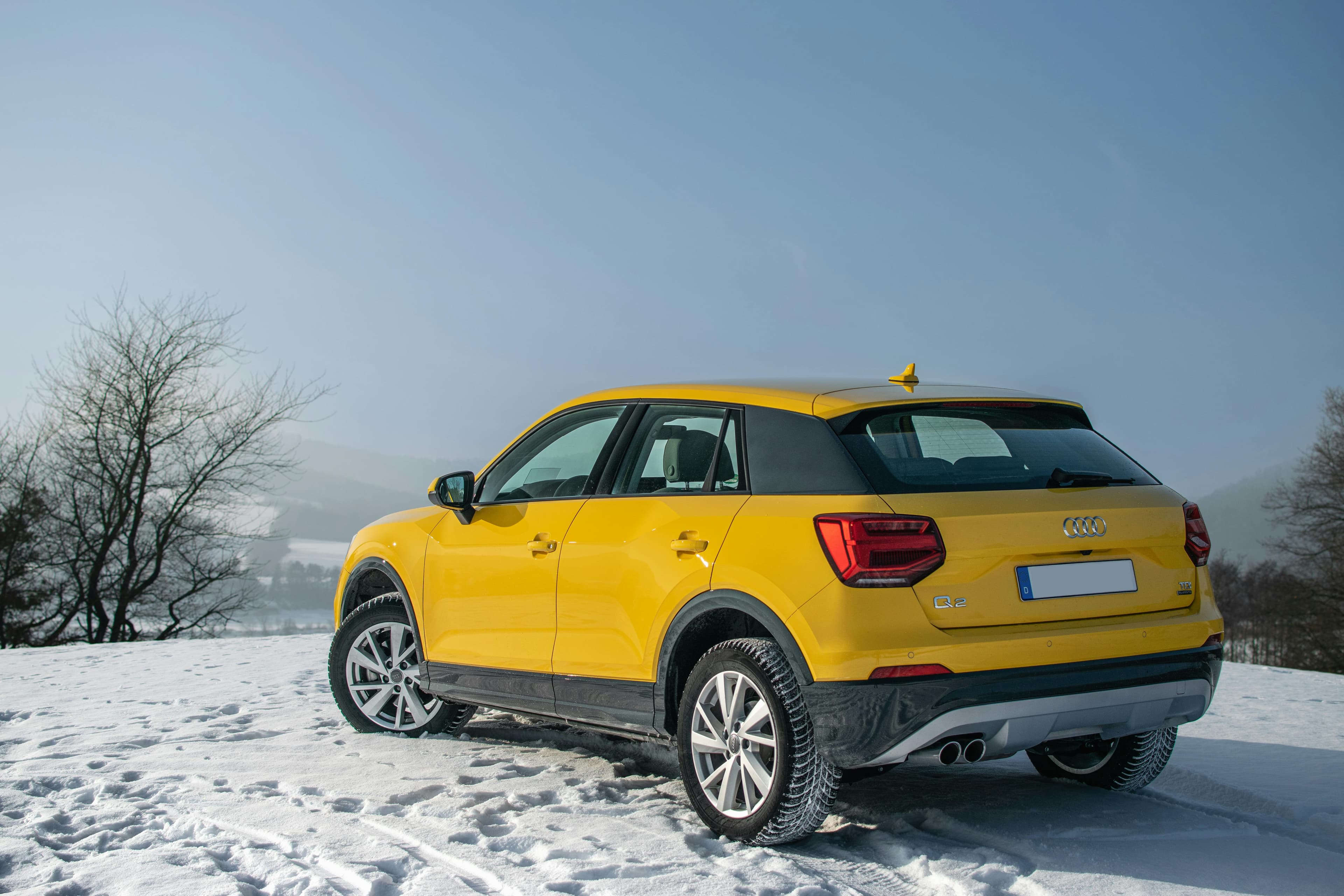
Audi Q3 is a compact premium crossover that combines city-friendly dimensions, a practical cabin, turbocharged engines and the option of quattro all-wheel drive. Over the years the model has become one of Audi’s most popular SUVs and is widely represented on the Finnish used-car market.
Depending on the generation, the Audi Q3 is equipped with petrol TFSI engines, diesel TDI engines, a manual gearbox or S tronic. Front-wheel-drive and all-wheel-drive versions are available, and the second and new third generations are also offered in electrified variants.
Since 2025 the third generation of the Audi Q3 has been produced, so today the name Q3 can mean cars with very different engineering — from early 2.0 TDI quattro models to the new Q3 e-hybrid with a high-voltage battery and DC charging. Audi states that from the start of series production in 2011 through 2025 more than two million Q3s were sold.
At Volkkarihuolto Espoo we carry out diagnostics, maintenance and repair of Audi Q3 at Ruukinmestarintie 7, 02330 Espoo.
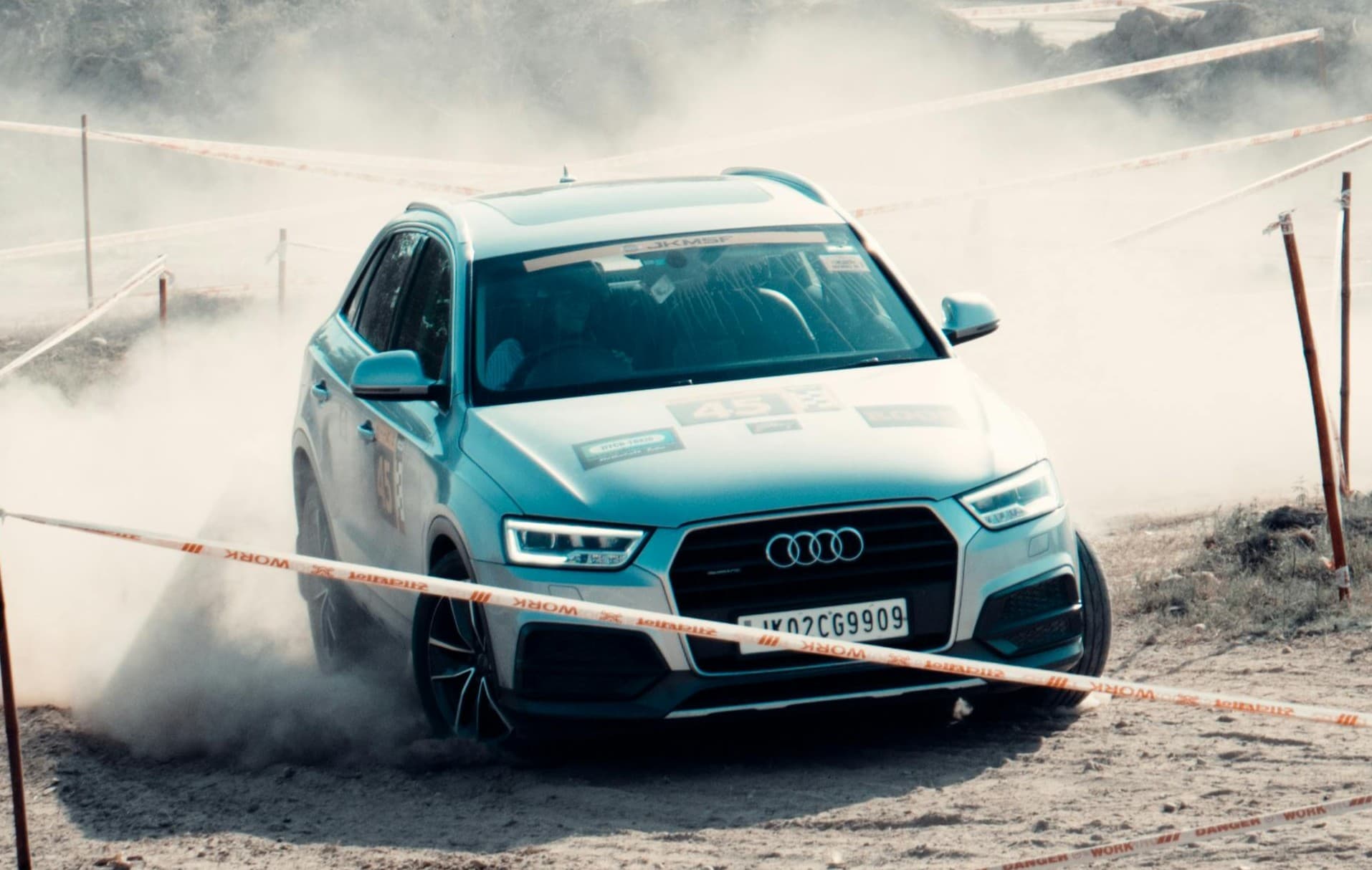
History of the Audi Q3
The first generation of the Audi Q3 appeared in 2011. The model became a compact alternative to the larger Q5 and Q7 and quickly gained popularity in Europe. The first Q3 was offered with petrol TFSI and diesel TDI engines, front-wheel drive or quattro, a manual gearbox and S tronic.
Production of the second-generation Q3 began in 2018. The first cars of the new generation left the Audi Hungaria plant in Győr on 28 August 2018. The second Q3 became noticeably more spacious, received a fully digital cabin architecture, modern multimedia systems and a large number of assistants. Later the Audi Q3 Sportback with a more sloping roofline appeared.
In 2025 Audi presented the third generation of the Q3, and in 2026 it is already the current model. The new family includes the regular Q3 SUV, Q3 Sportback, petrol and diesel versions, quattro and the new Q3 e-hybrid.
For repair work it is essential to consider the specific generation. A first-generation Q3 2.0 TDI quattro and a new Q3 e-hybrid are technically completely different cars. The main generations are:
- Audi Q3 I — 2011–2018
- Audi Q3 II — 2018–2025
- Audi Q3 III — from 2025
First-generation Audi Q3
The first-generation Q3 is widely represented on the used-car market today. You will find 1.4 TFSI, 2.0 TFSI, 2.0 TDI, manual gearboxes, S tronic, front-wheel drive and quattro.
For a car more than ten years old, the actual service history is especially important. With age the following may need attention:
- cooling system
- turbocharger
- timing drive
- S tronic
- DPF
- EGR
- quattro
- suspension
- hub bearings
- electronics
- computer diagnostics
Second-generation Audi Q3
The second-generation Q3 became significantly more modern. The car received a digital instrument cluster, modern MMI, new assistants, a more spacious cabin, new TFSI and TDI engines, the plug-in hybrid TFSI e and the Q3 Sportback.
The second generation also introduced more electronically controlled suspension and driver-assistance systems. When servicing it is especially worth considering:
- S tronic
- DPF
- EGR
- AdBlue
- quattro
- multimedia
- electronic assistants
- computer diagnostics
New third-generation Audi Q3
The new Q3 generation was presented in 2025. The current 2026 range includes petrol, diesel, all-wheel-drive and plug-in hybrid versions.
Official Audi data for the new Q3 include a 1.5 TFSI with 110 kW, a 2.0 TDI with 110 kW, petrol quattro versions with 150 and 195 kW, and an e-hybrid with a system output of 200 kW.
The current Q3 also received more complex lighting systems, new assistants and an updated electronic architecture. When servicing the new generation it is important not to automatically carry over procedures and parts from earlier Q3 models.
Audi Q3 servicing in Espoo
The Audi Q3 is often used as a family and city car. Typical use in Finland includes short trips, cold starts, urban traffic, winter salt and occasional longer journeys.
This places load on the engine, battery, brakes and exhaust aftertreatment system. Even with low annual mileage, yearly servicing remains important. Regular checks are needed for:
- engine oil
- filters
- spark plugs
- timing drive
- cooling system
- S tronic
- quattro
- DPF
- EGR
- AdBlue
- brakes
- suspension
- battery
- air conditioning
- scheduled maintenance
- oil and filter change
- computer diagnostics
- annual service
Audi Q3 TFSI petrol engines
Across generations the Audi Q3 has used 1.4 TFSI, 1.5 TFSI and 2.0 TFSI engines. The new third generation uses, among others, a 1.5 TFSI with 110 kW and a 2.0 TFSI with 150 or 195 kW on all-wheel-drive versions.
When servicing TFSI it is important to monitor oil condition, spark plugs, coils, the turbocharger, cooling system, crankcase ventilation and timing drive. Diagnostics are needed if:
- Check Engine appears
- EPC lights up
- the engine misfires
- the car jerks
- power has dropped
- fuel consumption has increased
- an unusual noise appears
- coolant level is dropping
- petrol engine repair
- computer diagnostics
Audi Q3 1.4 TFSI
The 1.4 TFSI is widely found on the first and second generations of the Q3. There are different technical versions of the engine, so the same recommendations cannot be applied to every car.
If the engine runs unsteadily, first read the fault codes and check the actual parameters. Items worth checking include:
- ignition system
- turbocharger
- timing drive
- cooling system
- crankcase ventilation
- petrol engine repair
- timing belt replacement
Audi Q3 1.5 TFSI
The 1.5 TFSI is used on more modern Q3 models. The new third generation also offers a 1.5 TFSI with 110 kW and mild-hybrid technology.
The engine is oriented towards efficiency, but it remains a turbocharged direct-injection engine with a complex control system. Diagnostics are needed for:
- jerking
- misfires
- EPC
- power loss
- increased consumption
- unstable idle
- petrol engine repair
Audi Q3 2.0 TFSI quattro
The 2.0 TFSI is fitted to more powerful Q3 models and is often combined with quattro. On the new generation the current versions are 2.0 TFSI quattro with 150 and 195 kW.
Higher power means greater load on the drivetrain. On such cars it is especially important to monitor:
- turbocharging
- cooling
- S tronic
- all-wheel drive
- brakes
- petrol engine repair
- S tronic service
Audi Q3 timing drive
The type of timing drive depends on the specific engine. Different TFSI and TDI generations use different designs.
Do not rely on one universal interval for all Q3s. If the service history is unknown, the timing drive should be checked after purchase. The service interval must be determined from:
- VIN
- engine code
- model year
- service schedule
- timing belt replacement
- timing chain replacement
Audi Q3 TDI diesel engines
Diesel Q3 models especially suit owners with high annual mileage. The most common engines are 2.0 TDI.
The current third generation is also offered with a 2.0 TDI with 110 kW. In the base configuration it is combined with front-wheel drive and a seven-speed S tronic. In 2026 the range also includes a more powerful TDI quattro with 142 kW.
On a diesel Q3 you should monitor:
- DPF
- EGR
- AdBlue
- turbocharger
- injectors
- cooling system
- S tronic
- TDI diesel engine repair
Audi Q3 DPF
The DPF particulate filter is especially sensitive to driving style. If the Q3 is constantly used for short trips, regeneration may be interrupted.
Not every clogged DPF needs replacement. Forced regeneration is also not suitable in every case. Diagnostics check calculated soot mass, ash quantity, differential pressure, temperature sensors, EGR and engine operation.
Symptoms include:
- elevated idle speed
- fan running after shutdown
- fuel consumption has increased
- regenerations have become more frequent
- DPF indicator appears
- power has dropped
- DPF diagnostics
Audi Q3 EGR
The EGR system gradually becomes contaminated with combustion products. If an EGR fault increases soot formation, the DPF can fill much faster.
Possible symptoms include:
- Check Engine
- power loss
- jerking
- uneven running
- frequent regenerations
- limp mode
- EGR diagnostics
Audi Q3 AdBlue
Modern diesel Q3 models use SCR and AdBlue. If a countdown to an engine start lockout appears on the display, the problem must not be left until the last kilometre.
Faults may be related to:
- pump
- NOx sensor
- injector
- heater
- level sensor
- wiring
- AdBlue diagnostics
Audi Q3 S tronic
The Audi Q3 is widely used with an S tronic gearbox. Depending on the engine, different dual-clutch gearbox versions are fitted.
For gearboxes where scheduled oil changes are specified, servicing must be done on time. Diagnostics are needed if:
- the car jerks on take-off
- D or R engages with a delay
- vibration appears
- hard shocks occur
- a transmission warning appears
- the car enters limp mode
- S tronic service and repair
- transmission oil change
Manual gearbox and clutch
Early Q3 models can have a manual gearbox. Over time clutch wear, release bearing wear and dual-mass flywheel wear are possible on the relevant versions.
Symptoms include:
- slipping
- high bite point
- vibration
- metallic knocking
- difficult gear engagement
- manual gearbox diagnostics
Audi Q3 quattro
Quattro all-wheel drive is available on various Q3 versions. Because of the transverse engine layout, the system differs from classic quattro on larger Audi models.
The Q3 uses an electronically controlled multi-plate clutch that engages the rear axle when needed. It is also important for the system to use tyres of the same size and similar tread depth.
A check is needed if:
- the front wheels constantly spin
- the rear axle does not engage
- a quattro fault appears
- vibration occurs
- a drone appears
- computer diagnostics
- transmission oil change
Audi Q3 quattro servicing
On cars with a multi-plate clutch you must consider fluid condition and the operation of the all-wheel-drive pump. The specific schedule depends on generation and design.
If all-wheel drive stops working, the cause may not be the clutch itself. Diagnostics are therefore needed first. Possible causes include:
- pump
- contamination
- power supply
- wiring
- control unit
- transmission oil change
Second-generation Audi Q3 TFSI e
The second-generation Q3 was produced as the plug-in hybrid 45 TFSI e. The Q3 Sportback 45 TFSI e uses a petrol 1.4 TFSI with 110 kW and an electric motor. Combined system output is 180 kW, and the battery has 13.0 kWh total and 10.4 kWh usable capacity. The car has front-wheel drive and a six-speed wet dual-clutch S tronic.
Diagnostics must take into account:
- engine
- high-voltage battery
- electric motor
- S tronic
- charger
- cooling system
- computer diagnostics
- electrical repair
New Audi Q3 e-hybrid
The third generation received a substantially more modern plug-in hybrid system. The new Audi Q3 e-hybrid 200 kW combines a 1.5 TFSI with 130 kW and an electric motor. Combined system output is 200 kW and torque is 400 Nm.
The high-voltage battery has 25.7 kWh total capacity and 19.7 kWh usable capacity. Audi claims up to 119 km of electric WLTP range for the Q3 SUV e-hybrid.
A particularly important change is support for DC charging at up to 50 kW. Under suitable conditions a charge from 10 to 80% takes less than half an hour. This means the new Q3 e-hybrid differs technically significantly from the previous 45 TFSI e.
If the Audi Q3 e-hybrid will not charge
The cause is not necessarily in the high-voltage battery. If the new Q3 will not accept DC charging, the relevant high-voltage section must also be diagnosed.
Work directly on high-voltage components requires appropriate qualification and compliance with safety requirements. It is worth checking:
- charging station
- cable
- connector
- charge port lock
- 12V battery
- on-board charging system
- high-voltage faults
- software
- computer diagnostics
- electrical repair
Audi Q3 cooling system
Modern Q3 models have a fairly complex cooling system. On the e-hybrid, separate cooling circuits for high-voltage components are added.
Coolant should not be topped up regularly without finding the leak. Causes of falling fluid level can include:
- pump
- thermostat
- thermostat housing
- radiator
- hoses
- heat exchanger
- EGR cooler on diesel
- coolant leak detection
Audi Q3 suspension
The Q3 is designed for a higher ride height than the A3, but the construction remains road-oriented. Over time anti-roll bar links, bushes, control arms, ball joints, dampers, top mounts and hub bearings may need attention.
Diagnostics are worth booking if:
- a knock appears
- the car pulls to one side
- a squeak appears
- stability has worsened
- tyres wear unevenly
New Audi Q3 suspension
For the new generation Audi revised the chassis settings. In addition to the standard suspension, a sport version and suspension with dual-valve adaptive dampers are offered.
If the car has electronically controlled dampers, when a fault appears you must check not only the mechanical part but also sensors, wiring and the control unit.
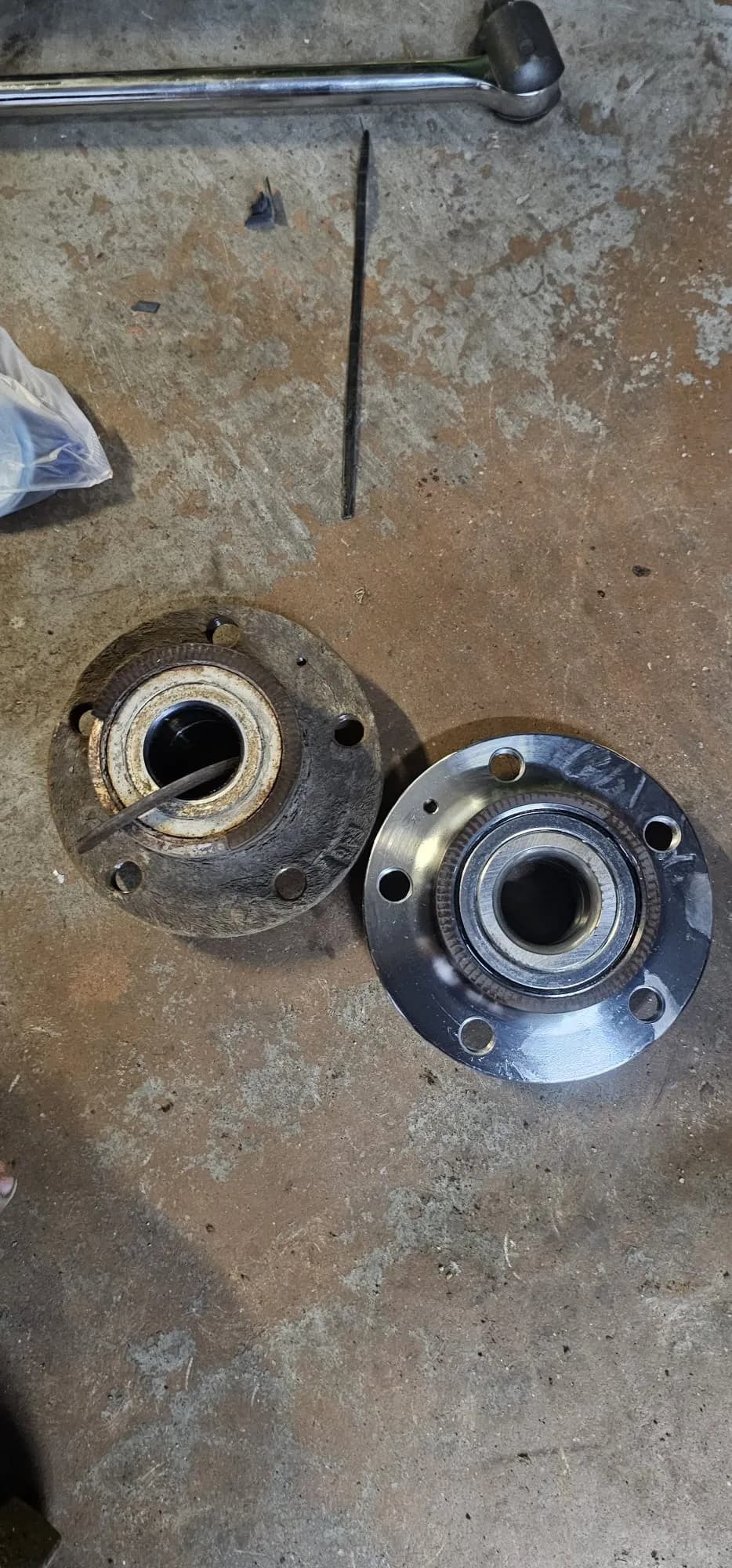
Hub bearings
A worn hub bearing produces a drone that usually increases with speed. On quattro a similar sound can come from tyres, the clutch, the differential or the drivetrain.
Therefore the noise source must be identified accurately before replacing the bearing.
Audi Q3 brake system
The Q3 is often used in the city, where brakes work intensively. In winter Finnish salt also accelerates corrosion.
On the e-hybrid you must also consider the interaction of conventional brakes and recuperation. A check is needed if:
- vibration appears
- brakes squeal
- the car pulls to one side
- a wheel overheats
- the parking brake works incorrectly
Battery and Start-Stop
A weak 12V battery can cause a large number of seemingly unrelated problems. Before replacing expensive electronic components it is worth checking the power supply.
Possible issues include:
- Start-Stop has stopped working
- the car starts slowly
- random warnings appear
- assistants become unavailable
- multimedia restarts
- electrical repair
Electronics and multimedia
Each new Q3 generation became more digital. The second generation received a modern multimedia architecture, and the new Q3 uses even more complex electronics and integrated digital systems.
Sometimes the cause of several problems at once is low 12V system voltage. Diagnostics are needed if:
- the screen does not switch on
- the system restarts regularly
- sound disappears
- Bluetooth works unstably
- the camera does not switch on
- numerous faults appear
- computer diagnostics
- electrical repair
Audi Q3 cameras and assistants
A modern Q3 may have adaptive cruise control, Audi pre sense, Lane Assist, blind-spot monitoring, cameras and parking assistants.
On the new generation Audi also offers Adaptive Driving Assistant Plus, a learnable parking system and a reverse assist.
In winter snow and ice can temporarily block sensors. After windscreen replacement, body repair, an impact or suspension repair, some systems may need calibration.
Audi Q3 air conditioning
Air conditioning is important not only in summer. In winter it helps remove moisture from the cabin and clear the windows faster.
If refrigerant has to be recharged regularly, the leak must be found. The problem may relate to:
- refrigerant leak
- compressor
- condenser
- pressure sensor
- fan
- flap actuator
- air conditioning service
Audi Q3 Sportback
The Q3 Sportback appeared in the second generation as a more sporting version of the standard SUV. The new third generation is also offered as a Sportback.
On the new car the Sportback roof is about 29 mm lower than on the Q3 SUV. Technically most systems are similar to the regular Q3, but the body, tailgate, boot volume and some trim elements differ.
When buying a Sportback it is worth checking operation of the powered tailgate and that there is no water in the boot.
Audi RS Q3
On the first and second generations there was a sporting RS Q3 version. It uses a five-cylinder turbocharged engine and differs significantly from a regular Q3.
Before purchase it is also advisable to check for chip tuning. A car with increased power may place significantly higher load on the gearbox and drivetrain.
When servicing an RS Q3 the following are especially important:
- engine
- turbocharger
- gearbox
- all-wheel drive
- cooling system
- brakes
- suspension
- computer diagnostics
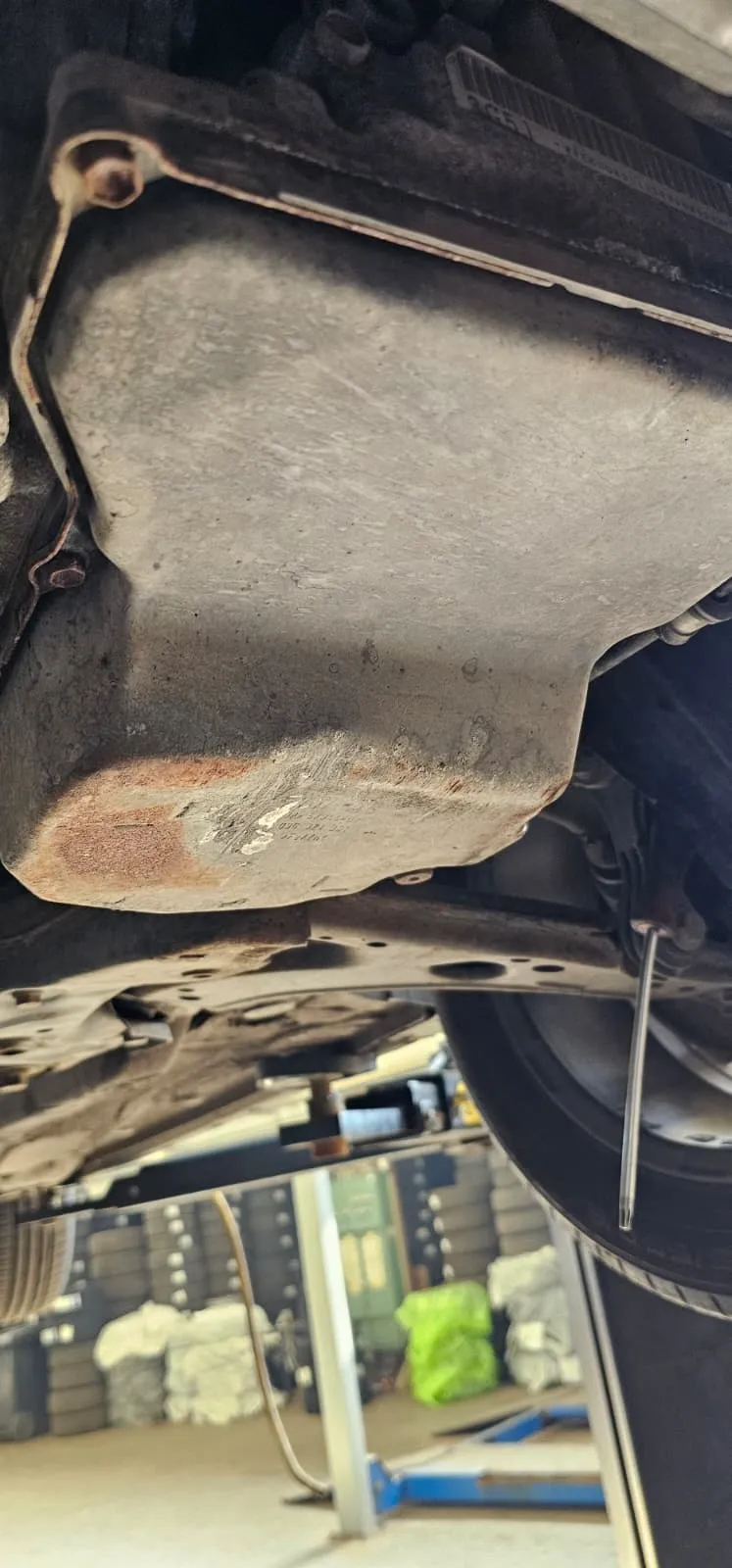
Body and corrosion
The Q3 is relatively well protected against corrosion, but Finnish salt affects the car regardless of age.
After winter it is useful to wash the underbody and inspect damage to the protective coating. Check:
- underbody
- sills
- wheel arches
- brake lines
- suspension components
- sites of previous repair
Pre-purchase inspection of an Audi Q3
Before buying a used Q3 it is worth carrying out diagnostics.
For TFSI e or the new e-hybrid you should additionally check high-voltage battery condition, charging, the charge port, hybrid mode and high-voltage faults. On an RS Q3 it is especially useful to check the tuning history.
Items to check include:
- cold engine start
- TFSI or TDI
- timing drive
- turbocharger
- cooling system
- S tronic
- quattro
- DPF
- EGR
- AdBlue
- suspension
- hub bearings
- brakes
- battery
- multimedia
- electronic assistants
- computer diagnostics
Which Audi Q3 services we provide
At Volkkarihuolto Espoo you can come for:
- regular Audi Q3 servicing
- engine oil and filter change
- computer diagnostics
- TFSI servicing
- TDI servicing
- turbocharging diagnostics
- timing drive inspection
- DPF diagnostics
- EGR diagnostics
- AdBlue diagnostics
- S tronic servicing
- quattro inspection
- TFSI e and e-hybrid diagnostics
- brake repair
- suspension diagnostics
- hub bearing replacement
- coolant leak detection
- battery check
- air conditioning service
- multimedia diagnostics
- camera and assistant checks
- preparation for inspection
- pre-purchase Audi Q3 inspection
Common Audi Q3 fault symptoms
Book diagnostics if:
- Check Engine or EPC is on
- the engine misfires
- the car has lost power
- coolant level is dropping
- the diesel starts regeneration too often
- DPF lights up
- an EGR or AdBlue fault appears
- S tronic jerks
- D or R engages with a delay
- quattro works unstably
- vibration appears under acceleration
- the suspension knocks
- a drone appears
- brakes vibrate
- Start-Stop has stopped working
- multimedia restarts regularly
- assistant faults appear
- the Q3 e-hybrid will not charge
Audi Q3 repair in Espoo
Need repair or maintenance for an Audi Q3? Contact Volkkarihuolto Espoo at Ruukinmestarintie 7, 02330 Espoo.
We can diagnose petrol TFSI and diesel TDI engines, S tronic, quattro, DPF, EGR, AdBlue, turbocharging, timing drive, brakes, suspension, cooling system, multimedia and electronic assistants.
For hybrid Audi Q3 models you can come for charging and related system diagnostics; whether specific work directly on high-voltage components is possible is determined with safety requirements and the necessary qualification in mind.
When servicing an Audi Q3 it is especially important to consider the generation and powertrain. A first-generation Q3 2.0 TDI quattro, a second-generation Q3 45 TFSI e and a new Q3 e-hybrid with a 25.7 kWh battery have substantially different construction and require different approaches to diagnostics and preventive maintenance.
FAQ
When did the Audi Q3 appear?
The first generation of the Audi Q3 appeared in 2011. Audi reports that from the start of series production through 2025 more than two million Q3 cars were sold.
How many Audi Q3 generations are there?
As of 2026 there are three main generations: the first from 2011, the second from 2018 and the third, presented in 2025.
Which Audi Q3 is current now?
The current model is the third generation, presented in 2025. In 2026 Audi offers the Q3 SUV, Q3 Sportback and e-hybrid versions.
Which engines are fitted to the Audi Q3?
Depending on the generation, petrol TFSI and diesel TDI engines are used. The new generation also offers an e-hybrid with a system output of 200 kW.
Is there an Audi Q3 with quattro?
Yes. All-wheel drive is available on various petrol and diesel versions. The current range includes, for example, TFSI quattro with 150 and 195 kW, as well as TDI quattro.
Does Audi Q3 quattro need servicing?
Yes. The specific schedule depends on the system generation. You should monitor clutch oil, pump operation and tyre condition.
Why does the Audi Q3 S tronic jerk?
Causes can include the clutches, mechatronics, adaptations, oil or a mechanical fault. Pronounced jerking requires diagnostics.
Why does a diesel Q3 regenerate the DPF often?
Causes can include short trips, high filter loading or a fault in the EGR, injectors or sensors.
Is there a hybrid Audi Q3?
Yes. The second generation was produced as the 45 TFSI e. The new third generation is offered as the Q3 e-hybrid with 200 kW.
What is the range of the new Audi Q3 e-hybrid?
Audi claims up to 119 km of electric WLTP range for the new Q3 SUV e-hybrid. The high-voltage battery has 25.7 kWh total and 19.7 kWh usable capacity.
Can the new Q3 e-hybrid be charged at a fast DC station?
Yes. The new generation supports DC charging at up to 50 kW. Under optimal conditions Audi claims a charge from 10 to 80% in less than 30 minutes.
Can an Audi Q3 be inspected before purchase?
Yes. It is recommended to check the engine, S tronic, quattro, timing drive, cooling system, brakes and suspension. On diesel, DPF/EGR/AdBlue are also checked, and on TFSI e or e-hybrid the charging and high-voltage systems.
Detailed Services
Professional fault diagnostics for Audi Q3.
Oil ChangeEngine oil and filter replacement for Audi Q3.
Annual maintenanceComprehensive annual maintenance for Audi Q3.
Regular MaintenanceScheduled maintenance for Audi Q3 according to service needs.
Engine RepairEngine diagnostics and repair for Audi Q3.
Diesel Engine RepairDiesel engine service and repair for Audi Q3.
Electrical RepairElectrical fault tracing and repair for Audi Q3.
ECU ProgrammingControl unit programming and coding for Audi Q3.
DSG RepairDSG transmission diagnostics and repair for Audi Q3.
Transmission RepairTransmission diagnostics and repair for Audi Q3.
Transmission Oil ChangeTransmission oil change for Audi Q3.
Timing Belt ReplacementTiming belt and related component replacement for Audi Q3.
Timing Chain ReplacementTiming chain, tensioner, and guide replacement for Audi Q3.
Cooling System RepairCooling system service and repair for Audi Q3.
AC RepairAir conditioning service and repair for Audi Q3.
Engine Heater InstallationEngine heater installation and service for Audi Q3.
Cabin OzonationCabin ozonation and odor removal for Audi Q3.

.webp&w=3840&q=75)
.webp&w=3840&q=75)