Audi A5 — service and repair in Espoo
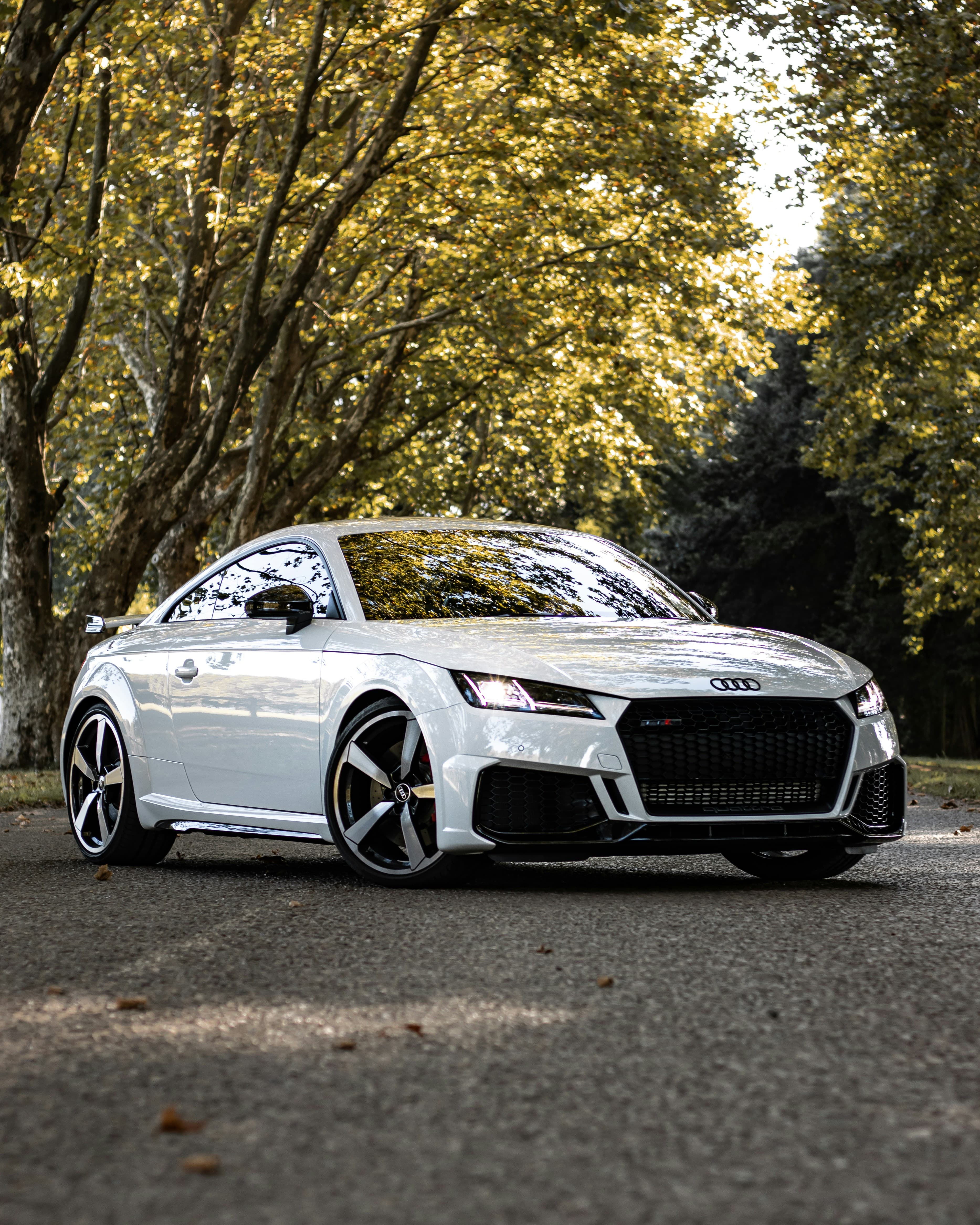
Audi A5 is a premium midsize model that combines sporty design, powerful petrol and diesel engines, complex transmissions and a high level of electronic equipment. Over the years of production, the A5 has been offered as Coupe, Sportback and Cabriolet, while more powerful versions are represented by the S5 and RS 5.
Technically, the Audi A5 is closely related to the Audi A4 of the corresponding generations, but differs in body style, suspension tuning, equipment and positioning. Different versions use petrol TFSI, diesel TDI, S tronic and Tiptronic gearboxes, as well as quattro all-wheel drive.
At Volkkarihuolto Espoo we carry out diagnostics, maintenance and repair of Audi A5 at Ruukinmestarintie 7, 02330 Espoo.

History of the Audi A5
The first-generation Audi A5 appeared in 2007 and marked Audi’s return to the midsize coupe segment. Later the range was expanded with the five-door Sportback and Cabriolet.
The first generation is usually designated as A5 8T. It is technically related to the Audi A4 B8 and uses a longitudinal engine layout.
The second-generation A5 appeared in 2016. It received the F5 designation, a new platform, a lighter body, modern electronics and updated TFSI and TDI engines.
In 2024 Audi changed the model range structure and introduced a new A5 as the successor to the A4 family with internal-combustion engines. When searching for information on the current A5, the model year is especially important.
When repairing, it is always necessary to identify the exact generation, engine, gearbox and drive system from the VIN. Main generations:
- Audi A5 8T — from 2007
- Audi A5 F5 — from 2016
- new-generation Audi A5 — from 2024
First-generation Audi A5
The first A5 is still widely represented on the Finnish used market. Cars from this period may have 1.8 TFSI, 2.0 TFSI, V6 FSI/TFSI, 2.0 TDI, 2.7 TDI, 3.0 TDI, a manual gearbox, Multitronic on selected front-wheel-drive versions, S tronic, Tiptronic and quattro.
On an ageing A5 it is especially worth checking:
- oil consumption
- timing drive
- cooling system
- gearbox
- DPF and EGR on diesel
- quattro
- multilink suspension
- electronics
- body and underbody condition
- computer diagnostics
Second-generation Audi A5
The second-generation A5 received more modern engines and electronic architecture. The car became more technologically advanced, so when a fault appears it is important to carry out a full scan of control units rather than limiting diagnostics to the engine alone.
The most common service focus areas:
- TFSI
- TDI
- S tronic
- Tiptronic on selected powerful versions
- quattro
- quattro ultra
- DPF
- EGR
- AdBlue
- electronic assistants
- computer diagnostics
New Audi A5
In the new generation Audi uses the A5 name for the model line that replaced the previous A4 with internal-combustion engines. This means the new A5 differs substantially from A5 Coupe and Sportback models of earlier years.
Parts and repair procedures from the previous A5 cannot therefore be applied automatically to the new model. For servicing it is especially important to consider:
- new electronic architecture
- modern TFSI and TDI
- electrified systems
- new gearboxes
- assistants
- a large number of electronic control units
- computer diagnostics
Audi A5 servicing in Espoo
Audi A5 is often fitted with more powerful engines than compact Audi models, and many cars have quattro and an automatic gearbox.
In Finland, cold starts, winter road salt and large temperature swings create extra load. Even a car with low annual mileage should ideally be checked every year. Items worth checking regularly include:
- engine oil
- filters
- timing drive
- cooling system
- gearbox
- all-wheel drive
- DPF and EGR
- AdBlue
- brakes
- suspension
- battery
- air conditioning
- regular maintenance
- oil and filter change
- computer diagnostics
- annual maintenance
Audi A5 TFSI petrol engines
Petrol turbocharged TFSI engines were widely used on the A5. On the used market you often see 1.8 TFSI, 2.0 TFSI and 3.0 TFSI on powerful versions.
For TFSI it is especially important to monitor oil consumption, crankcase ventilation, the turbocharger, spark plugs, coils, the cooling system and the timing drive. Book diagnostics if:
- Check Engine is on
- EPC appears
- the engine misfires
- the car has lost power
- noise appears on cold start
- oil consumption has increased
- coolant level is dropping
- petrol engine repair
- computer diagnostics
Oil consumption on Audi A5
Some first-generation petrol TFSI engines may have elevated engine oil consumption. However, the engine should not be assessed by the 1.8 or 2.0 TFSI name alone: there are different generations and revisions of these engines.
Constantly topping up oil without diagnosing the cause is not advisable. If oil consumption has become high, check:
- external leaks
- crankcase ventilation
- turbocharger
- compression
- piston–cylinder group condition
- engine condition by endoscopy if needed
- petrol engine repair
Audi A5 TFSI timing chain
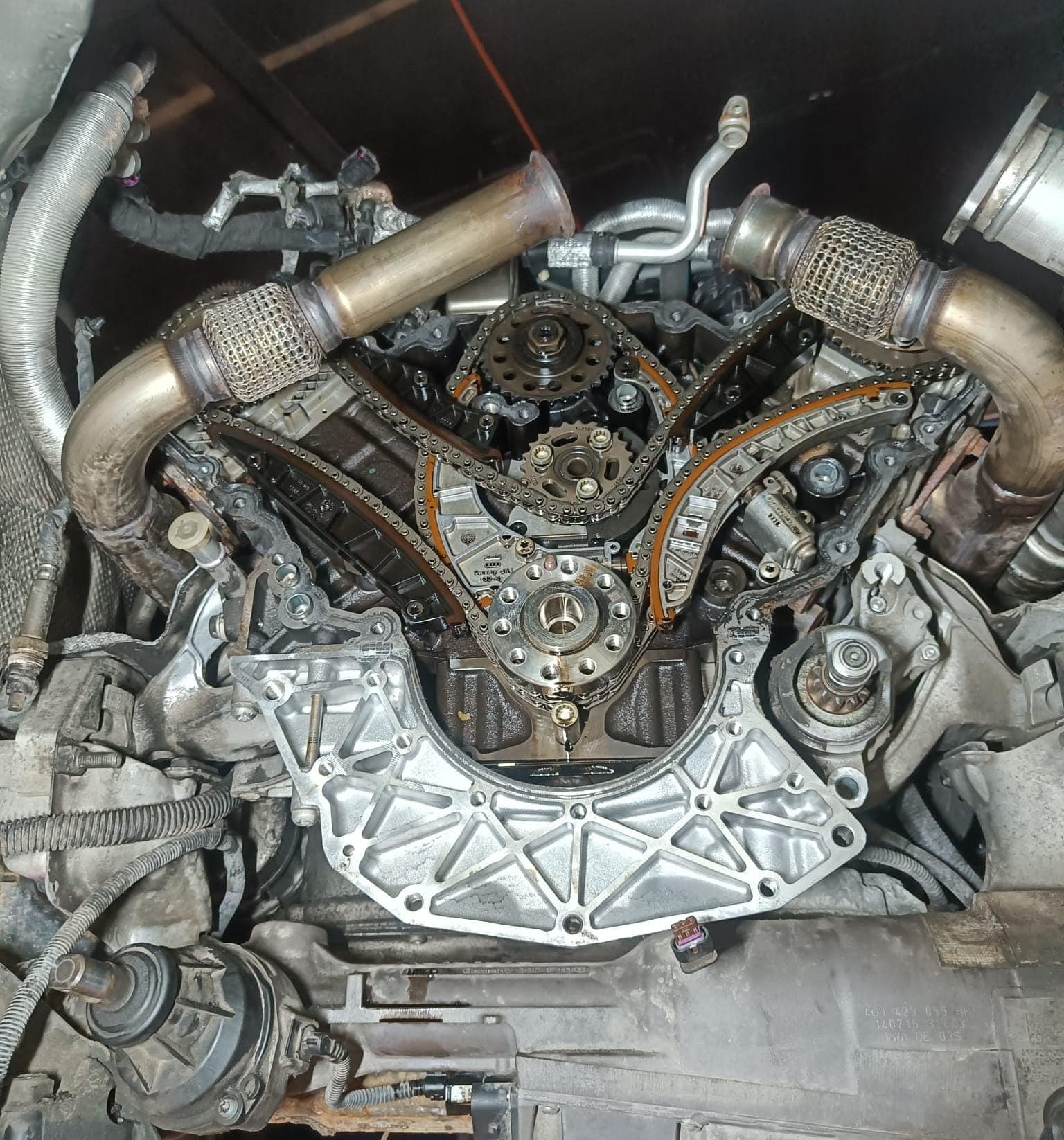
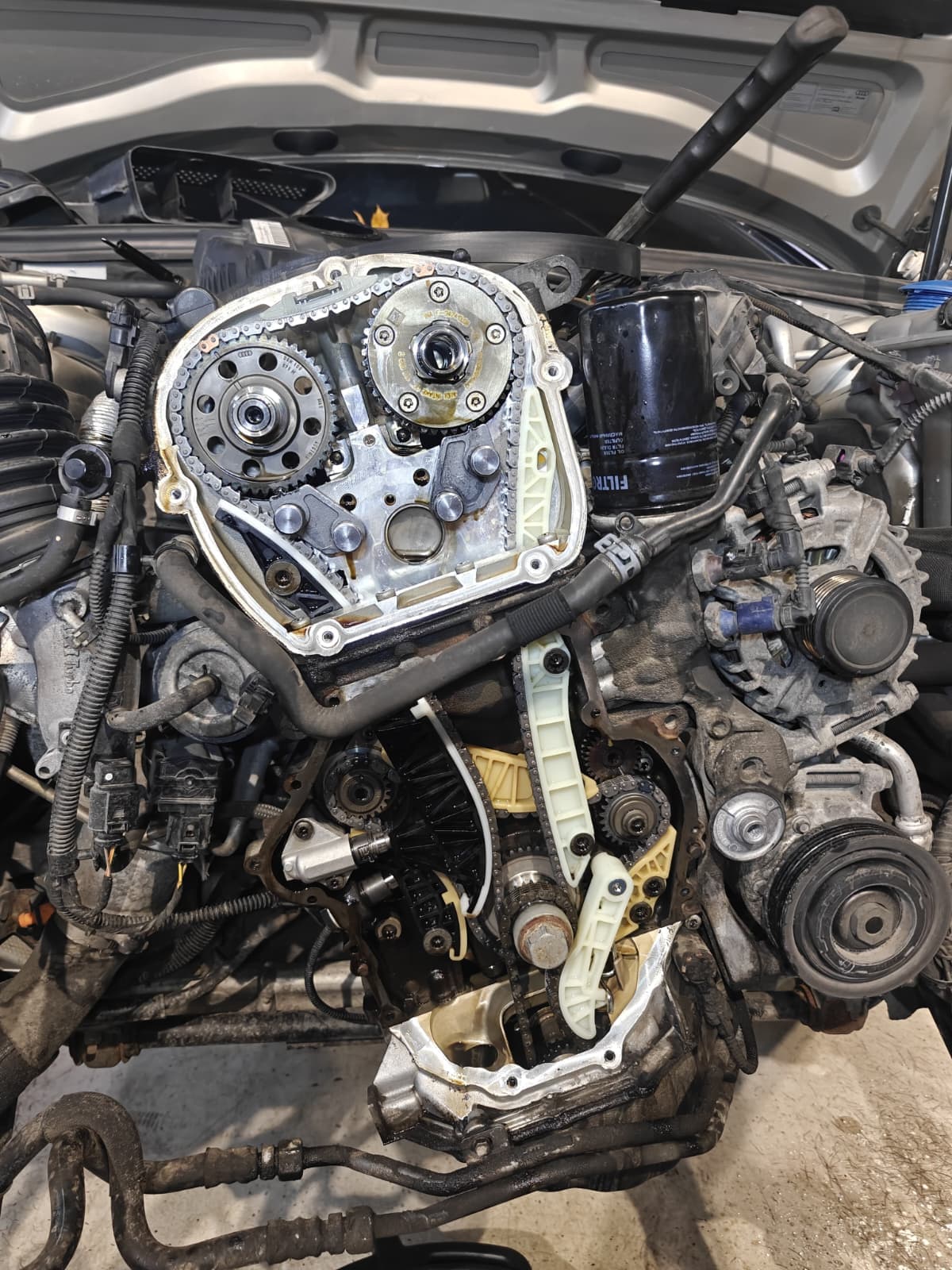
Many petrol engines on the A5 use a timing chain. The problem may relate to the chain, tensioner or variable valve timing mechanism.
If the chain jumps, serious engine damage is possible. A pronounced metallic noise on start-up should therefore not be ignored. On older cars, reasons for diagnostics include:
- metallic noise after cold start
- camshaft timing faults
- poor starting
- unstable idle
- Check Engine
- timing chain replacement
Audi A5 TDI diesel engines
Audi A5 was widely offered with diesel engines. On the used market 2.0 TDI, 2.7 TDI and 3.0 TDI are common.
Diesel suits long motorway mileage well, but with city use the exhaust aftertreatment system and EGR need attention. Book diagnostics if:
- the engine has lost power
- smoke appears
- regeneration starts frequently
- the DPF light is on
- an EGR fault appears
- an AdBlue fault appears
- the car goes into limp mode
- fuel consumption has risen
- TDI diesel engine repair
Audi A5 DPF
The DPF particulate filter gradually accumulates soot and ash. Soot can burn off during regeneration, while ash remains in the filter.
If the engine produces excessive soot, cleaning the DPF without fixing the cause will only give a temporary result. During diagnostics it is worth checking calculated soot load, ash quantity, differential pressure, temperature sensors, EGR operation and injector condition.
Signs of a problem:
- frequent regenerations
- elevated idle speed
- fans running after shutdown
- DPF indicator
- loss of power
- limp mode
- DPF diagnostics
Audi A5 EGR
The EGR system can become contaminated over time. On some diesel engines the EGR cooler should also be checked, especially if coolant level is dropping at the same time.
Possible symptoms:
- Check Engine
- uneven running
- loss of power
- increased soot formation
- frequent regenerations
- limp mode
- EGR diagnostics
AdBlue and SCR on Audi A5
Modern diesel A5 models use SCR and AdBlue. A fault may relate to more than just a low fluid level.
If a message appears that the engine cannot be started again after a certain distance, diagnostics must not be postponed. Possible causes:
- NOx sensor
- pump
- injector
- heater
- level sensor
- wiring
- AdBlue diagnostics
Audi A5 S tronic
Audi A5 is widely fitted with the dual-clutch S tronic gearbox. Different generations may use different transmission versions. During diagnostics the exact gearbox code must be identified.
If regular oil changes are specified for a particular S tronic, they must be carried out as scheduled. Book service if:
- jerking appears
- D or R engages with a delay
- the car vibrates on take-off
- shifts are accompanied by shocks
- a transmission fault appears
- the gearbox goes into limp mode
- S tronic service and repair
- transmission oil change
Audi A5 Tiptronic
Some powerful A5 versions, S5 models and cars with certain all-wheel-drive types use Tiptronic. This is a classic automatic gearbox with a torque converter.
It differs from S tronic and requires a different diagnostic approach. On a high-mileage car, transmission fluid condition and service history should be considered. Reasons to check include:
- shocks
- slipping
- delayed engagement
- vibration
- overheating
- gearbox fault
- gearbox diagnostics and repair
- transmission oil change
Multitronic on early Audi A5 models
Some early front-wheel-drive Audi A5 models were fitted with the Multitronic CVT. It differs substantially from S tronic and Tiptronic in design.
When buying such a car, service history is especially important. Multitronic requires the correct fluid and service procedure. Signs of a possible problem:
- vibration on start
- jerking
- unstable engine revs
- delayed gear engagement
- limp mode
- gearbox diagnostics and repair
Audi A5 quattro
Quattro all-wheel drive is very common on the Audi A5. On cars with a longitudinal engine layout the design differs from compact A1/A3 models.
Depending on the generation, either classic permanent all-wheel drive or the more modern quattro ultra system is used. For quattro it is advisable to use tyres of the same size and similar wear.
Transmission fluids, the propshaft, differentials, CV joints and electronic control should be monitored. Diagnostics are needed if:
- a humming noise appears
- the car vibrates
- shocks are felt
- an all-wheel-drive fault appears
- oil leaks are found
- computer diagnostics
- transmission oil change
Propshaft and differentials
An all-wheel-drive A5 has additional transmission components. Similar vibration can come from the wheels or driveshafts, so the source must be identified before repair.
Possible signs of a fault:
- vibration under acceleration
- humming at a certain speed
- shock when moving off
- metallic noise
- oil leak
- computer diagnostics
Audi A5 suspension
Audi A5 uses a complex multilink suspension designed to combine handling and comfort. On cars with large wheels and low-profile tyres suspension loads are higher.
Before wheel alignment, mechanical play must be eliminated first. Diagnostics are recommended if:
- knocking appears
- the car no longer holds its line as well
- the steering wheel vibrates
- tyres wear unevenly
- a humming noise appears
Adaptive suspension
Some A5 models are fitted with electronically adjustable suspension. If the car changes stiffness depending on driving mode, the condition of electronic dampers and sensors must be considered.
Before replacing a damper it is worth checking the wiring and stored faults. Signs of a problem:
- suspension fault
- one corner of the body behaves differently
- the car has become too stiff
- body roll and handling have worsened
- computer diagnostics
Audi A5 hub bearings
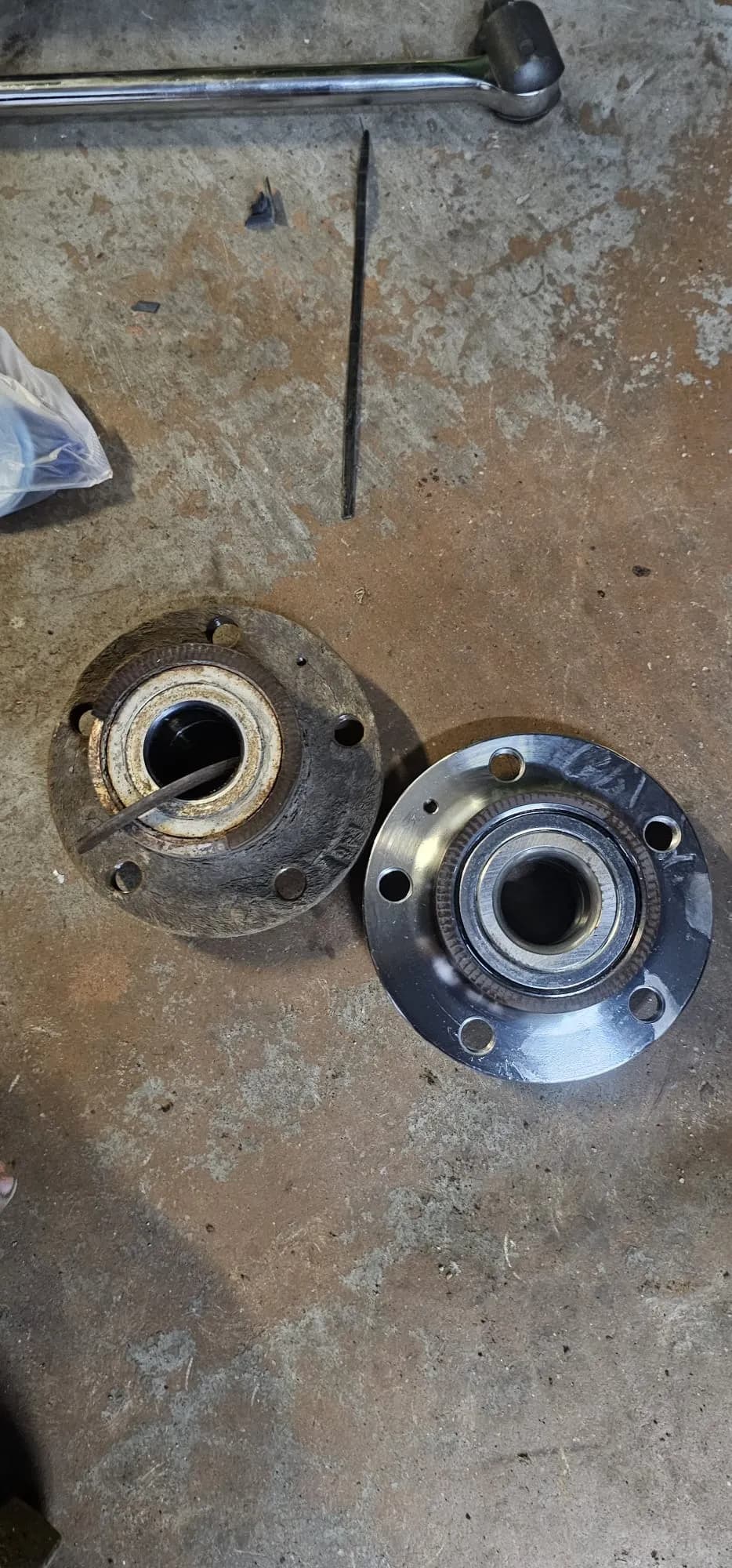
The main symptom of a worn hub bearing is a hum that increases with speed. On quattro such a sound can sometimes be hard to distinguish from transmission noise.
Before replacement it is necessary to identify the exact wheel or component creating the noise.
Audi A5 braking system
The A5 may have a fairly powerful engine and considerable weight, so brake condition is especially important. In Finland, road salt promotes corrosion of discs and mechanisms.
For S5 and RS 5, brake component costs are noticeably higher, so their condition is especially important to assess before purchase. Book an inspection if:
- vibration appears
- the brakes squeal
- the car pulls to one side
- one wheel overheats
- braking distance has increased
- the electronic parking brake does not work correctly
Audi A5 cooling system
The TFSI and TDI cooling system includes a large number of plastic housings, pumps, valves and heat exchangers.
If coolant level is gradually dropping, the cause must be found. Regular topping up alone is not enough. Fluid loss may come from:
- water pump
- thermostat
- hoses
- radiator
- EGR cooler
- heat exchanger
- coolant leak detection
Battery and electronics
A modern A5 has a large number of control units. It is especially important to check the battery before a Finnish winter.
After replacement, some versions require registration of the new battery in the vehicle energy management system. A weak battery can cause:
- Start-Stop faults
- assistants becoming unavailable
- warnings on the instrument cluster
- central locking problems
- MMI rebooting
- electrical system repair
Audi A5 MMI
The MMI multimedia system is an important part of the A5. Before replacing the MMI unit, check the power supply, fuses and diagnostic faults.
Depending on the generation, problems may appear as:
- freezing
- black screen
- reboots
- loss of sound
- Bluetooth problems
- navigation errors
- camera failure
- computer diagnostics
- electrical system repair
Cameras, radars and assistants
A modern Audi A5 may be fitted with adaptive cruise control, Audi pre sense, Lane Assist, blind-spot monitoring, cameras and parking sensors.
Systems may temporarily switch off because of snow or dirt. If a fault remains after cleaning the sensors, diagnostics are needed. After windscreen replacement, suspension repair or body repair, some systems may require calibration.
Air conditioning and climate control
The A5 often uses multi-zone climate control. Causes can include refrigerant leak, compressor, valve, sensor or flap actuator.
Inspection is needed if:
- the air conditioning does not cool
- one zone works differently
- temperature changes on its own
- clicks are heard from the dashboard
- windows clear poorly from condensation
- air conditioning service
Audi A5 Sportback
Sportback is one of the most practical A5 variants. The five-door body and large tailgate allow the car to be used almost like an estate while keeping a sporty profile.
If water appears in the spare-wheel well, the source of the leak must be found. It is also worth monitoring:
- power tailgate
- lock
- wiring
- seals
- water entering the load bay
Audi A5 Cabriolet
The A5 Cabriolet requires additional checks of the folding roof. Blocked drains can lead to water entering the cabin and damaging electronics.
The roof mechanism, hydraulics or electric drive, position sensors, seals and drains must be monitored. Diagnostics are needed if:
- the roof stops during operation
- a fault appears
- the mechanism works asymmetrically
- water enters the cabin
- unusual sounds are heard
- computer diagnostics
Audi S5
The S5 is the higher-performance version of the family. Depending on the generation, various powerful powertrains were used.
It is also important to consider possible chip tuning. If the car was used with increased power, load on the gearbox and engine may have been substantially higher than factory levels.
S5 servicing requires extra attention to:
- engine
- gearbox
- cooling system
- quattro
- brakes
- suspension
- computer diagnostics
Audi RS 5
The RS 5 is the most powerful version of the A5 family. The cost of a mistake when buying an RS 5 is substantially higher than with a regular A5 2.0 TFSI.
Such a car requires especially thorough diagnostics before purchase. Worth checking:
- engine
- service history
- cooling
- gearbox
- quattro
- brakes
- suspension
- signs of tuning
- electronic control-unit faults
- computer diagnostics
Pre-purchase inspection of an Audi A5
Before buying a used Audi A5, a comprehensive inspection is recommended.
For a Cabriolet, the roof mechanism and absence of water in the cabin should be checked additionally. For S5 and RS 5 it is especially important to establish whether previous tuning was carried out.
Worth checking:
- cold engine start
- oil consumption
- timing chain or other timing drive
- turbocharger
- cooling system
- S tronic, Tiptronic or Multitronic
- quattro
- propshaft
- DPF
- EGR
- AdBlue
- suspension
- brakes
- MMI
- electronic assistants
- body and underbody
- computer diagnostics
Which Audi A5 services we provide
At Volkkarihuolto Espoo you can book:
- regular Audi A5 maintenance
- engine oil and filter changes
- computer diagnostics
- TFSI servicing
- TDI servicing
- turbocharger diagnostics
- timing drive inspection
- DPF diagnostics
- EGR diagnostics
- AdBlue diagnostics
- S tronic servicing
- Tiptronic diagnostics
- Multitronic diagnostics
- quattro inspection
- propshaft diagnostics
- brake repair
- suspension diagnostics
- hub bearing replacement
- coolant leak detection
- battery inspection
- air conditioning service
- MMI diagnostics
- electronic assistant inspection
- Cabriolet roof diagnostics
- preparation for inspection
- pre-purchase Audi A5 inspection
Common Audi A5 fault symptoms
Book diagnostics if:
- Check Engine or EPC is on
- the engine misfires
- oil consumption has increased
- metallic noise appears on start-up
- coolant level is dropping
- the diesel frequently starts regeneration
- the DPF light is on
- an EGR or AdBlue fault appears
- S tronic jerks
- the automatic shifts with shocks
- quattro works unsteadily
- vibration appears under acceleration
- the suspension knocks
- a humming noise appears
- the brakes vibrate
- MMI reboots
- assistant faults appear
- the Cabriolet roof will not open or close
Audi A5 repair in Espoo
Need Audi A5 repair or servicing? Contact Volkkarihuolto Espoo at Ruukinmestarintie 7, 02330 Espoo.
We can diagnose petrol TFSI and diesel TDI engines, S tronic, Tiptronic, Multitronic, quattro, DPF, EGR, AdBlue, turbocharging, the timing drive, brakes, suspension, the cooling system, MMI and other electronic equipment.
When servicing an Audi A5 it is especially important to consider the generation and exact technical configuration. An early A5 2.0 TFSI, a diesel A5 3.0 TDI quattro and the new-generation A5 have substantially different designs and require different approaches to diagnostics and preventive repair.
FAQ
How does the Audi A5 differ from the Audi A4?
Historically the A5 uses a platform closely related to the A4 but has a more sporting body and positioning. The A5 was offered as Coupe, Sportback and Cabriolet. In the new generation Audi changed the model range structure and the A5 name is now used for a new midsize family with internal-combustion engines.
Which engines are fitted to the Audi A5?
Different generations use petrol TFSI and diesel TDI engines. The sporty S5 and RS 5 have separate powerful powertrains.
Does the Audi A5 use a timing chain or belt?
It depends on the specific engine. Many petrol TFSI engines use a chain drive, while diesel engine designs may differ. This should be checked from the VIN and engine code.
Why does an Audi A5 use oil?
Causes can include leaks, crankcase ventilation, the turbocharger or internal engine wear. On some earlier TFSI engines elevated oil consumption is more common, but each car must be diagnosed individually.
Which is better: S tronic or Tiptronic?
These are different designs. S tronic uses two clutches and delivers fast shifts. Tiptronic is a classic automatic with a torque converter. The choice depends on the engine and version of the car.
Does the Audi A5 have Multitronic?
Some early front-wheel-drive versions used Multitronic. On quattro it is not a typical configuration.
Does Audi A5 quattro need servicing?
Yes. The scope of servicing depends on the generation of the system. It is also important to monitor the propshaft, differentials, leaks and tyre condition.
Why does an Audi A5 vibrate under acceleration?
Causes can include the wheels, CV joints, driveshafts, propshaft, engine mounts or transmission.
Why does a diesel A5 regenerate the DPF so often?
Possible causes include short trips, high filter load or problems with the EGR, sensors and engine.
Can an Audi A5 be inspected before purchase?
Yes. It is advisable to check the engine, gearbox, timing drive, quattro, cooling system, suspension, brakes and electronics. For diesel, DPF/EGR/AdBlue should also be checked, and for a Cabriolet the roof mechanism.
Detailed Services
Professional fault diagnostics for Audi A5.
Oil ChangeEngine oil and filter replacement for Audi A5.
Annual maintenanceComprehensive annual maintenance for Audi A5.
Regular MaintenanceScheduled maintenance for Audi A5 according to service needs.
Engine RepairEngine diagnostics and repair for Audi A5.
Diesel Engine RepairDiesel engine service and repair for Audi A5.
Electrical RepairElectrical fault tracing and repair for Audi A5.
ECU ProgrammingControl unit programming and coding for Audi A5.
DSG RepairDSG transmission diagnostics and repair for Audi A5.
Transmission RepairTransmission diagnostics and repair for Audi A5.
Transmission Oil ChangeTransmission oil change for Audi A5.
Timing Belt ReplacementTiming belt and related component replacement for Audi A5.
Timing Chain ReplacementTiming chain, tensioner, and guide replacement for Audi A5.
Cooling System RepairCooling system service and repair for Audi A5.
AC RepairAir conditioning service and repair for Audi A5.
Engine Heater InstallationEngine heater installation and service for Audi A5.
Cabin OzonationCabin ozonation and odor removal for Audi A5.