
Audi Q7 — service and repair in Espoo
Audi Q7 is a large premium SUV designed for long trips, family use, towing and driving in demanding winter conditions. The model combines powerful petrol and diesel engines, quattro all-wheel drive, automatic gearboxes, a complex multi-link and air suspension setup and a large number of electronic systems.
In Finland the Audi Q7 is of particular interest thanks to all-wheel drive, a spacious cabin and the option of up to seven seats. At the same time the high vehicle mass, powerful drivetrains and transmission complexity mean that Q7 servicing requires a careful approach.
In 2026 Audi presented the third generation of the Q7. So today the name Q7 can mean technically very different cars — from the first generation with 3.0 TDI and V12 TDI to the modern Q7 with V6 TDI, MHEV plus and permanent quattro.
At Volkkarihuolto Espoo we carry out diagnostics, maintenance and repair of Audi Q7 at Ruukinmestarintie 7, 02330 Espoo.
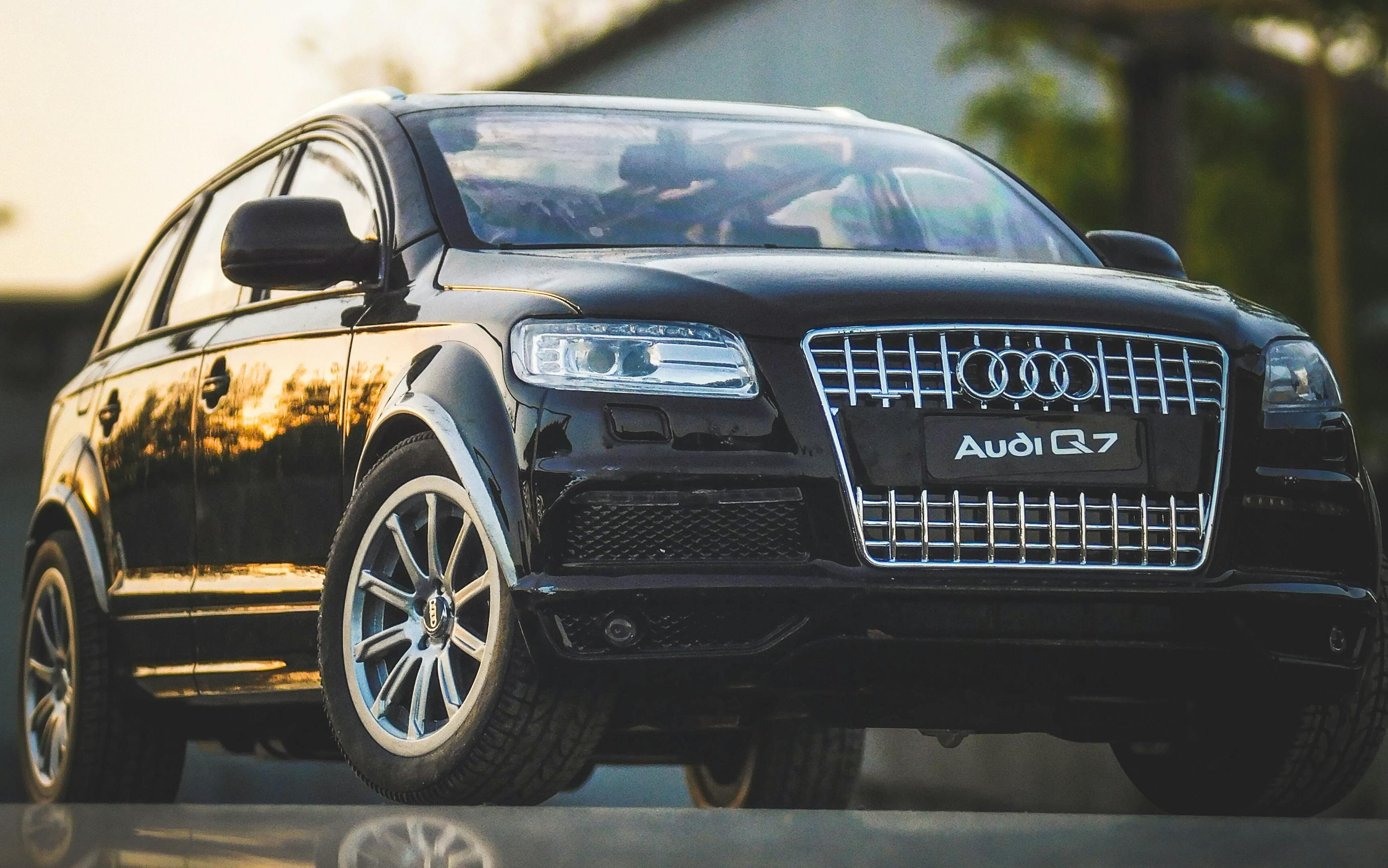
History of the Audi Q7
The history of the Q7 began with the Audi Pikes Peak quattro concept shown in 2003. The production Audi Q7 was presented to the public in 2005 at the Frankfurt Motor Show and became the first SUV from the Audi brand. Production started in 2006.
The first generation was built until 2015. During that time more than 550,000 cars were produced. Audi offered a wide choice of petrol and diesel engines, and the top of the range was the Q7 V12 TDI with 500 hp and 1000 Nm.
The second generation arrived in 2015. It became lighter, received a modern electronic architecture, new driver assistance systems, more efficient engines and the option of a four-wheel steering chassis. Later the car received major updates in 2019 and 2023–2024.
In June 2026 Audi presented the third-generation Q7. The new car received an updated architecture, modern electronics, MHEV plus and permanent quattro. At launch Audi announced V6 TDI outputs of 180 and 220 kW.
For repairs it is essential to consider the generation, engine, gearbox and the specific type of all-wheel drive. The main generations are:
- Audi Q7 4L — 2005/2006–2015
- Audi Q7 4M — 2015–2026
- Third-generation Audi Q7 — from 2026
First-generation Audi Q7
The first generation is widely represented on the used market today. You may find 3.0 TDI, 4.2 TDI, V12 TDI, petrol FSI, Tiptronic, quattro and air suspension.
These cars are already of significant age. It is especially important to assess the car from underneath: a large SUV may have been used with a heavy trailer, driven on poor roads or placed under heavy suspension load. In addition to scheduled servicing it is necessary to check carefully:
- cooling system
- turbochargers
- DPF
- EGR
- chain drive
- Tiptronic
- propshaft
- differentials
- air suspension
- brakes
- electrics
- underbody and body
- computer diagnostics
Second-generation Audi Q7
The second generation became significantly more advanced. It features 2.0 TFSI on selected markets, 3.0 TFSI, 3.0 TDI, Tiptronic, quattro, TFSI e, 48-volt mild-hybrid systems, adaptive air suspension and rear-wheel steering.
After the 2024 update the Q7 received new lighting systems, revised design and additional electronic functions. Audi continued to offer the car with petrol, diesel and plug-in hybrid powertrains.
New third-generation Audi Q7
The third-generation Q7 was officially presented in June 2026. At launch the model received a 3.0-litre V6 TDI in two power outputs: 180 kW / 245 hp and 220 kW / 299 hp.
Both use MHEV plus, and brief electric assistance can add up to 18 kW. An electric compressor is also used to improve engine response. Permanent quattro all-wheel drive is part of the core concept of the new generation.
The new Q7 can have five, six or seven seats depending on cabin configuration. For third-generation repairs it is necessary to use technical information for the new Q7 specifically — procedures from the previous generation cannot be transferred automatically.
Audi Q7 servicing in Espoo
Audi Q7 is a heavy car that is often used under high load. It may be used for long trips, family transport, trailer towing, cottage journeys, snow driving and operation at full load.
On a high-mileage car preventive diagnostics can help find a problem before a serious failure. It is especially important to check regularly:
- engine oil
- filters
- timing drive
- cooling system
- Tiptronic
- quattro
- DPF
- EGR
- AdBlue
- propshaft
- brakes
- suspension
- air system
- battery
- air conditioning
- electronic assistants
- Audi Q7 scheduled maintenance
- oil and filter change
- annual service
Audi Q7 TFSI petrol engines
On the second generation the 3.0 TFSI is widely used. Other petrol versions also existed depending on market and model year.
When servicing TFSI it is worth monitoring engine oil level and condition, spark plugs, coils, turbocharging, crankcase ventilation, the cooling system and the chain drive.
Diagnostics are needed if:
- Check Engine lights up
- EPC appears
- the engine misfires
- power has dropped
- oil consumption has increased
- a metallic noise appears
- coolant level is dropping
- petrol engine repair
- computer diagnostics
Audi Q7 3.0 TFSI
The 3.0 TFSI is one of the main petrol engines of the second-generation Q7. On updated cars the engine develops significant power and works together with an automatic transmission and quattro.
At high mileage it is worth carefully checking the cooling system, turbocharger, chain drive, ignition system, crankcase ventilation and engine mounts.
If the engine starts to run unevenly, diagnostics should begin with reading faults and checking actual parameters, not by replacing components at random.
Audi Q7 timing chain
Many V6 and V8 Audi Q7 engines use a chain-driven timing drive. The design can be complex, and on some engines the chains are located on the gearbox side.
Not every brief noise means a full chain replacement is required. First it is worth checking faults, actual timing angles and the condition of the mechanism.
Reasons for diagnostics include:
- metallic noise on cold start
- synchronisation faults
- poor starting
- unstable running
- Check Engine
- timing chain replacement
- computer diagnostics
Audi Q7 TDI diesel engines
Diesel Q7 models are very popular in Finland. The 3.0 TDI is especially common. On older generations larger diesels also appeared: 4.2 TDI and V12 TDI.
A diesel Q7 suits motorway trips and towing well, but needs a working exhaust aftertreatment system.
Diagnostics are needed if:
- the car has lost power
- smoke appears
- fuel consumption has risen
- regeneration starts frequently
- a DPF fault appears
- an EGR fault appears
- an AdBlue fault appears
- the car enters limp mode
- TDI diesel engine repair
- computer diagnostics
New Audi Q7 V6 TDI
The third generation launched with the 3.0 V6 TDI. Audi offers two versions with 180 and 220 kW.
Both received the MHEV plus system and an electric compressor that helps increase torque at low revs before the conventional turbocharger reaches efficient operation.
Servicing the new engine must take account of the conventional diesel side, MHEV plus, the electric compressor, exhaust aftertreatment and additional electronics.
Audi Q7 DPF
The DPF particulate filter gradually accumulates soot and ash. The Q7 is often used for long trips, which favours regeneration. But if a diesel car is driven mainly in the city or constantly on short trips, regeneration may not complete.
Forced regeneration is not suitable in every case. Diagnostics should check soot and ash loading, differential pressure, temperature sensors, EGR and engine operation.
Possible symptoms:
- raised idle speed
- fans continue running after shutdown
- fuel consumption has risen
- regenerations have become too frequent
- a DPF indicator appears
- the engine has lost power
- DPF diagnostics
Audi Q7 EGR
EGR reduces nitrogen oxide emissions but can become contaminated with soot over time. Fault symptoms: Check Engine, power loss, uneven running, frequent regenerations and limp mode.
On a diesel Q7 the EGR cooler should also be considered. If the coolant level drops at the same time as an EGR fault, the system should be checked especially carefully.
Audi Q7 AdBlue and SCR
Modern diesel Q7 models use SCR and AdBlue. The problem may involve the pump, injector, NOx sensor, heater, level sensor or wiring.
If a countdown to a no-start condition appears on the instrument cluster, diagnostics should not be delayed. Simply topping up AdBlue does not help if the fault is in the pump, sensor or control system.
Audi Q7 Tiptronic
The classic Tiptronic automatic with a torque converter is especially typical for the Audi Q7. It is designed for high torque and suits a heavy SUV.
On a high-mileage car it is worth considering oil condition and gearbox service history. Diagnostics also check engine mounts, the propshaft, driveshafts and electronic control.
Diagnostics are needed if:
- D or R engages with a delay
- harsh shifts appear
- the gearbox slips
- vibration appears
- shifts have become harsh
- a transmission fault appears
- transmission oil change
- computer diagnostics
Audi Q7 quattro
Quattro all-wheel drive is one of the core features of the Q7. The Q7 uses a longitudinal engine layout and an all-wheel-drive system that differs from compact Audi models with a transverse engine.
Across generations the torque distribution design may differ. For quattro it is especially important to use tyres of the same size and similar wear.
Diagnostics are needed if:
- a hum appears
- the car vibrates
- harsh engagement appears
- transmission faults appear
- oil leaks are found
- computer diagnostics
- transmission oil change
Propshaft and differentials
An all-wheel-drive Q7 has a propshaft, front and rear differentials, central torque distribution elements and driveshafts.
A similar hum can come from tyres or hub bearings, so the exact source must be identified first.
Signs of a possible fault:
- vibration under acceleration
- a metallic knock
- a hum
- noise at a certain speed
- oil leak
- computer diagnostics
Audi Q7 TFSI e
The second generation was produced as a plug-in hybrid TFSI e. After the 2024 update Audi offered a new battery with 25.9 kWh gross and 22 kWh net capacity.
The system combines a 3.0 V6 TFSI with 250 kW and an electric motor of up to 130 kW. The 55 TFSI e version has a system output of 290 kW and 600 Nm. Audi stated up to 85 km combined electric range WLTP and up to 90 km in the urban cycle for the updated version.
Diagnostics must consider the combustion engine, high-voltage battery, electric motor, charging system, Tiptronic, cooling system and quattro.
If the Audi Q7 TFSI e will not charge
A fault does not necessarily mean a traction battery problem. Check the charging cable, charge point, port, connector lock, 12V battery, onboard charging system, stored faults and high-voltage components.
If charging does not start or regularly interrupts, diagnostics should come first. Work directly on high-voltage components requires appropriate qualification.
MHEV and the 48-volt system
Modern Q7 models widely use a 48-volt mild-hybrid system. The new third generation uses the more advanced MHEV plus. It uses an electric motor-generator that can briefly assist the main engine.
This means additional components: a 48V battery, power electronics, a converter, electric drive and extra control units.
If numerous faults appear, it is necessary to check more than just the conventional 12V battery.
Audi Q7 cooling system
Large TDI and TFSI engines have a complex thermal management system. Causes of coolant loss may include the water pump, thermostat, radiator, hoses, EGR cooler, heat exchanger or cooling system valves.
On TFSI e there are also separate circuits for high-voltage components. If the antifreeze level drops regularly, the cause must be found.
Audi Q7 suspension
Audi Q7 is a heavy SUV, so the suspension takes a heavy load. This is especially noticeable on poor roads, with a heavy load, when towing and with large wheels.
It is worth checking control arms, bushes, ball joints, anti-roll bar links, dampers and hub bearings.
Fault symptoms:
- knocking
- squeaking
- the car pulling to one side
- steering wheel vibration
- uneven tyre wear
Audi Q7 air suspension
Many Q7 models are fitted with adaptive air suspension. It provides a high level of comfort and allows ride height to be changed. The system includes air struts, a compressor, a valve block, air lines and level sensors.
If there is a leak, simply replacing the compressor will not solve the problem. First it is necessary to find where the system is losing air.
Fault symptoms:
- the car settles after standing
- one corner is lower than the others
- the compressor runs for too long
- a suspension fault appears
- the body does not change height
- computer diagnostics
Rear-wheel steering
The second-generation Q7 can be fitted with four-wheel steering. At low speed the rear wheels turn in the opposite direction to the fronts and help reduce the turning circle. At high speed they help improve stability.
After suspension or steering repairs it is necessary to consider setup and calibration of this system. The updated Q7 TFSI e also gained the option of four-wheel steering.
Active anti-roll bars
On some second-generation versions electromechanical active roll stabilisation eAWS is available. It adjusts anti-roll bar behaviour to improve handling and comfort.
The updated 2024 Q7 TFSI e was also offered with this system. If a chassis fault appears, it is necessary to consider not only the conventional suspension but also electronically controlled components.
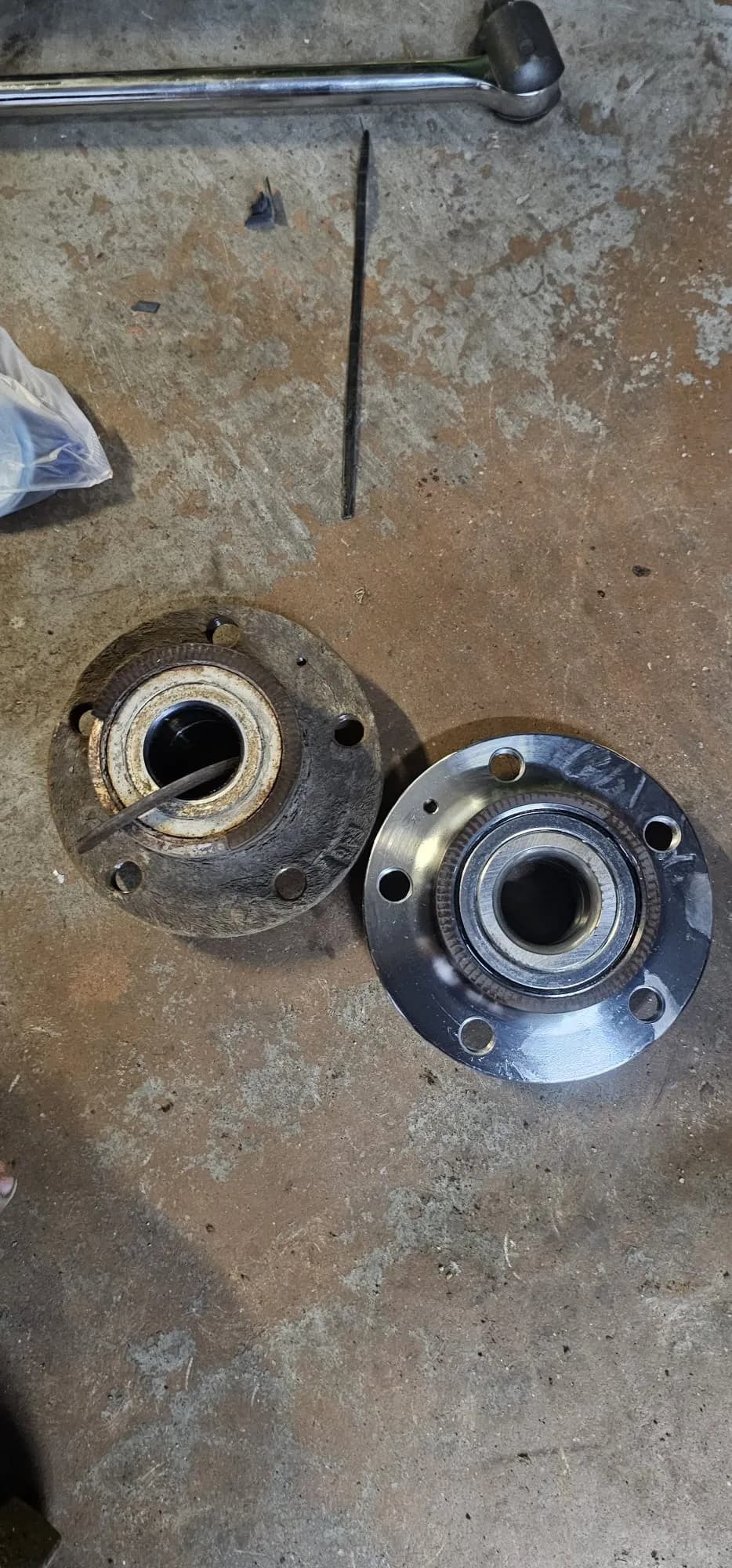
Hub bearings
High mass and wide wheels place significant load on hub bearings. The main symptom is a hum that increases with speed.
On quattro a similar sound can come from tyres, the propshaft or a differential. Before replacing a bearing the source must be localised.
Audi Q7 braking system
A large and heavy Q7 needs powerful brakes. In Finland road salt is an additional challenge. Over time disc corrosion, seized guides, uneven pad wear and parking brake issues are possible.
When towing the load on the brakes is even higher. Diagnostics are needed if:
- the brakes vibrate
- a metallic sound is heard
- the car pulls to one side
- one wheel overheats
- braking distance has increased
Tyres and wheel alignment
The Q7 has high mass and is often fitted with large wheels. Incorrect wheel angles can quickly lead to expensive tyre wear.
But before adjustment, play must first be eliminated. Geometry should be checked if:
- the car pulls to one side
- the steering wheel is not straight
- the inner or outer edge of the tyre wears faster
- the suspension was recently repaired
Audi Q7 battery
Audi Q7 contains a large number of electronic systems. A weak 12V battery can show up as slow starting, Start-Stop switching off, numerous warnings, unavailable assistants, gearbox faults and MMI problems.
On modern mild-hybrid cars the 48-volt system must also be considered.
MMI and electronics
The amount of electronics is especially large on second- and third-generation Q7 models. Possible faults: MMI restarts, the screen does not switch on, sound disappears, the camera does not work, parking sensors show a fault, assistants become unavailable.
If many different warnings appear at once, it is useful to start diagnostics by checking supply voltage and the battery.
Cameras, radars and assistants
A modern Q7 can be fitted with adaptive cruise control, Lane Assist, Audi pre sense, blind-spot monitoring, 360° cameras and parking assistants.
In winter snow and ice can temporarily block sensors. After windscreen replacement, body repair, an impact or serious suspension repair, calibration of cameras and radars may be required.
Air conditioning and climate system
The large Q7 cabin needs a capable climate system. The car may have multi-zone climate control.
Fault causes may include refrigerant leak, compressor, valve, sensor, blower or flap actuators.
Inspection is needed if:
- the air conditioning does not cool
- the rear of the cabin does not warm up
- one zone works differently
- flap clicking is heard
- the windows clear poorly of moisture
- air conditioning repair and service
Seven-seat Audi Q7 cabin
One of the main advantages of the Q7 is the option of seven seats. The first and second generations are widely known as large family SUVs.
The new third generation also retains a seven-seat layout and additionally offers an unusual six-seat option with two individual seats in the second row.
On an older car it is worth checking:
- folding mechanisms
- seat electric drives
- locks
- seat-belt sensors
- rear passenger climate
Trailer towing
The Q7 is often used for towing. The permitted trailer mass must be determined from the registration data of the specific car.
With regular trailer use it is especially important to monitor:
- Tiptronic
- cooling system
- brakes
- propshaft
- rear suspension
- tyres
- tow hitch
- electrical socket
Audi SQ7
SQ7 is the more sporting version of the family. Across generations powerful diesel and petrol engines have been used. Such cars have a more powerful drivetrain, a reinforced transmission, quattro, high-performance brakes and a complex chassis.
Before purchase it is especially useful to check:
- engine
- cooling system
- turbochargers
- Tiptronic
- quattro
- air suspension
- active anti-roll bars
- brakes
- presence of tuning
- computer diagnostics
Audi Q7 V12 TDI
The first generation had a unique V12 TDI version. The engine developed 500 hp and 1000 Nm. Audi built this version from 2008 to 2012. It was also the first Audi fitted with ceramic brakes as standard.
Today such a car is rare and technically complex. Any V12 TDI repair requires especially careful diagnostics and an assessment of parts availability.
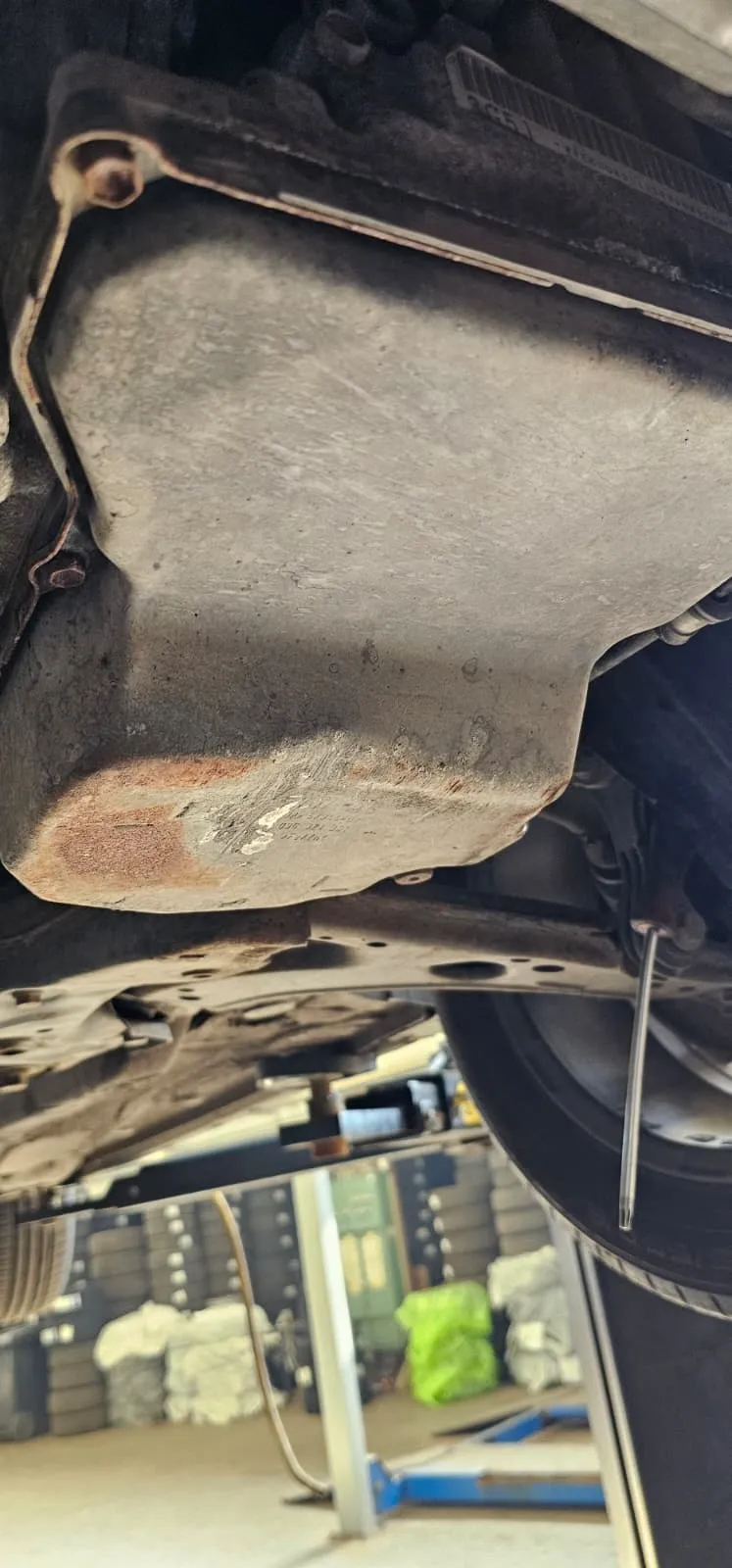
Audi Q7 body and underbody
The Q7 has good factory protection, but Finnish salt gradually affects the underbody, suspension parts, brake lines, mountings, exhaust system and subframes.
On first-generation cars age already makes corrosion an important part of diagnostics. Previous body repair areas in particular should be checked.
Audi Q7 pre-purchase inspection
Before buying a used Q7 a comprehensive diagnosis is recommended. It is also useful to find out whether the car was used for regular towing.
For TFSI e the high-voltage battery, charging port, charging, hybrid mode and high-voltage faults are additionally checked.
It is worth checking:
- cold engine start
- faults in all control units
- chain drive
- turbochargers
- cooling system
- DPF
- EGR
- AdBlue
- Tiptronic
- quattro
- propshaft
- differentials
- air suspension
- steering
- brakes
- batteries
- MMI
- cameras and assistants
- body and underbody
- computer diagnostics
Which Audi Q7 services we provide
At Volkkarihuolto Espoo you can come to us for:
- Audi Q7 scheduled maintenance
- engine oil and filter change
- computer diagnostics
- TFSI servicing
- TDI servicing
- turbocharging diagnostics
- timing chain inspection
- DPF diagnostics
- EGR diagnostics
- AdBlue diagnostics
- Tiptronic diagnostics
- quattro inspection
- propshaft and differential diagnostics
- TFSI e diagnostics
- 12V and 48V system checks
- brake repair
- suspension diagnostics
- air suspension diagnostics
- hub bearing replacement
- coolant leak detection
- air conditioning service
- MMI diagnostics
- camera and assistant checks
- preparation for inspection
- Audi Q7 pre-purchase inspection
Common Audi Q7 fault symptoms
Book diagnostics if:
- Check Engine is on
- the engine has lost power
- a metallic noise appears after start-up
- oil consumption has increased
- coolant level is dropping
- the diesel regenerates the DPF too often
- an EGR or AdBlue fault appears
- Tiptronic shifts with harsh engagement
- D or R engages with a delay
- vibration appears under acceleration
- quattro works unsteadily
- a transmission hum appears
- air suspension settles after standing
- the compressor switches on too often
- the suspension knocks
- the brakes vibrate
- MMI restarts
- many electronic faults appear at once
- TFSI e will not charge
Audi Q7 repair in Espoo
Need Audi Q7 repair or servicing? Contact Volkkarihuolto Espoo at Ruukinmestarintie 7, 02330 Espoo.
We can diagnose petrol TFSI and diesel TDI engines, Tiptronic, quattro, DPF, EGR, AdBlue, turbocharging, the timing chain drive, brakes, suspension, the air system, cooling, MMI and electronic assistants.
For Q7 TFSI e you can come for charging diagnostics and related systems; whether specific work directly on high-voltage components is possible is determined with safety requirements and the necessary qualification in mind.
When servicing an Audi Q7 it is especially important to consider the generation of the car. The first Q7 3.0 TDI, the second Q7 TFSI e and the new third-generation Q7 with V6 TDI and MHEV plus have substantially different designs and require different approaches to diagnostics and preventive maintenance.
FAQ
When did the Audi Q7 appear?
Audi showed the production Q7 in 2005 at the Frankfurt Motor Show. First-generation production started in 2006. The Q7 became the first SUV from the Audi brand.
How many generations of Audi Q7 are there?
As of 2026 there are three generations. The second was built until 2026, and the third generation was presented in June 2026.
Which Audi Q7 is the current new model?
The current model is the third generation, presented on 9 June 2026. At launch it received a V6 TDI with MHEV plus and permanent quattro.
Which engines are fitted to the Audi Q7?
Over the history of the model petrol TFSI, diesel TDI and plug-in hybrid TFSI e have been used. The first generation also had a unique V12 TDI version.
Is there a seven-seat Audi Q7?
Yes. A seven-seat layout is one of the characteristic features of the Q7. The new third generation is also available with five, six or seven seats.
Which gearbox does the Audi Q7 use?
Many Q7 models use an automatic Tiptronic with a torque converter. The exact transmission depends on generation and engine.
Does the Audi Q7 have quattro?
Yes. Quattro all-wheel drive is one of the core features of the model. The new third generation also uses permanent quattro as standard on the powertrains presented.
Does quattro need servicing?
Yes. Transmission fluids, the propshaft, differentials, driveshafts and tyre condition must be taken into account.
Why does the Audi Q7 settle after standing?
If the car has air suspension, there may be a leak in an air strut, valve block or line.
Why does a diesel Q7 regenerate the DPF often?
Causes may include short trips, high filter loading or faults in EGR, injectors, sensors or the engine.
Is there a plug-in hybrid Audi Q7?
Yes. The second generation was produced as TFSI e. After the 2024 update the version received a battery with 25.9 kWh gross and 22 kWh net capacity.
What is the electric range of the Q7 TFSI e?
For the updated version Audi stated up to 85 km electric range in the combined WLTP cycle and up to 90 km in the urban WLTP EAER City cycle.
Can an Audi Q7 be checked before purchase?
Yes. For a used Q7 such an inspection is especially useful. It is worth checking the engine, Tiptronic, quattro, chain drive, air suspension, cooling, brakes and electronics. On a diesel DPF, EGR and AdBlue are additionally checked, and on TFSI e the charging and high-voltage systems.
Detailed Services
Professional fault diagnostics for Audi Q7.
Oil ChangeEngine oil and filter replacement for Audi Q7.
Annual maintenanceComprehensive annual maintenance for Audi Q7.
Regular MaintenanceScheduled maintenance for Audi Q7 according to service needs.
Engine RepairEngine diagnostics and repair for Audi Q7.
Diesel Engine RepairDiesel engine service and repair for Audi Q7.
Electrical RepairElectrical fault tracing and repair for Audi Q7.
ECU ProgrammingControl unit programming and coding for Audi Q7.
DSG RepairDSG transmission diagnostics and repair for Audi Q7.
Transmission RepairTransmission diagnostics and repair for Audi Q7.
Transmission Oil ChangeTransmission oil change for Audi Q7.
Timing Belt ReplacementTiming belt and related component replacement for Audi Q7.
Timing Chain ReplacementTiming chain, tensioner, and guide replacement for Audi Q7.
Cooling System RepairCooling system service and repair for Audi Q7.
AC RepairAir conditioning service and repair for Audi Q7.
Engine Heater InstallationEngine heater installation and service for Audi Q7.
Cabin OzonationCabin ozonation and odor removal for Audi Q7.

.webp&w=3840&q=75)
.webp&w=3840&q=75)