Škoda Yeti — repair and service in Espoo
Škoda Yeti is the brand’s first production SUV and one of the most recognisable Škoda models of the 2000s and 2010s. The car combines compact dimensions, a high seating position, a practical transformable cabin and, on some versions, 4×4 all-wheel drive.
The production Yeti was presented in 2009. It was from this model that Škoda’s modern SUV story began, later continued by the Kodiaq, Karoq and Kamiq. Over its life cycle more than 680,000 cars were produced.
On the Finnish used-car market you will find petrol 1.2, 1.4 and 1.8 TSI, diesel 1.6 and 2.0 TDI, manual gearboxes, DSG, and front-wheel or all-wheel drive.
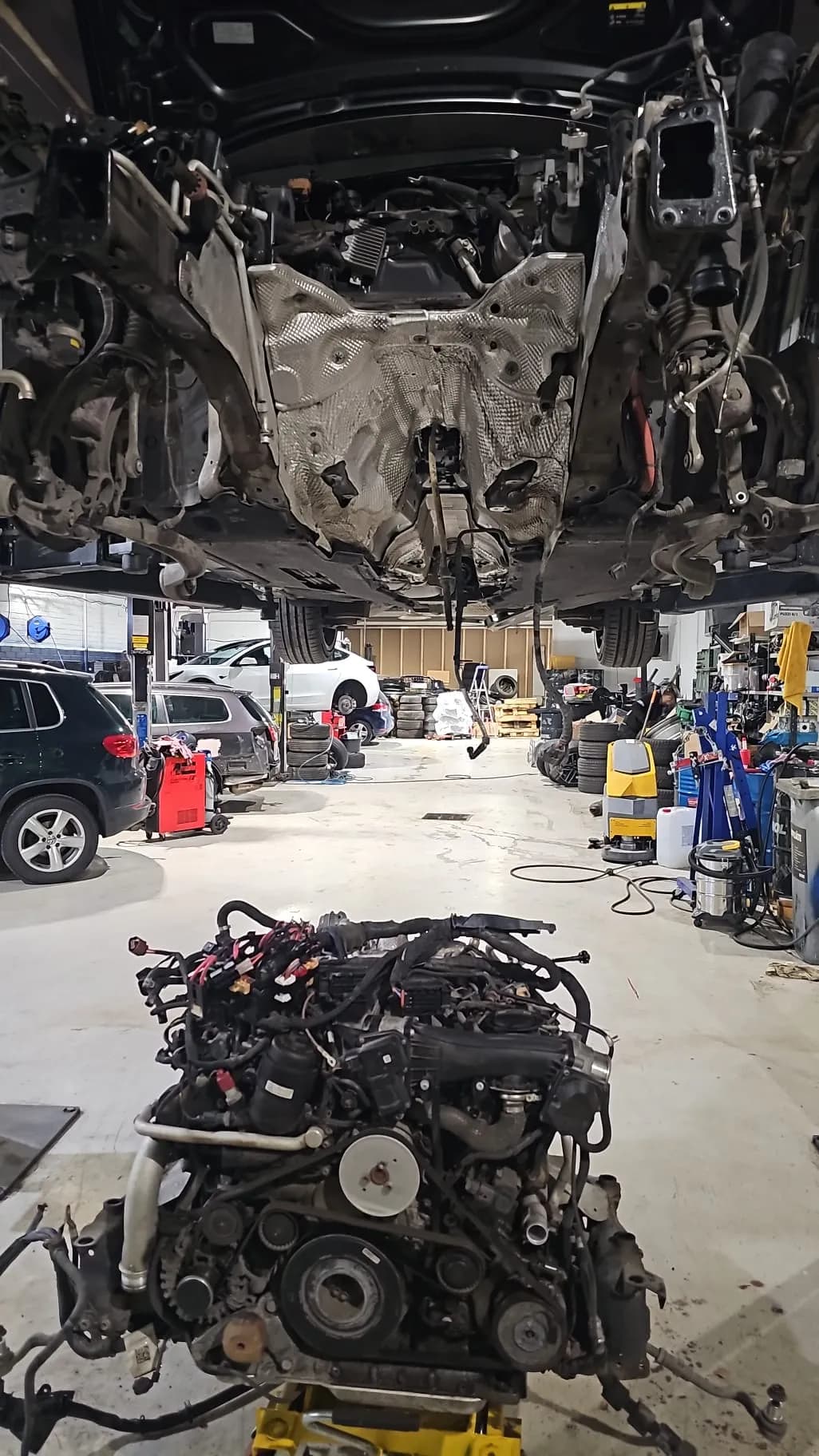
At Volkkarihuolto Espoo we carry out diagnostics, maintenance and repair of Škoda Yeti at Ruukinmestarintie 7, 02330 Espoo.

History of the Škoda Yeti
The production Yeti was presented on 5 March 2009 at the Geneva Motor Show, and production started already in April. The car was built on a technical base related to the second-generation Octavia, but received its own compact SUV body and ground clearance of about 180 mm.
In 2013 Škoda substantially updated the Yeti, and from 2014 a sportily styled Monte Carlo version appeared. At the start of the model cycle the following were offered:
- 1.2 TSI
- 1.8 TSI
- 2.0 TDI of various outputs
- front-wheel drive
- 4×4
When did Škoda Yeti production end?
Czech production of the Yeti ended in 2017 when the transition to the new Karoq began. On some markets and production sites the model lasted a little longer, so in Škoda materials you may see the life cycle marked as 2009–2018.
The successor to the Yeti was the Škoda Karoq, presented in 2017. So today any European Yeti is already a used car, and the condition of the specific example matters more than its equipment level.
Škoda Yeti before the facelift
Early Yeti models are especially recognisable by the round auxiliary lights in the front bumper. On these cars you often find 1.2 TSI, 1.8 TSI, 2.0 TDI, a manual gearbox, DSG and 4×4.
For cars from 2009–2013 the following are especially important:
- service history
- timing drive
- DSG
- cooling system
- all-wheel drive
- DPF and EGR on diesel
- suspension
- computer diagnostics
Škoda Yeti facelift 2013
At the end of 2013 the model received a major update. After the facelift Škoda split the design into two directions: the regular Yeti with a more urban look and the Yeti Outdoor with a more pronounced SUV style.
The front end, lighting, interior, equipment levels and engine range also changed. On later cars you find more modern TSI and TDI versions.
Škoda Yeti servicing in Espoo
Today most Yeti cars are already around ten years old or more. So besides the standard schedule, age-related wear deserves special attention. On an all-wheel-drive car, servicing the rear-axle clutch is separately important.
The following are checked regularly:
- engine oil
- filters
- spark plugs
- timing drive
- turbocharger
- cooling system
- DSG
- clutch
- 4×4
- DPF
- EGR
- brakes
- suspension
- battery
- air conditioning
- Škoda Yeti technical maintenance
- oil and filter change
- annual service
Škoda Yeti 1.2 TSI
1.2 TSI is one of the most common petrol engines on the early Yeti. At model launch the 77 kW / 105 hp version was offered with front-wheel drive.
During servicing it is worth monitoring engine oil, spark plugs, coils, the turbocharger, crankcase ventilation, the timing drive and the cooling system. Reasons for diagnostics include:
- Check Engine
- EPC
- misfiring
- jerking
- loss of power
- metallic noise after start-up
- petrol engine repair
- computer diagnostics
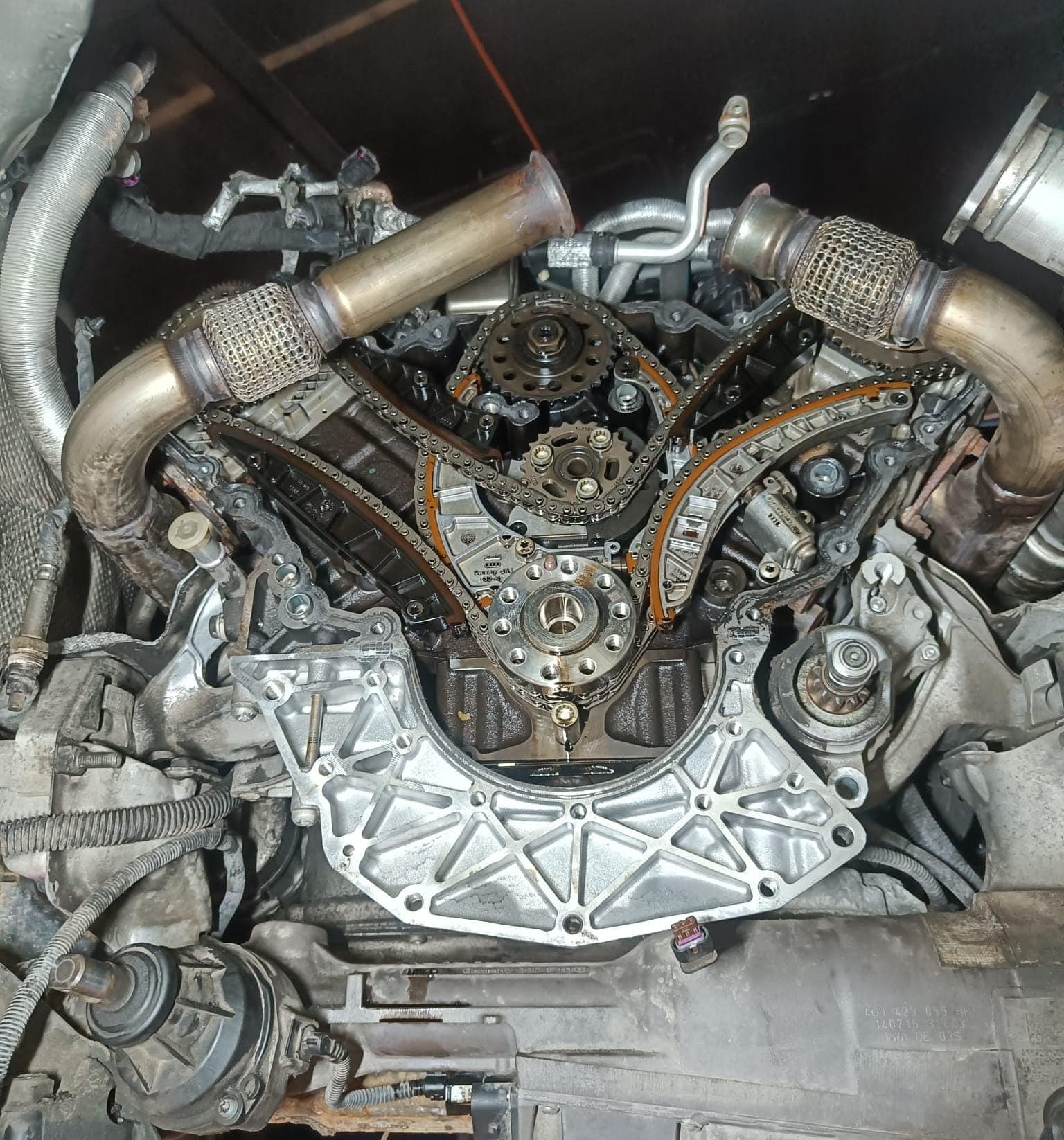
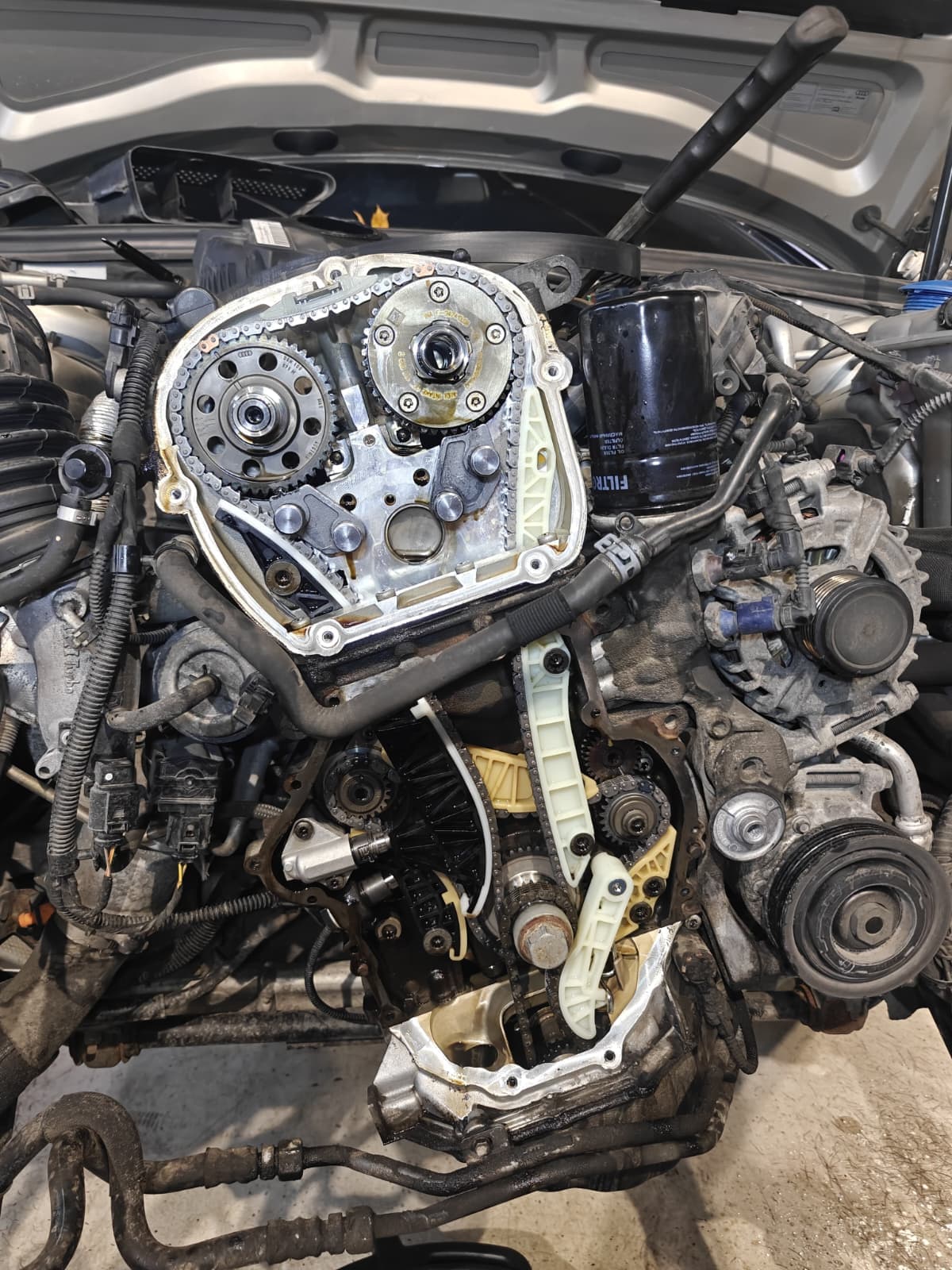
1.2 TSI timing chain
Early 1.2 TSI versions use a chain timing drive. But noise alone does not mean the chain must be replaced immediately. First the system condition and diagnostic parameters should be checked.
With high mileage or an unknown history, watch for a metallic sound on cold start, timing errors, unstable running and starting problems.
Škoda Yeti 1.4 TSI
1.4 TSI appeared in the range later. Škoda quoted, for example, a 90 kW / 122 hp version in the earlier line-up, and on later all-wheel-drive Yeti cars a 1.4 TSI with 110 kW was used.
Because different engine generations hide under the 1.4 TSI name, timing and service recommendations must be determined from the VIN and engine code. It is worth monitoring oil, ignition, the turbocharger, the cooling system and the timing drive.
Škoda Yeti 1.8 TSI
1.8 TSI was used on more powerful versions, especially with all-wheel drive. The early Yeti 1.8 TSI produced 118 kW / 160 hp and was offered with 4×4.
Such a car places greater load on the engine, gearbox, all-wheel-drive system and cooling. Before buying it is especially useful to check oil consumption, the turbocharger, the timing drive, DSG if fitted, Haldex/4×4 and any tuning history.
Yeti TSI oil consumption
Do not automatically conclude that a major overhaul is needed. First it is useful to establish the real consumption and rule out simpler causes.
If a petrol engine starts to use oil noticeably, the cause may lie in:
- an external leak
- the crankcase ventilation system
- the turbocharger
- internal engine wear
- petrol engine repair
- computer diagnostics
Škoda Yeti turbocharger
TSI and TDI use turbocharging. So the turbocharger should only be replaced after diagnostics. Similar symptoms can be caused by hoses, the vacuum system on relevant diesels, the actuator, valves and sensors.
Possible faults are indicated by loss of power, a boost-pressure fault, whistling, smoke and increased oil consumption.
Diesel Škoda Yeti
The Yeti was widely produced with diesel engines. In different years 1.6 TDI and 2.0 TDI were used. At model launch the 2.0 TDI was offered with roughly 81 kW / 110 hp, 103 kW / 140 hp and 125 kW / 170 hp.
The more powerful versions were initially paired with all-wheel drive. A diesel Yeti suits highway use and high mileage well, but needs working DPF and EGR systems.
Škoda Yeti 1.6 TDI
1.6 TDI appeared later and was used, among other things, on economical GreenLine versions. Škoda quoted about 77 kW / 105 hp. For mainly short trips a diesel may more often experience DPF regeneration problems.
On a high-mileage car it is worth checking:
- DPF
- EGR
- injectors
- turbocharger
- timing drive
- clutch
- TDI diesel engine repair
Škoda Yeti 2.0 TDI
2.0 TDI is one of the most suitable Yeti engines for highway use, winter operation, all-wheel drive and towing. On later Yeti 4×4 cars you find, for example, 2.0 TDI versions with 81 and 110 kW.
During servicing it is worth monitoring:
- timing drive
- DPF
- EGR
- turbocharger
- injectors
- cooling system
- all-wheel drive
- TDI diesel engine repair
- all-wheel-drive clutch service
Škoda Yeti DPF
Diesel Yeti cars of the relevant years use a particulate filter. The DPF gradually accumulates soot and ash. Soot is removed during regeneration, while ash remains in the filter.
Signs of active regeneration: raised idle, fans after stopping, increased consumption and temporarily disabled Start-Stop on the relevant car. When there are problems you may see a DPF fault, Check Engine, loss of power and limp mode.
Why does the Yeti regenerate the DPF often?
So frequent regenerations are a reason to find the cause, not simply to run another forced clean.
Possible causes:
- short trips
- excessively high filter loading
- a faulty EGR
- injector problems
- incorrect engine operation
- differential pressure sensor
- temperature sensor
- DPF diagnostics
Škoda Yeti EGR
Diesels use EGR. Over time it can become contaminated with soot. If the car is also losing coolant, on the relevant versions the EGR cooler should also be checked.
Possible symptoms:
- Check Engine
- loss of power
- unstable idle
- frequent regenerations
- limp mode
- EGR diagnostics
- coolant leak diagnosis
Škoda Yeti timing drive
Different engines are used on the Yeti, so both chain and belt systems occur. One replacement interval cannot be used for all Yeti cars.
The correct schedule is determined from the VIN, engine code, model year and service history. This is especially important when buying a car without confirmed records of previous servicing.
Škoda Yeti DSG
The Yeti was produced with various DSG units depending on the engine. Front-wheel-drive low-power versions and powerful 4×4 models may use technically different gearboxes. So the word DSG alone is not enough to define the service schedule.
Diagnostics are needed if:
- the car jerks
- vibration has appeared
- D or R engages with a delay
- the gearbox shifts with jolts
- a fault has appeared
- some gears have become unavailable
- DSG service and repair
- gearbox oil change
DSG on the Yeti 4×4
On later all-wheel-drive Yeti cars some engines could be paired with a 6-speed DSG. For example, Škoda quoted this option for the 1.4 TSI 110 kW and the more powerful 2.0 TDI. On such gearboxes oil service requirements are especially important.
When buying, check the gearbox cold, after warm-up, in slow driving, when shifting D/R and under load.
DSG mechatronic unit
The mechatronic unit controls the gearbox and clutches. But a mechatronic fault does not automatically mean the whole gearbox must be replaced. First a diagnosis of the specific fault is carried out.
Possible symptoms: limp mode, loss of gears, strong jerking, inability to select D or R, and pressure faults.
Manual gearbox and clutch
Many Yeti cars have a manual gearbox. On diesels and certain petrol versions the dual-mass flywheel should also be taken into account.
A clutch check is needed if it slips, the car jerks on take-off, the biting point has changed or vibration has appeared.
Škoda Yeti 4×4
All-wheel drive is one of the Yeti’s key features. From the start of production Škoda offered all-wheel-drive versions, and the model became one of the brand’s first mass-market SUVs with 4×4.
The system uses an electronically controlled multi-plate clutch to transfer torque to the rear axle. Depending on the model year the corresponding generation of this system is used. In everyday speech it is usually called Haldex.
Haldex / 4×4 service on the Škoda Yeti
All-wheel drive needs its own servicing. It is worth checking the clutch oil, pump, system contamination, electronic faults and actual engagement of the rear axle.
Signs of a problem:
- the front wheels spin while the rears barely help
- an all-wheel-drive fault has appeared
- the car behaves unusually on a slippery road
- jolts or vibration have appeared
- all-wheel-drive clutch service
- computer diagnostics
Haldex pump
If the pump does not build the required pressure, all-wheel drive may practically stop working without an obvious mechanical failure. The whole clutch should not be replaced immediately.
So if a problem is suspected it is useful to check pump power supply, control-unit faults, actual operating parameters and system contamination.
Tyres and all-wheel drive
On a Yeti 4×4 it is especially important to use four tyres of the same size, a suitable type and similar tread depth. A large difference in wheel circumference creates unnecessary load on the drivetrain.
Propshaft and rear differential
A Yeti 4×4 also has a propshaft, rear differential, driveshafts and a multi-plate clutch. Similar humming can also come from hub bearings or tyres.
A check is needed for vibration, humming, knocking, jolts on take-off and leaks.
Off-road Mode on the Škoda Yeti
Some all-wheel-drive Yeti cars offer Off-road Mode. It changes the operation of ABS, traction control, the electronic accelerator pedal and other vehicle control systems.
If Off-road Mode becomes unavailable, the cause may not be the button itself but a fault in a related system, for example ABS or all-wheel drive.
Škoda Yeti Outdoor
After the 2013 facelift the Yeti Outdoor appeared. It differs with a more off-road look: protective plastic elements, revised bumpers and a more pronounced SUV style.
At the same time Outdoor could be either front-wheel or all-wheel drive depending on the engine and equipment. After the update Škoda simultaneously offered the more urban Yeti and the more off-road-styled Yeti Outdoor. So the Outdoor name alone does not yet mean 4×4.
Škoda Yeti Monte Carlo
From 2014 the Yeti Monte Carlo version was produced. It received sporty exterior and interior styling, black trim details and special wheels.
Monte Carlo is not a separate RS model. Servicing is determined by the fitted engine, gearbox and whether all-wheel drive is present.
Is there a Škoda Yeti RS?
There was no production Yeti RS. Monte Carlo is a sportily styled equipment line, not a high-performance RS model.
If a used Yeti has noticeably increased power, it is most likely tuned.
Tuning a Škoda Yeti
TSI and TDI engines are often given software power increases. This increases load on the turbocharger, clutch, DSG, dual-mass flywheel, all-wheel drive and cooling system.
Before buying a tuned Yeti it is useful to find out which program is installed, whether the gearbox was modified, how long ago the tuning was done and whether the car was returned to factory configuration.
Yeti cooling system
If the coolant level drops, the cause must be found. The age of the car also means natural ageing of plastic joints and rubber parts.
Possible sources:
- water pump
- thermostat
- thermostat housing
- radiator
- hoses
- heat exchanger
- EGR cooler on diesel
- coolant leak diagnosis
Škoda Yeti suspension
The Yeti has a higher body and greater mass than a regular Fabia. Over time anti-roll-bar links, bushes, arms, ball joints, dampers, top mounts and hub bearings may need attention.
Reasons for diagnostics include:
- knocking
- squeaking
- the car pulling to one side
- body roll / pitching
- uneven tyre wear
- computer diagnostics
Yeti rear suspension
The condition of the rear suspension is especially affected by the all-wheel-drive drivetrain, towing, heavy loads and poor roads.
If the car regularly carried heavy loads or towed a trailer, springs, dampers, bushes and geometry should be checked more carefully.
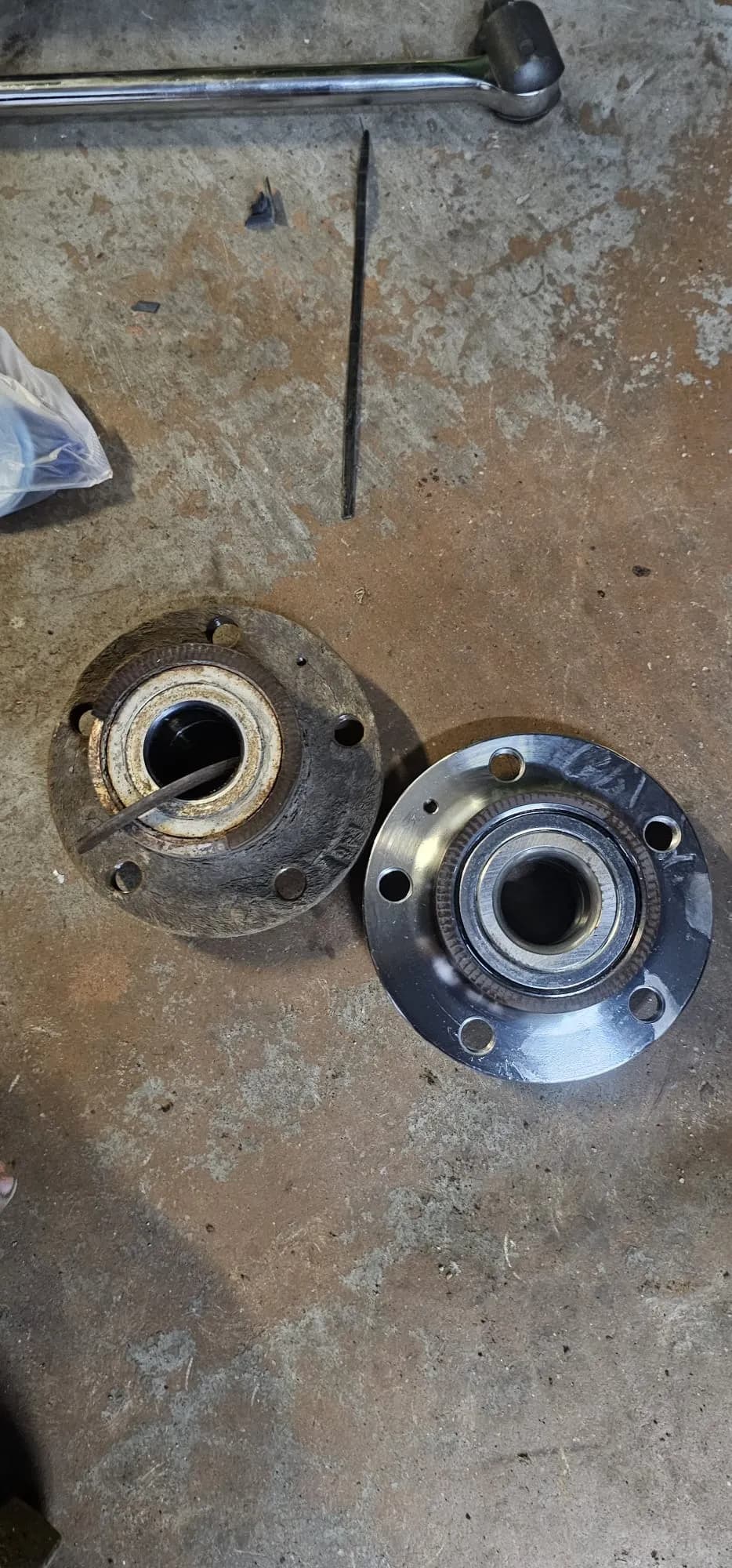
Hub bearings
The main sign of wear is humming that increases with speed. On a Yeti 4×4 similar sounds can also come from tyres, the propshaft or the rear differential.
So before replacing a part the source should be localised.
Škoda Yeti brakes
Finnish road salt places serious stress on the braking system. Over time disc corrosion, seized guides, a sticking caliper and uneven pad wear are possible.
A check is needed if:
- the car pulls under braking
- vibration has appeared
- one wheel overheats
- squeaking or a metallic sound has appeared
Handbrake
The Yeti uses a mechanical parking brake. In Finnish conditions it is especially useful to check it after winter.
With age seized cables, problems with the rear brake mechanisms and incorrect adjustment are possible.
Brake lines and corrosion
The Yeti already belongs among older cars. So during inspection it is worth checking not only discs and pads but also brake lines, hoses, mountings and underbody components.
Road salt eventually causes corrosion of metal parts.
Škoda Yeti battery
A weak battery in winter can cause poor starting, random ABS/ESP faults, steering faults, DSG problems and central-locking glitches.
If several unrelated warnings appear at once, it is useful first to check battery voltage, battery condition and alternator charging.
Alternator and charging system
If the battery keeps going flat, the problem is not necessarily the battery itself. It is worth checking the alternator, voltage regulator, earth connections, power cables and parasitic drain.
Škoda Yeti electrics
The Yeti has significantly more electronics than older Škoda models, but is noticeably simpler than modern Kodiaq or Enyaq cars. With an unstable fault it is worth first checking power supply and wiring.
With age connector oxidation, door-lock problems, wiring damage, sensor faults and parking-system failures are possible.
Central locking and doors
If one door does not lock, is not recognised by the system or does not respond to the remote, the cause may be the lock, a microswitch, door wiring or a control unit. Age-related lock wear on used cars is fairly common.
Window regulators
If a window moves in jerks, slowly or with a crackling sound, check the guides, cable mechanism, motor and wiring. Continued use of a sticking window regulator can lead to a more expensive failure.
Škoda Yeti air conditioning
Air conditioning is needed not only in summer. It helps clear moisture from the glass in winter too. If the system has to be recharged regularly, the leak must be found.
If the system has stopped cooling, refrigerant quantity, leaks, the compressor, condenser, pressure sensor and fans are checked.
VarioFlex — transformable cabin
One of the Yeti’s distinctive features is the VarioFlex rear-seat system. Individual rear seats can be adjusted and removed, making a compact SUV especially practical. Škoda used the VarioFlex concept already on the Roomster and made it one of the Yeti’s hallmarks.
On a used car it is worth checking the guides, latches, folding mechanisms, mountings and seat belts.
Panoramic roof
Some Yeti cars have a large panoramic roof. Watch the mechanism operation, seals, drains and the absence of water in the cabin.
If the drains are blocked, water can enter the pillars, under the carpet and reach electrical connectors.
Water in the cabin
If the carpet or boot is wet, the source must be found. Moisture can lead to contact corrosion and electrical faults.
Doors, seals, the panoramic roof, drains, the tailgate and signs of previous body repairs are checked.
Tailgate
On an older Yeti it is worth checking the lock, wiring, gas struts, rear wiper and washer. If several tailgate functions stop working at once, check the wiring loom.
Trailer towing
An all-wheel-drive 2.0 TDI Yeti was often used for towing. Such use increases load on the clutch or DSG, dual-mass flywheel, cooling system, brakes, rear suspension and 4×4.
The permitted trailer weight should be determined from the registration data of the specific car.
Škoda Yeti corrosion
The Yeti body is usually fairly well protected, but age and Finnish salt require a careful inspection. The outer body may look good while underside components already suffer serious corrosion.
It is especially worth checking the underbody, subframes, suspension parts, brake lines, sills, arches and sites of previous body repairs.
Checking a Škoda Yeti before purchase
If the car has a tow bar, it is useful to find out whether it was used for regular towing. Before buying a used Yeti it is worth checking:
- cold start
- electronic control-unit faults
- engine
- oil consumption
- turbocharger
- timing chain or belt
- cooling system
- DSG or manual gearbox
- clutch
- dual-mass flywheel
- DPF
- EGR
- Haldex / 4×4
- propshaft
- rear differential
- suspension
- hub bearings
- brakes
- brake lines
- battery
- air conditioning
- body and underbody
- no water in the cabin
- computer diagnostics
Which Škoda Yeti services we provide
At Volkkarihuolto Espoo you can come for:
- regular Škoda Yeti maintenance
- engine oil and filter change
- computer diagnostics
- TSI servicing
- TDI servicing
- turbocharging diagnostics
- timing chain or belt inspection
- DPF diagnostics
- EGR inspection
- DSG servicing
- mechatronic diagnostics
- clutch repair
- dual-mass flywheel inspection
- 4×4 / Haldex service
- propshaft and rear differential diagnostics
- coolant leak diagnosis
- brake repair
- suspension diagnostics
- hub bearing replacement
- battery and alternator check
- air-conditioning service
- electrical diagnostics
- preparation for inspection
- Škoda Yeti pre-purchase inspection
Common Škoda Yeti fault signs
Book diagnostics if:
- Check Engine or EPC is on
- the engine misfires
- a metallic noise is heard after start-up
- the car has lost power
- oil consumption has increased
- an unusual turbo whistle has appeared
- the coolant level is dropping
- the TDI regenerates the DPF too often
- an EGR fault has appeared
- the DSG jerks
- D or R engages with a delay
- the clutch slips
- all-wheel drive has stopped working properly
- the front wheels spin while the rear axle barely engages
- vibration has appeared
- humming has appeared
- the suspension knocks
- the brakes vibrate
- the battery keeps going flat
- the air conditioning does not cool
- water appears in the cabin
Škoda Yeti repair in Espoo
Need repair or maintenance of a Škoda Yeti? Contact Volkkarihuolto Espoo at Ruukinmestarintie 7, 02330 Espoo.
We can diagnose petrol TSI and diesel TDI engines, DSG, turbocharging, chain and belt timing drives, DPF, EGR, the cooling system, 4×4/Haldex, the propshaft, brakes, suspension, battery, air conditioning and electrical systems.
When servicing a Škoda Yeti it is especially important to take the specific engine and transmission into account. A front-wheel-drive 1.2 TSI, an all-wheel-drive 1.8 TSI, a 2.0 TDI 4×4 DSG and a late Yeti Outdoor have different units and need different approaches to diagnostics and preventive maintenance.
Correct diagnostics make it possible to find the real cause of a fault and avoid unnecessary replacement of expensive components.
FAQ
When did the Škoda Yeti appear?
The production Yeti was presented on 5 March 2009 in Geneva, and production started in April 2009.
Why is the Škoda Yeti important for the brand?
The Yeti became Škoda’s first production SUV and laid the foundation for the later development of the Kodiaq, Karoq, Kamiq and the brand’s electric SUVs.
When did Škoda stop producing the Yeti?
Main European production ended in 2017 with the transition to the Karoq, and in the overall model history Škoda indicates a life cycle through 2018 including other production sites.
How many Škoda Yeti cars were produced?
Different official materials give slightly different final figures because of markets and counting methods, but the figure is about 684–685 thousand cars.
Which model replaced the Škoda Yeti?
The successor to the Yeti was the Škoda Karoq, whose production started in 2017.
Which engines were fitted to the Škoda Yeti?
In different years petrol 1.2, 1.4 and 1.8 TSI were used, as well as diesel 1.6 and 2.0 TDI.
Is there a Škoda Yeti with DSG?
Yes. DSG was fitted to various versions depending on the engine. On later 4×4 models, for example, some engines could be paired with a 6-speed DSG.
Why does the Yeti DSG jerk?
The cause may be the clutches, mechatronic unit, oil, adaptations, powertrain mounts or a mechanical gearbox fault. Diagnostics are needed first.
Is there a Škoda Yeti 4×4?
Yes. All-wheel drive was one of the Yeti’s key features from the first generation of the model.
Does the Haldex on a Yeti need servicing?
Yes. On an all-wheel-drive car you need to allow for multi-plate clutch service, oil condition, the pump and system contamination.
Why does a Yeti 4×4 spin only the front wheels?
Possible causes are a faulty pump, system contamination, a control fault or another problem with the rear-axle engagement clutch.
Does the Yeti have a DPF?
On the relevant diesel versions — yes. Presence and exact system configuration depend on the engine and model year.
Why does a Yeti TDI regenerate the DPF often?
The cause may be short trips, high filter loading, EGR, sensors, injectors or another engine problem.
Does Yeti Outdoor always have all-wheel drive?
No. Outdoor primarily denotes a design and equipment variant. Whether 4×4 is fitted depends on the specific engine and equipment.
Is there a Yeti Monte Carlo?
Yes. The Monte Carlo version appeared in 2014 and differed with sporty styling.
Is there a Škoda Yeti RS?
No. There was no production Yeti RS.
Can a Škoda Yeti be checked before purchase?
Yes. It is especially useful to check the engine, timing drive, DSG or clutch, cooling system, DPF/EGR on diesel, and Haldex, propshaft and differential on 4×4.
Detailed Services
Professional fault diagnostics for Skoda Yeti.
Oil ChangeEngine oil and filter replacement for Skoda Yeti.
Annual maintenanceComprehensive annual maintenance for Skoda Yeti.
Regular MaintenanceScheduled maintenance for Skoda Yeti according to service needs.
Engine RepairEngine diagnostics and repair for Skoda Yeti.
Diesel Engine RepairDiesel engine service and repair for Skoda Yeti.
Electrical RepairElectrical fault tracing and repair for Skoda Yeti.
ECU ProgrammingControl unit programming and coding for Skoda Yeti.
DSG RepairDSG transmission diagnostics and repair for Skoda Yeti.
Transmission RepairTransmission diagnostics and repair for Skoda Yeti.
Transmission Oil ChangeTransmission oil change for Skoda Yeti.
Timing Belt ReplacementTiming belt and related component replacement for Skoda Yeti.
Timing Chain ReplacementTiming chain, tensioner, and guide replacement for Skoda Yeti.
Cooling System RepairCooling system service and repair for Skoda Yeti.
AC RepairAir conditioning service and repair for Skoda Yeti.
Engine Heater InstallationEngine heater installation and service for Skoda Yeti.
Cabin OzonationCabin ozonation and odor removal for Skoda Yeti.