Škoda Kodiaq — service and repair in Espoo
Škoda Kodiaq is a large family SUV that combines a spacious cabin, the option of a seven-seat layout, petrol TSI, diesel TDI, DSG and 4×4 all-wheel drive. For Finnish conditions the Kodiaq is especially appealing as a practical car for a family, winter driving, long journeys and towing a trailer.
The first Kodiaq was presented in 2016 and effectively launched Škoda’s modern SUV line-up. The car became the brand’s first large SUV and could have up to seven seats.
Today the second generation is already in production. It received more modern TSI and TDI engines, mild-hybrid, a new generation of DSG and for the first time the plug-in hybrid Kodiaq iV with an electric range of more than 100 km.
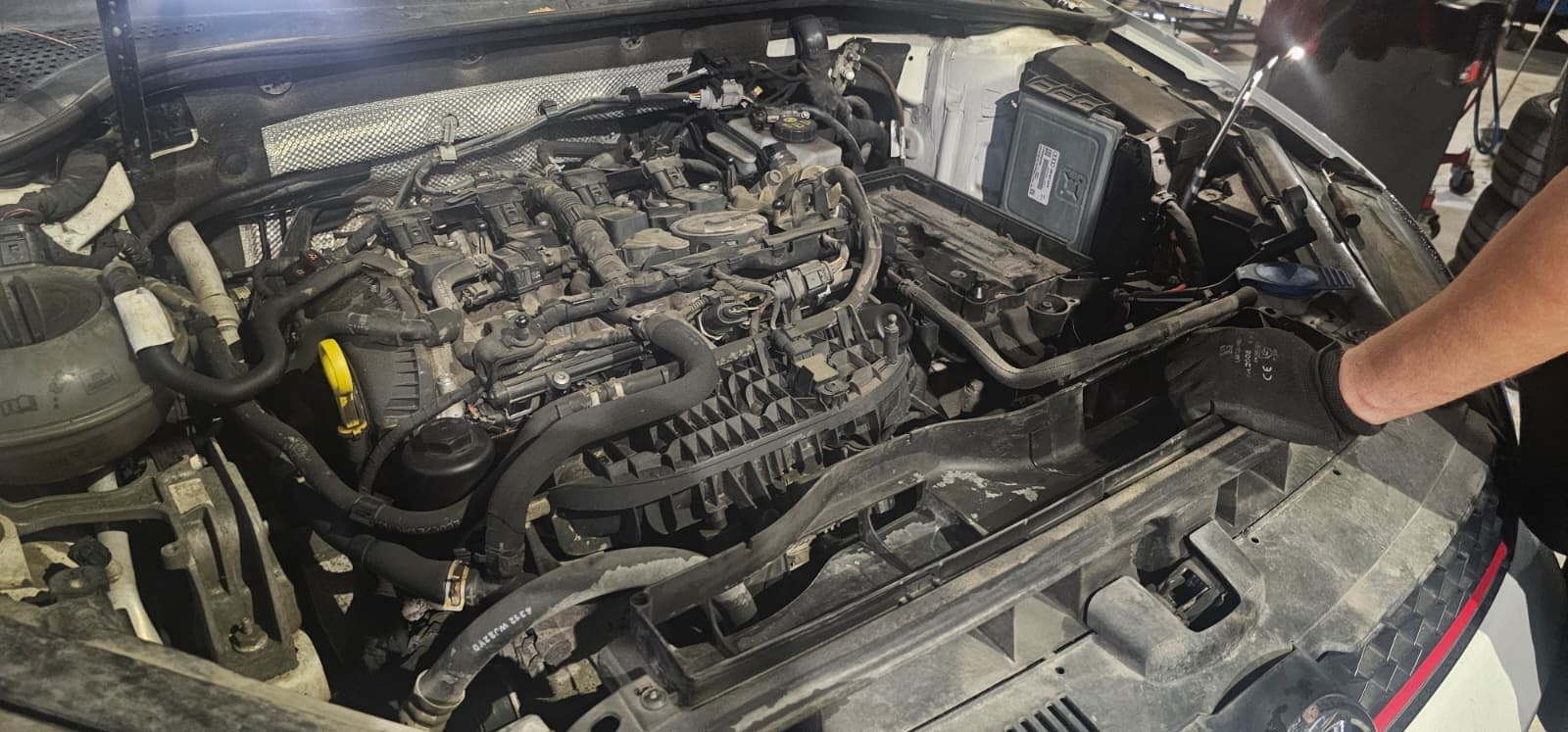
At Volkkarihuolto Espoo we carry out diagnostics, maintenance and repair of Škoda Kodiaq at Ruukinmestarintie 7, 02330 Espoo.
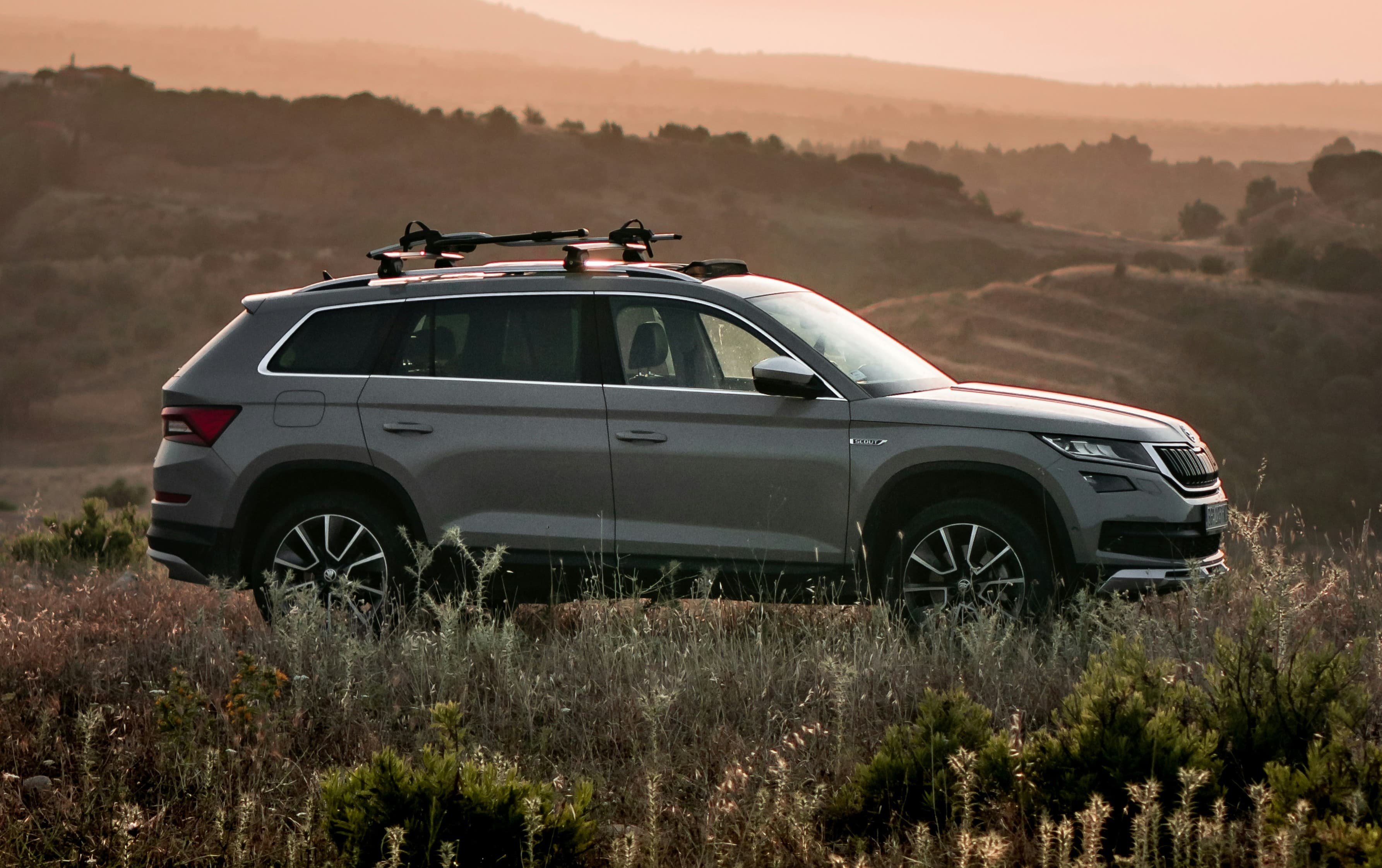
History of the Škoda Kodiaq
The Kodiaq appeared in 2016 as Škoda’s first large SUV and became the starting point for a major expansion of the brand’s SUV range. The name is linked to the Kodiak bear that lives on Kodiak Island off Alaska.
The first generation was about 4.70 m long and was offered with five or seven seats, petrol TSI, diesel TDI, a manual gearbox, 6- or 7-speed DSG, front-wheel drive, 4×4 all-wheel drive and adaptive DCC dampers on the relevant versions. The first generation received a notable update in 2021.
The main generations:
- Škoda Kodiaq I — from 2016
- Škoda Kodiaq II — from 2023/2024
First-generation Škoda Kodiaq
The first Kodiaq is very widely represented on the Finnish used-car market. You may find 1.4 TSI, 1.5 TSI, 2.0 TSI, 2.0 TDI, DSG, front-wheel drive, 4×4 and Kodiaq RS.
After the 2021 update the range included 1.5 TSI with 110 kW, 2.0 TSI with 140 kW and diesel 2.0 TDI with 110 and 147 kW.
On a used Kodiaq it is especially worth checking:
- DSG
- all-wheel-drive system
- DPF
- EGR
- AdBlue
- cooling system
- suspension
- brakes
- electronic assistants
- DSG service and repair
- computer diagnostics
Second-generation Škoda Kodiaq
The second generation became significantly more technological. The range gained 1.5 TSI mild-hybrid, 2.0 TSI, 2.0 TDI, DSG, 4×4 and the Kodiaq iV plug-in hybrid.
Most ordinary ICE versions use a 7-speed DSG. The more powerful 2.0 TSI and 2.0 TDI are offered with all-wheel drive.
When servicing the second generation it is especially important to take the specific powertrain into account. The new Kodiaq iV, mild-hybrid 1.5 TSI and diesel 2.0 TDI 4×4 have completely different systems.
Škoda Kodiaq servicing in Espoo
The Kodiaq is a fairly heavy car that is often used with a full load, with children and passengers, for long trips, with a trailer, in winter and on poor roads.
On the seven-seat version the extra mass and load especially affect the brakes and rear suspension. So it is worth checking regularly:
- engine oil
- filters
- timing drive
- cooling system
- DSG
- 4×4
- DPF
- EGR
- AdBlue
- brakes
- suspension
- battery
- air conditioning
- Škoda Kodiaq technical maintenance
- oil and filter change
- annual service
Škoda Kodiaq petrol engines TSI
Various TSI engines are used on the Kodiaq. On the first generation you find 1.4 TSI, 1.5 TSI and 2.0 TSI. On the second generation 1.5 TSI mild-hybrid and the more powerful 2.0 TSI are used. The new 2.0 TSI with 150 kW / 204 hp is offered with 7-speed DSG and 4×4.
When servicing TSI it is worth monitoring oil, spark plugs, ignition coils, turbocharging, crankcase ventilation, the cooling system and the timing drive.
Škoda Kodiaq 1.5 TSI
1.5 TSI is widely used on the Kodiaq. On the new generation this engine received a mild-hybrid system and 110 kW / 150 hp. It also uses ACT+ — a system that deactivates some cylinders under light load.
The cause may be spark plugs, coils, sensors, the boost system or engine management. It is worth coming for diagnostics if:
- EPC has come on
- the engine is misfiring
- jerking has appeared
- power has dropped
- starting has become worse
- fuel consumption has increased
- petrol engine repair
- computer diagnostics
Škoda Kodiaq 2.0 TSI
2.0 TSI is used on more powerful versions. It places a greater load on the DSG, all-wheel drive, cooling system and brakes. On the new generation the 2.0 TSI with 150 kW works with 7-speed DSG and all-wheel drive.
At high mileage it is especially worth watching the turbocharger, cooling system, oil consumption, timing drive and DSG.
Kodiaq oil consumption
If the engine has started to use oil noticeably, do not immediately conclude there is serious internal wear. It is useful first to establish the actual consumption and carry out diagnostics.
The cause may be:
- external leaks
- crankcase ventilation
- turbocharger
- internal engine wear
- petrol engine repair
- computer diagnostics
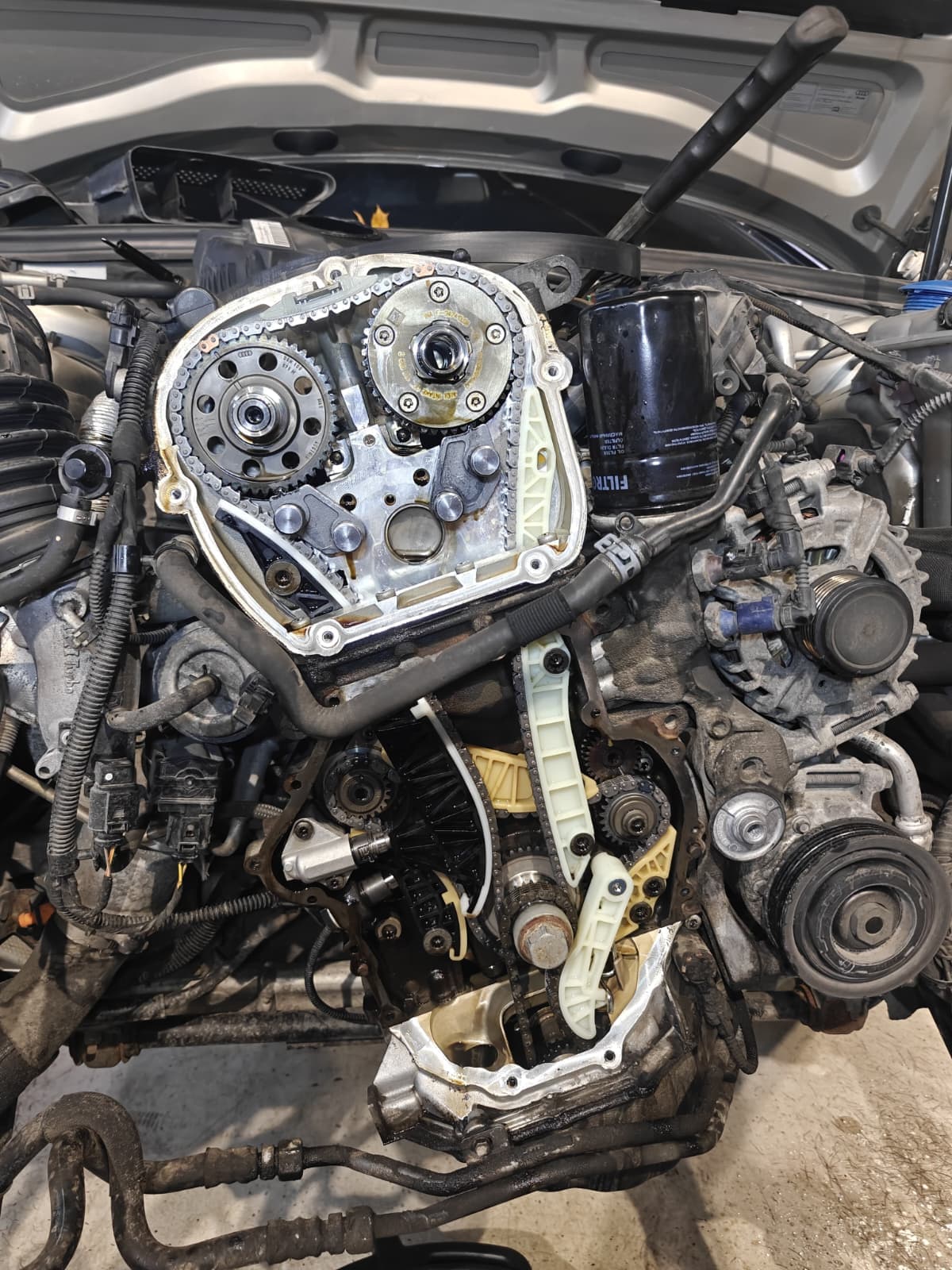
Škoda Kodiaq timing belt or chain
The design depends on the specific engine. Different TSI and TDI engines use different solutions, so there is no universal interval for the entire Kodiaq range.
You need to take into account the VIN, engine code, year of manufacture and factory schedule. If the car’s history is unknown, the timing drive condition should be checked after purchase.
Diesel Škoda Kodiaq 2.0 TDI
2.0 TDI is one of the most popular Kodiaq engines in Finland. It suits high mileage, motorway use, towing and a heavy SUV well. On the second generation versions with 110 kW / 150 hp and 142 kW / 193 hp are available. The more powerful version has 4×4.
When servicing a diesel the following are especially important:
- DPF
- EGR
- AdBlue
- turbocharger
- injectors
- cooling system
- TDI diesel engine repair
- computer diagnostics
Škoda Kodiaq DPF
Kodiaq TDI is fitted with a particulate filter. On long motorway trips regeneration usually runs without problems. On short city trips the process can be interrupted constantly. Not every DPF with a fault needs to be replaced immediately.
Diagnostics check soot mass, ash quantity, differential pressure, temperatures, EGR and engine operation.
Possible signs:
- raised idle speed
- fans run after stopping
- consumption has risen
- regenerations have become frequent
- a DPF indicator has appeared
- the car has lost power
- DPF diagnostics
Škoda Kodiaq EGR
EGR can become clogged over time. If the coolant level is falling at the same time, the condition of the EGR cooler should also be considered.
Symptoms:
- Check Engine
- loss of power
- unstable running
- increased soot formation
- frequent regenerations
- limp mode
- EGR diagnostics
Škoda Kodiaq AdBlue
Modern diesel Kodiaq models use SCR and AdBlue. If the car shows a countdown to a no-start condition, diagnostics should not be postponed. Topping up fluid only helps when the problem really is a low AdBlue level.
A fault may be related to:
- the pump
- the injector
- the NOx sensor
- the level sensor
- the heater
- the wiring
- AdBlue diagnostics
Škoda Kodiaq DSG
Most Kodiaq models are fitted with DSG. Different versions use different transmissions designed for different torque levels. The cause may be the mechatronic unit, clutches, oil, adaptations or the mechanical part.
A check is needed if:
- D or R engages with a delay
- jerking has appeared
- vibration has appeared
- the gearbox shifts with jolts
- a transmission fault has appeared
- the car has gone into limp mode
- DSG service and repair
- gearbox oil change
DSG servicing
The specific gearbox must be taken into account. On powerful Kodiaq versions DSG units with wet clutches are used, with their own oil service requirements.
You cannot apply one schedule to all DSG units just because the gearboxes share the same commercial name. Before servicing, the exact transmission code should be identified.
DSG mechatronic unit
The mechatronic unit controls the gearbox and clutches. A mechatronic fault does not necessarily mean the whole unit must be replaced. Diagnostics should be carried out first.
Possible symptoms: missing gears, limp mode, hard jolts, pressure faults and inability to select D or R.
Škoda Kodiaq 4×4
All-wheel drive is one of the most sought-after Kodiaq features in Finland. On the first generation 4×4 was offered depending on the engine and trim. The second generation also uses all-wheel drive on the powerful 2.0 TSI and 2.0 TDI.
The system uses an electronically controlled multi-plate clutch that connects the rear axle. In everyday speech it is often called Haldex.
Haldex / 4×4 servicing
The system needs its own servicing. For 4×4 it is especially important to use four tyres of the same size and a similar degree of wear.
Oil, the pump, contamination, electronic control and faults should be checked. A problem may show as:
- the front wheels spin while the rear axle barely helps
- an all-wheel-drive fault appears
- jolts occur
- all-wheel drive works unsteadily
- computer diagnostics
- transmission oil change
Propshaft and rear differential
The all-wheel-drive version has additional components: propshaft, rear differential, drive shafts and the all-wheel-drive clutch. A similar drone can also come from wheel bearings or tyres.
A possible fault is indicated by:
- vibration
- a drone/hum
- a knock
- a jolt when pulling away
- an oil leak
- computer diagnostics
Škoda Kodiaq iV
The second generation received a plug-in hybrid Kodiaq iV for the first time. It combines a 1.5 TSI with 110 kW, an electric motor, a 6-speed DSG, a 25.7 kWh high-voltage battery and front-wheel drive.
System power is 150 kW / 204 hp. Technically this differs clearly from an ordinary petrol Kodiaq.
Kodiaq iV range
Škoda states an electric range of more than 100 km for the second-generation Kodiaq iV. In a Finnish winter the range will naturally be lower.
The real result depends on temperature, speed, heating, tyres and driving style.
Charging the Kodiaq iV
The Kodiaq iV supports AC charging up to 11 kW and DC charging up to 50 kW.
This is a notable difference from many earlier Volkswagen Group plug-in hybrid models that did not support fast DC charging.
If the Kodiaq iV will not charge
The cause is not necessarily the traction battery. Work directly on HV components requires appropriate qualification.
It is worth checking:
- the charging station
- the cable
- the port
- connector lock
- the 12V battery
- the onboard charger
- high-voltage faults
- the cooling system
- computer diagnostics
- electrical system repair
Mild-hybrid Kodiaq
The new-generation 1.5 TSI became the first Kodiaq with a mild-hybrid system. Such a system helps reduce fuel consumption, supports recuperation and more efficient Start-Stop operation. But a mild hybrid is not a full electric car.
If electrical faults appear, the ordinary battery, additional electrical system, starter-generator and power electronics must be taken into account.
Seven-seat Škoda Kodiaq
A seven-seat cabin has been one of the model’s key features since it appeared. The first Kodiaq offered an optional third row of seats. The car may have been used regularly under high load.
On a used seven-seat car it is worth additionally checking:
- seat folding mechanisms
- seat belts
- locks
- climate system operation at the rear
- rear suspension
Škoda Kodiaq suspension
The large mass of an SUV places extra load on the running gear. Over time control arms, bushes, anti-roll bar links, ball joints, dampers, top mounts and wheel bearings can wear.
It is worth coming for diagnostics if:
- the suspension knocks
- the car tracks less well
- a squeak has appeared
- tyres wear unevenly
- the steering wheel vibrates
- computer diagnostics
Škoda Kodiaq DCC
The Kodiaq can be fitted with adaptive DCC suspension. It was already available on the first generation. Electronic control allows the damper characteristics to be changed.
If there is a fault, a chassis error, excessive stiffness or unusual behaviour may appear. Before replacement it is necessary to establish whether ordinary dampers or DCC are fitted.
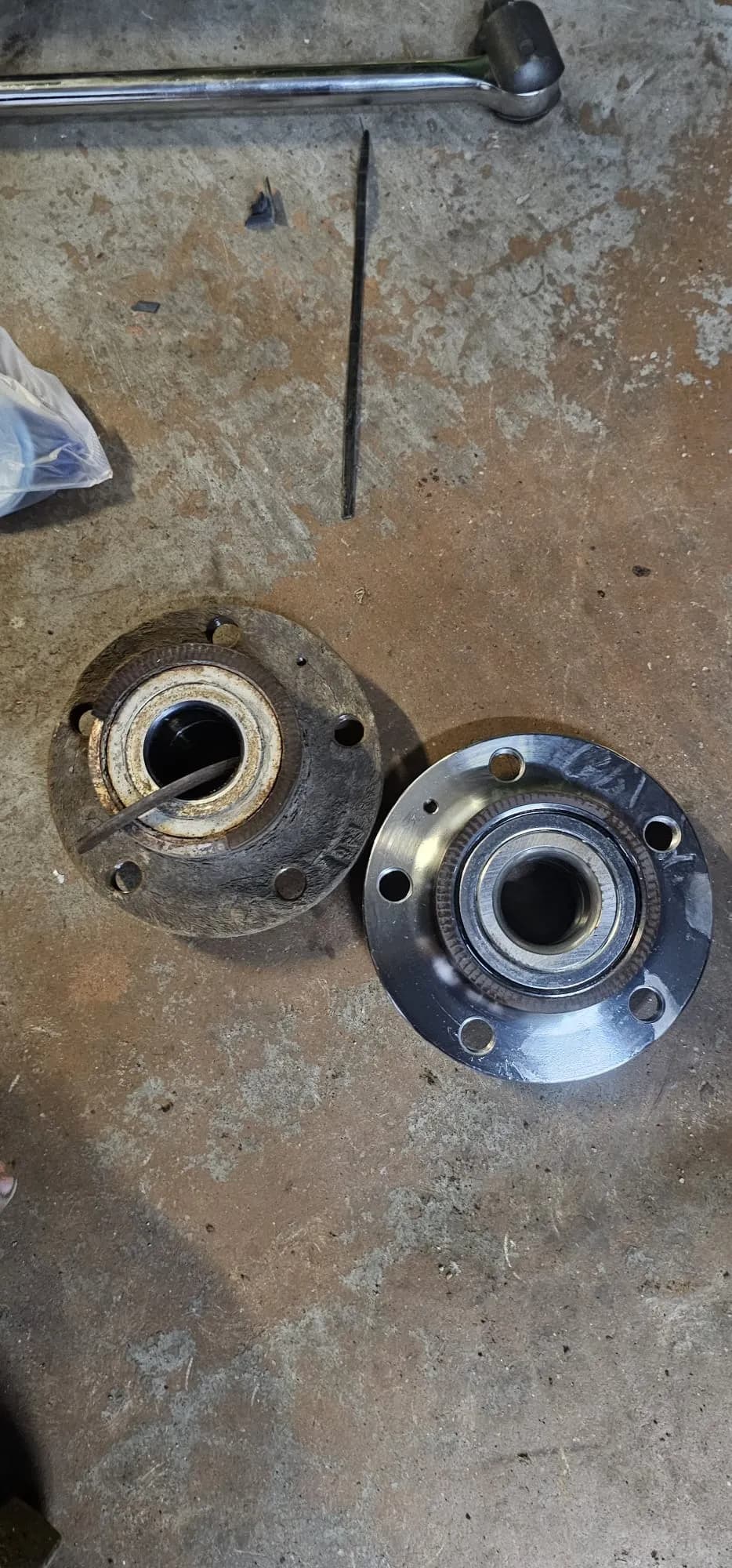
Wheel bearings
A large car with large wheels places significant load on the hubs. The main symptom is a drone that increases with speed.
But on a 4×4 version a similar noise can come from the propshaft, differential or tyres. So the source should be localised before replacement.
Škoda Kodiaq brakes
The Kodiaq is heavier than an Octavia or Fabia, so the braking system is under greater load. This is especially noticeable on seven-seat cars, when towing and with a full load. In Finland corrosion from road salt should also be considered.
A check is needed if:
- vibration has appeared
- the brakes squeal
- the car pulls to one side
- one wheel overheats
- the electronic parking brake reports a fault
Electronic parking brake
The Kodiaq uses an electronic parking brake. When servicing the rear brakes, service mode must be taken into account.
A fault may be related to the caliper actuator, wiring, battery or control unit.
Cooling system
TSI and TDI have a complex thermal management system. On the Kodiaq iV there is additionally cooling of the high-voltage side. Regular topping-up of fluid without finding the cause does not solve the problem.
A falling coolant level may be caused by:
- water pump
- thermostat
- housing
- valves
- hoses
- radiator
- heat exchanger
- EGR cooler on diesel
- coolant leak detection
Battery and Start-Stop
The Kodiaq has a large amount of electrical equipment. Before replacing expensive control units it is useful to check the power supply first.
A weak 12V battery can cause:
- slow starting
- Start-Stop failure
- assistant faults
- DSG glitches
- multimedia problems
- many random warnings
- electrical system repair
- computer diagnostics
Škoda Kodiaq multimedia
The first and especially the second generation use a large number of digital systems. The cause may lie in software, a control unit, power supply or communication between modules.
Problems may show as:
- a frozen screen
- rebooting
- no sound
- Bluetooth problems
- camera failure
- navigation problems
- computer diagnostics
- electrical system repair
Cameras and assistants
The Kodiaq can be equipped with Adaptive Cruise Control, Front Assist, Lane Assist, Side Assist, Travel Assist, cameras and parking sensors.
After windscreen replacement, body repair or suspension repair, calibration may be required. In winter snow and ice can also temporarily block radars and cameras.
Air conditioning and climate
On a seven-seat car a working climate system is especially important. The cause may be a refrigerant leak, compressor, sensors, valves or servo actuators.
A check is needed if:
- the air conditioning cools poorly
- one zone differs from the others
- the rear of the cabin heats poorly
- flap clicking is heard
- air conditioning service
Power tailgate
Many Kodiaq models have an electric tailgate. If it does not open, stops, reverses or does not close fully, the actuators, lock, sensors and power supply should be checked.
Panoramic roof and water
On cars with a panoramic roof the drains should be monitored. If moisture appears after rain, the source is best found before electrical faults develop.
Water ingress can lead to damp, connector corrosion and damage to electronics.
Trailer towing
The Kodiaq is often used for towing. When buying a car with a tow bar it is useful to find out how it was previously used. The permissible trailer weight is determined from the documents of the specific car.
This increases the load on:
- the engine
- DSG
- cooling
- brakes
- 4×4
- rear suspension
Škoda Kodiaq RS
The first Kodiaq RS appeared in 2018 and became Škoda’s first SUV with the RS badge. Sport versions differ in a more powerful engine, DSG settings, brakes, suspension and software.
Higher power means extra load on all main assemblies. Before buying an RS it is especially important to check the engine, turbocharging, DSG, all-wheel drive, cooling system, brakes and any tuning.
Checking a Škoda Kodiaq before purchase
Before buying a used Kodiaq it is useful to carry out a comprehensive inspection. Check cold starting, faults in all control units, the engine, oil consumption, turbocharging, timing drive, cooling system, DSG, DPF, EGR, AdBlue, 4×4, propshaft and differential, suspension, DCC, wheel bearings, brakes, battery, air conditioning, multimedia, cameras and assistants.
For the Kodiaq iV the HV system, AC/DC charging, hybrid mode and high-voltage faults are additionally checked. For an RS it is advisable to establish any tuning history.
Which Škoda Kodiaq services we provide
At Volkkarihuolto Espoo you can come for:
- regular Škoda Kodiaq maintenance
- engine oil and filter change
- computer diagnostics
- TSI servicing
- TDI servicing
- turbocharging diagnostics
- timing drive inspection
- DPF diagnostics
- EGR inspection
- AdBlue diagnostics
- DSG servicing
- mechatronic diagnostics
- 4×4 inspection
- all-wheel-drive clutch servicing
- propshaft and differential diagnostics
- Kodiaq iV diagnostics
- brake repair
- suspension diagnostics
- DCC inspection
- wheel bearing replacement
- coolant leak detection
- battery inspection
- air conditioning service
- multimedia diagnostics
- electronic assistant inspection
- preparation for the vehicle inspection
- Škoda Kodiaq pre-purchase inspection
Common Škoda Kodiaq fault signs
It is worth booking diagnostics if:
- Check Engine or EPC is on
- the engine is misfiring
- the car has lost power
- oil consumption has increased
- coolant level is falling
- the diesel regenerates the DPF frequently
- an EGR or AdBlue fault has appeared
- the DSG jerks
- D or R engages with a delay
- 4×4 works unsteadily
- vibration has appeared under acceleration
- a drone is heard
- the suspension knocks
- DCC reports a fault
- the brakes vibrate
- one wheel overheats
- Start-Stop has stopped working
- the multimedia reboots
- the Kodiaq iV will not charge
Škoda Kodiaq repair in Espoo
Need repair or technical maintenance of a Škoda Kodiaq? Contact Volkkarihuolto Espoo at Ruukinmestarintie 7, 02330 Espoo.
We can diagnose petrol TSI and diesel TDI, DSG, 4×4, DPF, EGR, AdBlue, turbocharging, timing drive, brakes, suspension, DCC, cooling system, multimedia and electronic assistants.
For the Kodiaq iV you can come for charging and related-system diagnostics; specific work directly on high-voltage components is carried out only with safety requirements and the necessary qualification in mind.
When servicing a Škoda Kodiaq it is especially important to take the generation and specific powertrain into account. A Kodiaq I 2.0 TDI 4×4 DSG, a petrol 1.5 TSI, a Kodiaq RS and a new Kodiaq iV differ technically and need different approaches to diagnostics and preventive maintenance.
FAQ
When did the Škoda Kodiaq appear?
The Kodiaq was presented in 2016 and became Škoda’s first large SUV and the starting model of the brand’s modern SUV line-up.
How many Škoda Kodiaq generations are there?
There are two main generations: the first, presented in 2016, and the second generation, launched in 2023–2024.
Is there a seven-seat Škoda Kodiaq?
Yes. The option of a third row has been one of the model’s features since the first generation.
Which engines are used on the Kodiaq?
Depending on the generation, petrol TSI, diesel TDI, mild-hybrid and plug-in hybrid iV are used.
Is there a Kodiaq with DSG?
Yes. DSG is widely used on the model. On the second generation all ordinary stated powertrains work with DSG — 7-speed for TSI/TDI and 6-speed for iV.
Why does the Kodiaq DSG jerk?
The cause may be the clutches, mechatronic unit, oil, adaptations or a mechanical fault. Correct diagnostics require identifying the exact gearbox.
Is there a Kodiaq 4×4?
Yes. All-wheel drive is available on various first-generation versions, and on the second generation it is used as standard with the 2.0 TSI 150 kW and 2.0 TDI 142 kW.
Does 4×4 need servicing?
Yes. The multi-plate clutch oil, pump operation, system contamination and electronic faults must be taken into account.
Why does the Kodiaq TDI regenerate the DPF often?
The cause may be short trips, a heavily loaded DPF, a faulty EGR, sensors, injectors or other engine problems.
Is there a plug-in hybrid Kodiaq?
Yes. The second generation received the Kodiaq iV for the first time, with 1.5 TSI, an electric motor and system power of 150 kW / 204 hp.
What is the range of the Kodiaq iV?
Škoda states more than 100 km of electric range.
Does the Kodiaq iV support fast charging?
Yes. AC up to 11 kW and DC up to 50 kW are supported.
Is there a Škoda Kodiaq RS?
Yes. The first Kodiaq RS appeared in 2018 and became the brand’s first SUV with the RS badge.
Can a Škoda Kodiaq be checked before purchase?
Yes. It is especially useful to check the engine, DSG, 4×4, cooling system, suspension, brakes and electronics. On a diesel, DPF, EGR and AdBlue are additionally checked, and on an iV the charging and high-voltage systems.
Detailed Services
Professional fault diagnostics for Skoda Kodiaq.
Oil ChangeEngine oil and filter replacement for Skoda Kodiaq.
Annual maintenanceComprehensive annual maintenance for Skoda Kodiaq.
Regular MaintenanceScheduled maintenance for Skoda Kodiaq according to service needs.
Engine RepairEngine diagnostics and repair for Skoda Kodiaq.
Diesel Engine RepairDiesel engine service and repair for Skoda Kodiaq.
Electrical RepairElectrical fault tracing and repair for Skoda Kodiaq.
ECU ProgrammingControl unit programming and coding for Skoda Kodiaq.
DSG RepairDSG transmission diagnostics and repair for Skoda Kodiaq.
Transmission RepairTransmission diagnostics and repair for Skoda Kodiaq.
Transmission Oil ChangeTransmission oil change for Skoda Kodiaq.
Timing Belt ReplacementTiming belt and related component replacement for Skoda Kodiaq.
Timing Chain ReplacementTiming chain, tensioner, and guide replacement for Skoda Kodiaq.
Cooling System RepairCooling system service and repair for Skoda Kodiaq.
AC RepairAir conditioning service and repair for Skoda Kodiaq.
Engine Heater InstallationEngine heater installation and service for Skoda Kodiaq.
Cabin OzonationCabin ozonation and odor removal for Skoda Kodiaq.