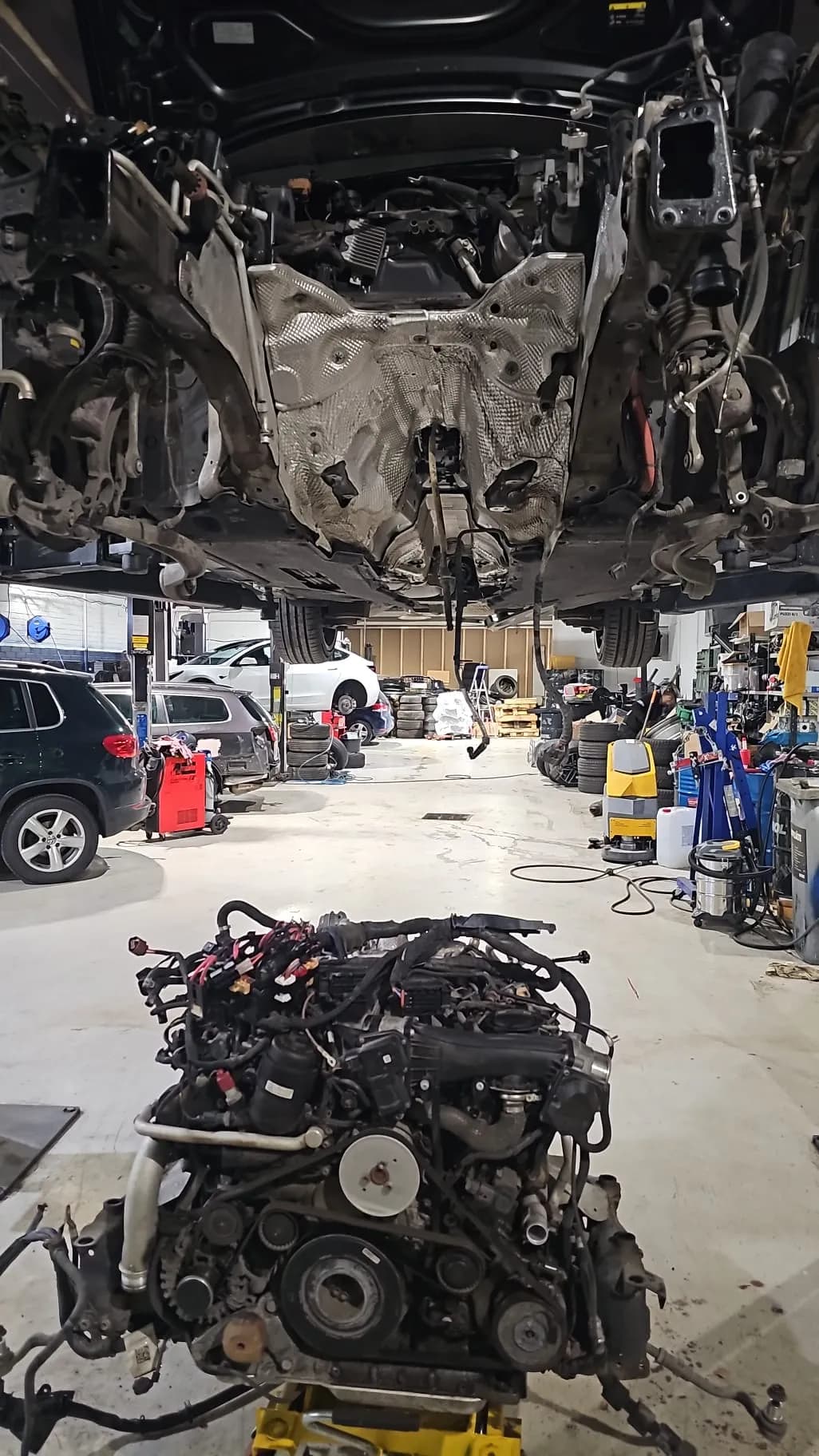
Škoda Octavia — service and repair in Espoo
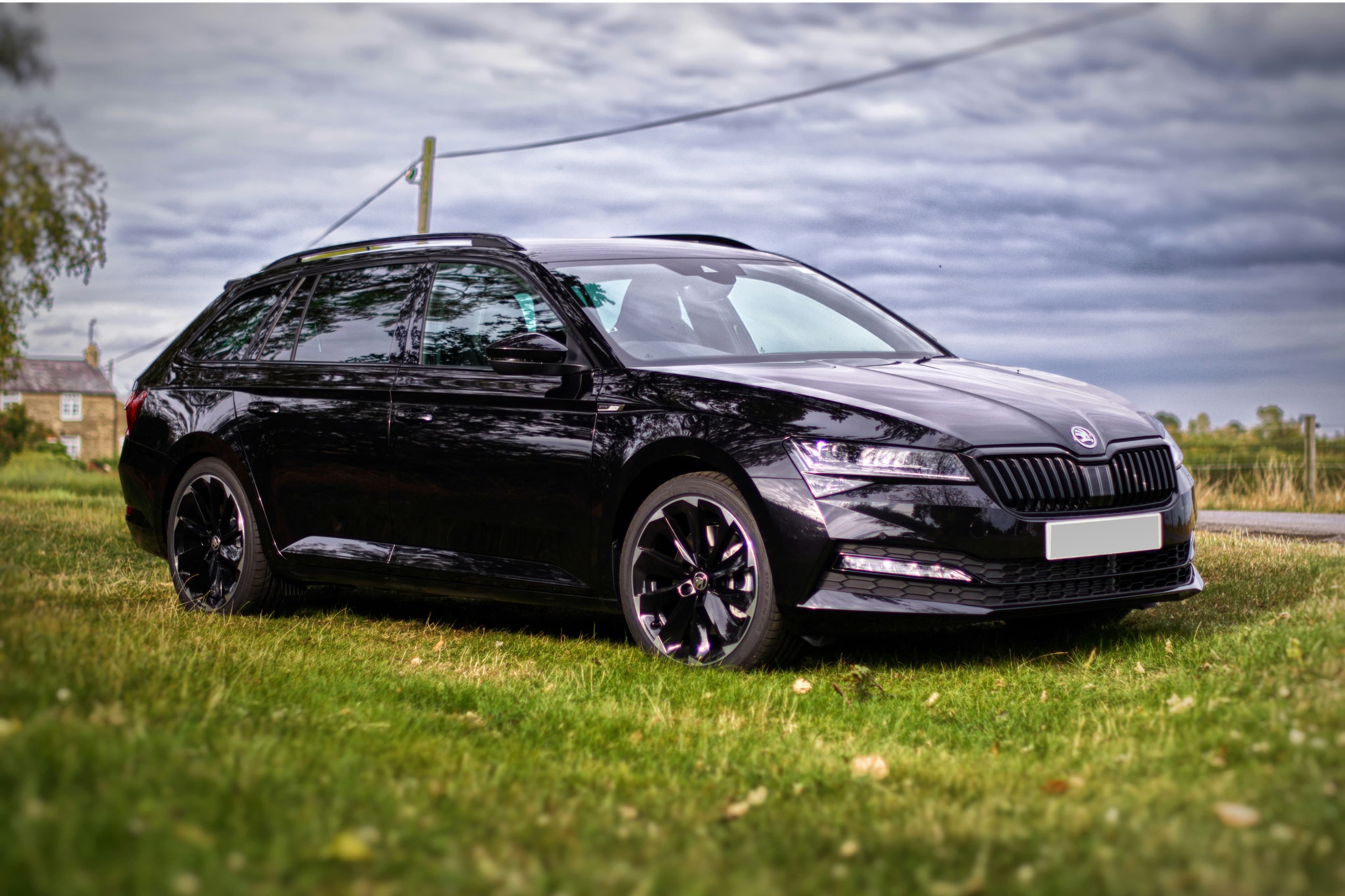
Škoda Octavia is one of the brand’s most popular models and one of the most common Volkswagen Group cars in Finland. The Octavia combines a practical body, a large boot, economical petrol and diesel engines and a familiar VAG technical base.
Across four modern generations the model has been built with MPI, TSI and TFSI-like petrol engines from the group, TDI diesels, manual gearboxes, DSG, 4×4 all-wheel drive and electrified powertrains.
In 2026 the modern Octavia marks its 30th anniversary: the first car of the new generation left the production line on 3 September 1996. In that time almost 7.9 million Octavia cars have been produced, making the model Škoda’s bestseller.
At Volkkarihuolto Espoo we carry out diagnostics, maintenance and repair of Škoda Octavia at Ruukinmestarintie 7, 02330 Espoo.
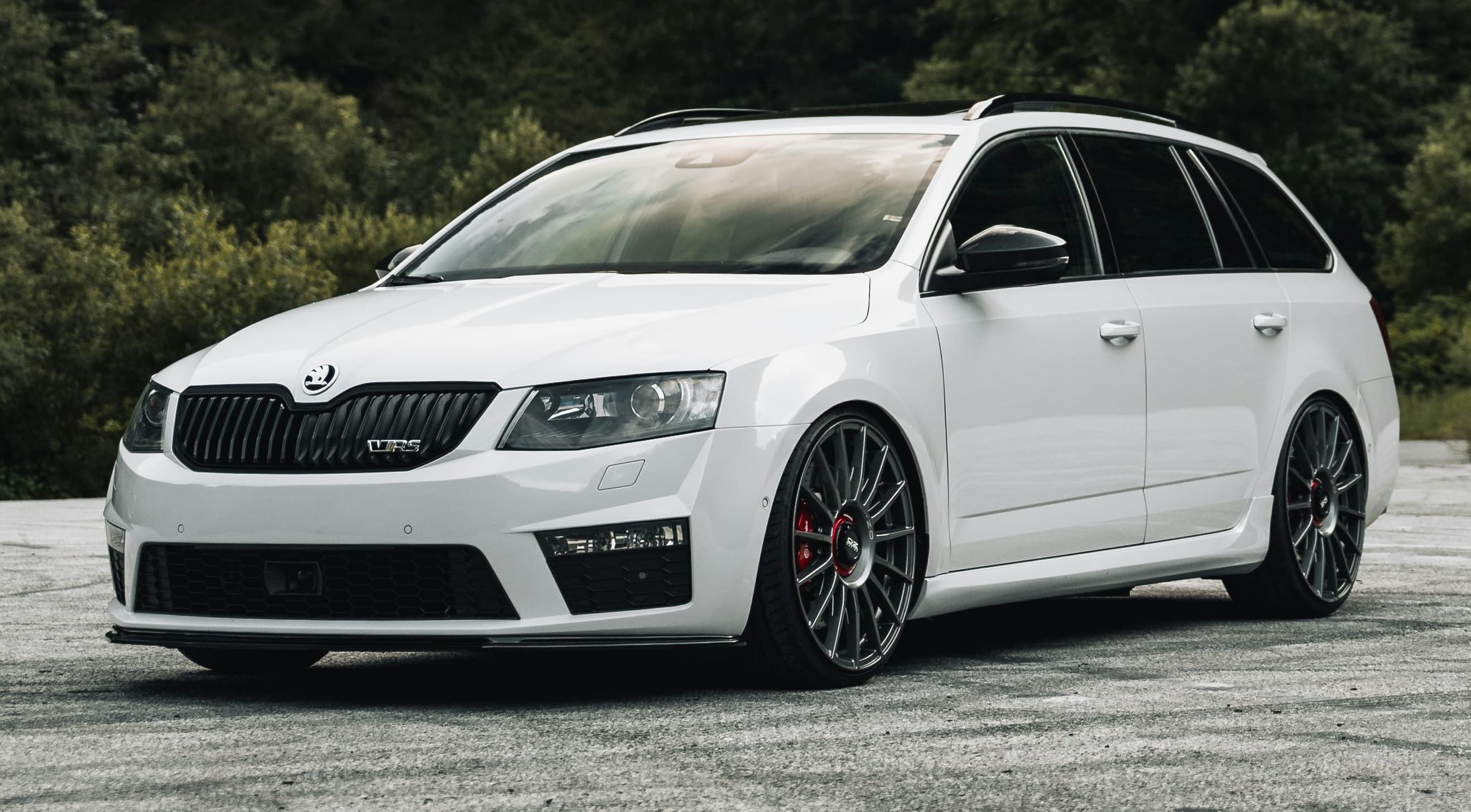
History of the Škoda Octavia
The Octavia name appeared long before the modern model, but the current story began after Škoda joined the Volkswagen Group. The first modern generation debuted in 1996 and became one of the key cars in the brand’s development.
The first Octavia used the then-new Volkswagen Group platform and quickly became popular thanks to its practical liftback, large boot and strong price-to-equipment ratio.
The second generation brought modern petrol engines with direct injection and the DSG gearbox. The third generation arrived in 2012, and the fourth was presented in November 2019. In 2024 the fourth generation received a facelift with updated styling, new multimedia, additional assistants and a modernised engine line-up.
The main generations of the modern Octavia:
- Octavia I — 1996–2010 including the long production of the Octavia Tour
- Octavia II — 2004–2013
- Octavia III — 2012–2020
- Octavia IV — from 2019
First-generation Škoda Octavia
The first modern Octavia is already an older car today, but examples can still be found in Finland. Initially in 1996 two petrol engines and the 1.9 TDI were offered, and later the range expanded considerably. The Combi arrived in 1998 and all-wheel drive in 1999.
The first generation used MPI petrol engines, the 1.8 Turbo, 1.9 TDI, manual gearboxes, automatic transmissions and all-wheel drive on selected versions.
For the Octavia I today the following are especially important:
- body condition
- corrosion
- suspension
- cooling system
- turbocharger on TDI and 1.8T
- timing drive
- clutch
- electrical equipment
- computer diagnostics
Škoda Octavia II
The second generation became noticeably more modern. This is where TSI, TDI with more modern injection systems, DSG, 4×4 and the Octavia RS became widespread. Škoda notes that it was the Octavia II that brought the model petrol engines with direct injection and the dual-clutch DSG automatic.
Today when buying or servicing an Octavia II it is especially worth paying attention to:
- timing drive
- oil consumption on certain TSI engines
- DSG
- DPF on diesels
- EGR
- dual-mass flywheel
- suspension
- brake system corrosion
- DSG service and repair
- computer diagnostics
Škoda Octavia III
The third generation was produced from 2012 to 2020. On the Finnish used-car market it is one of the most interesting Octavia models thanks to a wide choice of 1.0 TSI, 1.2 TSI, 1.4 TSI, 1.5 TSI, 1.6 TDI, 2.0 TDI, DSG, 4×4 and RS.
Technically this is already a modern Volkswagen Group car with a large number of electronic systems. Diagnostics of DSG, DPF/EGR on diesel, cooling systems and electronic assistants are especially relevant.
Škoda Octavia IV
The fourth generation was presented in 2019. The Octavia received more modern electronics, a digital instrument cluster, new TSI and TDI engines, mild-hybrid e-TEC, plug-in hybrid iV on corresponding versions, modern assistants and a new multimedia architecture.
After the 2024 facelift Škoda offers the Octavia Hatch and Combi with petrol and diesel engines as well as mild-hybrid variants. Four petrol and two diesel engines were announced in the updated line-up.
Škoda Octavia servicing in Espoo
The Octavia is often used as a daily family or work car. In Finland typical use includes short trips, motorway driving, cold starts, winter salt, high annual mileage and long-term diesel use.
It is worth checking regularly:
- engine oil
- filters
- spark plugs
- timing drive
- cooling system
- DSG
- clutch
- DPF
- EGR
- AdBlue
- 4×4
- brakes
- suspension
- battery
- air conditioning
- Škoda Octavia scheduled maintenance
- oil and filter change
- annual service
Škoda Octavia TSI petrol engines
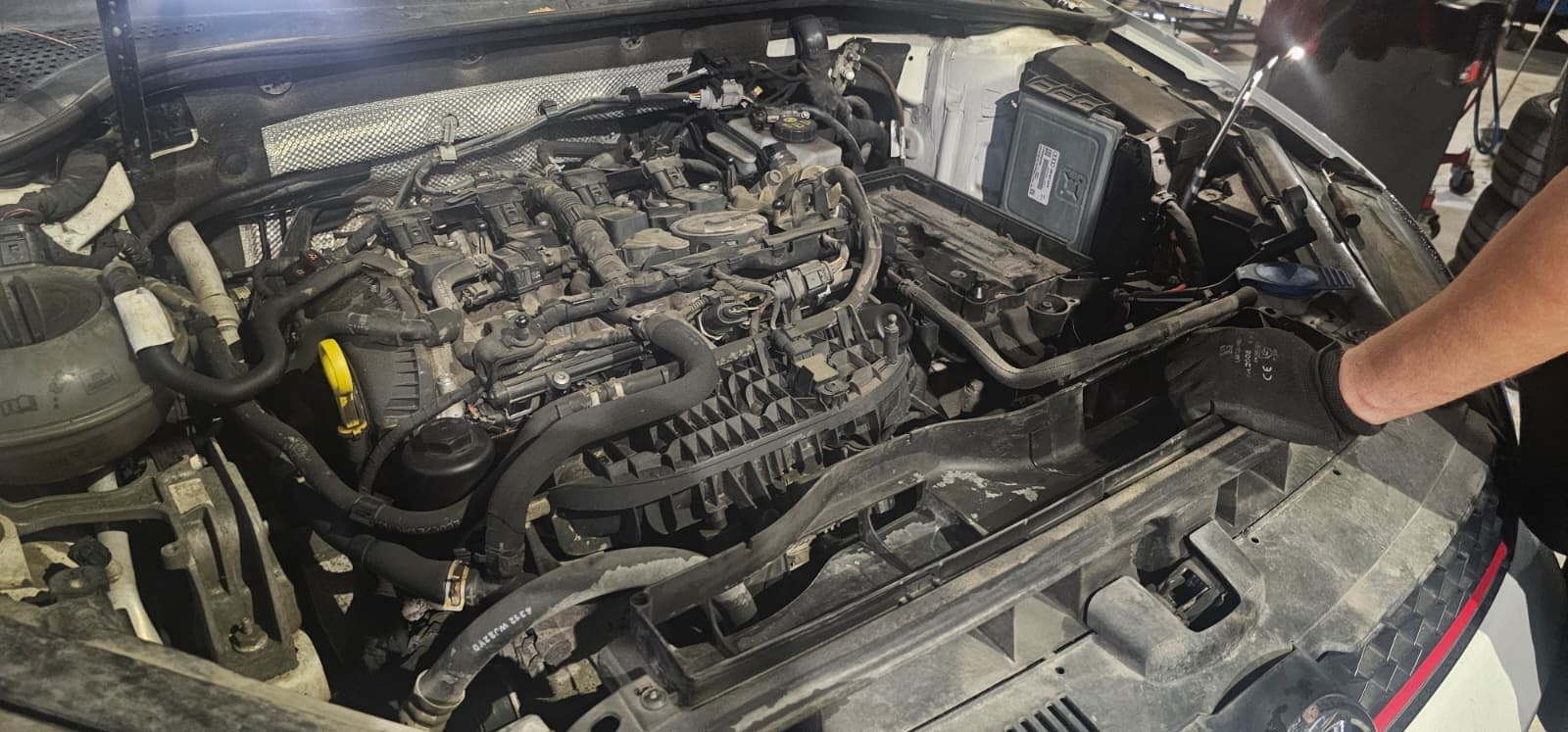
Modern Octavia models widely use turbocharged TSI engines. Depending on the generation you will find 1.0 TSI, 1.2 TSI, 1.4 TSI, 1.5 TSI, 1.8 TSI and 2.0 TSI.
During servicing it is worth monitoring oil, spark plugs, ignition coils, the turbocharger, the cooling system, crankcase ventilation and the timing drive.
It is worth booking diagnostics if:
- Check Engine is on
- EPC appears
- the engine misfires
- the car jerks
- power has dropped
- oil consumption has increased
- coolant level is falling
- petrol engine repair
- computer diagnostics
Škoda Octavia 1.0 TSI
The 1.0 TSI is widely used on newer Octavia generations. It is a three-cylinder turbocharged engine well suited to ordinary city use.
A slight characteristic vibration of a three-cylinder engine does not in itself mean a fault. Strong vibration, however, can be linked to spark plugs, coils, injectors, engine mounts, an air leak or turbocharger operation.
Škoda Octavia 1.4 and 1.5 TSI
The 1.4 and 1.5 TSI have become some of the most common Octavia petrol engines. On newer cars the 1.5 TSI may use a cylinder deactivation system.
The cause is not always in the engine itself — it is worth checking the ignition system, sensors, boost and software parameters. Diagnostics are worth booking for:
- jerking
- misfires
- EPC
- unstable idle
- loss of power
- petrol engine repair
- computer diagnostics
Škoda Octavia 1.8 and 2.0 TSI
More powerful Octavia versions, including RS, may use a 1.8 or 2.0 TSI. On sports and tuned cars the load on the engine and transmission is significantly higher.
With high mileage it is especially important to monitor oil consumption, the cooling system, the turbocharger, the timing drive and crankcase ventilation.
Škoda Octavia oil consumption
On certain TSI generations elevated oil consumption can be more common. But an engine cannot automatically be considered faulty based on the model alone.
If oil has to be topped up regularly, it is worth measuring the actual consumption and finding the cause. The cause may be:
- external leaks
- crankcase ventilation
- turbocharger
- piston group
- general wear
- petrol engine repair
- computer diagnostics
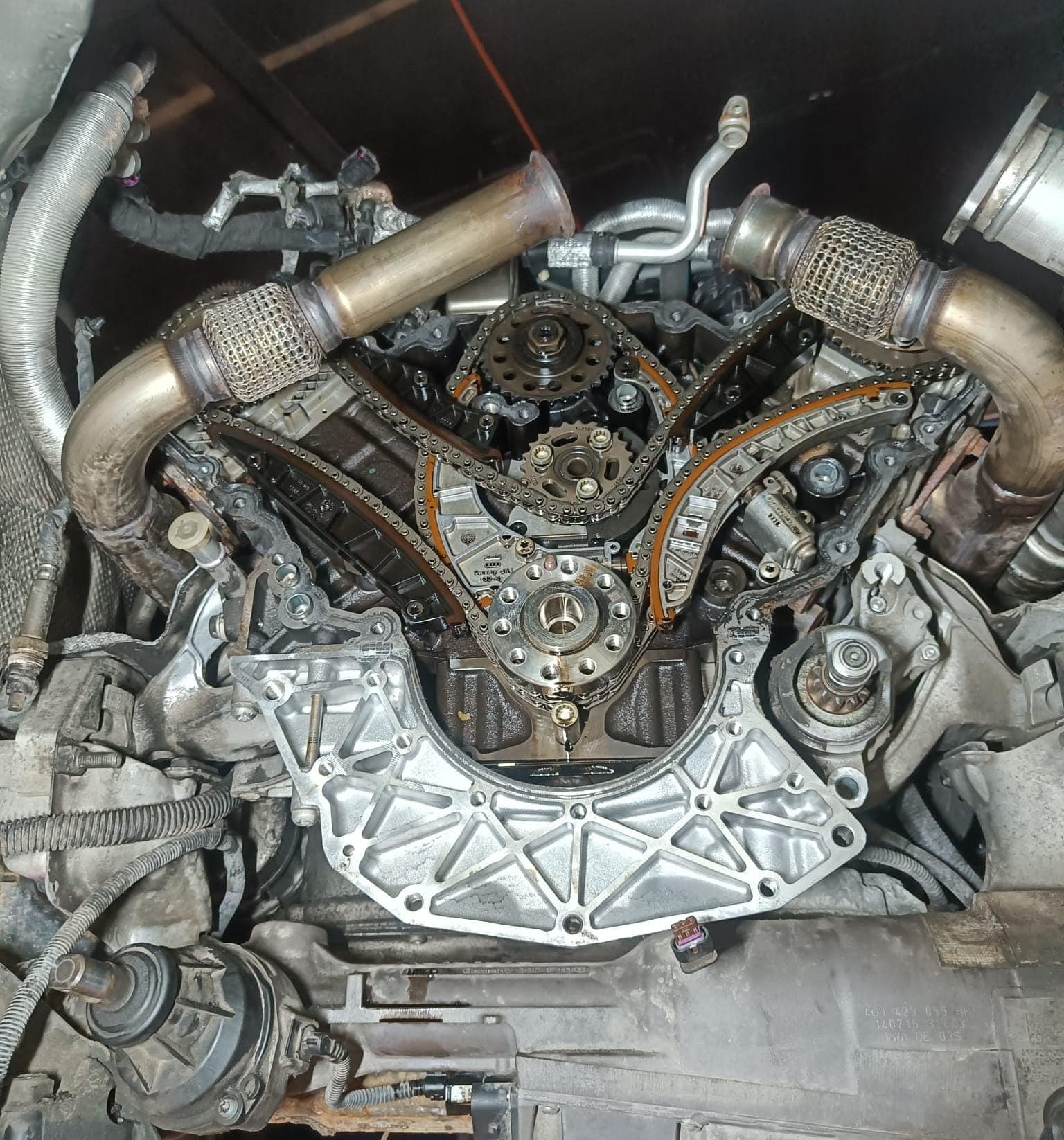
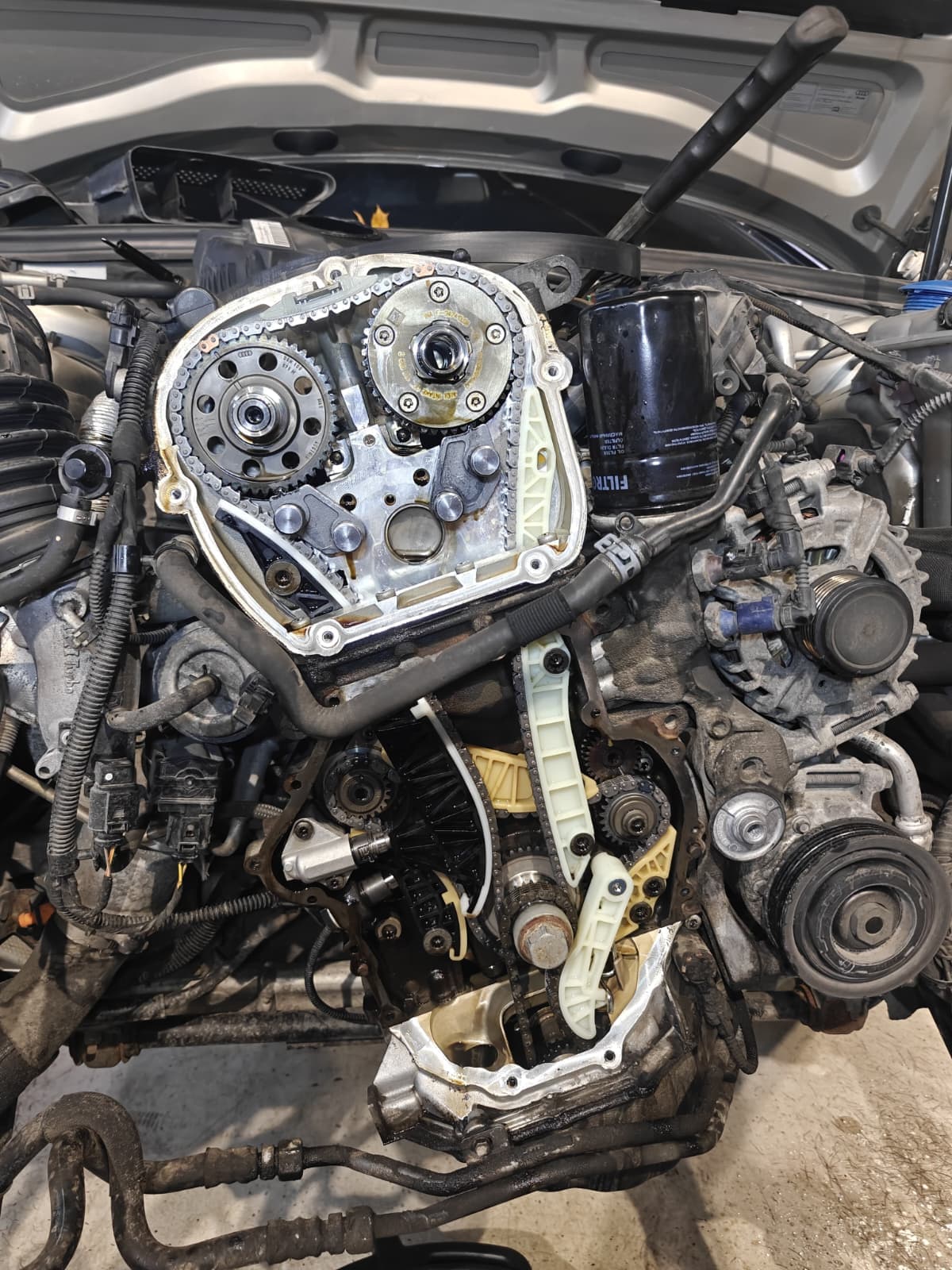
Octavia timing belt or chain
Many Volkswagen Group engines have been used in the Octavia. Some have a chain drive, others a belt drive. That is why there is no single replacement interval for all Octavia models.
Before servicing it is necessary to determine the VIN, engine code, year of manufacture and the specific schedule.
On chain systems reasons for diagnostics may include:
- metallic noise on start-up
- timing errors
- poor starting
- unstable running
- timing belt replacement
- timing chain replacement
Škoda Octavia TDI diesel engines
The Octavia TDI is extremely common in Finland. You will find 1.9 TDI, 1.6 TDI and 2.0 TDI. Diesel suits high mileage and motorway driving well, but modern TDI engines have complex exhaust aftertreatment systems.
It is worth monitoring:
- DPF
- EGR
- AdBlue
- turbocharger
- injectors
- timing drive
- cooling system
- TDI diesel engine repair
- computer diagnostics
Škoda Octavia DPF
The DPF traps soot and is periodically cleaned by regeneration. With regular motorway use conditions are usually favourable. If the car is used for short city trips, regeneration may be constantly interrupted.
Not every loaded DPF needs to be replaced immediately. During diagnostics it is necessary to check soot load, ash load, differential pressure, temperature sensors, EGR and engine operation.
Signs:
- elevated idle speed
- fans running after shutdown
- increased fuel consumption
- regenerations happening too often
- DPF warning light appears
- power has dropped
- DPF diagnostics
Škoda Octavia EGR
On a diesel Octavia the EGR gradually becomes contaminated with soot. An EGR fault can also place additional load on the DPF. On corresponding engines, if coolant is being lost it is worth checking the EGR cooler as well.
Possible symptoms:
- Check Engine
- loss of power
- jerking
- unstable idle
- frequent regenerations
- limp mode
- EGR diagnostics
Škoda Octavia AdBlue
Modern diesel Octavia models use SCR and AdBlue. If a warning appears that starting will be prevented after a certain mileage, diagnostics should not be postponed. Topping up AdBlue will not help if the problem is in the control system.
The fault may be linked to:
- pump
- injector
- NOx sensor
- level sensor
- heater
- wiring
- AdBlue diagnostics
Škoda Octavia DSG
DSG is one of the most common automatic gearboxes in the Octavia. But several different transmissions exist under the DSG name. They differ in the number of gears, dry or wet clutches, mechatronic design, permitted torque and service requirements.
It is worth booking diagnostics if:
- the car jerks
- D or R engages with a delay
- vibration appears
- shocks occur
- the gearbox shows an error
- the car goes into limp mode
- DSG service and repair
- transmission oil change
DSG with dry and wet clutches
Not all DSG units are the same. On less powerful Octavia models one gearbox family is often used, while on 2.0 TDI, RS and all-wheel-drive cars other DSG units may be fitted.
That is why the same oil change or repair cannot automatically be assigned to every gearbox. Before servicing the exact transmission code is identified.
DSG mechatronics
The mechatronic unit combines electronic and hydraulic control of the gearbox. But a mechatronic error does not always mean the entire unit needs to be replaced.
Fault signs can include missing gears, limp mode, strong jerking, inability to engage D or R, and pressure errors. First it is worth checking faults, pressure, power supply, adaptations, clutch condition and the mechanical part.
Clutch and dual-mass flywheel
Manual gearboxes and some DSG units use a dual-mass flywheel. On a manual gearbox clutch slip is also possible.
Wear may be indicated by:
- vibration
- metallic knocking
- noise on start-up or shutdown
- jerking when moving off
- manual gearbox diagnostics
Škoda Octavia 4×4
All-wheel-drive Octavia models are especially interesting for Finnish winter conditions. These cars use an electronically controlled multi-plate clutch on the rear axle. In everyday speech this system is often called Haldex.
During servicing it is worth considering fluid condition, pump operation, system contamination and control unit faults.
Haldex / 4×4 service
If the system is not serviced, all-wheel drive may work less effectively. The specific schedule depends on the system and vehicle generation. It is important to use tyres of the same size with similar tread depth.
Signs of a problem:
- front wheels spin heavily
- the rear axle does not engage
- an all-wheel-drive fault appears
- unusual shocks occur
- computer diagnostics
- transmission oil change
Škoda Octavia suspension
The rear suspension design depends on generation, engine and equipment. Some front-wheel-drive cars use a simpler rear design, while powerful and all-wheel-drive versions use a multi-link setup.
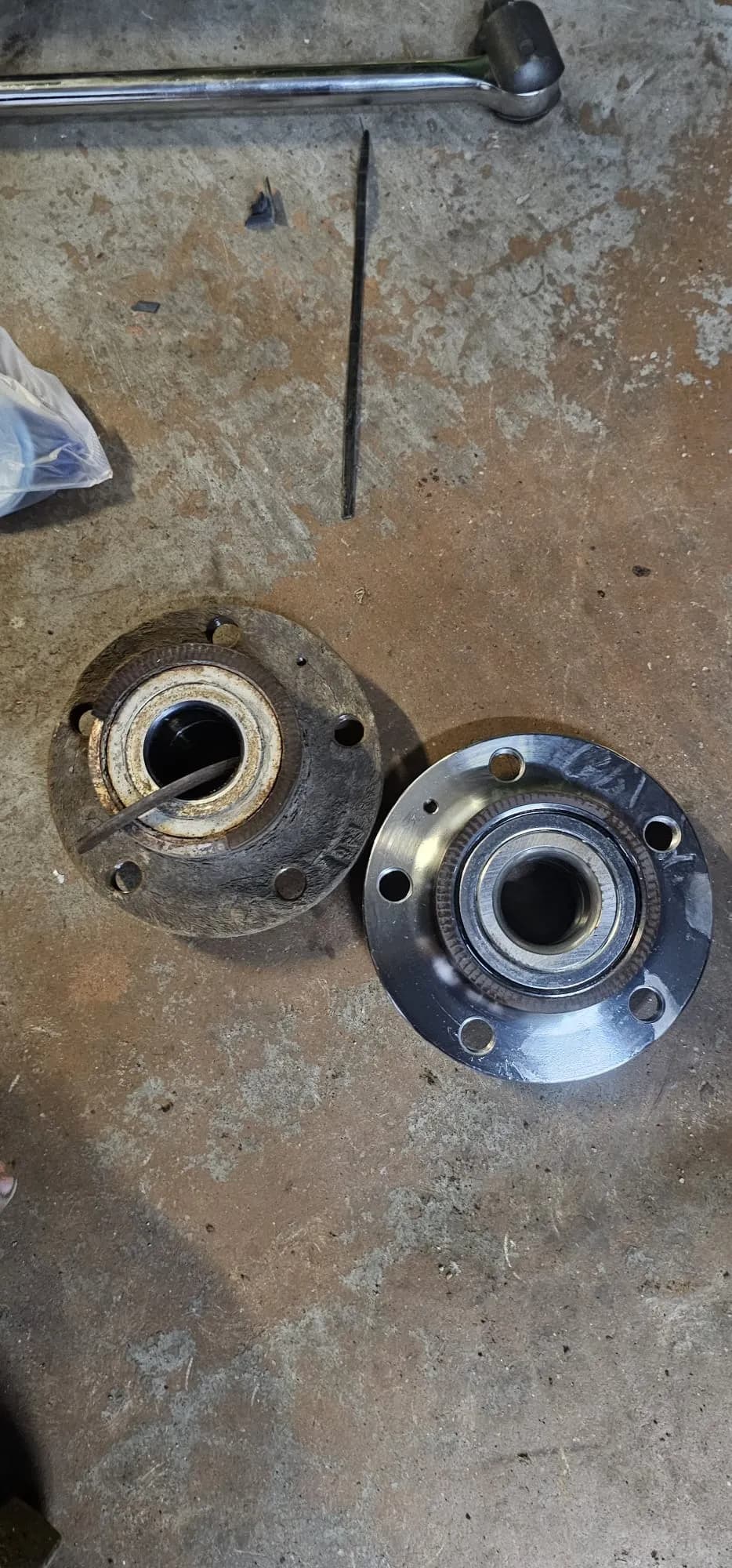
Over time anti-roll bar links, bushes, control arms, ball joints, dampers, top mounts and wheel bearings may need attention.
Diagnostics are needed for:
- knocking
- creaking
- the car pulling to one side
- reduced stability
- uneven tyre wear
- computer diagnostics
Wheel bearings
A worn bearing usually starts to hum as speed increases. But a similar noise can also come from tyres, the rear differential or all-wheel-drive components.
Before replacement it is worth identifying the exact source.
Škoda Octavia brake system
Finnish road salt affects brakes especially strongly. Common problems include disc corrosion, seized guides, a sticking caliper and uneven pad wear.
A check is needed if:
- the brakes squeal
- vibration appears
- the car pulls to one side
- a wheel overheats
- the parking brake works incorrectly
Electronic parking brake
Newer Octavia generations use an electronic parking brake. When replacing the rear pads the service mode must be taken into account.
A parking brake fault may be linked to the caliper actuator, wiring, the battery or the control unit.
Octavia cooling system
Modern TSI and TDI engines have complex temperature management. Coolant should not be topped up regularly without finding the leak.
Coolant loss may be linked to:
- pump
- thermostat
- housing
- hoses
- radiator
- EGR cooler
- heat exchanger
- coolant leak detection
Battery and Start-Stop
On cars with Start-Stop the battery condition is especially important. After replacement on corresponding cars the battery may need to be registered in the system.
Signs of a weak battery:
- Start-Stop has stopped working
- the engine starts slowly
- random faults appear
- the multimedia restarts
- assistants become unavailable
- electrical repair
- computer diagnostics
Octavia e-TEC mild hybrid
In the fourth generation e-TEC versions with mild-hybrid technology appeared. This system does not make the car a full electric vehicle. It assists the petrol engine and allows more efficient use of recuperation and coasting.
During diagnostics the ordinary 12V battery, the additional electrical system, the starter-generator and the power electronics must be taken into account.
Škoda Octavia iV plug-in hybrid
The Octavia IV was also produced as a plug-in hybrid Octavia iV. This version combines a petrol engine, an electric motor, a high-voltage battery, DSG and a charging port. Diagnostics must take two power systems into account at once.
Work directly on high-voltage components requires the appropriate qualification. Reasons for a check:
- the car does not charge
- electric mode does not engage
- a hybrid system fault appears
- charging is interrupted
- electric range changes sharply
- computer diagnostics
- electrical repair
If the Octavia iV does not charge
The fault is not necessarily in the traction battery. The low-voltage system plays an important role even in a plug-in hybrid.
It is worth checking:
- charging station
- cable
- connector
- port lock
- 12V battery
- on-board charging system
- stored faults
- computer diagnostics
- electrical repair
Škoda Octavia Combi
The Octavia Combi is one of the most practical estates in its class. The first modern Combi appeared as early as 1998. A large boot also means the car may regularly have been used with a high load.
On the estate it is also worth checking:
- the rear hatch
- boot lid wiring
- the lock
- the power tailgate on corresponding equipment levels
- the rear wiper
- water ingress
- electrical repair
Power tailgate
Well-equipped newer Octavia models may use a power tailgate. If the hatch stops, reverses, does not open or does not close fully, the actuators, lock, sensors and power supply need to be checked.
Water in the cabin or boot
If moisture appears after rain, door seals, drains, the rear hatch, the panoramic roof on corresponding cars and areas of previous body repair need to be checked.
Water can damage connectors and electronic modules.
Škoda Octavia IV multimedia
The fourth generation received a significantly more complex digital architecture. After the 2024 facelift the Octavia received an updated multimedia system, and on some versions a 13-inch screen is available.
Before replacing a unit it is useful to check power supply, faults and software. Diagnostics are needed if:
- the system restarts
- the screen freezes
- sound disappears
- Bluetooth works unstably
- the camera does not turn on
- computer diagnostics
- electrical repair
Cameras and assistants
A modern Octavia may have adaptive cruise control, Lane Assist, Front Assist, blind-spot monitoring, parking sensors and cameras.
In winter sensors can also be temporarily blocked by snow and ice. After windscreen replacement, body repair, suspension repair or a geometry change, calibration may be required.
Škoda Octavia air conditioning
Air conditioning is important all year round. If refrigerant has to be added regularly, a leak must be found.
If the system does not cool, the cause may be a refrigerant leak, the compressor, condenser, pressure sensor, fan or valve.
Škoda Octavia RS
The Octavia RS is the sporting version of the range. The first modern Octavia already received an RS version, and the sporting line continued in all later generations. The RS may differ with a more powerful engine, DSG, brakes, suspension and electronics settings.
Tuning increases the load on the engine and transmission. When buying an RS it is especially worth checking the tuning history, turbocharger, gearbox, brakes, cooling and suspension.
Škoda Octavia pre-purchase inspection
Before buying a used Octavia it is worth checking the cold start, control unit faults, engine, oil consumption, turbocharger, timing drive, cooling system, DSG or manual gearbox, clutch, DPF, EGR, AdBlue, 4×4, suspension, wheel bearings, brakes, battery, air conditioning and multimedia.
For the Octavia iV the high-voltage system, charging, hybrid mode and high-voltage faults are also checked. For the RS the tuning history should be clarified separately.
Which Škoda Octavia services we provide
At Volkkarihuolto Espoo you can come for:
- regular Škoda Octavia servicing
- engine oil and filter change
- computer diagnostics
- TSI servicing
- TDI servicing
- turbocharger diagnostics
- timing drive inspection
- DPF diagnostics
- EGR inspection
- AdBlue diagnostics
- DSG servicing
- mechatronics diagnostics
- clutch repair
- 4×4 inspection
- all-wheel-drive clutch service
- brake repair
- suspension diagnostics
- wheel bearing replacement
- coolant leak detection
- battery check
- air conditioning service
- multimedia diagnostics
- electronic assistant checks
- Octavia iV diagnostics
- inspection preparation
- Škoda Octavia pre-purchase inspection
Common Škoda Octavia fault signs
It is worth booking diagnostics if:
- Check Engine or EPC is on
- the engine misfires
- the car has lost power
- oil consumption has increased
- coolant level is falling
- the diesel regenerates the DPF too often
- an EGR or AdBlue fault appears
- the DSG jerks
- D or R engages with a delay
- the clutch slips
- 4×4 has stopped working normally
- vibration appears
- the suspension knocks
- a humming noise appears
- the brakes vibrate
- Start-Stop has stopped working
- the multimedia regularly restarts
- the Octavia iV does not charge
Škoda Octavia repair in Espoo
Need repair or maintenance for a Škoda Octavia? Contact Volkkarihuolto Espoo at Ruukinmestarintie 7, 02330 Espoo.
We can diagnose petrol TSI and diesel TDI engines, DSG, 4×4, DPF, EGR, AdBlue, turbocharging, the timing drive, brakes, suspension, the cooling system, multimedia and electronic systems.
For the Octavia iV you can come for charging and related system diagnostics; whether specific work directly on high-voltage components is possible is determined with safety requirements and the necessary qualification in mind.
When servicing a Škoda Octavia it is especially important to consider the generation and the specific powertrain. An Octavia II 1.9 TDI, Octavia III 1.4 TSI DSG, Octavia 2.0 TDI 4×4 and Octavia IV iV differ technically in noticeable ways and need different approaches to diagnostics and preventive maintenance.
FAQ
When did the modern Škoda Octavia appear?
The first modern generation entered production on 3 September 1996. In 2026 the Octavia marks its 30th anniversary.
How many generations of Škoda Octavia are there?
The modern Octavia has four generations. The first appeared in 1996, the second in 2004, the third in 2012, and the fourth was presented in 2019.
How many Škoda Octavia cars have been produced?
By August 2026 Škoda reported almost 7.9 million modern Octavia cars produced.
Which engines are fitted to the Škoda Octavia?
Depending on the generation, MPI and TSI petrol engines, TDI diesels, mild-hybrid e-TEC and plug-in hybrid iV are used.
Is there a Škoda Octavia with DSG?
Yes. DSG has been widely used from the second Octavia generation onwards.
Why does the DSG on an Octavia jerk?
The cause may be the clutches, mechatronics, adaptations, oil or the mechanical part of the gearbox. For correct diagnostics the exact DSG version must first be identified.
Is there a Škoda Octavia 4×4?
Yes. All-wheel drive appeared already on the first modern generation — the Octavia Combi 4×4 was presented in 1999.
Does Haldex / 4×4 need servicing?
Yes. The specific schedule depends on the system generation. It is worth monitoring the fluid, pump, contamination and control unit faults.
Why does a diesel Octavia regenerate the DPF often?
The cause may be short trips, high filter load, or faults in the EGR, engine or sensors.
Is there a hybrid Škoda Octavia?
Yes. The fourth generation was produced with mild-hybrid e-TEC and plug-in hybrid Octavia iV. At the same time the current European range after the 2024 facelift is focused on petrol, diesel and mild-hybrid variants.
Can a Škoda Octavia be checked before purchase?
Yes. It is recommended to check the engine, DSG, timing drive, cooling system, brakes and suspension. On diesel, DPF, EGR and AdBlue are also checked; on 4×4 the all-wheel-drive clutch; and on iV the charging and high-voltage systems.
Detailed Services
Professional fault diagnostics for Skoda Octavia.
Oil ChangeEngine oil and filter replacement for Skoda Octavia.
Annual maintenanceComprehensive annual maintenance for Skoda Octavia.
Regular MaintenanceScheduled maintenance for Skoda Octavia according to service needs.
Engine RepairEngine diagnostics and repair for Skoda Octavia.
Diesel Engine RepairDiesel engine service and repair for Skoda Octavia.
Electrical RepairElectrical fault tracing and repair for Skoda Octavia.
ECU ProgrammingControl unit programming and coding for Skoda Octavia.
DSG RepairDSG transmission diagnostics and repair for Skoda Octavia.
Transmission RepairTransmission diagnostics and repair for Skoda Octavia.
Transmission Oil ChangeTransmission oil change for Skoda Octavia.
Timing Belt ReplacementTiming belt and related component replacement for Skoda Octavia.
Timing Chain ReplacementTiming chain, tensioner, and guide replacement for Skoda Octavia.
Cooling System RepairCooling system service and repair for Skoda Octavia.
AC RepairAir conditioning service and repair for Skoda Octavia.
Engine Heater InstallationEngine heater installation and service for Skoda Octavia.
Cabin OzonationCabin ozonation and odor removal for Skoda Octavia.