Škoda Rapid — repair and service in Espoo
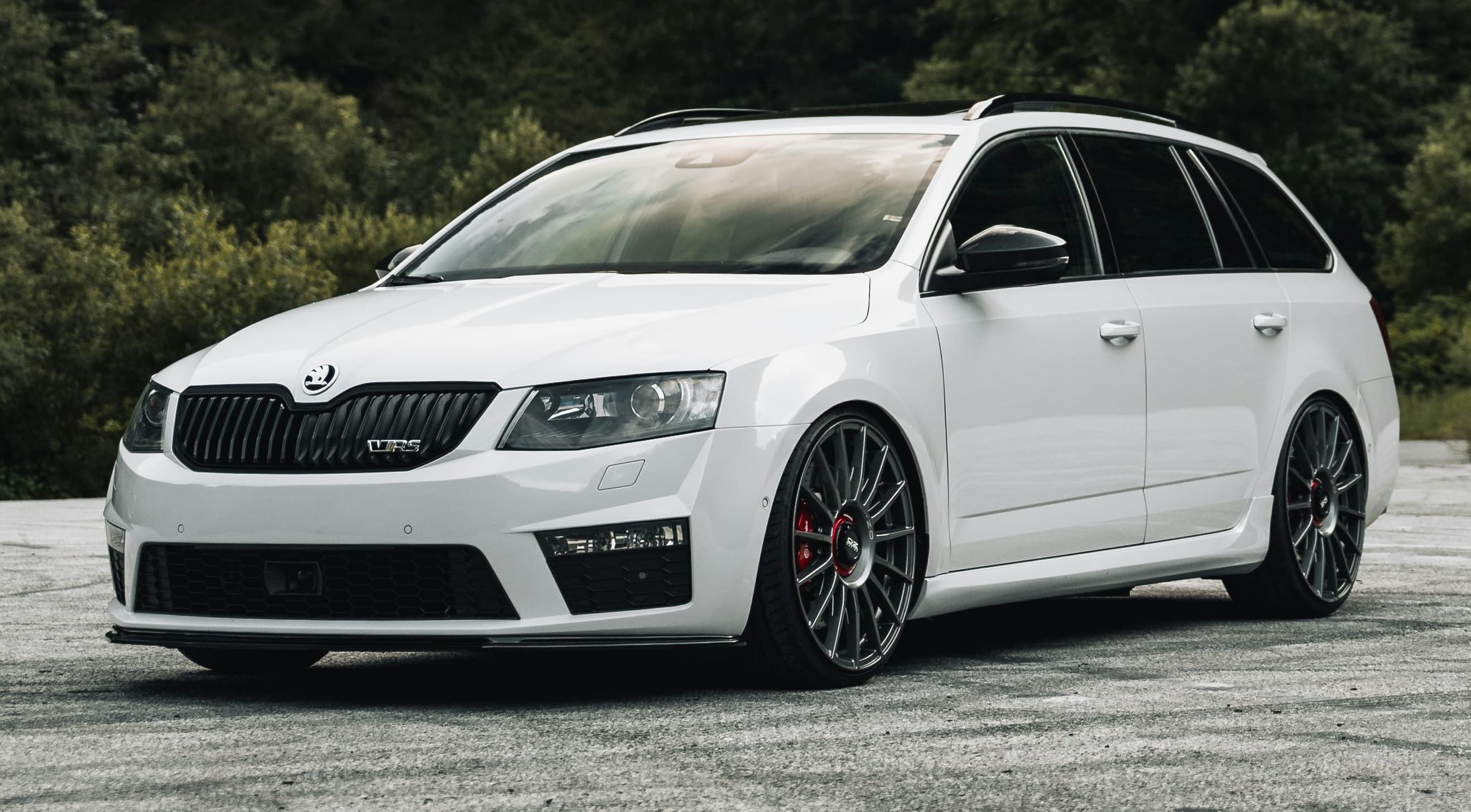
Škoda Rapid is a practical compact Volkswagen Group car that sat between the Fabia and the Octavia in the brand’s European line-up. The model was offered as the spacious Rapid liftback and the more compact Rapid Spaceback hatchback.
The European Rapid arrived in 2012, and the Rapid Spaceback in 2013. The model was produced with petrol MPI and TSI engines, diesel TDI units, manual gearboxes and DSG.
Production of the Rapid for the European market ended in May 2019. Its place in Škoda’s European compact line-up was taken by the Scala, which reached the market the same year. The Rapid name continued to be used on some markets for cars with a different specification.
Today the European Škoda Rapid is exclusively a used car, so the condition of the engine, DSG, timing drive, suspension and service history is especially important.
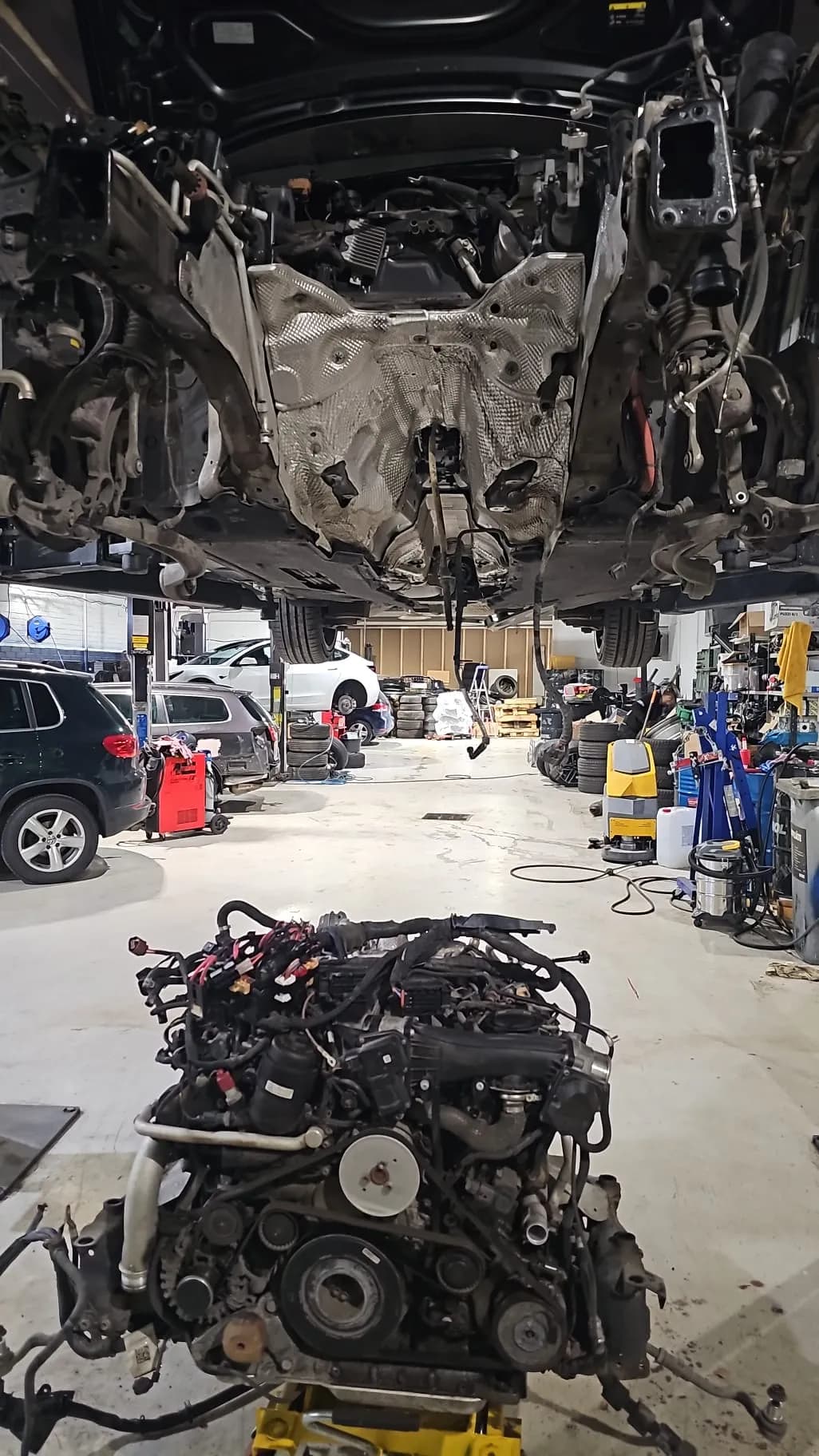
At Volkkarihuolto Espoo we carry out diagnostics, maintenance and repair of Škoda Rapid and Rapid Spaceback at Ruukinmestarintie 7, 02330 Espoo.

Škoda Rapid history
Škoda used the Rapid name long before the modern model, but the European car of interest here appeared in 2012. The Rapid was meant to fill the gap between the Škoda Fabia and the Škoda Octavia.
It combined relatively compact exterior dimensions with a spacious cabin and a large boot. The Rapid became one of the first series-production cars of Škoda’s then-new design direction.
In 2013 the line-up was expanded by the Rapid Spaceback — Škoda’s first modern compact hatchback in this class.
Škoda Rapid Liftback
The main European Rapid has a liftback body. Externally the car resembles a saloon, but the boot lid opens together with the rear screen. That solution gives a large boot aperture, easy loading and strong practicality.
The Rapid was often used as a family or work car, so the used market includes examples with fairly high mileages. When buying, it is especially important to assess the actual condition, not only the odometer reading.
Škoda Rapid Spaceback
The Rapid Spaceback arrived in autumn 2013. It has a shorter rear and a hatchback body, but keeps the spacious cabin characteristic of the Rapid. Škoda positioned the Spaceback as a more dynamic alternative to the regular Rapid.
On cars with a panoramic roof it is also worth checking for water ingress and the condition of the drains. On a used Spaceback the same main systems should be checked:
- TSI or TDI
- DSG
- timing drive
- cooling system
- suspension
- brakes
- electronics
- computer diagnostics
Škoda Rapid 2017 update
In 2017 the Rapid and Rapid Spaceback received a clear update. Front lighting, body styling, the instrument cluster, multimedia, connectivity and the engine line-up changed.
One of the important changes was the arrival of the three-cylinder 1.0 TSI, which replaced some of the earlier 1.2 TSI engines. After the update, European engines included 1.0 TSI 70 kW, 1.0 TSI 81 kW, 1.4 TSI 92 kW, 1.4 TDI 66 kW and 1.6 TDI 85 kW.
European Rapid and Rapid from other markets
When looking up technical information it is important to consider the car’s market. After European production ended, the Rapid name continued to be used, for example, in China, India and Russia. Those cars could have a different body structure, different engines, different equipment and different electronics.
Škoda stated directly that after leaving Europe the Rapid continued in special local versions. So when ordering parts or checking a service schedule it is best to work from the VIN of the specific car.
Škoda Rapid service in Espoo
The Rapid is not usually among the most technically complex models, but the age of most cars already makes preventive maintenance especially important.
On diesels, DPF, EGR, the injection system and the turbocharger are also important. It is worth checking regularly:
- engine oil
- filters
- spark plugs
- timing drive
- cooling system
- turbocharger
- DSG
- clutch
- brakes
- suspension
- battery
- air conditioning
- Škoda Rapid maintenance
- oil and filter change
- annual service
Škoda Rapid petrol engines
Several petrol engines were used in the European Rapid. Depending on the year you may find MPI, 1.2 TSI, 1.4 TSI and 1.0 TSI.
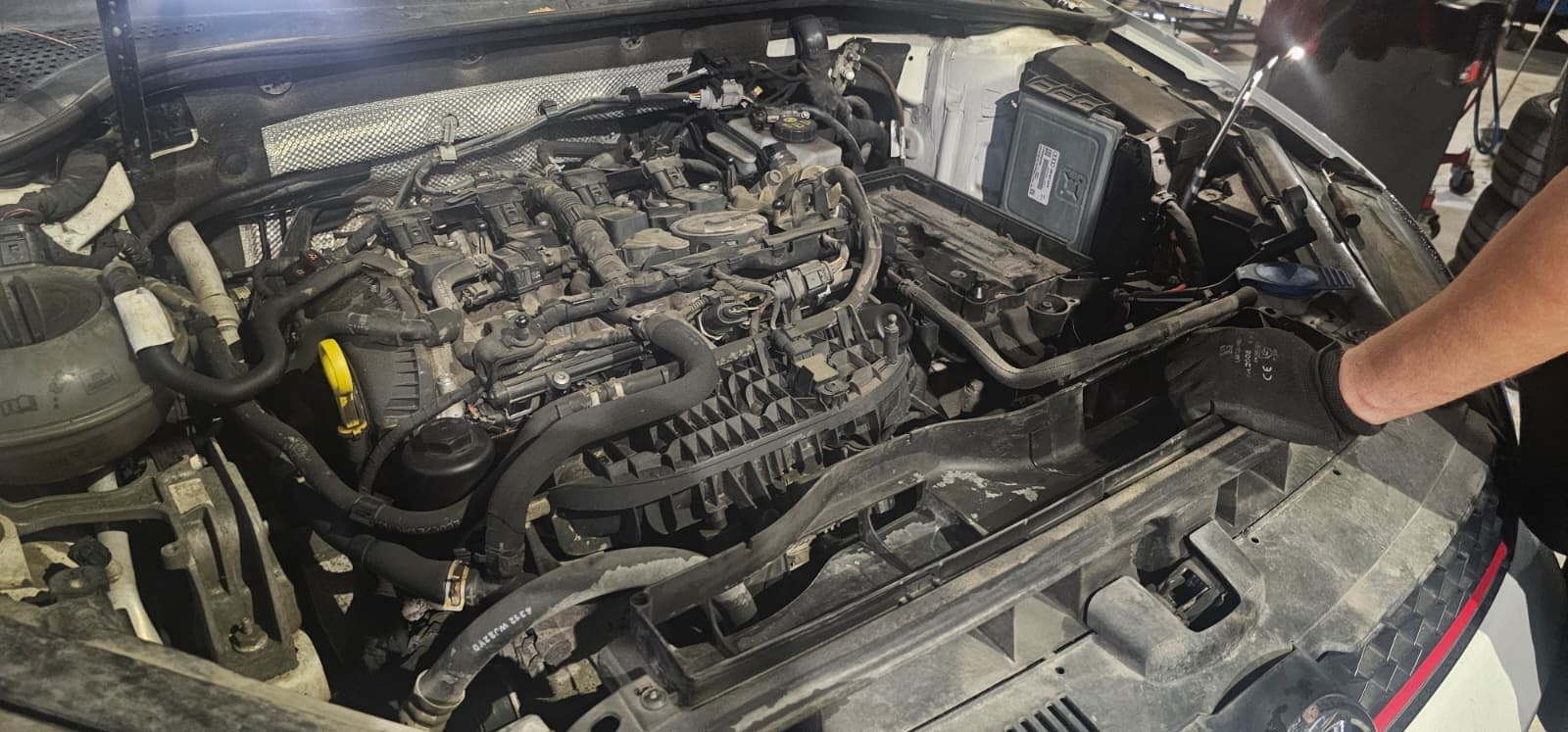
When servicing a petrol Rapid it is worth monitoring oil level and condition, spark plugs, coils, the turbocharger on TSI, the cooling system and the timing drive.
Diagnostics are needed if:
- Check Engine has appeared
- EPC lights up
- the engine misfires
- jerking has appeared
- power has dropped
- oil consumption has increased
- petrol engine repair
- computer diagnostics
Škoda Rapid 1.0 TSI
The 1.0 TSI arrived on the updated Rapid in 2017. Versions with 70 kW / 95 hp and 81 kW / 110 hp were offered. The 70 kW version was available with a 5-speed manual or a 7-speed DSG, and the 81 kW variant came with a 6-speed manual.
It is a three-cylinder turbo engine. A mild characteristic vibration for this layout can be normal. Diagnostics are needed if:
- the engine vibrates strongly
- misfires have appeared
- the car jerks
- an EPC fault has appeared
- power has dropped
- petrol engine repair
- computer diagnostics
Škoda Rapid 1.2 TSI
The 1.2 TSI is widely found on pre-facelift Rapids. Different engine versions can have different timing-drive designs, so recommendations must be set by the specific engine code.
In service it is worth watching oil, spark plugs, coils, the turbocharger, the cooling system and the timing drive. If an unusual metallic noise appears after a cold start, the timing drive should be diagnosed.
Škoda Rapid 1.4 TSI
Later European Rapids used a 1.4 TSI with 92 kW / 125 hp. It was paired with a 7-speed DSG. This version is clearly more dynamic than base Rapids.
At high mileage it is worth checking turbocharging, spark plugs and coils, the cooling system, the DSG and the condition of the engine.
Naturally aspirated MPI
On some markets and early configurations, naturally aspirated petrol MPI engines appear. Compared with TSI they have no turbocharger, which makes the design somewhat simpler.
Service still includes spark plugs, coils, the throttle body, the cooling system, the timing drive and sensors. With unstable idle it is useful first to read faults and check engine parameters.
Škoda Rapid turbocharger
TSI and TDI engines use turbocharging. A boost-pressure fault does not automatically mean the turbocharger is faulty. Causes can also be leaking hoses, the actuator, a valve, a sensor or wiring. So diagnostics come first.
Signs of a possible fault:
- the car has lost power
- a whistling noise has appeared
- a boost fault has appeared
- smoke has appeared
- oil consumption has increased
- petrol engine repair
- computer diagnostics
Škoda Rapid oil consumption
If the engine starts to use oil noticeably, the cause should be identified. Regular topping-up without understanding the cause is not a repair.
Possible causes:
- external leaks
- crankcase ventilation system
- turbocharger
- internal engine wear
- petrol engine repair
- computer diagnostics
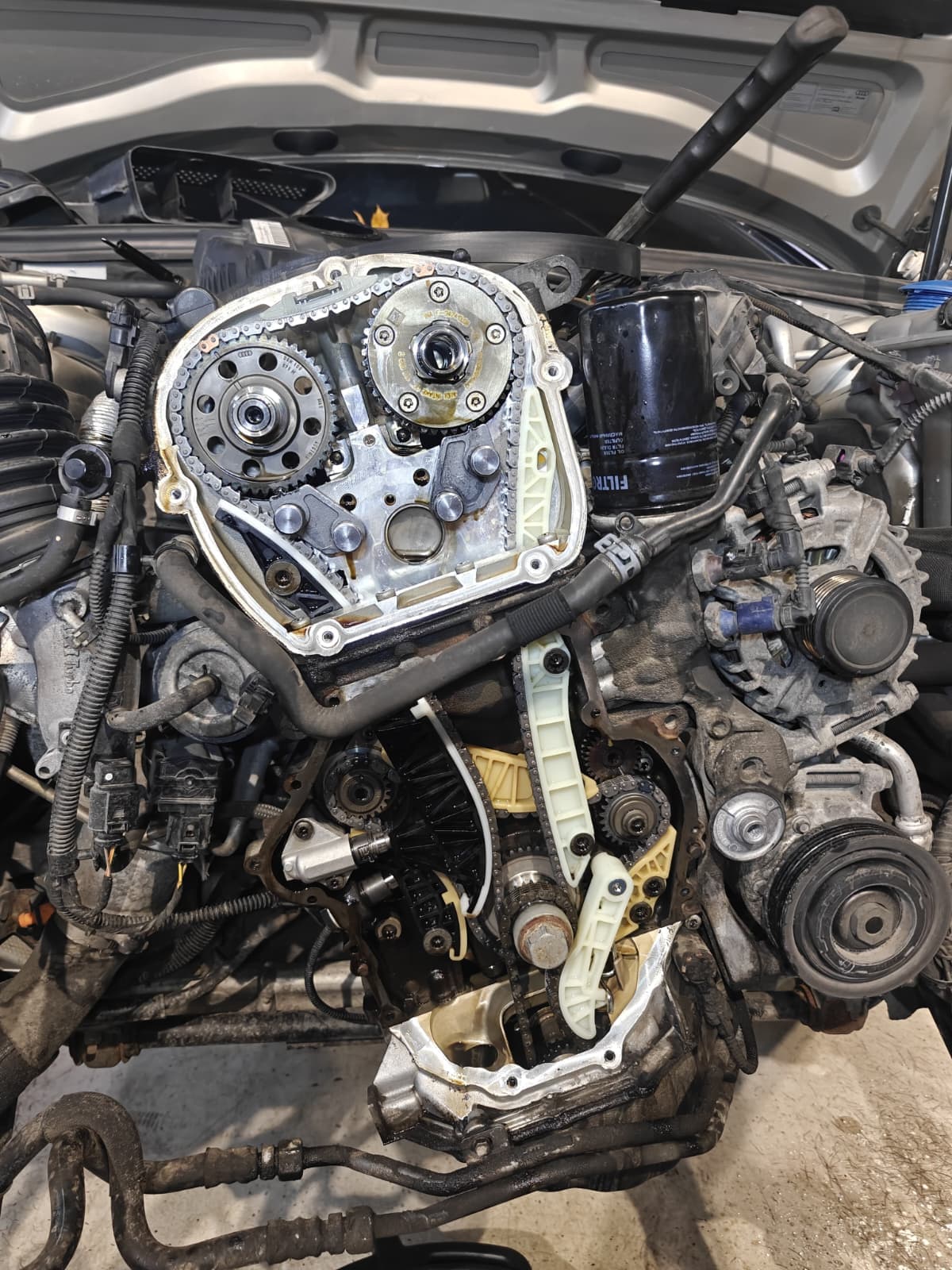
Škoda Rapid timing drive
The Rapid was produced with several generations of Volkswagen Group engines. So different timing-drive designs appear. One interval cannot be used for every Rapid.
You need to identify the VIN, engine code, year of manufacture and service history. For the specific engine, the relevant manufacturer requirements are checked.
Timing chain
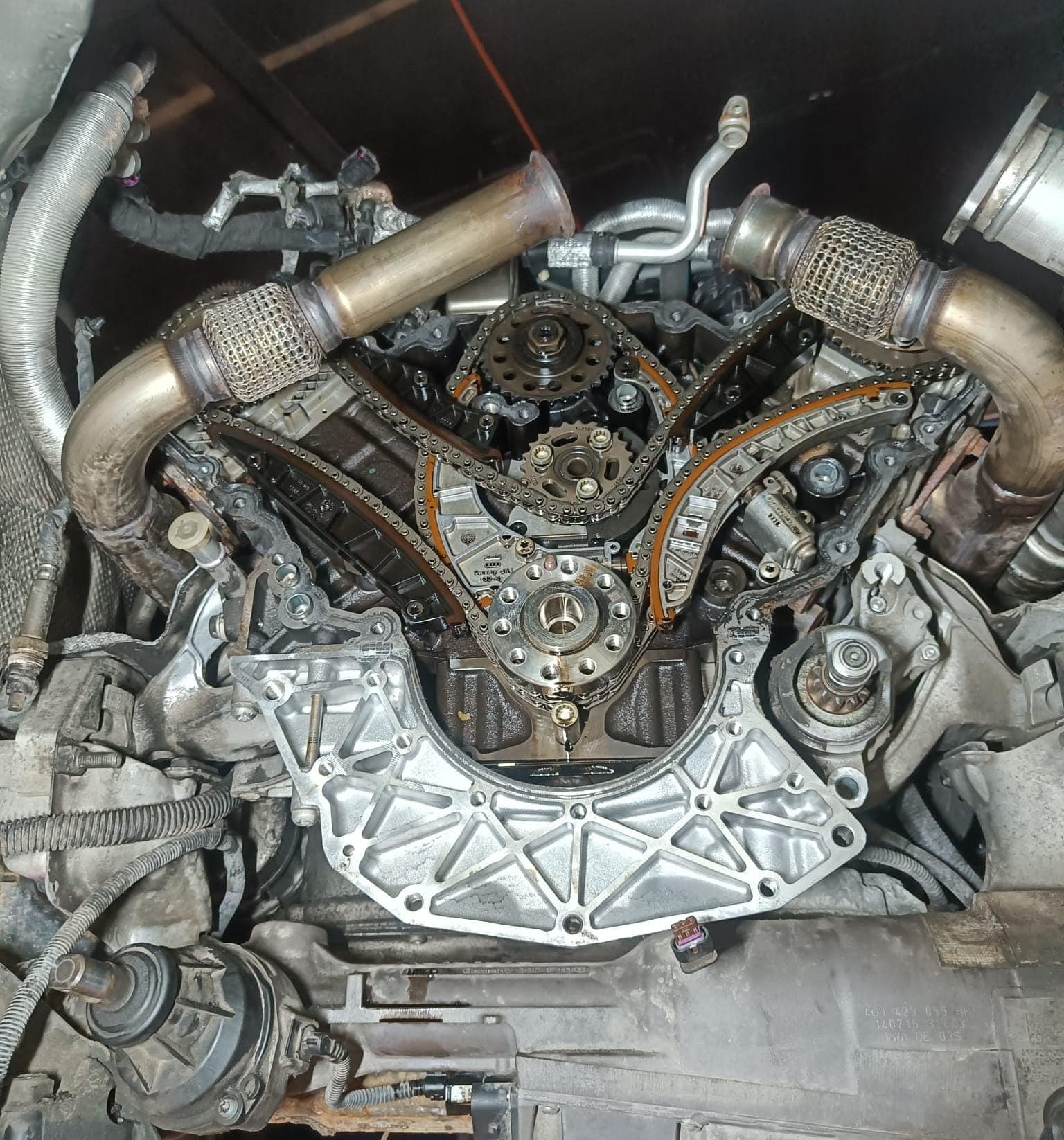
Some early TSI engines used a chain design. A single brief noise is still not enough reason to replace the whole kit automatically. The condition of the system must be assessed.
Reasons for diagnostics can include a metallic noise on start-up, synchronisation faults, difficult starting and unstable running.
Timing belt
Other Rapid engines use a belt drive. The exact schedule is determined by the specific engine.
In service the belt, pulleys, tensioner, related components and oil and coolant leaks are checked.
Diesel Škoda Rapid TDI
The Rapid was produced with several TDI engines. In different years 1.4 TDI and 1.6 TDI appeared. After the 2017 update the European range included 1.4 TDI 66 kW / 90 hp and 1.6 TDI 85 kW / 116 hp.
A diesel suits a high-mileage car well, especially if it regularly drives on the motorway. In service it is important to monitor:
- DPF
- EGR
- turbocharger
- injectors
- timing drive
- TDI diesel engine repair
- computer diagnostics
Škoda Rapid DPF
European diesel versions of the relevant period use a particulate filter. Škoda listed a DPF for the diesel engines of the updated Rapid. The filter periodically performs regeneration.
Signs of active regeneration: raised idle, higher consumption, the fan after stopping and Start-Stop temporarily unavailable. Soot and ash are different types of contamination. Regeneration burns soot but does not remove accumulated ash.
If regenerations are too frequent, check:
- soot quantity
- ash quantity
- differential pressure
- temperature sensors
- EGR
- engine operation
- DPF diagnostics
Škoda Rapid EGR
Diesel Rapids use exhaust-gas recirculation. Over time the EGR can become contaminated. If only the consequences in the DPF are fixed while a faulty EGR is left, the problem can return quickly.
Possible symptoms:
- Check Engine
- loss of power
- uneven running
- limp mode
- DPF regenerations that are too frequent
- EGR diagnostics
Škoda Rapid DSG
The Rapid is widely found with a 7-speed DSG. For example, after the 2017 update DSG was offered with 1.0 TSI 70 kW, 1.4 TSI 92 kW and 1.4 TDI 66 kW. Causes can be the clutches, mechatronics, adaptations or the mechanical part.
It is worth booking diagnostics if:
- the car jerks on take-off
- vibration has appeared
- D or R engages with a delay
- shifts are accompanied by knocks
- the gearbox shows a fault
- some gears disappear
- DSG service and repair
- transmission oil change
DSG clutches
One characteristic symptom of clutch wear is vibration or shudder at the start of movement. Similar sensations can also come from the engine, engine and gearbox mounts, or incorrect adaptations.
So the clutch should not be replaced only on the basis of a jerking feel.
DSG mechatronics
The mechatronics unit controls shifts and clutches. A fault can sometimes affect a specific part of the system without requiring a full gearbox replacement. Diagnostics come first.
Possible symptoms: limp mode, strong knocks, inability to engage D or R, loss of individual gears, and pressure and control faults.
Manual gearbox and clutch
A large number of Rapids have a manual gearbox. On diesel versions and some engines the condition of the dual-mass flywheel should also be considered.
Clutch wear can show as:
- slipping
- a high bite point
- vibration
- difficulty engaging a gear
- manual gearbox diagnostics
Is there a Škoda Rapid 4×4?
The European Rapid is not among Škoda’s all-wheel-drive models. It has front-wheel drive. So there is no Haldex, propshaft or rear differential here.
If you need a compact Škoda with 4×4, matching versions are found, for example, on the Octavia or Karoq.
Škoda Rapid cooling system
A falling coolant level should not be ignored. If antifreeze has to be topped up regularly, the leak point should be found.
Possible sources:
- water pump
- thermostat
- thermostat housing
- hoses
- radiator
- heat exchanger
- coolant leak diagnosis
Škoda Rapid suspension
The Rapid’s design is relatively simple and suits everyday use well. With age, however, anti-roll-bar links, bushes, ball joints, dampers, top mounts and wheel bearings may need attention.
Before a wheel alignment, play in the suspension should first be ruled out. Reasons for diagnostics:
- knocking
- squeaking
- the car pulling to one side
- steering-wheel vibration
- uneven tyre wear
- computer diagnostics
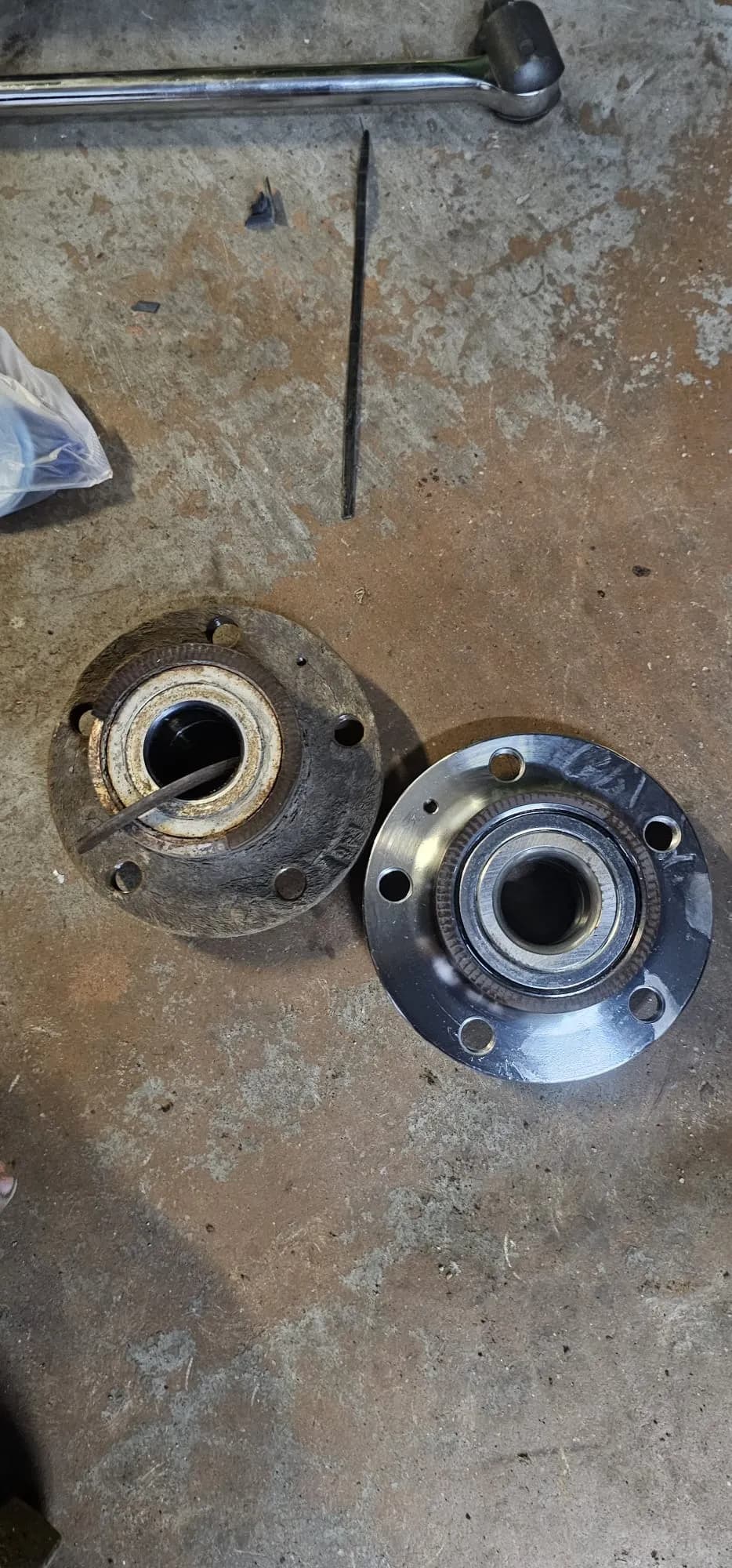
Wheel bearings
A worn bearing usually starts to hum. The noise rises with speed and sometimes changes in corners.
A similar hum can also come from winter tyres or unevenly worn tyres. So the source is best identified before replacing the part.
Škoda Rapid brakes
Finnish winters create harsh conditions for the braking system. Road salt and moisture can lead to disc corrosion, seized guides, uneven pad wear and a sticking caliper.
A check is needed if:
- the car pulls to one side
- vibration has appeared
- a wheel overheats
- the brakes squeal
- a metallic sound has appeared
Rear brakes
The exact rear brake design depends on the engine and the car version. Some Rapids have simpler drum mechanisms.
In service it is worth checking the working parts, pads, the condition of the drums or discs, and the parking-brake cables.
Handbrake
The Rapid uses a mechanical parking brake. After winter it is useful to check its operation together with the rear brakes.
With age the mechanism can seize, cables can be damaged and adjustment can be incorrect.
Battery and Start-Stop
Later Rapids use Start-Stop. If the system stops working, the cause is not necessarily a fault. Start-Stop can switch off because of low temperature, a weak battery, heating in use, high electrical load or active DPF regeneration on a diesel.
With a weak battery, poor starting, random faults and multimedia glitches are also possible.
Škoda Rapid electronics
The Rapid is simpler than a modern Scala or Octavia IV, but it still has a large number of electronic systems. After updates came modern multimedia systems, Škoda Connect, a Wi-Fi hotspot and various driver-assistance systems.
Before replacing an electronic control unit it is useful to check the car’s power supply. Diagnostics are needed if:
- the multimedia restarts
- central locking works unreliably
- random faults appear
- parking sensors work incorrectly
- computer diagnostics
- electrical system repair
Cameras and driver assistance
In matching trim levels the Rapid can have Front Assist, a fatigue-monitoring system, parking sensors and other assistants.
After repair of the front of the car or the windscreen, the position and condition of the relevant sensors must be taken into account.
Škoda Rapid air conditioning
Air conditioning is used year-round. If the system has to be recharged every year, it is better to find the leak.
If the system has stopped cooling, possible causes are a leak, low refrigerant, the compressor, condenser, pressure sensor or fan.
Rapid Spaceback and panoramic roof
One characteristic option on the Rapid Spaceback is a large panoramic glass roof visually linked with an enlarged rear screen. Škoda emphasised this feature in model materials.
Water in the cabin can damage electrical connections. On such a car it is useful to check seals, drains, absence of moisture, the condition of the headlining and water traces in the boot.
Škoda Rapid Monte Carlo
The Rapid and Rapid Spaceback were also produced in Monte Carlo trim. For the Rapid, Monte Carlo versions were offered roughly from 2014 to 2019.
Monte Carlo differs mainly in body styling, wheels, interior and sporty decorative elements. It is not a separate high-performance RS model. Technical service is determined by the fitted engine and gearbox.
Is there a Škoda Rapid RS?
There was no series-production modern European Rapid RS. Do not confuse a Rapid Monte Carlo or a regular Rapid with tuning with full Škoda RS models.
If the car has increased power, the tuning history should be checked separately when buying.
Škoda Rapid tuning
TSI engines are often given software power increases. That can raise the load on the turbocharger, DSG, clutches, cooling system and engine. Tuning itself does not mean the car is in poor condition.
Before buying, however, it is useful to know which software is installed, whether the DSG programme was changed and whether the car was returned to factory configuration.
Rapid discontinued in Europe
Production of European Rapids and Rapid Spacebacks ended in May 2019. In the compact class its place was taken by the Škoda Scala.
That means even the latest European Rapids are already used cars with several years of use. When choosing a car, condition and service history become more important than the options list.
Škoda Rapid pre-purchase inspection
Before buying it is worth checking cold start, electronic control-unit faults, the engine, oil consumption, the turbocharger, the timing drive, the cooling system, DSG or the manual gearbox, the clutch, suspension, wheel bearings, brakes, battery, air conditioning, body and underbody.
For a diesel TDI, DPF, EGR, injectors and the turbocharger are also checked. For a Rapid with DSG it is especially useful to check the gearbox cold, after warm-up, on take-off and when shifting D/R.
Which Škoda Rapid services we provide
At Volkkarihuolto Espoo you can come for:
- regular Škoda Rapid maintenance
- Rapid Spaceback service
- engine oil and filter change
- computer diagnostics
- MPI service
- TSI service
- TDI service
- turbocharging diagnostics
- timing-drive inspection
- DPF diagnostics
- EGR inspection
- DSG service
- mechatronics diagnostics
- clutch repair
- cooling-system diagnostics
- brake repair
- suspension diagnostics
- wheel-bearing replacement
- battery check
- air conditioning service
- electronic-system diagnostics
- preparation for inspection
- Škoda Rapid pre-purchase inspection
Common Škoda Rapid fault signs
Book diagnostics if:
- Check Engine or EPC is on
- the engine misfires
- the car has lost power
- jerking has appeared
- oil consumption has increased
- an unusual noise appears after start-up
- the turbocharger behaves unusually
- coolant level is falling
- the TDI regenerates the DPF often
- an EGR fault has appeared
- the DSG jerks
- D or R engages with a delay
- the clutch slips
- the suspension knocks
- a humming noise has appeared
- the brakes vibrate
- one wheel overheats
- the car starts poorly in winter
- the air conditioning has stopped cooling
Škoda Rapid repair in Espoo
Need repair or maintenance of a Škoda Rapid or Rapid Spaceback? Contact Volkkarihuolto Espoo at Ruukinmestarintie 7, 02330 Espoo.
We can diagnose petrol MPI and TSI engines, diesel TDI units, DSG, turbocharging, the timing drive, DPF, EGR, the cooling system, brakes, suspension, battery, air conditioning and electronic systems.
When servicing a Škoda Rapid it is especially important to identify the exact engine and model year. An early Rapid 1.2 TSI, an updated 1.0 TSI DSG, a diesel 1.6 TDI and a Rapid Spaceback can have different units and service requirements.
Correct diagnostics help find the real cause of the fault and avoid unnecessary replacement of sound components.
FAQ
When did the modern Škoda Rapid appear?
The European Škoda Rapid reached the market in 2012. The Rapid Spaceback joined the line-up in 2013.
Is the Škoda Rapid still produced in Europe?
No. Production of the European Rapid ended in May 2019.
Which model replaced the Škoda Rapid?
In the European compact segment the Rapid was replaced by the new Škoda Scala.
How does the Rapid Spaceback differ from the Rapid?
The Rapid is a practical liftback, while the Rapid Spaceback has a shorter hatchback body. The Spaceback arrived about a year after the Rapid, in 2013.
Which engines were fitted to the Škoda Rapid?
The European Rapid was produced with petrol MPI and TSI engines and diesel TDI units. Later versions include 1.0 TSI, 1.4 TSI, 1.4 TDI and 1.6 TDI.
Is there a Škoda Rapid with DSG?
Yes. Some engines were fitted with a 7-speed DSG. For example, after the 2017 update DSG was available with 1.0 TSI 70 kW, 1.4 TSI and 1.4 TDI.
Why does the DSG on a Rapid jerk?
Causes can be the clutches, mechatronics, adaptations, the engine or powertrain mounts. Diagnostics must be carried out before repair.
Does the Škoda Rapid have a timing belt or chain?
It depends on the specific engine. Different generations of TSI and TDI were used in the Rapid, so the drive type and schedule must be determined from the VIN and engine code.
Is there a Škoda Rapid 4×4?
The European Rapid has front-wheel drive. There is no series-production European 4×4 version.
Is there a diesel Škoda Rapid?
Yes. The European model was produced with TDI. For example, after the 2017 update 1.4 TDI 66 kW and 1.6 TDI 85 kW were offered.
Why does a Rapid TDI regenerate the DPF often?
Causes can be short trips, a heavily loaded filter, a faulty EGR, sensors or engine problems.
Is there a Škoda Rapid Monte Carlo?
Yes. The Rapid and Rapid Spaceback were produced in a sportily styled Monte Carlo version.
Is there a Škoda Rapid RS?
No. There was no modern series-production European Rapid RS. Monte Carlo is a trim level, not a full RS model.
Can a Škoda Rapid be checked before purchase?
Yes. It is especially useful to check the engine, turbocharger, timing drive, DSG, cooling system, suspension and brakes. On a diesel, DPF and EGR should also be checked.
Detailed Services
Professional fault diagnostics for Skoda Rapid.
Oil ChangeEngine oil and filter replacement for Skoda Rapid.
Annual maintenanceComprehensive annual maintenance for Skoda Rapid.
Regular MaintenanceScheduled maintenance for Skoda Rapid according to service needs.
Engine RepairEngine diagnostics and repair for Skoda Rapid.
Diesel Engine RepairDiesel engine service and repair for Skoda Rapid.
Electrical RepairElectrical fault tracing and repair for Skoda Rapid.
ECU ProgrammingControl unit programming and coding for Skoda Rapid.
DSG RepairDSG transmission diagnostics and repair for Skoda Rapid.
Transmission RepairTransmission diagnostics and repair for Skoda Rapid.
Transmission Oil ChangeTransmission oil change for Skoda Rapid.
Timing Belt ReplacementTiming belt and related component replacement for Skoda Rapid.
Timing Chain ReplacementTiming chain, tensioner, and guide replacement for Skoda Rapid.
Cooling System RepairCooling system service and repair for Skoda Rapid.
AC RepairAir conditioning service and repair for Skoda Rapid.
Engine Heater InstallationEngine heater installation and service for Skoda Rapid.
Cabin OzonationCabin ozonation and odor removal for Skoda Rapid.