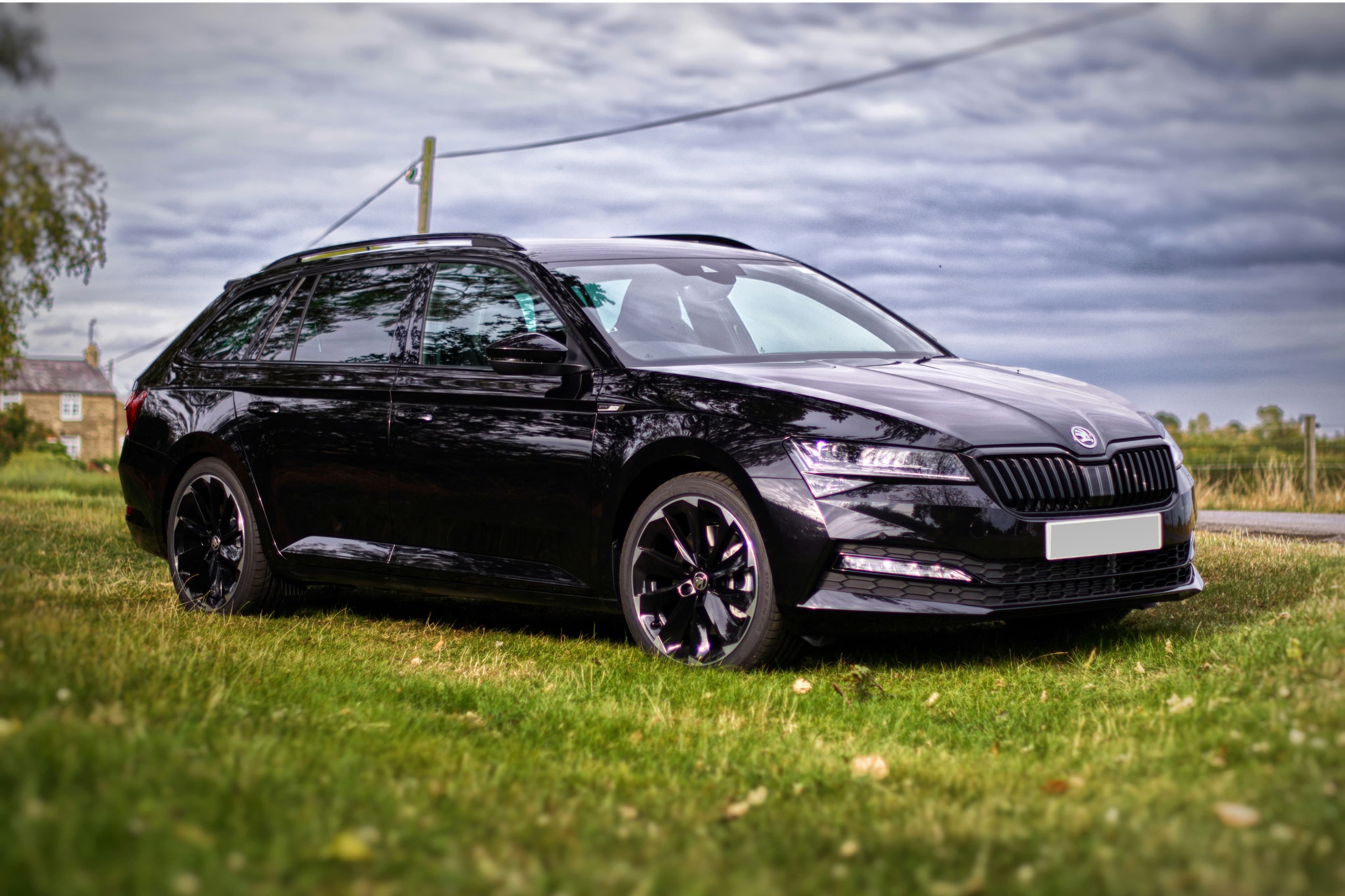
Škoda Superb — service and repair in Espoo
Škoda Superb is the brand’s flagship model, known for its spacious cabin, high comfort level and Volkswagen Group technical base. The Superb is often chosen as a family car, a company car or a high-mileage vehicle, so the Finnish used-car market widely features petrol TSI, diesel TDI, DSG, 4×4 all-wheel-drive versions and the plug-in hybrid Superb iV.
The modern Superb story began in 2001. Today the fourth modern generation is already in production, presented in 2023. Over that time the Superb has evolved from a large saloon with 1.8 Turbo, V6 and Tiptronic to modern cars with TSI, TDI, DSG, mild-hybrid and plug-in hybrid powertrains. According to Škoda, almost 1.8 million modern Superb cars have been delivered to customers since 2001.
At Volkkarihuolto Espoo we carry out diagnostics, maintenance and repair of Škoda Superb at Ruukinmestarintie 7, 02330 Espoo.
History of the Škoda Superb
The Superb name is considerably older than the modern model. Škoda already built the first cars with that name in the 1930s and 1940s. The modern Superb returned to the range in 2001. The first generation was presented in Frankfurt in September 2001 and became Škoda’s flagship model with an internal combustion engine.
The second generation was the first to offer all-wheel drive and later the Combi body. The third generation moved to the MQB platform and brought more modern assistants, DCC and the first Superb iV. The fourth generation continued the development of TSI, TDI, mild-hybrid and plug-in hybrid technologies.
The main modern generations:
- Škoda Superb I — 2001–2008
- Škoda Superb II — 2008–2015
- Škoda Superb III — from 2015
- Škoda Superb IV — from 2023
First-generation Škoda Superb
The first modern Superb is already an older car today. On it you may find 1.8 Turbo, petrol V6, TDI, manual gearboxes and Tiptronic. The most powerful petrol version of the first generation used a 2.8 V6 with 142 kW / 193 hp.
Age and the real service history often matter more than the odometer reading. For cars of this age it is especially important to check:
- timing drive
- turbocharger
- cooling system
- automatic gearbox
- front suspension
- brakes
- electrics
- corrosion
- computer diagnostics
Second-generation Škoda Superb
The second generation appeared in 2008. It was the first to offer a Superb with all-wheel drive, and in 2009 the Superb Combi arrived. On the used market you may find 1.4 TSI, 1.8 TSI, 2.0 TSI, 1.6 TDI, 2.0 TDI, DSG, manual gearbox and 4×4. Powerful V6 versions also existed.
Today special attention is required by:
- DSG
- oil consumption on certain TSI engines
- timing drive
- DPF
- EGR
- dual-mass flywheel
- all-wheel-drive system
- suspension
- DSG service and repair
- computer diagnostics
Third-generation Škoda Superb
The third generation was presented in 2015 and built on the MQB platform. For the Superb this was a major technological step forward. Škoda for the first time offered adaptive DCC suspension, three-zone climate control and more modern driver assistance systems on the model.
On the Superb III the common engines are 1.4 TSI, 1.5 TSI, 1.8 TSI, 2.0 TSI, 1.6 TDI, 2.0 TDI, DSG and 4×4. In 2019 after the update the Superb iV arrived — the first series-production plug-in hybrid from Škoda.
New fourth-generation Škoda Superb
The fourth generation was presented in November 2023. The Superb retained two main bodies: Hatch and Combi.
For the new generation Škoda announced three petrol engines, two diesels, mild-hybrid and an improved plug-in hybrid. The power range at launch was from 110 to 195 kW, and DSG became standard for all powertrains.
That is why servicing a new Superb cannot automatically reuse procedures from previous generations.
Škoda Superb servicing in Espoo
The Superb is often used for high mileage. Typical use in Finland includes motorway trips, short city journeys, cold starts, road salt, towing and high annual mileage.
For a high-mileage car preventive diagnostics are especially useful. It is worth checking regularly:
- engine oil
- filters
- timing drive
- cooling system
- DSG
- clutch
- DPF
- EGR
- AdBlue
- 4×4
- suspension
- brakes
- battery
- air conditioning
- Škoda Superb scheduled maintenance
- oil and filter change
- annual service
Škoda Superb TSI petrol engines
Modern generations use various petrol TSI engines. You may find 1.4 TSI, 1.5 TSI, 1.8 TSI and 2.0 TSI.
During servicing it is worth monitoring oil condition, spark plugs, coils, the turbocharger, the cooling system, crankcase ventilation and the timing drive.
It is worth booking diagnostics if:
- Check Engine appears
- EPC is on
- the engine misfires
- the car jerks
- power has dropped
- oil consumption has increased
- coolant level is falling
- petrol engine repair
- computer diagnostics
Škoda Superb 1.4 and 1.5 TSI
The 1.4 and 1.5 TSI are widely found on the third and fourth generations. They are economical turbocharged engines well suited to everyday use.
The cause may be spark plugs, coils, the boost system, sensors or other components. Diagnostics are worth booking for:
- misfires
- EPC
- jerking
- unstable idle
- loss of power
- petrol engine repair
- computer diagnostics
Škoda Superb 1.8 and 2.0 TSI
More powerful versions use 1.8 and 2.0 TSI. They place a greater load on the gearbox, cooling and the all-wheel-drive system. If the car has been chip-tuned, the load on the transmission may have been higher than the factory level.
With high mileage it is especially worth monitoring oil consumption, the turbocharger, the cooling system, crankcase ventilation, the timing drive and DSG.
Škoda Superb oil consumption
On certain TSI engines elevated oil consumption can be more common. But the cause is not always in the piston group. If oil has to be topped up regularly, it is useful to measure the actual consumption and identify the source.
The following are checked:
- external leaks
- crankcase ventilation
- turbocharger
- actual engine wear
- petrol engine repair
- computer diagnostics
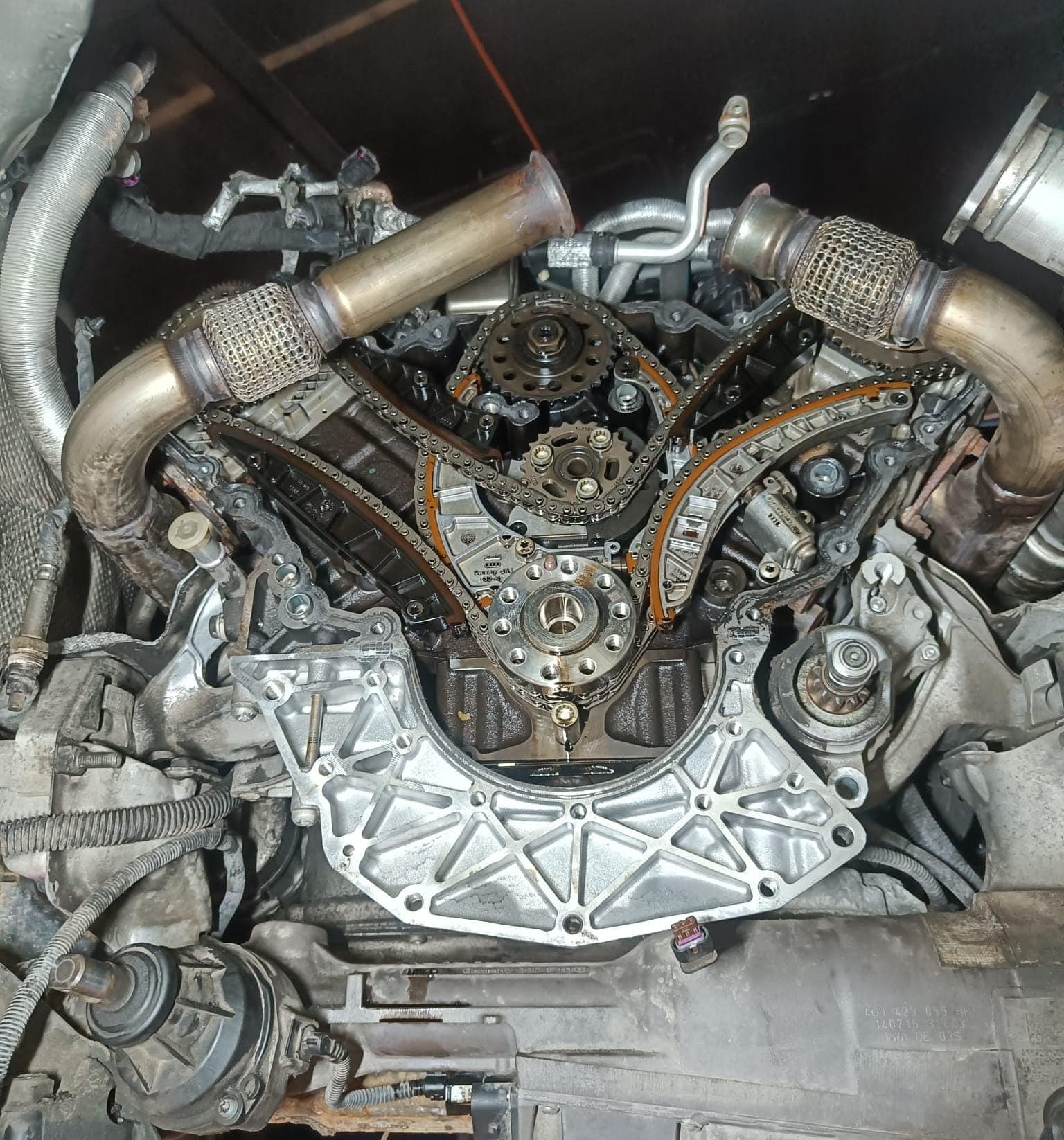
Superb timing belt or chain
A large number of engines have been used in the Superb. Depending on the engine the timing drive may be a belt or a chain. There is no single universal replacement interval for all Superb models.
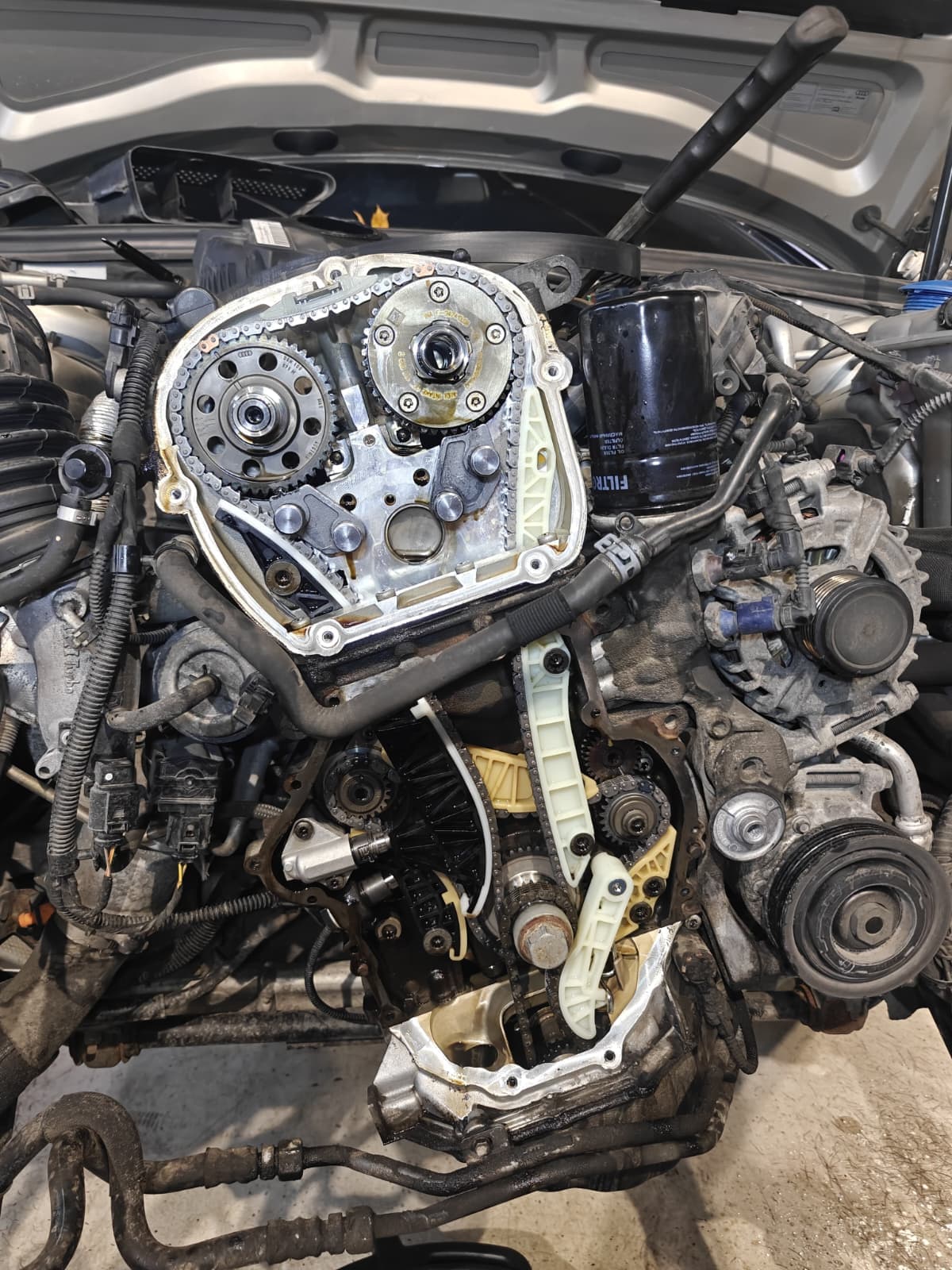
It is necessary to go by the VIN, engine code, model year and factory schedule. On a chain engine metallic noise on start-up or timing errors may be reasons for a check.
Diesel Škoda Superb TDI
Diesel Superb models are very common in Finland. The 2.0 TDI is especially frequent. Diesel suits a large car and high annual mileage well, but requires a working exhaust aftertreatment system.
It is worth checking:
- turbocharger
- DPF
- EGR
- AdBlue
- injectors
- cooling system
- timing drive
- TDI diesel engine repair
- computer diagnostics
DPF Škoda Superb
The particulate filter periodically carries out regeneration. On the motorway conditions for this are usually good. With mostly short trips the process can be constantly interrupted. Forced regeneration is not suitable in every case.
During diagnostics soot load, ash load, differential pressure, temperature sensors, EGR and engine operation are checked.
Symptoms:
- elevated idle
- fans after stopping
- increased consumption
- frequent regenerations
- DPF fault
- loss of power
- DPF diagnostics
EGR Škoda Superb
The EGR gradually becomes contaminated with soot. An EGR fault can lead to faster DPF filling. If the coolant level is also falling, the EGR cooler should be checked on the corresponding engine.
Possible symptoms:
- Check Engine
- loss of power
- jerking
- unstable running
- frequent regenerations
- limp mode
- EGR diagnostics
AdBlue Škoda Superb
Modern diesel Superb models use SCR and AdBlue. If a countdown to a no-start condition appears, the problem should not be postponed.
The fault may be related to:
- NOx sensor
- pump
- injector
- heater
- level sensor
- wiring
- AdBlue diagnostics
DSG Škoda Superb
DSG is widely used on the second, third and fourth generations of the Superb. At the same time there are several different gearboxes. They differ in the number of gears, clutches, mechatronics, permitted torque and lubrication system. That is why the schedule is determined by the specific transmission.
Diagnostics are needed if:
- the gearbox jerks
- D or R engages with a delay
- vibration has appeared
- shocks have occurred
- a fault has appeared
- the car has gone into limp mode
- DSG service and repair
- transmission oil change
DSG mechatronics
The mechatronics unit controls the gearbox and clutches. But a mechatronics fault does not automatically mean the entire unit needs replacing.
When faulty, jerking, loss of individual gears, limp mode, a pressure fault or inability to engage a gear may appear. First the faults, power supply, pressure, adaptations, clutch condition and the mechanical part of the gearbox are checked.
Clutch and dual-mass flywheel
The Superb is a fairly heavy car, so the clutch and dual-mass flywheel can experience significant load. The dual-mass flywheel is also used with certain DSG versions.
Signs of wear:
- vibration
- metallic knocking
- noise on start or stop
- jerking
- slipping on a manual gearbox
- manual gearbox diagnostics
Škoda Superb 4×4
All-wheel drive first appeared on the second modern Superb generation. These cars use electronically controlled engagement of the rear axle. The system is especially useful in winter, but it requires servicing.
It is worth monitoring clutch fluid, the pump, contamination, control-unit faults and tyre condition.
All-wheel drive / Haldex servicing
In everyday speech the Superb all-wheel-drive system is often called Haldex. The specific clutch generation depends on the car. It is especially important to use four tyres of the same size and similar wear.
Signs of a problem:
- the rear axle does not engage
- the front wheels spin heavily
- an all-wheel-drive fault appears
- shocks occur
- computer diagnostics
- transmission oil change
Third-generation Superb iV
In 2019 the Superb became the first Škoda to receive a plug-in hybrid powertrain. The Superb iV combines a petrol TSI, an electric motor, a high-voltage battery, DSG and a charging port. Diagnostics must take both parts of the powertrain into account.
A check is needed if:
- the car does not charge
- electric mode does not engage
- charging is interrupted
- a hybrid-system fault appears
- electric range changes sharply
- computer diagnostics
- electrical repair
New Superb Combi iV
The fourth generation received a substantially improved plug-in hybrid. For the new model Škoda announced electric range of more than 100 km, and later indicated up to around 120 km depending on version and conditions.
This means the new Superb iV is technically noticeably different from the previous generation. Work directly on high-voltage components requires the appropriate qualification.
During diagnostics the following are especially important:
- HV battery
- charger
- cooling system
- DSG
- 12V system
- software
- computer diagnostics
- electrical repair
If the Škoda Superb iV does not charge
The fault is not necessarily related to the battery. A weak 12V battery can also create problems starting a charge and activating the hybrid system.
It is worth checking:
- charging station
- cable
- charging port
- connector lock
- 12V battery
- on-board charger
- high-voltage faults
- computer diagnostics
- electrical repair
Mild-hybrid Superb
The fourth generation for the first time offers a Superb with a mild-hybrid system. It assists the combustion engine and improves efficiency, but does not turn the car into a full electric vehicle.
Diagnostics must take the additional electrical part and the energy management system into account.
Škoda Superb cooling system
Modern TSI and TDI engines use fairly complex temperature management. On the plug-in hybrid high-voltage system circuits are added. Regular topping up without finding the cause is not a repair.
Causes of falling coolant level may include:
- pump
- thermostat
- housing
- hoses
- radiator
- heat exchanger
- EGR cooler
- coolant leak detection
Škoda Superb suspension
The Superb is a large and heavy car. Because of the long wheelbase and mass, suspension condition significantly affects comfort and handling.
Over time anti-roll bar links, control arms, bushes, ball joints, shock absorbers, top mounts and wheel bearings may need attention.
Diagnostics are needed if:
- knocking has appeared
- the car pulls
- tyres wear unevenly
- stability has worsened
- squeaking has appeared
- computer diagnostics
DCC — Superb adaptive suspension
The third generation was the first Superb with adaptive DCC chassis. Electronically adjustable dampers allow the suspension characteristics to be changed. When replacing a conventional damper and a DCC unit the cost and procedure can differ substantially.
If a DCC fault appears or the car becomes unusually firm, it is worth checking the dampers, sensors, wiring and control unit.
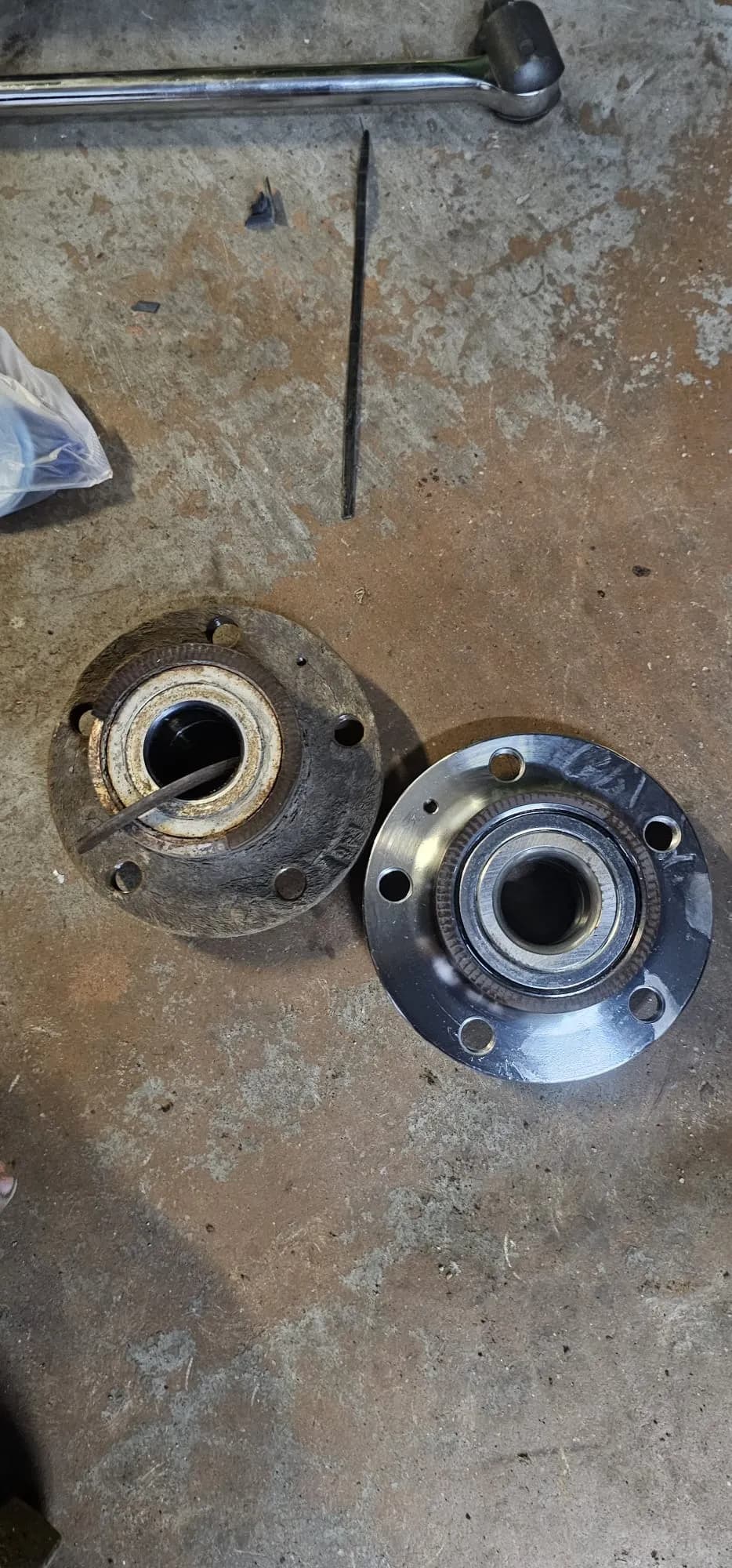
Wheel bearings
The main wear symptom is a hum that increases with speed. On a Superb 4×4 a similar sound can come from the tyres, the rear differential or all-wheel-drive components.
That is why the source is best identified before replacing a part.
Škoda Superb brakes
The large mass of the Superb places noticeable load on the braking system. Finnish road salt additionally accelerates disc corrosion, seized guides and damaged mechanisms.
It is worth booking diagnostics if:
- vibration has appeared
- the brakes squeal
- the car pulls to one side
- a wheel overheats
- the parking brake works incorrectly
Electronic parking brake
Modern Superb models use an electronic parking brake. When servicing the rear brakes the service mode must be taken into account.
A fault may be related to the caliper actuator, wiring, power supply or the control unit.
Battery and Start-Stop
The Superb has a large amount of electrical equipment. Before replacing expensive electronic components it is useful to check the car’s power supply.
A weak 12V battery can cause:
- Start-Stop failure
- slow starting
- random faults
- DSG problems
- assistants unavailable
- multimedia reboot
- electrical repair
- computer diagnostics
Multimedia and electronics
A modern Superb has a digital instrument cluster, multimedia and a large number of networked electronic control units. The new generation also introduced Škoda Smart Dials and a revised digital cabin architecture.
Diagnostics are needed if:
- the screen freezes
- the system reboots
- sound disappears
- Bluetooth works unstably
- the camera does not switch on
- numerous faults appear
- computer diagnostics
- electrical repair
Cameras and assistants
The third and fourth generations may be equipped with Adaptive Cruise Control, Lane Assist, Front Assist, Travel Assist, Side Assist, parking systems and cameras.
After windscreen replacement, body repair or significant suspension repair, some systems may require calibration.
Air conditioning and climate
The Superb is often equipped with multi-zone climate control. On the iV the climate system is also linked to thermal management of the electrified powertrain.
If one zone works incorrectly, the cause may be a flap servo, sensor, valve, lack of refrigerant or the compressor.
Škoda Superb Combi
The Superb Combi appeared on the second modern generation in 2009. The estate is especially popular thanks to its large boot. The car may also often have been used with a heavy load or a trailer.
It is additionally worth checking:
- tailgate
- electric drive
- lock
- rear wiper
- wiring
- absence of water
- electrical repair
Electric tailgate drive
Well-equipped Superb models use an electric drive. If the lid stops, reverses, does not open or does not close fully, the actuators, lock, sensors, wiring and power supply are checked.
Panoramic roof and water in the cabin
On cars with a panoramic roof the drains must be monitored. If moisture appears after rain, the source should be found as early as possible.
Water in the cabin or boot can lead not only to dampness but also to connector oxidation, electronics damage and random faults.
Trailer towing
The Superb, especially a powerful TDI 4×4, is often used for towing. The permitted trailer weight must be determined from the registration data of the specific car.
In such use additional load is placed on:
- DSG
- engine
- cooling system
- brakes
- rear suspension
- all-wheel drive
Škoda Superb pre-purchase inspection
Before buying a used Superb it is worth checking cold start, electronic control-unit faults, the engine, oil consumption, the turbocharger, the timing drive, the cooling system, DSG, the clutch, DPF, EGR, AdBlue, 4×4, suspension, DCC, wheel bearings, brakes, battery, air conditioning, multimedia and the body.
For the Superb iV the high-voltage system, charging, battery, hybrid mode and stored HV faults are additionally checked. On a car with a tow bar it is useful to find out how actively it was used for towing.
Which Škoda Superb services we provide
At Volkkarihuolto Espoo you can come for:
- Škoda Superb scheduled maintenance
- engine oil and filter change
- computer diagnostics
- TSI servicing
- TDI servicing
- turbocharger diagnostics
- timing drive check
- DPF diagnostics
- EGR check
- AdBlue diagnostics
- DSG servicing
- mechatronics diagnostics
- clutch repair
- 4×4 check
- all-wheel-drive clutch servicing
- Superb iV diagnostics
- brake repair
- suspension diagnostics
- DCC check
- wheel bearing replacement
- coolant leak detection
- battery check
- air conditioning service
- multimedia diagnostics
- electronic assistants check
- inspection preparation
- Škoda Superb pre-purchase inspection
Common Škoda Superb fault signs
It is worth booking diagnostics if:
- Check Engine or EPC is on
- the engine misfires
- the car has lost power
- oil consumption has increased
- coolant level is falling
- the diesel regenerates the DPF too often
- an EGR or AdBlue fault has appeared
- the DSG jerks
- D or R engages with a delay
- vibration has appeared
- 4×4 works incorrectly
- the suspension knocks
- DCC shows a fault
- a hum has appeared
- the brakes vibrate
- Start-Stop has stopped working
- multimedia reboots
- the Superb iV does not charge
Škoda Superb repair in Espoo
Need repair or maintenance of a Škoda Superb? Contact Volkkarihuolto Espoo at Ruukinmestarintie 7, 02330 Espoo.
We can diagnose petrol TSI and diesel TDI, DSG, 4×4, DPF, EGR, AdBlue, turbocharging, the timing drive, brakes, suspension, DCC, the cooling system, multimedia and electronic assistants.
For the Superb iV you can come for diagnostics of charging and related systems; the possibility of specific work directly on high-voltage components is determined with safety requirements and the necessary qualification in mind.
When servicing a Škoda Superb it is especially important to take the car’s generation into account. A Superb II 1.8 TSI DSG, Superb III 2.0 TDI 4×4, Superb III iV and the new fourth-generation Superb have different powertrains and electronic systems and require different approaches to diagnostics and preventive maintenance.
FAQ
When did the modern Škoda Superb appear?
The modern Superb was presented in September 2001 in Frankfurt.
How many Škoda Superb generations are there?
The modern model has four generations: from 2001, 2008, 2015 and 2023 respectively.
Which Škoda Superb is current?
The current model is the fourth generation, presented in 2023. It is produced in Hatch and Combi bodies.
Which engines are used on the Superb?
Depending on the generation, petrol TSI, diesel TDI, earlier naturally aspirated and turbocharged petrol engines were used, and on modern cars also mild-hybrid and plug-in hybrid powertrains.
Is there a Superb with DSG?
Yes. DSG is widely used on modern Superb generations. On the fourth generation DSG is standard for all powertrains announced at launch.
Why does the DSG on a Superb jerk?
The cause may be the clutches, mechatronics, oil, adaptations or a mechanical fault. Exact diagnostics depend on the installed DSG version.
Is there a Škoda Superb 4×4?
Yes. All-wheel drive first appeared on the second modern generation in 2008.
Does the all-wheel drive need servicing?
Yes. For the corresponding multi-plate clutch the fluid, pump and control system condition must be taken into account. The specific schedule is determined by the car.
Why does a diesel Superb regenerate the DPF often?
The cause may be short trips, high filter load or faults in the EGR, engine, injectors or sensors.
Is there a plug-in hybrid Škoda Superb?
Yes. The first Superb iV appeared after the third-generation update in 2019.
What is the electric range of the new Superb iV?
For the fourth generation Škoda states electric range of more than 100 km, and for current variants up to around 120 km depending on version and measurement conditions.
Can a Škoda Superb be inspected before purchase?
Yes. It is recommended to check the engine, DSG, timing drive, cooling system, suspension, brakes and electronics. On a diesel, DPF, EGR and AdBlue are additionally checked, on 4×4 the all-wheel-drive system, and on iV the charging and high-voltage systems.
Detailed Services
Professional fault diagnostics for Skoda Superb.
Oil ChangeEngine oil and filter replacement for Skoda Superb.
Annual maintenanceComprehensive annual maintenance for Skoda Superb.
Regular MaintenanceScheduled maintenance for Skoda Superb according to service needs.
Engine RepairEngine diagnostics and repair for Skoda Superb.
Diesel Engine RepairDiesel engine service and repair for Skoda Superb.
Electrical RepairElectrical fault tracing and repair for Skoda Superb.
ECU ProgrammingControl unit programming and coding for Skoda Superb.
DSG RepairDSG transmission diagnostics and repair for Skoda Superb.
Transmission RepairTransmission diagnostics and repair for Skoda Superb.
Transmission Oil ChangeTransmission oil change for Skoda Superb.
Timing Belt ReplacementTiming belt and related component replacement for Skoda Superb.
Timing Chain ReplacementTiming chain, tensioner, and guide replacement for Skoda Superb.
Cooling System RepairCooling system service and repair for Skoda Superb.
AC RepairAir conditioning service and repair for Skoda Superb.
Engine Heater InstallationEngine heater installation and service for Skoda Superb.
Cabin OzonationCabin ozonation and odor removal for Skoda Superb.