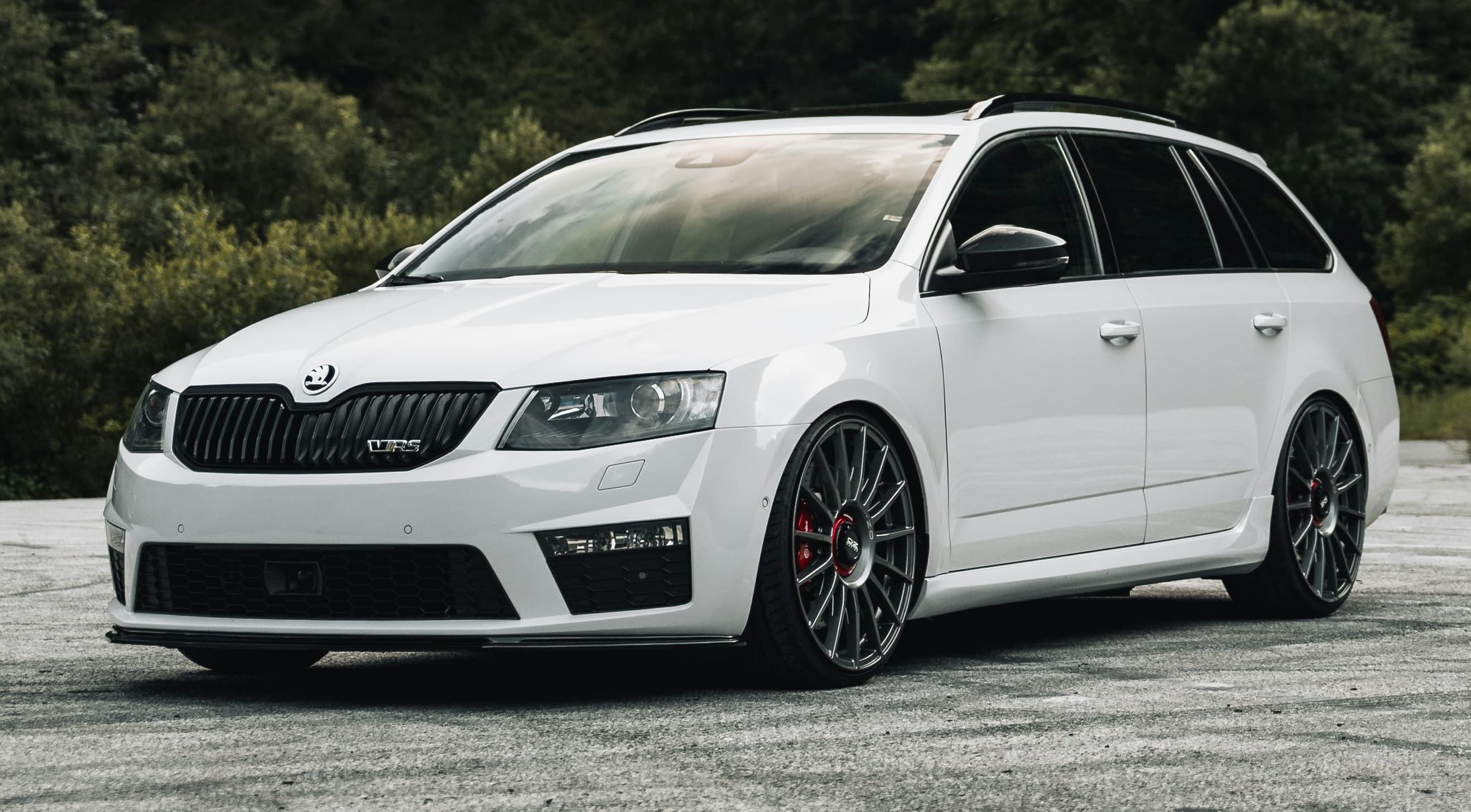
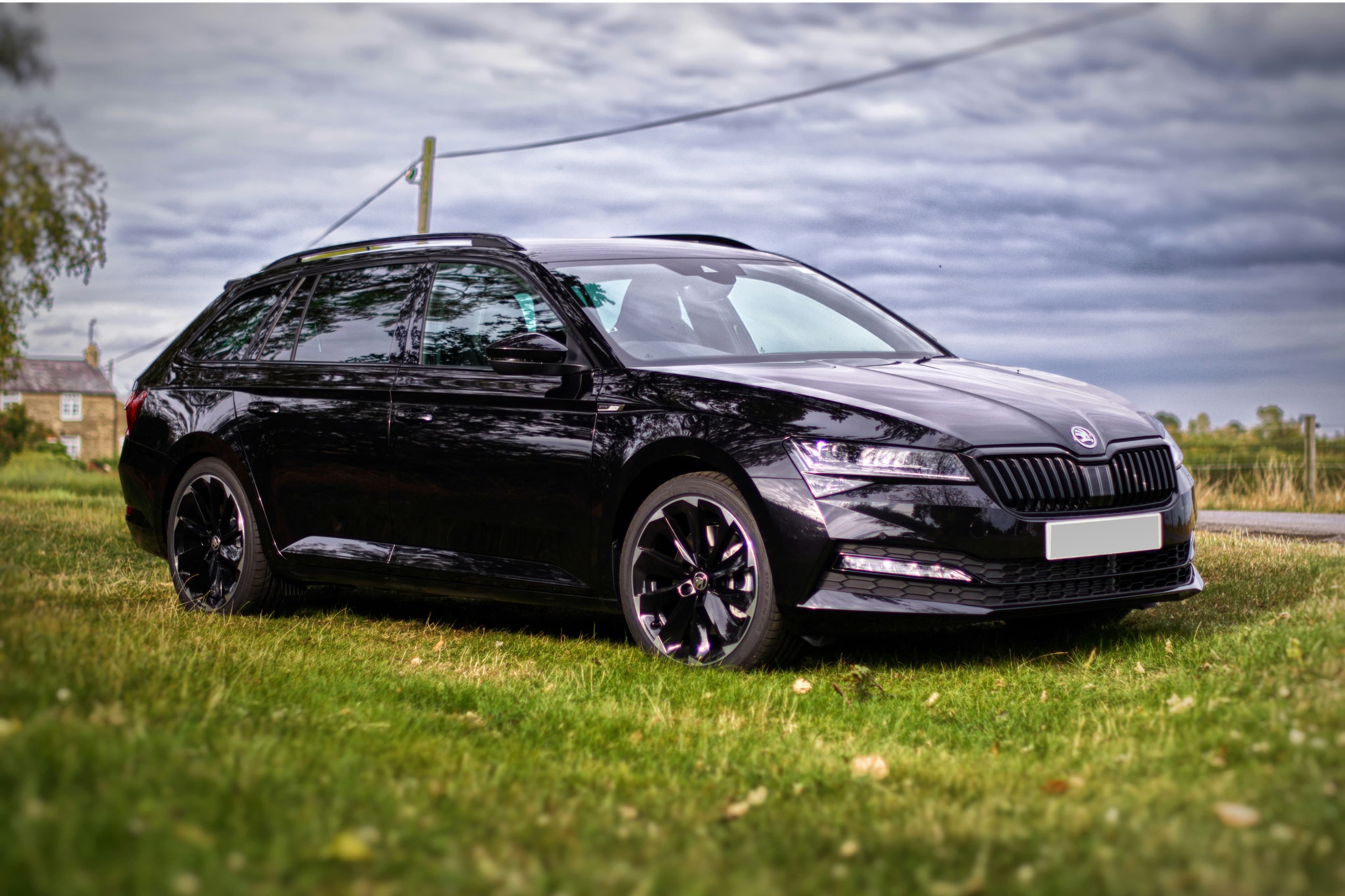
Škoda Scala — repair and service in Espoo
Škoda Scala is a compact Volkswagen Group hatchback that replaced the Rapid Spaceback and sits between the Fabia and the Octavia. The model combines a spacious cabin, a large boot for its class, petrol TSI engines, a diesel TDI on early cars, manual gearboxes and DSG.
Scala was unveiled in December 2018 and became the first Škoda on the MQB-A0 platform. At launch the model received petrol TSI engines, the 1.6 TDI diesel and later a G-TEC natural-gas engine.
In 2023 Škoda presented the updated Scala, and series production of the facelift model began in early 2024. After the update, the European engine range focused on modern petrol 1.0 and 1.5 TSI units of the evo2 generation.
At Volkkarihuolto Espoo we carry out Škoda Scala diagnostics, maintenance and repair at Ruukinmestarintie 7, 02330 Espoo.

Škoda Scala history
The name Scala comes from a Latin word meaning "ladder" or "step". For Škoda the model was meant to symbolise a new stage in the brand's development in the compact class. The world premiere took place on 6 December 2018.
Unlike the Octavia, Scala is technically closer to Volkswagen Group compact models on MQB-A0. Scala became the first Škoda:
- on the MQB-A0 platform
- with the brand's new design generation
- with the ŠKODA lettering centred on the boot lid instead of the traditional logo
- with a new digital architecture and modern infotainment systems
Škoda Scala update
In August 2023 Škoda presented a major update of the model. The front end, grille, bumpers, headlights, interior, digital instrument cluster, multimedia and the set of assistants changed.
TOP LED Matrix headlights became available for Scala for the first time. The model also received modern petrol engines from the EA211 evo2 family with outputs from 70 to 110 kW.
Which engines are used in the Škoda Scala?
The original engine range included 1.0 TSI, 1.5 TSI, 1.6 TDI and G-TEC on natural gas. At launch the 1.0 TSI was offered with 70 or 85 kW, and the 1.5 TSI with 110 kW. The 1.6 TDI diesel produced 85 kW and used DPF, SCR and AdBlue.
After the facelift the European range includes 1.0 TSI — 70 kW, 1.0 TSI — 85 kW and 1.5 TSI — 110 kW. The 85 and 110 kW versions are also available with a 7-speed DSG.
Škoda Scala service in Espoo
Scala is often used as an everyday city and family car. Finnish conditions mean frequent cold starts, short trips, road salt, snow, long use of heating and a heavy load on the battery in winter.
On early 1.6 TDI cars, DPF, EGR and AdBlue are also important. It is worth checking regularly:
- engine oil
- filters
- spark plugs
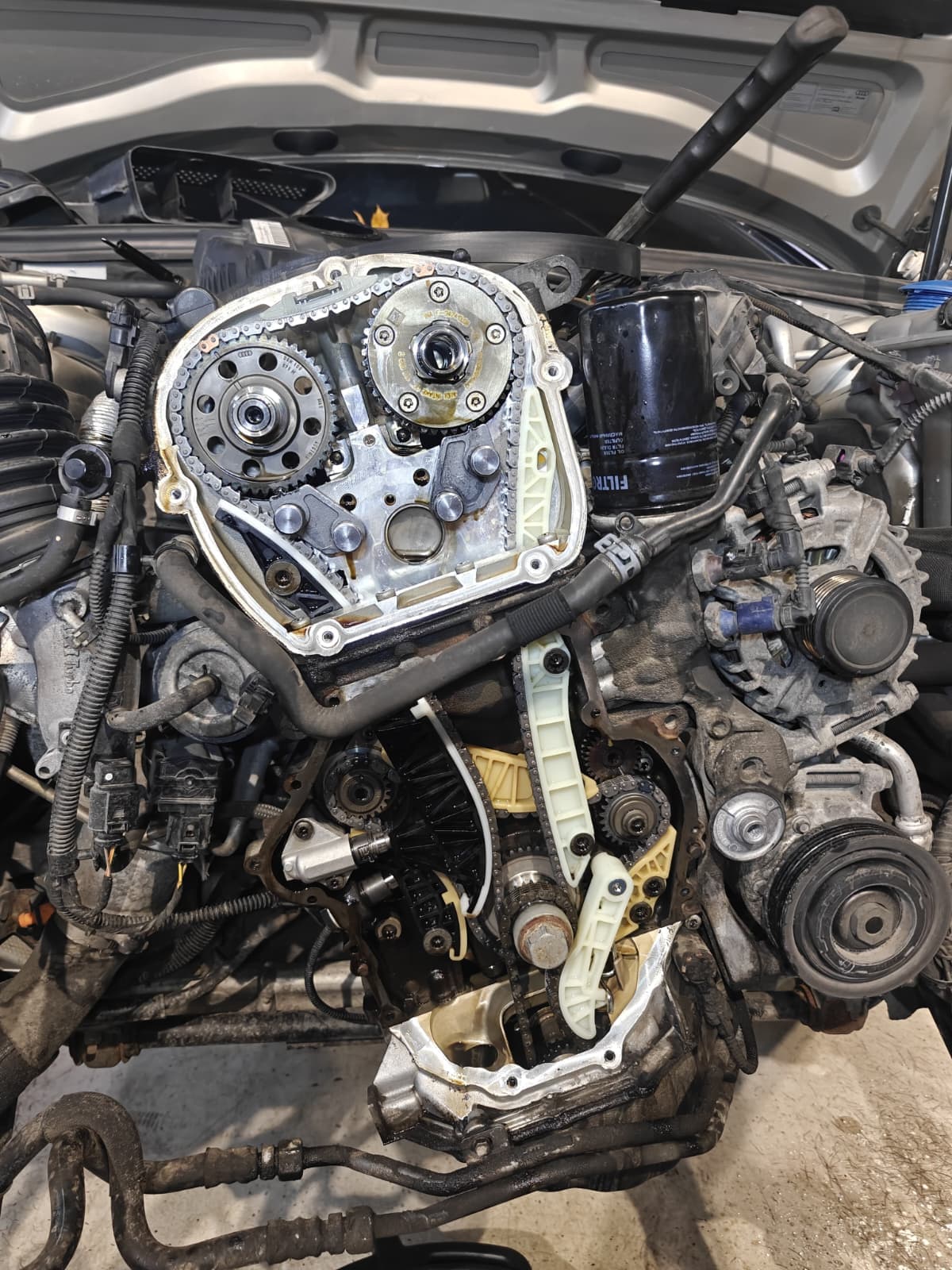
- timing drive
- cooling system
- turbocharger
- DSG
- brakes
- suspension
- battery
- air conditioning
- Škoda Scala maintenance
- oil and filter change
- annual service
Škoda Scala 1.0 TSI
1.0 TSI is the main Scala engine. It is a three-cylinder petrol turbo. On the updated model, versions with 70 kW / 95 hp and 85 kW / 115 hp are available. The more powerful variant produces 200 Nm, and the 70 kW version 175 Nm.
A three-cylinder engine can have a characteristic light vibration, and that alone does not mean a fault. Diagnostics are needed if:
- the engine vibrates strongly
- misfires appear
- EPC lights up
- Check Engine is on
- the car has lost power
- jerking appears
- fuel consumption has increased
- petrol engine repair
- computer diagnostics
Škoda Scala 1.5 TSI
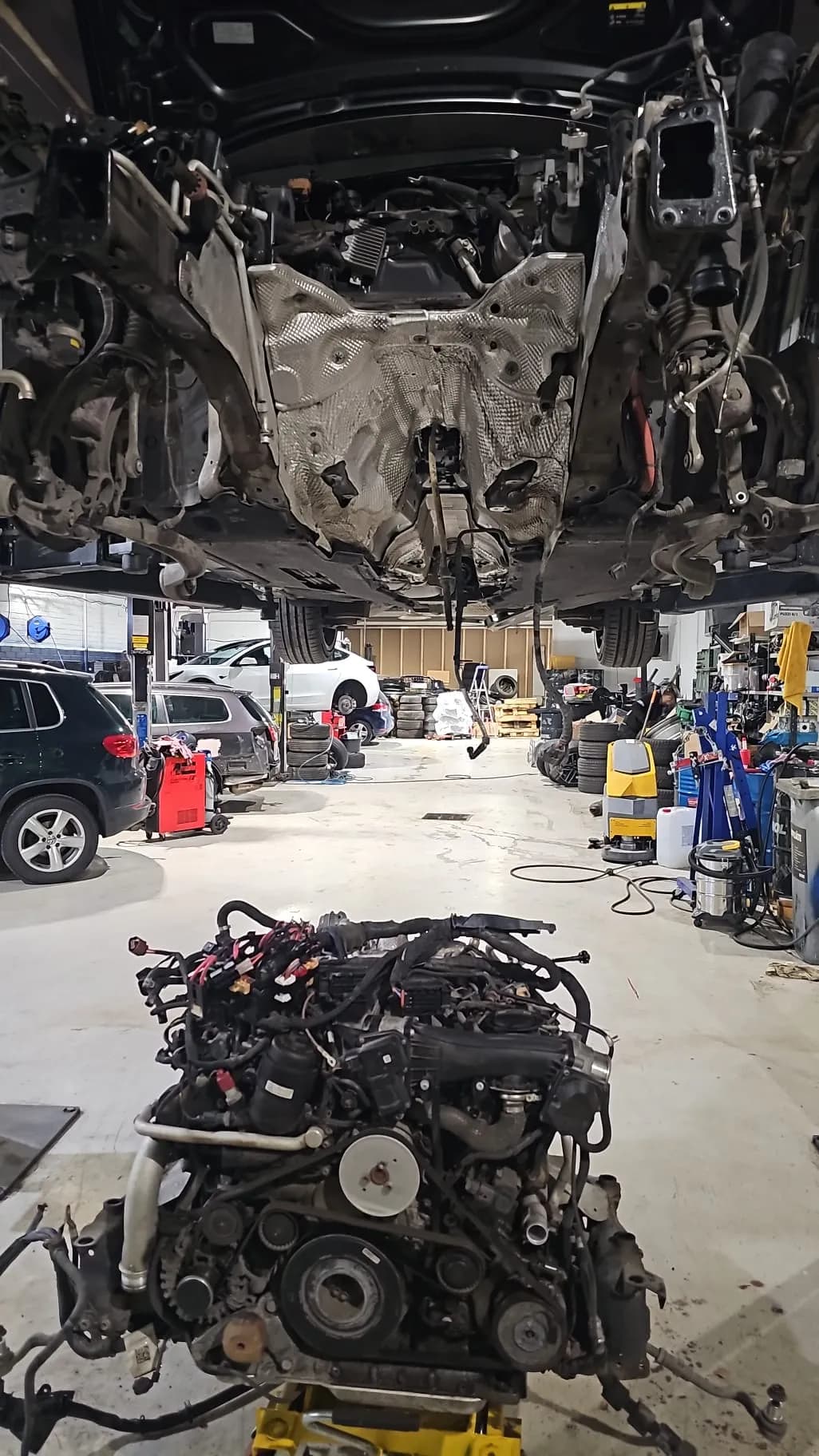
1.5 TSI is the more powerful four-cylinder version. On the updated Scala the engine produces 110 kW / 150 hp and 250 Nm. It can be paired with a 6-speed manual gearbox or a 7-speed DSG.
During service it is worth monitoring oil, spark plugs, coils, the turbocharger, the cooling system and the timing drive. Book diagnostics if you notice:
- EPC
- Check Engine
- jerking
- misfires
- unstable idle
- loss of power
- petrol engine repair
- computer diagnostics
1.5 TSI cylinder deactivation
1.5 TSI uses technology that can temporarily deactivate some cylinders under light load. This helps reduce fuel consumption. The transition between modes is usually almost unnoticeable.
If the car starts jerking, vibrating or responding unsteadily to the throttle, the cause may be related not to cylinder deactivation itself but to ignition, boost, sensors or the engine management system.
Škoda Scala turbocharger
Petrol TSI and diesel TDI engines use turbocharging. A boost fault does not automatically mean the turbocharger is defective. Accurate diagnostics help avoid unnecessary replacement of an expensive turbocharger.
Possible signs: loss of power, boost pressure fault, whistling, smoke, increased oil consumption or limp mode. Check hoses, system tightness, the actuator, valves, sensors and wiring.
Škoda Scala oil consumption
If a TSI starts using oil noticeably, the cause must be identified. Mild oil consumption alone does not always mean a fault. But if the level needs topping up regularly between services, an inspection is worthwhile.
Possible causes:
- external leaks
- crankcase ventilation
- turbocharger
- internal engine wear
- petrol engine repair
- computer diagnostics
Škoda Scala timing drive
Engines fitted to Scala belong to modern Volkswagen Group families. Do not use a universal rule such as "change the timing belt every 100,000 km" without checking the specific powertrain.
The interval must be determined by VIN, engine code, model year and manufacturer requirements. Inspection also considers pulleys, tension, belt condition and oil or coolant leaks.
Diesel Škoda Scala 1.6 TDI
Early Scalas were built with the 1.6 TDI diesel producing 85 kW / 115 hp and 250 Nm. The engine has a turbocharger, DPF, SCR and AdBlue injection.
Such a car suits high mileage and motorway driving well. With mostly short city trips, special attention must be paid to the DPF.
Škoda Scala DPF
The particulate filter is used on diesel Scala. While driving, the filter accumulates soot that is periodically burned during regeneration. Short trips can prevent the process from completing.
Signs of active regeneration: raised idle speed, increased consumption, the fan keeps running after shutdown and Start-Stop is temporarily unavailable.
If the filter starts causing problems, a DPF indicator, Check Engine, reduced power or limp mode may appear. Diagnostics check:
- soot quantity
- ash quantity
- differential pressure
- temperature sensors
- EGR operation
- DPF diagnostics
Škoda Scala EGR
The diesel engine uses EGR. The system gradually becomes contaminated with deposits. A faulty EGR can also contribute to faster DPF filling.
Possible symptoms:
- Check Engine
- unstable running
- loss of power
- frequent regenerations
- limp mode
- EGR diagnostics
Škoda Scala AdBlue
Diesel Scala 1.6 TDI is equipped with SCR and AdBlue injection. A fault is not always only a low fluid level. If a warning appears that the car may not start after a certain mileage, diagnose the problem early.
Checks include:
- pump
- injector
- NOx sensors
- heater
- level sensor
- wiring
- AdBlue diagnostics
Škoda Scala DSG
Scala is offered with a 7-speed DSG on matching TSI engines. After the facelift, DSG is available for 1.0 TSI 85 kW and 1.5 TSI 110 kW. The cause may be clutches, the mechatronic unit, adaptations or the mechanical part of the gearbox.
An inspection is needed if:
- the car jerks when pulling away
- D or R engages with a delay
- vibration appears
- shocks occur
- the gearbox shows a fault
- the car goes into limp mode
- DSG service and repair
- transmission oil change
DSG mechatronic unit
The mechatronic unit controls gear shifts and clutches. An error does not mean the entire mechatronic unit must always be replaced. Diagnostics and parameter analysis come first.
Strong jerking, loss of a gear, inability to engage D or R, limp mode and pressure or control faults can indicate a problem.
Manual gearbox and clutch
Scala is also widely available with a manual gearbox. If noise appears when pressing or releasing the pedal, other clutch mechanism components should be checked as well.
Clutch wear can show as:
- slipping
- a high engagement point
- vibration when moving off
- difficult gear changes
- manual gearbox diagnostics
Škoda Scala front-wheel drive
Scala is a front-wheel-drive model. All-wheel drive 4×4 is not offered.
This makes the drivetrain simpler than on a Karoq or Octavia 4×4: there is no rear-axle coupling, no propshaft and no rear differential. Related service operations are therefore also absent.
Škoda Scala cooling system
If the coolant level drops, the source must be found. Do not keep topping up without diagnostics. Even a small leak can lead to engine overheating over time.
Possible causes:
- water pump
- thermostat
- cooling system housing
- radiator
- hoses
- heat exchanger
- coolant leak detection
Škoda Scala suspension
Scala is built on the MQB-A0 platform. The suspension is designed for everyday use and is relatively simple compared with larger VAG models. Over time, anti-roll bar links, bushes, ball joints, shock absorbers, top mounts and wheel bearings may need attention.
Diagnostics are needed if:
- the suspension knocks
- squeaking appears
- the car holds its direction less well
- the steering wheel is not straight
- tyres wear unevenly
- computer diagnostics
Sport Chassis Control
A sport chassis with electronically adjustable damper characteristics is available for Scala on matching equipment levels. Before replacing dampers it is therefore worth checking the car's specification.
If the car has such a system, diagnostics must consider the dampers, electrical connections, control unit and selected driving mode.
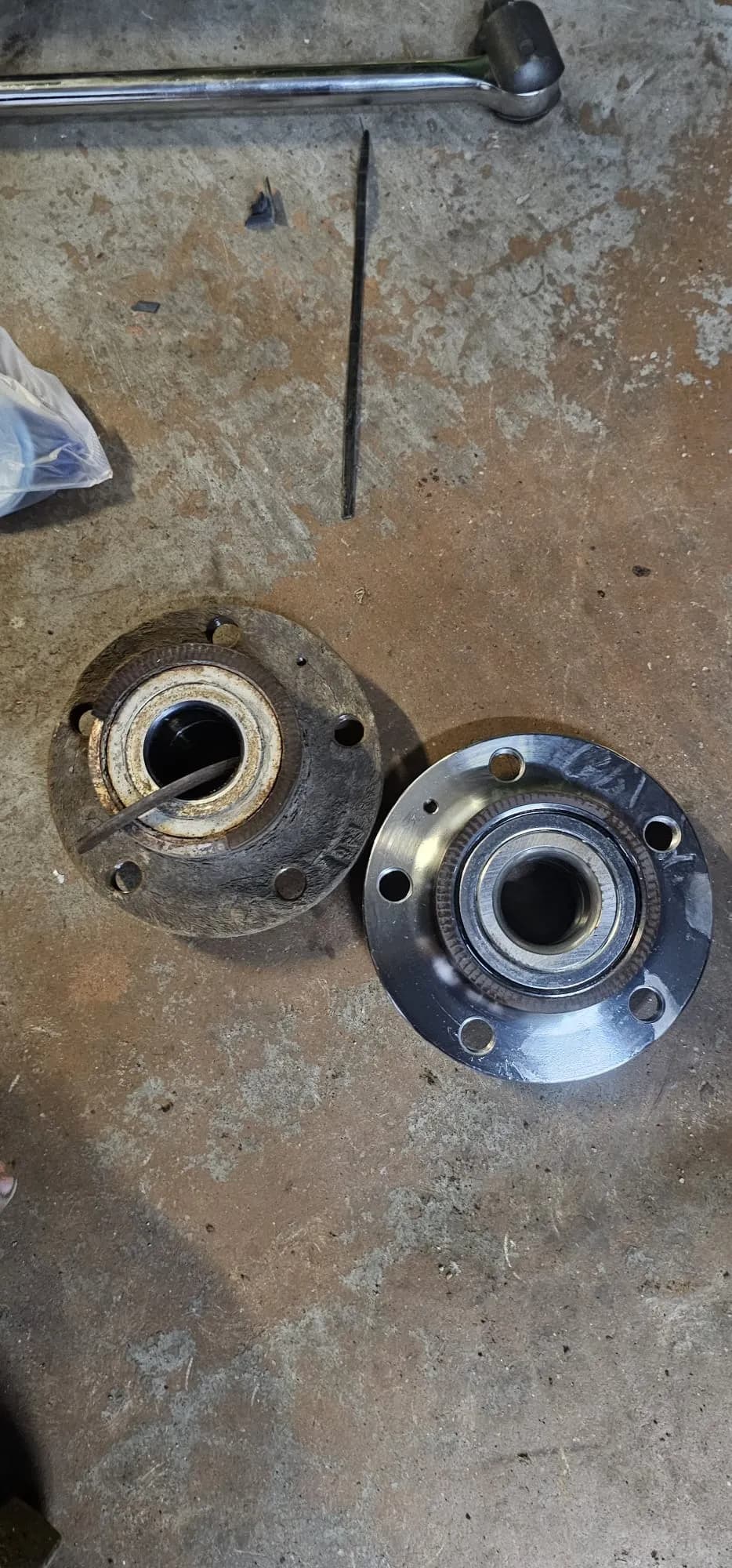
Wheel bearings
A worn wheel bearing usually creates a hum that increases with speed. However, winter tyres or unevenly worn tyres can make a similar noise.
Before replacing the bearing it is useful to identify the source precisely.
Škoda Scala braking system
In Finnish conditions one of the main brake issues is corrosion. Road salt and moisture can lead to corroded discs, seized guides, uneven pad wear and sticking calipers.
An inspection is needed if:
- vibration appears
- brakes squeal
- the car pulls when braking
- one wheel heats up
- a metallic sound appears
Rear brakes
The rear brake design depends on the specific vehicle version. During service the fitted brake system must be considered, not only the Scala model.
Especially after winter it is useful to check free movement of the mechanisms, disc condition, pad condition and parking brake operation.
Battery and Start-Stop
Scala makes wide use of Start-Stop and many electronic systems. In Finland battery condition is especially important in winter. If several unrelated faults appear at once, it is useful to start diagnostics by checking voltage and battery condition.
A weak 12V battery can cause:
- Start-Stop deactivation
- slow starting
- random faults
- multimedia problems
- temporary unavailability of assistants
- electrical system repair
- computer diagnostics
Škoda Scala multimedia
Scala was one of the models with which Škoda began the move to a new generation of digital systems. Already at launch a Virtual Cockpit digital instrument cluster and modern infotainment systems were available. After the update Digital Display became standard and multimedia systems were modernised.
Before replacing a unit, check power supply, faults and software. Diagnostics are needed if:
- the screen freezes
- the system reboots
- sound disappears
- Bluetooth loses connection
- the camera does not work
- computer diagnostics
- electrical system repair
Cameras and assistants
Scala received safety systems that were previously more common on larger models. The car can be equipped with Front Assist, Lane Assist, Adaptive Cruise Control, Side Assist, Park Assist and a reversing camera. After the facelift the set of systems was expanded further.
After windscreen replacement, body repair or major suspension work, the relevant sensors may need checking or calibration.
Škoda Scala LED Matrix
After the update, TOP LED Matrix headlights became available for Scala for the first time. Given the cost of modern lighting, diagnostics are especially important before replacing a complete headlight.
If a lighting fault appears, the cause may not be only inside the headlight. Power supply, wiring, control unit, sensors and communication between electronic units are checked.
Škoda Scala air conditioning
Working air conditioning is needed not only in summer. It helps cool the cabin, remove moisture and clear the windows faster in winter. If the system needs regular recharging, the leak must be found.
If the system works poorly, leaks, refrigerant quantity, compressor, condenser, pressure sensor and fan are checked.
Škoda Scala boot
One of Scala's advantages is a large boot. Even before launch Škoda stated 467 litres of volume, which is a high figure for a compact hatchback.
On a used car it is useful to check:
- boot lid lock
- gas struts
- rear wiper
- seals
- that there is no water in the boot
Water in the cabin
If moisture appears in the cabin after rain or washing, check door seals, drains, the rear hatch, the panoramic roof if fitted, and sites of previous body repairs.
Moisture can cause not only smell and fogging but also problems with electrical connections.
Škoda Scala Monte Carlo
Monte Carlo is the most sportily styled Scala version. It received black trim elements, a sporty interior, special exterior details and matching wheels and equipment.
After the update, Scala Monte Carlo remains the top sporty trim in the range. It is important to understand that Monte Carlo is not a separate RS-level model. Service is determined by the fitted engine and gearbox.
Is there a Škoda Scala RS?
There is no series production road-going Scala RS in the model range. Scala's design did develop from the Vision RS concept, but the production car did not receive a separate RS version. Škoda directly linked the design of the series Scala to the VISION RS concept.
The most sportily styled series version remains Monte Carlo.
Is there a diesel new Škoda Scala?
Early Scalas were offered with the 1.6 TDI producing 85 kW. After the 2023–2024 update the European engine range consists of petrol TSI evo2 units: 1.0 TSI 70 kW, 1.0 TSI 85 kW and 1.5 TSI 110 kW.
Diesel therefore mainly relates to pre-facelift used cars.
Škoda Scala pre-purchase inspection
Before buying a used Scala it is worth checking cold start, control unit faults, the engine, oil consumption, turbocharger, timing drive, cooling system, DSG or manual gearbox, clutch, suspension, wheel bearings, brakes, battery, air conditioning, multimedia, cameras and assistants.
On 1.6 TDI, DPF, EGR, AdBlue and the turbocharger are checked additionally. On a Scala with DSG it is useful to check gearbox behaviour separately when cold and warm.
Which Škoda Scala services we provide
At Volkkarihuolto Espoo you can book:
- regular Škoda Scala maintenance
- engine oil and filter change
- computer diagnostics
- TSI service
- TDI service
- turbocharging diagnostics
- timing drive inspection
- DPF diagnostics
- EGR inspection
- AdBlue diagnostics
- DSG service
- mechatronic diagnostics
- clutch repair
- cooling system diagnostics
- brake repair
- suspension diagnostics
- wheel bearing replacement
- battery check
- air conditioning service
- multimedia diagnostics
- electronic assistant checks
- preparation for inspection
- Škoda Scala pre-purchase inspection
Common Škoda Scala fault signs
Book diagnostics if:
- Check Engine or EPC is on
- the engine misfires
- the car has lost power
- jerking appears
- oil consumption has increased
- an unusual turbo whistle appears
- coolant level is dropping
- the diesel regenerates the DPF often
- an EGR or AdBlue fault appears
- DSG jerks
- D or R engages with a delay
- the clutch slips
- the suspension knocks
- a hum appears
- brakes vibrate
- one wheel overheats
- Start-Stop has stopped working
- multimedia reboots
- assistants become unavailable
Škoda Scala repair in Espoo
Need Škoda Scala repair or service? Contact Volkkarihuolto Espoo at Ruukinmestarintie 7, 02330 Espoo.
We can diagnose petrol TSI and diesel TDI engines, DSG, turbocharging, timing drive, DPF, EGR, AdBlue, the cooling system, brakes, suspension, battery, air conditioning, multimedia and electronic assistants.
When servicing a Škoda Scala it is important to consider the specific powertrain. An early Scala 1.6 TDI, a petrol 1.0 TSI DSG and an updated Scala 1.5 TSI evo2 need different approaches to service and diagnostics.
Correct diagnostics identify the real cause of the fault and help avoid unnecessary replacement of working components.
FAQ
When did the Škoda Scala appear?
The world premiere of the Škoda Scala took place on 6 December 2018.
Which platform is the Škoda Scala built on?
Scala became the first Škoda on the Volkswagen Group MQB-A0 platform.
How many Škoda Scala generations are there?
Scala belongs to one main generation introduced in 2018. In 2023 the model received a substantial update, and production of the updated version began in January 2024.
Which engines are fitted to the Škoda Scala?
Early cars were offered with 1.0 TSI, 1.5 TSI and 1.6 TDI, as well as G-TEC on selected markets. After the facelift the European line-up consists of 1.0 and 1.5 TSI evo2.
Is there a Škoda Scala with DSG?
Yes. On the updated model a 7-speed DSG is available with 1.0 TSI 85 kW and 1.5 TSI 110 kW.
Why does the DSG on a Scala jerk?
The cause may be clutches, the mechatronic unit, adaptations or a mechanical gearbox fault. Diagnostics are carried out first for correct repair.
Is there a Škoda Scala 4×4?
No. Scala is a front-wheel-drive car and has no series 4×4 version.
Is there a diesel Škoda Scala?
Yes. Early cars were built with the 1.6 TDI producing 85 kW / 115 hp. The engine had DPF and SCR with AdBlue.
Why does a diesel Scala regenerate the DPF often?
The cause may be short trips, high filter loading, an EGR fault, sensor issues or other engine problems.
Is there a Škoda Scala RS?
No. There is no series road-going Scala RS. The most sportily styled version is Monte Carlo.
What is Škoda Scala Monte Carlo?
Monte Carlo is a sportily styled version with special exterior and interior design. It is not a separate high-performance RS model.
Does Scala have Matrix LED?
Yes. After the update, TOP LED Matrix headlights became available for the model for the first time.
What is the boot volume of the Škoda Scala?
Škoda stated a boot volume of 467 litres, which is a high figure for a compact hatchback.
Can a Škoda Scala be checked before purchase?
Yes. It is worth checking the engine, turbocharger, DSG or manual gearbox, timing drive, cooling system, suspension, brakes and electronics. On a diesel version, DPF, EGR and AdBlue are checked additionally.
Detailed Services
Professional fault diagnostics for Skoda Scala.
Oil ChangeEngine oil and filter replacement for Skoda Scala.
Annual maintenanceComprehensive annual maintenance for Skoda Scala.
Regular MaintenanceScheduled maintenance for Skoda Scala according to service needs.
Engine RepairEngine diagnostics and repair for Skoda Scala.
Diesel Engine RepairDiesel engine service and repair for Skoda Scala.
Electrical RepairElectrical fault tracing and repair for Skoda Scala.
ECU ProgrammingControl unit programming and coding for Skoda Scala.
DSG RepairDSG transmission diagnostics and repair for Skoda Scala.
Transmission RepairTransmission diagnostics and repair for Skoda Scala.
Transmission Oil ChangeTransmission oil change for Skoda Scala.
Timing Belt ReplacementTiming belt and related component replacement for Skoda Scala.
Timing Chain ReplacementTiming chain, tensioner, and guide replacement for Skoda Scala.
Cooling System RepairCooling system service and repair for Skoda Scala.
AC RepairAir conditioning service and repair for Skoda Scala.
Engine Heater InstallationEngine heater installation and service for Skoda Scala.
Cabin OzonationCabin ozonation and odor removal for Skoda Scala.