Škoda Roomster — repair and service in Espoo
Škoda Roomster is a compact family car with an unusual body layout, a spacious cabin and a large glazed area. It combines compact-car dimensions with the practicality of a small MPV and is especially useful for carrying a family, bicycles, luggage or work equipment.
Series production of the Roomster began in 2006, and the last cars left the line in April 2015. More than 370,000 cars of the Roomster family were produced in total.
Today every Škoda Roomster is already a used car, so age, repair history and the condition of the engine, timing drive, gearbox, suspension, brakes and body are especially important in service.
At Volkkarihuolto Espoo we carry out diagnostics, maintenance and repair of Škoda Roomster at Ruukinmestarintie 7, 02330 Espoo.

Škoda Roomster history
The Roomster was one of the most unusual Škoda models of its time. The model was shown to the public in 2006, and series production began the same year at a Škoda plant. The manufacturer positioned the car as a separate model line with an emphasis on space, functionality and a transformable cabin.
The Roomster was produced roughly from 2006 to 2015. In 2010 the model received a clear facelift with updated exterior, interior and more modern engines. Main versions:
- Roomster
- Roomster Scout
- Praktik — commercial version
- various petrol and diesel equipment levels
Škoda Roomster before the facelift
Early cars came with a fairly simple engine range. In the 2008 line-up, for example, there were 1.2 HTP 51 kW, 1.4 MPI 63 kW, 1.6 MPI 77 kW, 1.4 TDI 51 or 59 kW and 1.9 TDI 77 kW.
That makes the early Roomster technically close to Fabia models of the same generations. Today the following are especially relevant for such cars:
- timing drive
- cooling system
- clutch
- suspension
- brakes
- corrosion
- electrics
- computer diagnostics
Roomster 2010 facelift
In 2010 Škoda updated the Roomster. The car received new headlights, a revised grille, updated cabin materials, a more modern engine range and Euro 5 engines.
One of the most visible technical changes was the arrival of the petrol 1.2 TSI. Škoda offered it in two power outputs: 63 kW and 77 kW. Later Roomsters with 1.2 TSI are especially interesting for turbocharging, timing-drive and DSG diagnostics on the relevant versions.
Škoda Roomster service in Espoo
Most Roomsters today already have significant age. Even low mileage does not cancel ageing of rubber, seals, plastic parts, electrical connectors, brake components and suspension parts.
So in service it is worth checking regularly:
- engine oil
- filters
- spark plugs
- timing drive
- cooling system
- turbocharger on TSI and TDI
- DSG or manual gearbox
- clutch
- DPF
- EGR
- brakes
- suspension
- battery
- air conditioning
- Škoda Roomster maintenance
- oil and filter change
- annual service
Škoda Roomster 1.2 HTP
The 1.2 HTP is one of the most characteristic engines of the early Roomster. This three-cylinder EA111-family engine was used not only in the Roomster but also in the Fabia, Volkswagen Polo and SEAT Ibiza.
A certain vibration of the three-cylinder layout is typical. That is normal if the engine runs evenly. Diagnostics are needed if:
- vibration has become clearly stronger
- the engine misfires
- misfires have appeared
- starting has worsened
- a metallic noise has appeared
- Check Engine has lit up
- petrol engine repair
- computer diagnostics
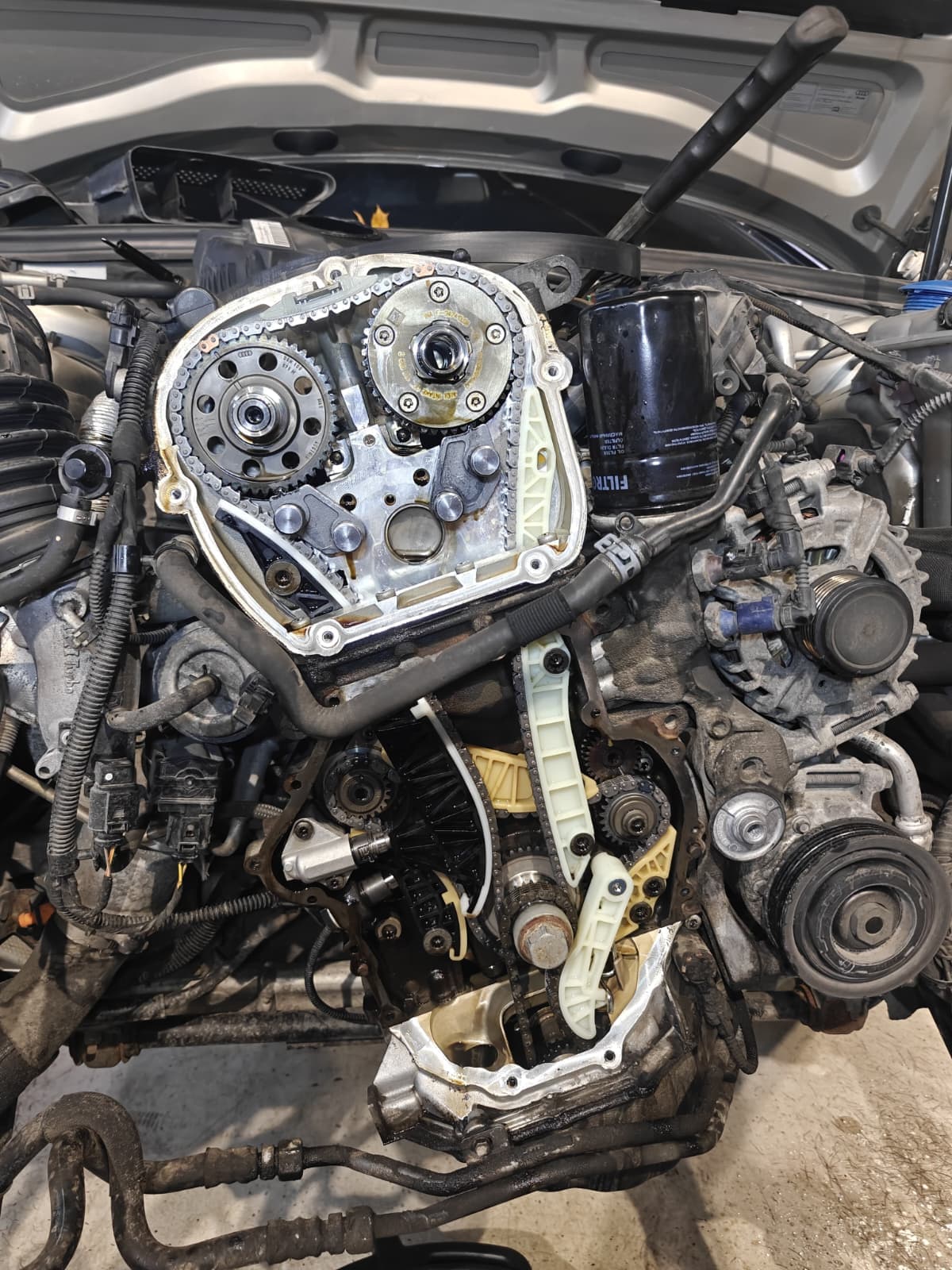
1.2 HTP timing chain
Some 1.2 HTP versions use a chain drive. But one short-lived noise is not enough reason to replace the whole system automatically. The actual condition of the drive must be checked first.
At high mileage or with an unknown service history it is worth watching for metallic noise on a cold start, synchronisation faults, uneven running and starting problems.
Škoda Roomster 1.4 MPI
The 1.4 MPI belongs to the simpler naturally aspirated petrol engines. There is no turbocharger, so there are fewer potential components than on TSI.
If idle has become unstable, do not immediately suspect serious engine mechanics — the cause may be in ignition, intake or sensors. In service the following are checked:
- spark plugs
- coils
- intake
- throttle
- cooling system
- timing drive
- oil leaks
- petrol engine repair
- computer diagnostics
Škoda Roomster 1.6 MPI
The 1.6 MPI with 77 kW is also found on pre-facelift cars. It is a naturally aspirated petrol engine without a turbocharger.
At high mileage it is worth monitoring the cooling system, oil consumption, ignition, timing drive and engine mounts.
Škoda Roomster 1.2 TSI
After the facelift one of the main petrol engines was the 1.2 TSI. Škoda offered 63 and 77 kW versions. Compared with HTP or MPI this is a more modern turbocharged engine.
In service it is important to monitor oil, spark plugs, coils, the turbocharger, crankcase ventilation, the cooling system and the timing drive.
Roomster 1.2 TSI turbocharger
If the car has lost power or a boost fault has appeared, that does not yet mean the turbocharger itself is faulty. Diagnostics must be carried out before replacing the turbocharger.
Possible causes:
- leaking hose
- actuator
- valve
- pressure sensor
- wiring
- engine management
- petrol engine repair
- computer diagnostics
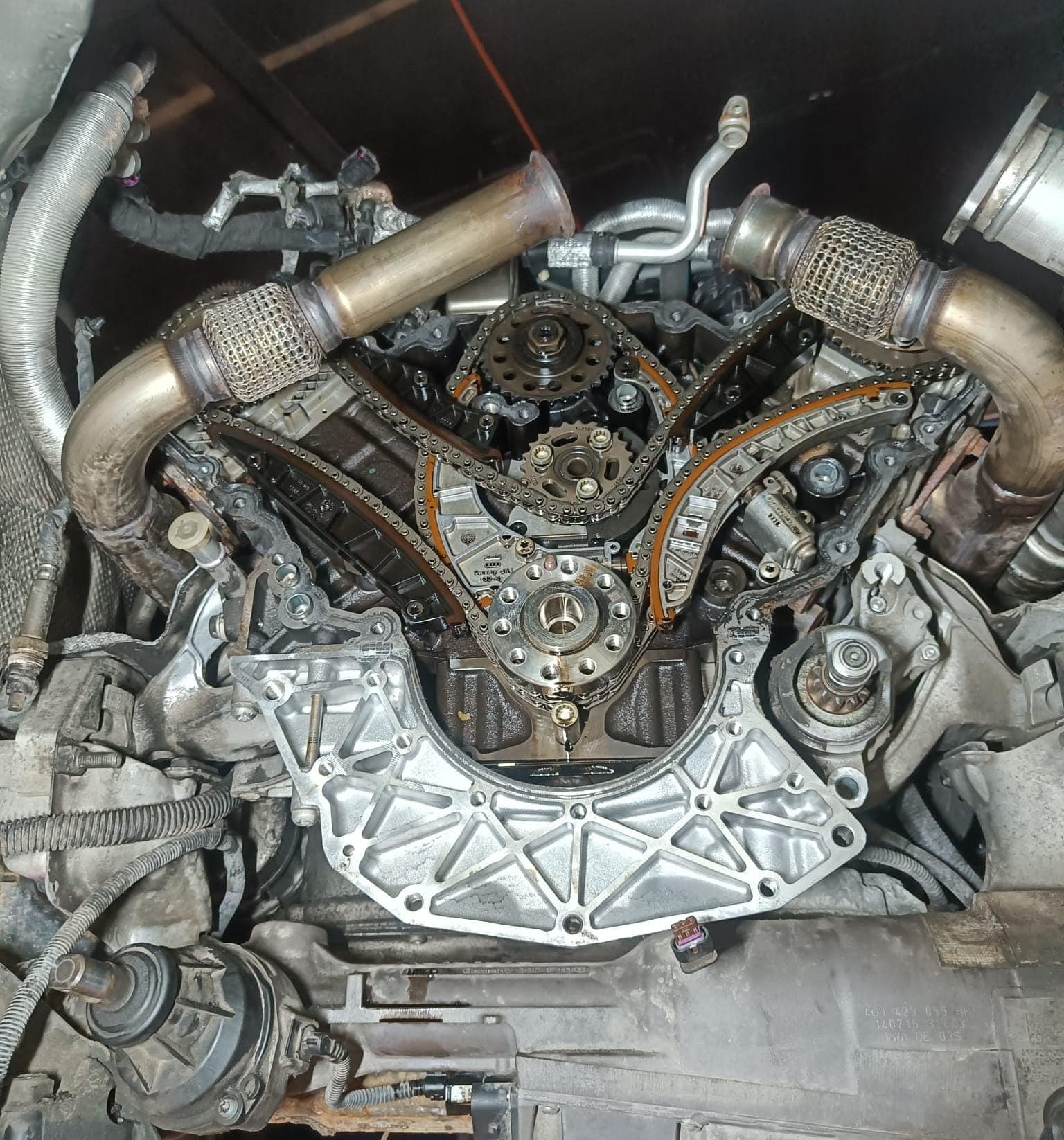
1.2 TSI timing chain
On the relevant 1.2 TSI versions a chain timing drive is used. For an older Roomster it is especially important to know the previous service history. If it is unknown, the condition of the drive should be assessed separately.
Reasons for a check can include metallic noise after start, a synchronisation fault, uneven running and difficult starting.
Škoda Roomster oil consumption
On a car older than ten years, noticeable oil consumption can have many causes. Constant top-ups do not replace diagnostics. It is useful first to establish the actual consumption and check the engine for leaks.
For example:
- external leak
- crankcase ventilation
- turbocharger
- engine wear
- old seals
- petrol engine repair
- computer diagnostics
Diesel Škoda Roomster
The Roomster was produced with several diesel engines. Early cars include 1.4 TDI and 1.9 TDI. Later ones also have modern diesel versions of the period.
The early 2008 line-up included 1.4 TDI with 51 and 59 kW and 1.9 TDI with 77 kW. A diesel Roomster suits high mileages well, but today it is especially important to consider the condition of the turbocharger, EGR, fuel system and DPF where fitted.
Škoda Roomster 1.9 TDI
The 1.9 TDI is well known from many Volkswagen Group cars. Loss of power does not automatically mean a faulty turbocharger. The cause may also be in the EGR, vacuum system, hoses or sensors.
At high mileage it is worth checking:
- turbocharger
- EGR
- injectors
- vacuum system
- timing drive
- clutch
- dual-mass flywheel on the relevant versions
- TDI diesel engine repair
Škoda Roomster 1.4 TDI
The 1.4 TDI is a three-cylinder diesel. A certain vibration level is structurally typical for such an engine. If engine faults appear at the same time, computer diagnostics are needed.
But strong vibration may point to:
- engine mounts
- injectors
- combustion problems
- clutch or flywheel
- TDI diesel engine repair
- computer diagnostics
Škoda Roomster DPF
On the relevant later diesel versions a particulate filter is used. The DPF gradually accumulates soot and ash. Soot can burn during regeneration. Ash does not disappear in a normal regeneration.
If the car is driven mainly on short trips, regenerations may be interrupted continuously. Diagnostics must check not only the filter itself but also the reason it is filling up. Signs:
- raised idle
- increased consumption
- fan after stopping
- DPF indicator
- reduced power
- DPF diagnostics
Škoda Roomster EGR
Diesel Roomsters use EGR. Over time the system can become contaminated with soot. A faulty EGR can also contribute to faster DPF filling.
Possible symptoms:
- Check Engine
- loss of power
- unstable idle
- smoke
- limp mode
- EGR diagnostics
Diesel Roomster turbocharger
On an old diesel a damaged vacuum hose can give symptoms very similar to a serious turbocharger fault. Before replacing the turbocharger it is worth checking hoses, vacuum lines, control valves, the actuator and sensors.
A check is needed for loss of power, smoke, unusual whistling, increased oil consumption and limp mode.
Škoda Roomster DSG
On later petrol Roomster versions an automatic DSG gearbox appears depending on engine and market. When buying such a car it is especially important to check the gearbox on the move. The cause may be clutches, the mechatronic unit, adaptations or the mechanical part.
Reasons for diagnostics:
- jerking
- shudder on take-off
- delay engaging D or R
- limp mode
- flashing gear indicator
- loss of individual gears
- DSG service and repair
- gearbox oil change
DSG mechatronic unit
The mechatronic unit controls the gearbox and clutches. But a mechatronic fault does not automatically mean the whole gearbox must be replaced. The specific fault should be identified first.
Possible signs of a problem: D or R will not engage, strong jolts, the gearbox goes into limp mode and control faults appear.
Manual gearbox and clutch
Most Roomsters have a manual gearbox. On diesel versions the condition of the dual-mass flywheel should also be considered if it is used on the specific car.
Signs of clutch wear:
- slipping
- high bite point
- jerking
- vibration
- difficult gear changes
- manual gearbox diagnostics
Škoda Roomster cooling system
The age of the car makes the cooling system one of the important check points. Old plastic connections and rubber hoses can also lose sealing. If the coolant level drops regularly, the source must be found.
Possible leak sources:
- water pump
- thermostat
- thermostat housing
- hoses
- radiator
- heat exchanger
- coolant leak diagnosis
Engine overheating
On an old car overheating is especially dangerous. Running an overheated engine can lead to a much more expensive repair.
If temperature starts to rise, do not continue driving under high load; check the coolant level, fan operation, thermostat and pump.
Škoda Roomster suspension
By design the Roomster is closely related to compact Škoda and Volkswagen Group models of its time. Over time anti-roll bar links, bushes, ball joints, dampers, top mounts and wheel bearings may need attention.
A check is needed if:
- a knock has appeared
- the car pulls to one side
- the steering wheel vibrates
- the car has become less stable
- tyres wear unevenly
- computer diagnostics
Rear suspension
The Roomster is often used for carrying loads. If the car regularly ran heavily loaded, rear springs, dampers, bushes and wheel bearings took extra stress.
If the rear of the car looks too low or the car rocks heavily, the suspension should be checked.
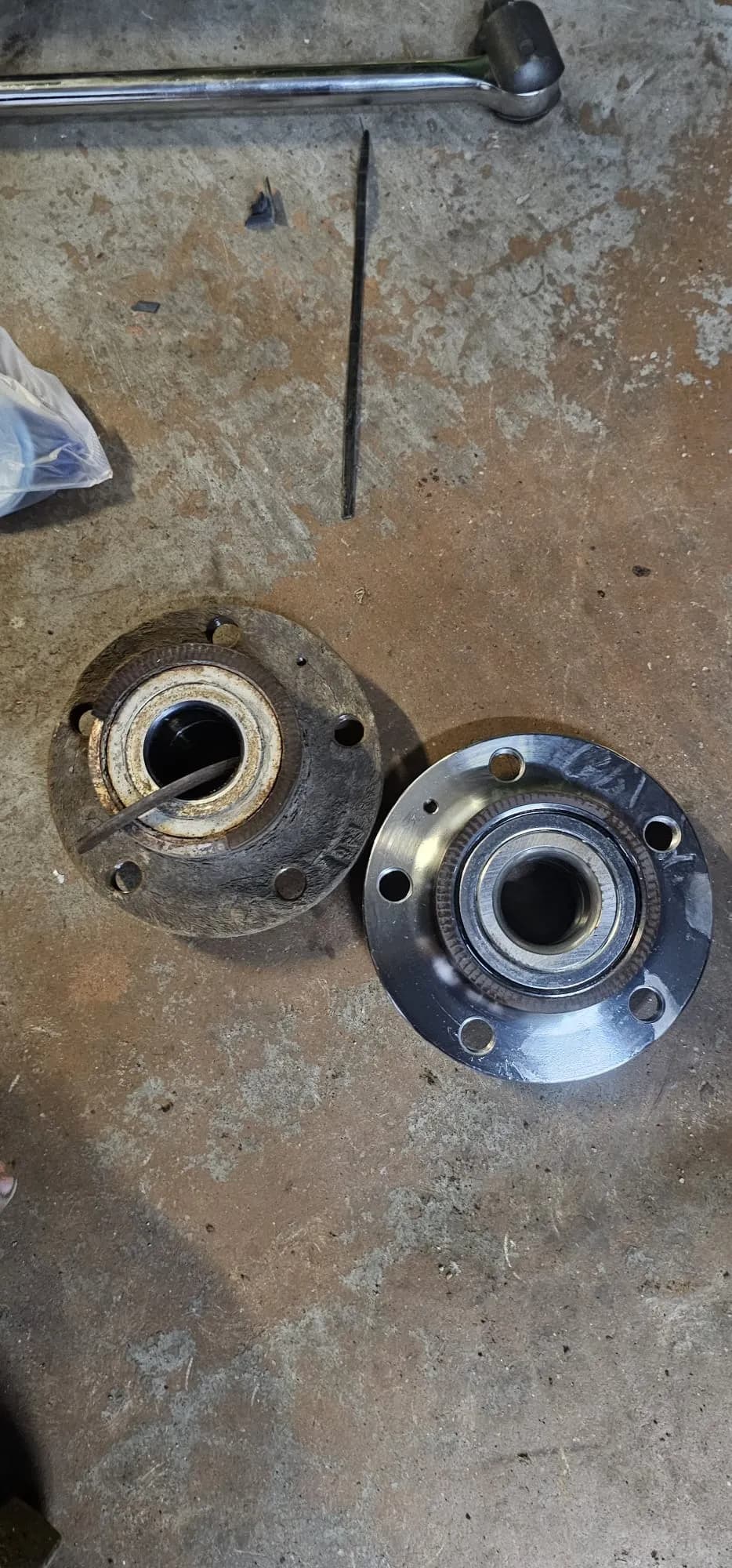
Wheel bearings
A worn bearing usually creates a hum that increases with speed. But on an old car a similar noise can come from winter tyres or unevenly worn tyres.
So before replacing a bearing the source of the noise must be identified.
Škoda Roomster brakes
Finnish salt and the age of the car create harsh conditions for the braking system. It is worth checking brake discs, pads, calipers, slides, brake pipes, hoses and the parking brake.
Reasons for diagnostics:
- vibration
- the car pulling to one side
- one wheel overheating
- squeal
- metallic sound
Brake pipes and corrosion
On a car of this age it is especially important to inspect the brake pipes from underneath. Road salt can cause corrosion of metal parts.
When preparing for inspection it is useful to check not only discs and pads but the condition of the whole braking system.
Handbrake
The Roomster uses a mechanical parking brake. Over time mechanisms can seize, cables wear and adjustment can be incorrect.
If one rear wheel brakes worse than the other or the handbrake does not hold well enough, the whole system should be checked.
Škoda Roomster battery
With age, possible electrical problems often start with an ordinary battery. Battery condition is especially important in winter. Before looking for a complex electronic fault it is useful to check voltage and alternator charging.
A weak battery can cause poor starting, ABS/ESP faults, central locking problems and unstable electrical equipment.
Alternator
If the battery regularly goes flat even after replacement, the charging system must be checked. Possible problems: alternator, voltage regulator, belt, wiring and a poor earth connection.
Symptoms can include a battery warning light, dim lights, poor starting and a gradually discharging battery.
Škoda Roomster electrics
The Roomster is clearly simpler than modern Škoda models, but age creates its own problems. If an electrical issue appears and disappears depending on door position or humidity, wiring and connectors should be checked.
It is worth considering connector oxidation, damaged wiring, worn door looms, faulty locks and sensors.
Central locking
On older cars mechanical wear of the door lock is also fairly common. For central locking problems the door lock, microswitch, wiring, power supply and remote are checked.
Window regulators
If the glass moves slowly, stops, is skewed or makes a cracking noise, the regulator mechanism and guides should be checked. Prolonged use of a sticking mechanism can damage the electric motor.
Škoda Roomster air conditioning
On an old car simply topping up refrigerant regularly without finding a leak is not always worthwhile. Possible causes: leak, condenser, compressor, pressure sensor and pipes.
The air conditioning needs a check if the air does not cool, the compressor does not engage, the system loses refrigerant quickly or unusual noises appear.
Climate and cabin blower
If the blower only works on some speeds, the resistor, control unit or the blower motor itself may be at fault. If airflow is weak even on maximum, the cabin filter should also be checked.
Practical Roomster cabin
One of the Roomster’s main features is the transformable rear row. The car’s concept was built from the start around functionality and flexible use of interior space.
If the car was used for regular carrying, the mechanisms may have seen extra wear. On a used car it is worth checking folding mechanisms, latches, guides, seat belts and seat mountings.
Large glazed area
The Roomster is easy to recognise by its unusual side-window line. Large rear windows give good visibility and a sense of space.
But with age it is worth carefully checking seals, signs of water ingress, the condition of door frames and the sealing of the rear body.
Water in the cabin
If carpets or the boot are damp, the source must be found. Moisture can lead to misting, unpleasant smell, corrosion and problems with electrical connectors.
Door seals, drains, the rear door, glass and consequences of body repairs are checked.
Boot lid
If the rear wiper or lock periodically stop working, the problem may be in the boot-lid wiring. On the Roomster it is worth checking the lock, gas struts, wiring, rear wiper and washer.
Škoda Roomster Scout
The Roomster was also produced as a Scout version. It differs with a more off-road visual look: protective plastic elements, decorative details and different body styling.
Scout does not make the Roomster a full off-roader and does not mean four-wheel drive. Maintenance is determined by the fitted engine and gearbox.
Is there a Škoda Roomster 4×4?
No. The series-production Roomster is a front-wheel-drive car. Even the Roomster Scout is primarily a styling version.
The car has no Haldex, propshaft or rear differential.
Škoda Praktik
A commercial Praktik version was produced on the Roomster base. Instead of a normal rear passenger area it is oriented towards carrying goods. Škoda continued to count Praktik in Roomster statistics until production ended. For example, in 2015 of 16,612 delivered cars in the family, 1,153 were Praktik.
When buying a commercial car it is especially worth checking the rear suspension, brakes, clutch, load-area condition and signs of constant heavy loading.
Škoda Roomster corrosion
The body can remain in fairly good condition, but today the age of the cars already makes a corrosion inspection essential. Finnish road salt accelerates corrosion of the underside even when the outer body looks good.
It is worth checking sills, arches, underbody, subframe, brake pipes, suspension parts and places of previous body repair.
Škoda Roomster check before purchase
The Roomster can be a practical inexpensive car, but when buying, the condition of the specific example matters far more than the equipment level.
It is worth checking:
- cold start
- engine faults
- TSI/HTP/MPI
- oil consumption
- timing drive
- turbocharger
- cooling system
- DSG or manual gearbox
- clutch
- DPF on diesel
- EGR
- suspension
- wheel bearings
- brakes
- brake pipes
- battery
- alternator
- air conditioning
- body and underbody
- no water in the cabin
- computer diagnostics
What Škoda Roomster services we carry out
At Volkkarihuolto Espoo you can come for:
- regular Škoda Roomster maintenance
- Roomster Scout service
- Škoda Praktik service
- engine oil and filter change
- computer diagnostics
- HTP service
- MPI service
- TSI service
- TDI service
- turbocharging diagnostics
- timing chain or belt check
- DPF diagnostics
- EGR check
- DSG diagnostics
- clutch repair
- coolant leak diagnosis
- brake repair
- suspension diagnostics
- wheel bearing replacement
- battery and charging system check
- air conditioning service
- electrical diagnostics
- preparation for inspection
- Škoda Roomster pre-purchase check
Common Škoda Roomster fault signs
It is worth booking diagnostics if:
- Check Engine is on
- the engine misfires
- metallic noise after start has appeared
- the car has lost power
- oil consumption has increased
- the turbocharger behaves unusually
- coolant level is dropping
- the TDI regenerates the DPF often
- an EGR fault has appeared
- the DSG jerks
- D or R engages with a delay
- the clutch slips
- strong vibration has appeared
- the suspension knocks
- a hum has appeared
- the brakes vibrate
- the handbrake does not hold well
- the car starts poorly in winter
- the battery keeps going flat
- the air conditioning does not cool
- water appears in the cabin
Škoda Roomster repair in Espoo
Need repair or maintenance of a Škoda Roomster? Contact Volkkarihuolto Espoo at Ruukinmestarintie 7, 02330 Espoo.
We can diagnose petrol HTP, MPI and TSI engines, diesel TDI units, DSG, turbocharging, the timing drive, DPF, EGR, the cooling system, brakes, suspension, battery, alternator, air conditioning and electrical systems.
For the Roomster it is especially important to consider age and the specific engine. An early 1.2 HTP, a naturally aspirated 1.6 MPI, a later 1.2 TSI, a diesel 1.9 TDI and a commercial Praktik have different characteristics and need different diagnostic approaches.
A proper check of an older Roomster separates ordinary age-related wear from a genuinely serious fault and helps avoid unnecessary replacement of sound parts.
FAQ
When did the Škoda Roomster appear?
Series production began in 2006. Škoda launched the Roomster as a separate model line with an emphasis on a spacious and functional cabin.
When did Škoda stop producing the Roomster?
The last cars left the production line in April 2015.
How many Škoda Roomsters were produced?
Škoda states roughly 371,503 Roomsters produced in the period 2006–2015.
Which engines were fitted to the Škoda Roomster?
Depending on the year, petrol 1.2 HTP, 1.4 MPI, 1.6 MPI, later 1.2 TSI, as well as diesel 1.4 and 1.9 TDI and other period variants were used.
Is there a Škoda Roomster with TSI?
Yes. After the 2010 update the 1.2 TSI with 63 or 77 kW appeared.
Timing belt or chain on the Škoda Roomster?
It depends on the engine. Different Volkswagen Group engines were used in the Roomster, so the drive type must be determined by VIN and engine code.
Why does a Roomster 1.2 TSI make noise on a cold start?
On the relevant engines the chain timing drive should be checked, but a short-lived sound alone is not enough reason to replace parts.
Is there a Škoda Roomster with DSG?
Yes, DSG appears on some later versions depending on engine and market.
Why does the DSG on a Roomster jerk?
The cause may be clutches, the mechatronic unit, adaptations, powertrain mounts or another mechanical problem. Diagnostics are needed first.
Is there a diesel Roomster?
Yes. Early cars commonly had 1.4 TDI and 1.9 TDI.
Does the Škoda Roomster have a DPF?
On the relevant later diesel versions — yes. Presence and design of the system must be determined by the specific engine and year.
Why has a diesel Roomster lost power?
Possible causes include the turbocharger, vacuum control, hoses, EGR, DPF, sensors or the fuel system.
Is there a Roomster 4×4?
No. The series-production Roomster has front-wheel drive.
Is Roomster Scout four-wheel drive?
No. Scout is a styling version with a more off-road look, but without a 4×4 system.
What is Škoda Praktik?
Praktik is the commercial variant of the Roomster family, intended primarily for carrying goods. The manufacturer continued to produce it together with the Roomster until the end of the model’s life cycle.
Is it worth buying a Škoda Roomster now?
It can be a practical and inexpensive car, but today the technical condition of the specific example matters most. Before buying it is especially useful to check the engine, timing drive, gearbox, cooling system, suspension, brakes, corrosion and electrics.
Detailed Services
Professional fault diagnostics for Skoda Roomster.
Oil ChangeEngine oil and filter replacement for Skoda Roomster.
Annual maintenanceComprehensive annual maintenance for Skoda Roomster.
Regular MaintenanceScheduled maintenance for Skoda Roomster according to service needs.
Engine RepairEngine diagnostics and repair for Skoda Roomster.
Diesel Engine RepairDiesel engine service and repair for Skoda Roomster.
Electrical RepairElectrical fault tracing and repair for Skoda Roomster.
ECU ProgrammingControl unit programming and coding for Skoda Roomster.
DSG RepairDSG transmission diagnostics and repair for Skoda Roomster.
Transmission RepairTransmission diagnostics and repair for Skoda Roomster.
Transmission Oil ChangeTransmission oil change for Skoda Roomster.
Timing Belt ReplacementTiming belt and related component replacement for Skoda Roomster.
Timing Chain ReplacementTiming chain, tensioner, and guide replacement for Skoda Roomster.
Cooling System RepairCooling system service and repair for Skoda Roomster.
AC RepairAir conditioning service and repair for Skoda Roomster.
Engine Heater InstallationEngine heater installation and service for Skoda Roomster.
Cabin OzonationCabin ozonation and odor removal for Skoda Roomster.