Škoda Fabia — service and repair in Espoo
Škoda Fabia is a compact city car that across several generations uses familiar Volkswagen Group technology. Small dimensions, economical engines and a relatively simple design have made the Fabia popular both for city use and for daily driving in Finland.
Over the years the Fabia has been produced with naturally aspirated MPI petrol engines, turbocharged TSI units, TDI diesels, manual gearboxes and DSG. Earlier generations also include the Fabia RS, Combi and various special editions.
The first Fabia appeared in 1999. By 2025 Škoda had already produced five million Fabia cars, making it the brand’s second-largest model series after the Octavia. The manufacturer has also stated that the current Fabia with modern combustion engines will remain in production after 2030.
At Volkkarihuolto Espoo we carry out diagnostics, maintenance and repair of Škoda Fabia at Ruukinmestarintie 7, 02330 Espoo.

History of the Škoda Fabia
The first Fabia generation was unveiled on 14 September 1999 at the Frankfurt Motor Show. The model replaced the Felicia and was built on a new Volkswagen Group platform.
Škoda’s official chronology also notes a facelift of the first generation in 2004, the second in 2010 and the third in 2018. In 2024 the Fabia marked its 25th anniversary, and cumulative deliveries of four generations by then approached five million cars.
Behind the modern Fabia story stand four generations:
- Škoda Fabia I — from 1999
- Škoda Fabia II — from 2007
- Škoda Fabia III — from 2014
- Škoda Fabia IV — from 2021
First-generation Škoda Fabia
The first generation is already an older car today. You may encounter MPI petrol engines, 1.4, 2.0, 1.4 TDI, 1.9 SDI, 1.9 TDI, as well as manual and automatic gearboxes. The Fabia Combi appeared as early as 2000, and a Sedan was also produced later.
Most first-generation Fabia cars already have significant age, so actual technical condition matters more than the odometer reading. On such cars it is especially important to monitor:
- body condition
- corrosion
- timing drive
- cooling system
- clutch
- suspension
- brakes
- electrics
- computer diagnostics
Second-generation Škoda Fabia
The second generation arrived in 2007. The Fabia became roomier and gained more modern engines and equipment. A new Fabia Combi appeared the same year. On the used market you will find 1.2 HTP, 1.2 TSI, 1.4, 1.6, 1.4 TDI, 1.6 TDI, 1.9 TDI, DSG and manual gearboxes.
It was in the second generation that the sporty Fabia RS with a 1.4 TSI producing 132 kW appeared. Today it is especially worth checking carefully:
- timing drive
- TSI
- DSG
- cooling system
- turbocharger
- DPF on diesel
- clutch
- suspension
- DSG service and repair
- computer diagnostics
Third-generation Škoda Fabia
The third generation debuted in 2014. It received a more modern electronic architecture and new safety systems. It was on the Fabia III that features such as Front Assist, adaptive cruise control and a driver fatigue monitor appeared. After the 2018 facelift, additional LED functions and blind-spot monitoring arrived.
On third-generation cars you may find 1.0 MPI, 1.0 TSI, 1.2 TSI, 1.4 TDI, DSG and manual gearboxes. This is one of the most interesting Fabia models to buy as a relatively simple and economical used car.
Fourth-generation Škoda Fabia
The fourth generation arrived in 2021. For the first time the Fabia moved to the Volkswagen Group MQB-A0 platform. Overall length grew to 4108 mm and boot volume to 380 litres.
The Fabia IV is offered with EVO-family petrol engines and front-wheel drive only. Naturally aspirated MPI, turbocharged TSI, a manual gearbox and a seven-speed DSG are available on corresponding versions. At launch Škoda announced five petrol engines.
Škoda Fabia servicing in Espoo
The Fabia is often used for short city trips. In Finland that means cold starts, short routes, slow warm-up in winter, road salt, a large number of start cycles and long periods of standing.
On diesel cars DPF and EGR are additionally important. It is worth checking regularly:
- engine oil
- filters
- spark plugs
- timing drive
- cooling system
- DSG
- clutch
- brakes
- suspension
- battery
- air conditioning
- Škoda Fabia scheduled maintenance
- oil and filter change
- annual service
Škoda Fabia MPI petrol engines
MPI engines are naturally aspirated petrol engines without turbocharging. Different Fabia generations used various MPI and other naturally aspirated motors. Their advantage is a relatively simple design. That does not mean they are free of faults.
It is worth monitoring spark plugs, coils, the throttle body, sensors, the timing drive and the cooling system.
Diagnostics are needed if:
- the engine misfires
- Check Engine is on
- idle is unstable
- starting has worsened
- fuel consumption has increased
- petrol engine repair
- computer diagnostics
Škoda Fabia 1.0 MPI
The 1.0 MPI is widely used on modern Fabia models. It is a three-cylinder naturally aspirated engine well suited to city use. A mild characteristic vibration of a three-cylinder engine is not a fault by itself.
Strong vibration, however, may relate to misfires, spark plugs, coils, injectors or engine mounts. If Check Engine appears, diagnostics should come first rather than replacing parts at random.
Škoda Fabia TSI petrol engines
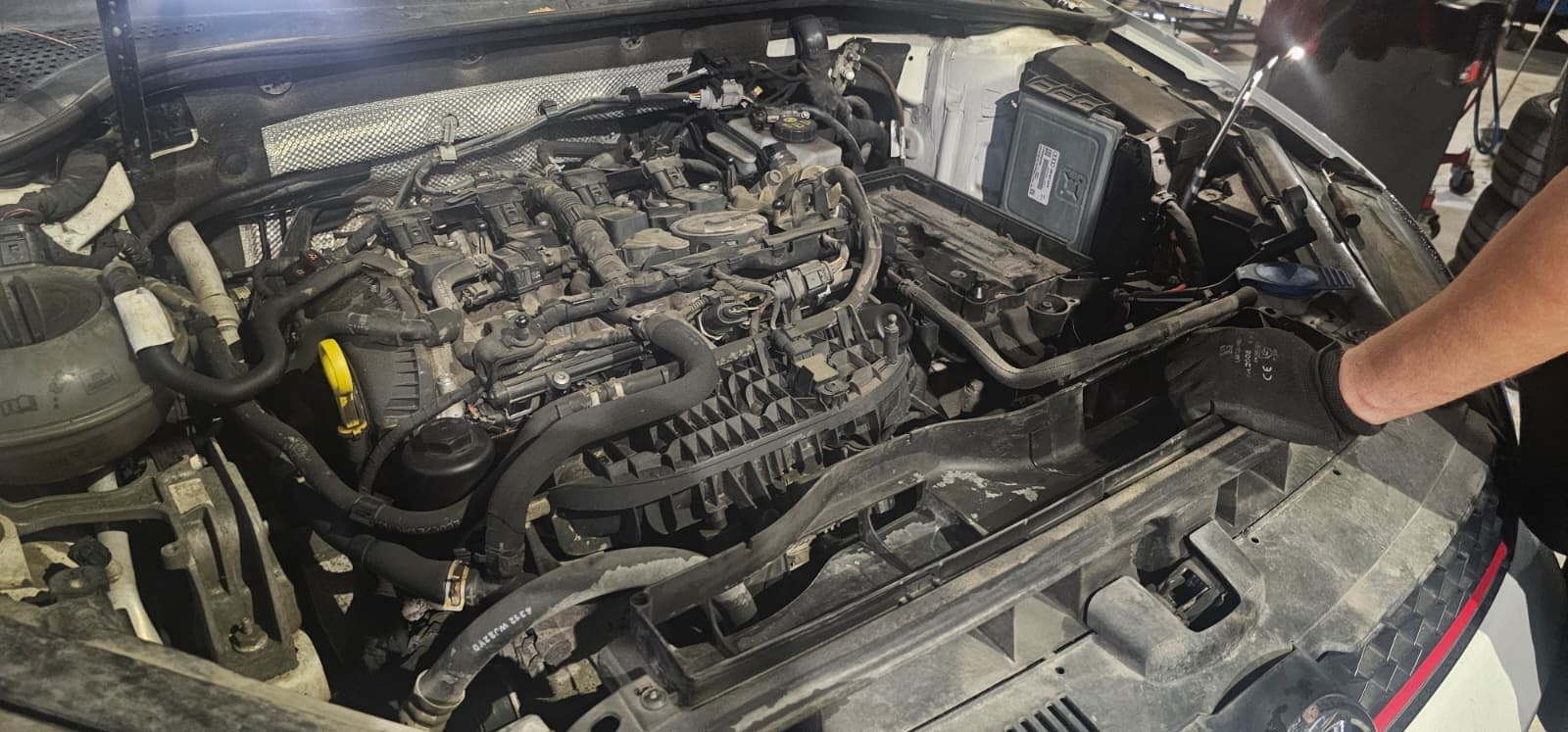
On the second, third and fourth generations turbocharged TSI engines are widely used. The most common are 1.0 TSI, 1.2 TSI, 1.4 TSI on selected versions and more powerful TSI units depending on generation.
When servicing TSI it is worth watching engine oil, spark plugs, coils, the turbocharger, the cooling system, crankcase ventilation and the timing drive.
Reasons for diagnostics include:
- EPC
- Check Engine
- loss of power
- jerking
- whistling
- unstable running
- increased oil consumption
- petrol engine repair
- computer diagnostics
Škoda Fabia 1.0 TSI
The 1.0 TSI is one of the main engines of the modern Fabia. Despite its small displacement it is a full turbocharged engine. If a boost-pressure fault appears, the cause is not necessarily the turbocharger itself. Replacing the turbo without diagnostics may be unnecessary.
It is worth checking:
- hoses
- system tightness
- actuator
- valves
- sensors
- wiring
- petrol engine repair
- computer diagnostics
Škoda Fabia 1.2 TSI
The 1.2 TSI is widely found on second- and third-generation Fabia models. Different generations of this engine have different designs. Timing, oil and service recommendations must therefore be determined by the specific engine code.
If the car starts poorly, misfires, shows EPC, loses power or makes an unusual noise on start-up, engine diagnostics are required.
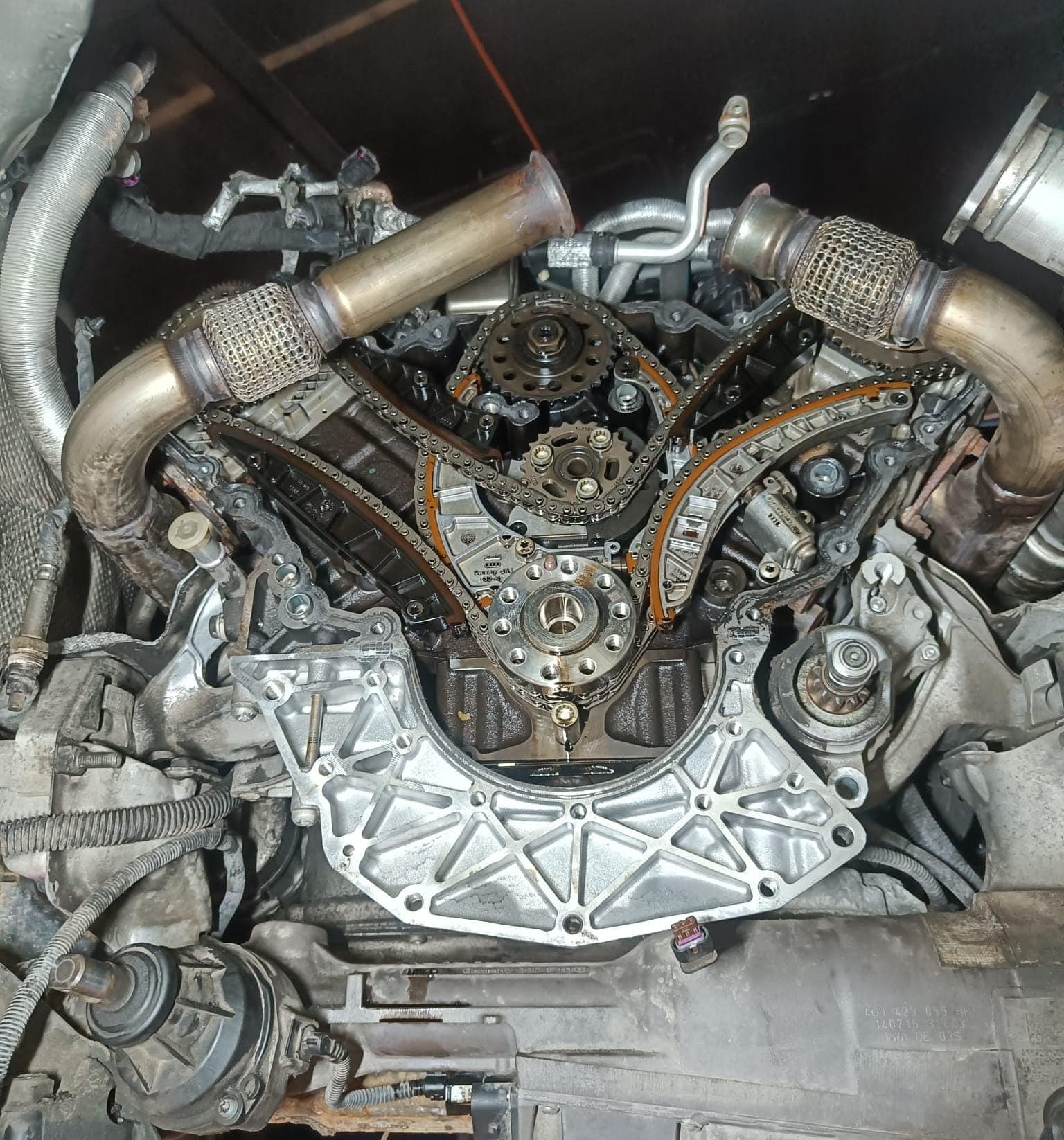
Škoda Fabia timing belt or chain
A large number of different engines have been used in the Fabia. Some have a belt timing drive, others a chain. It is therefore impossible to quote one interval for all Fabia cars.
You must take into account the VIN, engine code, model year and factory schedule. If the service history is unknown, the timing drive should preferably be checked after purchase.
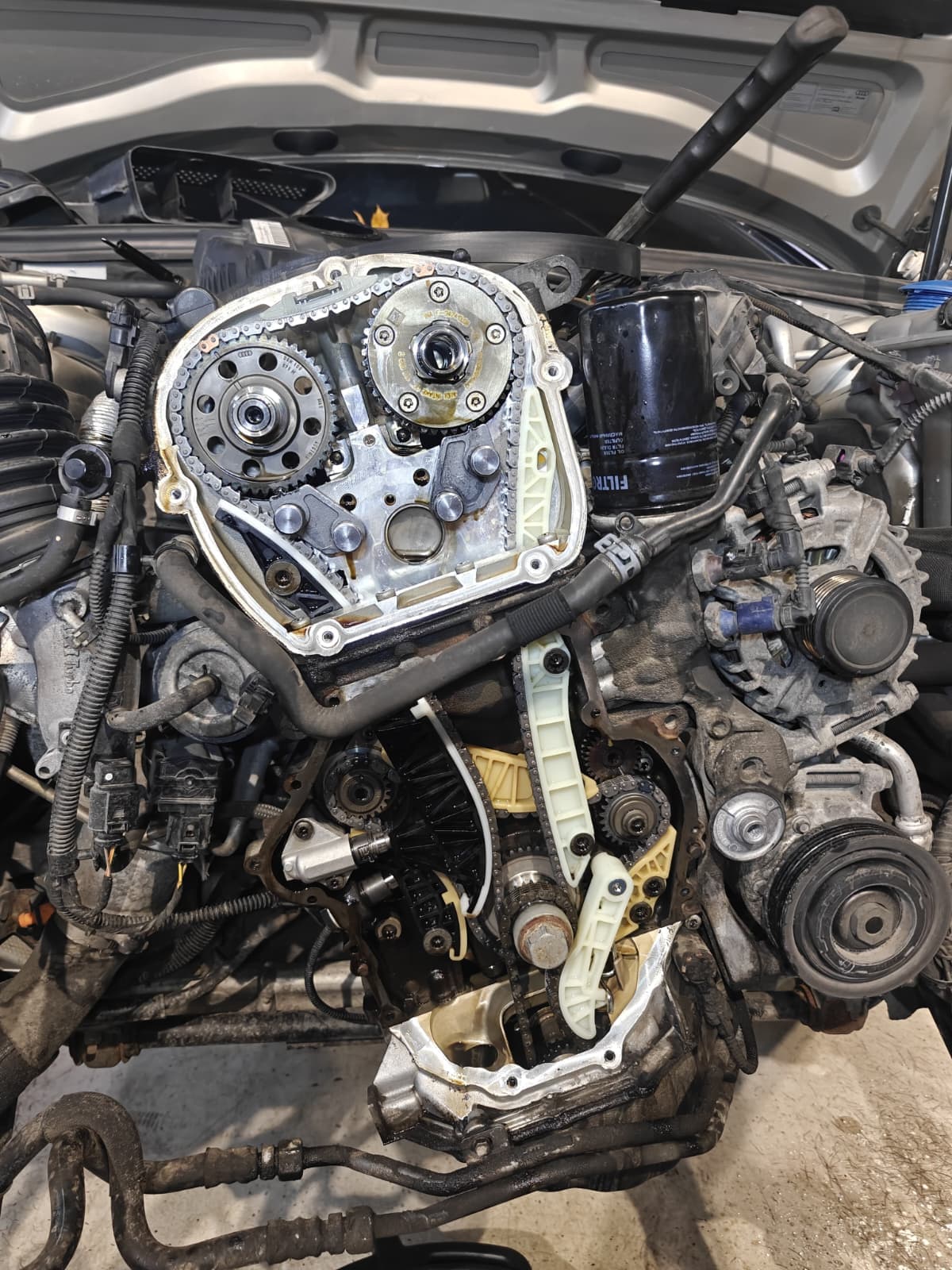
Timing chain
On chain-driven engines reasons for inspection can include a metallic noise on cold start, timing-phase faults, difficult starting and unstable running.
Not every brief sound automatically means a full kit must be replaced. First the actual condition of the system must be checked.
Timing belt
On belt-driven engines it is important to follow the schedule for the specific motor. Belt failure on many engines can cause serious engine damage.
Service also assesses pulleys, the tensioner, the water pump if its replacement is linked to the job, and any oil or coolant leaks.
Škoda Fabia TDI diesels
Diesel engines appear on the first three Fabia generations. 1.4 TDI, 1.6 TDI and 1.9 TDI were used. A diesel Fabia can be very economical at high mileage, but modern TDI engines need a working exhaust aftertreatment system.
It is worth monitoring:
- turbocharger
- DPF
- EGR
- injectors
- timing drive
- dual-mass flywheel on corresponding versions
- TDI diesel engine repair
- computer diagnostics
Škoda Fabia DPF
More modern diesel Fabia models use a particulate filter. Short city trips can hinder normal regeneration. Forced regeneration is not suitable in every case.
Diagnostics check calculated soot mass, ash quantity, differential pressure, temperature sensors, EGR operation and engine operation.
Signs:
- idle speed has increased
- the fan runs after shut-off
- fuel consumption has risen
- regenerations occur frequently
- the DPF warning light is on
- power has dropped
- DPF diagnostics
Škoda Fabia EGR
On diesels the EGR gradually becomes fouled. A faulty EGR can also accelerate DPF loading.
Possible symptoms:
- Check Engine
- loss of power
- jerking
- unstable idle
- frequent regenerations
- limp mode
- EGR diagnostics
Škoda Fabia turbocharger
A turbocharger is used on TSI and TDI engines. Similar symptoms can be caused by something other than the turbo itself. First check hoses, the vacuum system on corresponding engines, the actuator, valves and sensors.
Inspection is needed when there is:
- loss of power
- whistling
- smoke
- increased oil consumption
- a boost-pressure fault
- petrol engine repair
- computer diagnostics
Škoda Fabia DSG
Some Fabia models use a seven-speed DSG. For example, the fourth generation is available with a manual gearbox or a 7-speed DSG on corresponding engines. DSG is a dual-clutch automated gearbox. The exact service schedule depends on the specific transmission.
Inspection is needed if the car jerks on take-off, D or R engages with a delay, vibration appears, knocks are heard, the gearbox shows a fault or the car enters limp mode. Causes may include the clutches, mechatronics, adaptations or the mechanical section.
DSG mechatronics
The mechatronics unit handles electronic and hydraulic control of the gearbox. A mechatronics fault does not always mean the entire unit must be replaced. Diagnostics come first.
Possible signs of a fault: disappearing gears, limp mode, strong jerking, inability to select D or R, and a pressure fault.
Manual gearbox and clutch
Most Fabia cars were built with a manual gearbox. Some diesel versions also use a dual-mass flywheel.
Clutch wear may show as:
- slipping
- a high bite point
- vibration
- difficult gear engagement
- noise when pressing the pedal
- manual gearbox diagnostics
Škoda Fabia cooling system
Even a small engine needs a working cooling system. If coolant must be topped up regularly, the leak should be found. Overheating can lead to a far more expensive engine repair.
Coolant loss may relate to:
- the water pump
- the thermostat
- the thermostat housing
- hoses
- the radiator
- the heat exchanger
- coolant leak diagnosis
Škoda Fabia suspension
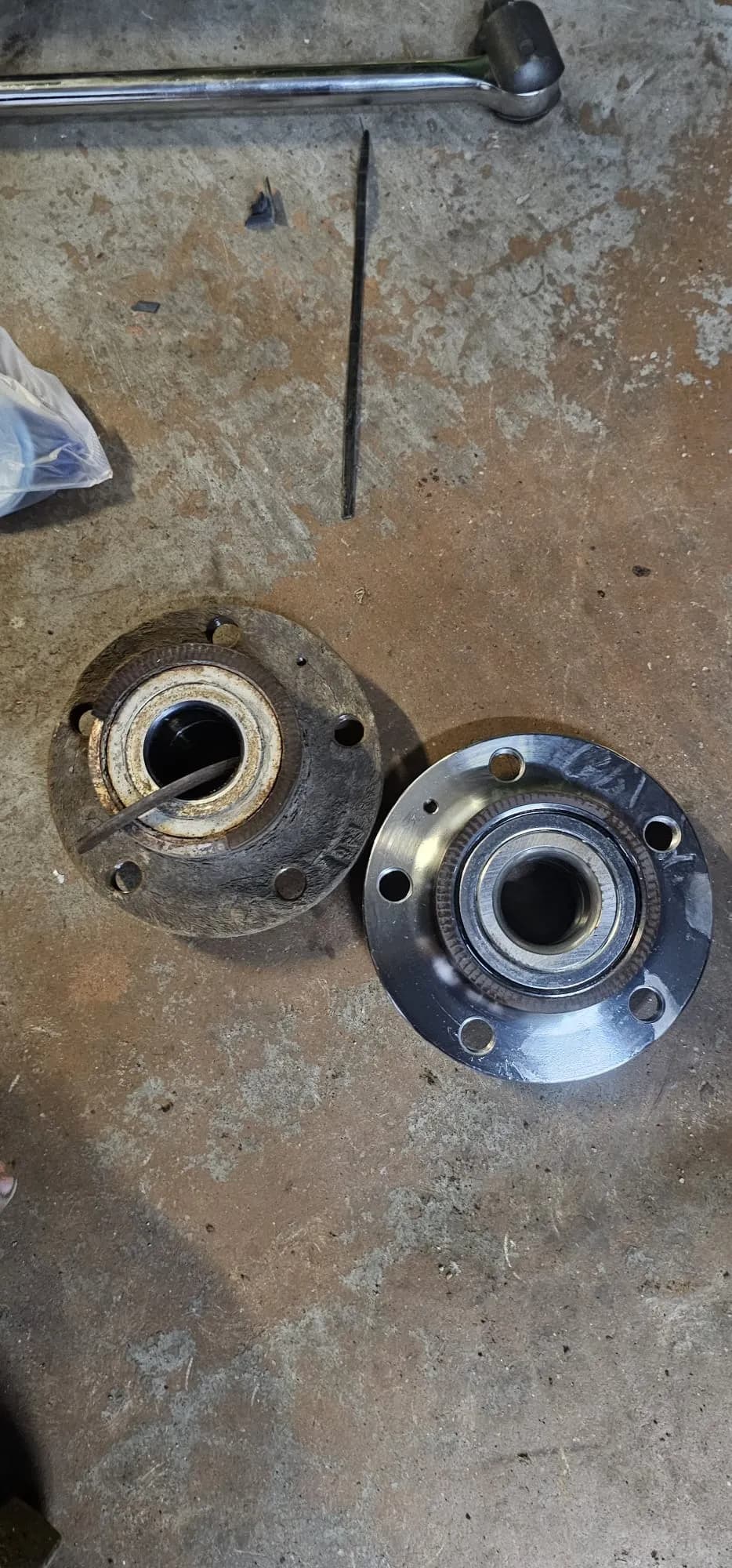
The Fabia has relatively simple suspension, so repair is usually less expensive than on larger Škoda models. Over time attention may be needed for anti-roll bar links, bushes, ball joints, dampers, top mounts and wheel bearings.
Inspection is needed if:
- the suspension knocks
- a squeak appears
- the car pulls to one side
- tyres wear unevenly
- computer diagnostics
Wheel bearings
A worn bearing usually creates a hum that increases with speed. A similar noise can sometimes come from the tyres.
Therefore it is best to identify the source before replacement.
Škoda Fabia brakes
The Fabia is relatively light, but in Finland brakes suffer heavily from road salt. Possible issues include disc corrosion, seized guide pins, a sticking caliper and uneven pad wear.
Inspection is needed if:
- the car pulls under braking
- vibration appears
- the brakes squeal
- one wheel heats up more than the others
Rear drum brakes
Some Fabia versions may use rear drum brakes. They also need servicing. If the handbrake holds poorly or one wheel brakes harder, the mechanism must be checked.
It is worth checking the shoes, wheel cylinders, handbrake and drum condition.
Handbrake
Many Fabia models use a conventional mechanical parking brake. In Finnish conditions this is especially relevant after winter.
Over time cables can stretch, mechanisms seize and effectiveness declines.
Škoda Fabia battery
The Fabia is often used for short trips, so in winter the battery may not fully recharge. Before winter it is useful to check battery condition and the charging system.
Signs of a weak battery:
- the engine cranks slowly
- Start-Stop has stopped working
- random faults appear
- the multimedia system reboots
- electrical repair
- computer diagnostics
Start-Stop
If Start-Stop has stopped working, it is not necessarily a system fault. It may temporarily disable itself due to a weak battery, low temperature, heating demand, air-conditioning use or diesel regeneration mode.
But if other electrical problems appear at the same time, the battery should be checked.
Škoda Fabia electronics
Newer Fabia generations have significantly more electronics than earlier cars. The fourth generation on the MQB-A0 platform received assistants previously seen in larger classes. First it is useful to check the power supply and battery.
Diagnostics are needed if:
- random faults appear
- central locking does not work
- the multimedia system reboots
- the camera does not switch on
- assistants become unavailable
- computer diagnostics
- electrical repair
Cameras and assistants
Fabia III and IV may be equipped with systems such as Front Assist, adaptive cruise control, Lane Assist, blind-spot monitoring and parking sensors.
After windscreen replacement, body repair or major suspension work, some systems may need calibration.
Škoda Fabia air conditioning
Air conditioning matters not only in summer. In winter it helps remove moisture and clear the glass faster. If the system needs regular recharging, the leak must be found.
If the system does not cool, refrigerant, leaks, the compressor, condenser, pressure sensor and fan are checked.
Škoda Fabia Combi
The Fabia was long produced as an estate. The first Fabia Combi appeared in 2000, and the second-generation estate was presented in 2007. The Fabia Combi is especially practical as a small family car. The fourth generation is now produced only as a hatchback.
It is additionally worth checking:
- the rear hatch
- the lock
- wiring
- the rear wiper
- that there is no water in the boot
- electrical repair
Škoda Fabia RS
The Fabia RS existed as a road-going sport version of the early generations. The first Fabia RS debuted in 2003. The second-generation RS received a 1.4 TSI petrol engine producing 132 kW.
Do not confuse the road Fabia RS with the modern Fabia RS Rally2 — that is a race car, not a production road version of the Fabia IV. Škoda continues to use the Fabia name in its rally programme.
On a Fabia RS it is especially important to check the engine, turbocharging, gearbox, brakes, suspension and tuning history.
Škoda Fabia Monte Carlo
Monte Carlo is a sportily styled Fabia version. It takes its name from Škoda’s rally history. The first Fabia Monte Carlo appeared in the second generation.
It is important to understand that Monte Carlo is primarily a trim and styling package. It does not necessarily mean a separate high-performance engine like the older Fabia RS. Service follows the requirements of the specific engine and gearbox fitted.
Škoda Fabia corrosion
On newer generations severe body corrosion is less common, but older cars already need careful inspection. Finnish road salt accelerates corrosion of underbody parts even when the body looks good from above.
It is worth checking:
- sills
- wheel arches
- underbody
- brake lines
- suspension components
- sites of previous body repair
Škoda Fabia pre-purchase inspection
A Fabia can be a good inexpensive used car, but the condition of the individual example matters a great deal. On a Fabia RS or a car with increased power it is also worth clarifying the tuning history.
Before purchase it is worth checking cold start, control-unit faults, the engine, oil consumption, the timing drive, the turbo on TSI/TDI, the cooling system, DSG or the manual gearbox, the clutch, DPF on diesel, EGR, suspension, wheel bearings, brakes, battery, air conditioning and bodywork.
Which Škoda Fabia services we provide
At Volkkarihuolto Espoo you can come for:
- scheduled Škoda Fabia maintenance
- engine oil and filter change
- computer diagnostics
- MPI servicing
- TSI servicing
- TDI servicing
- turbocharging diagnostics
- timing belt or chain inspection
- DPF diagnostics
- EGR diagnostics
- DSG servicing
- mechatronics diagnostics
- clutch repair
- coolant leak diagnosis
- brake repair
- suspension diagnostics
- wheel bearing replacement
- battery check
- air conditioning service
- multimedia diagnostics
- electronic assistant checks
- inspection preparation
- Škoda Fabia pre-purchase inspection
Common Škoda Fabia fault signs
Book diagnostics if:
- Check Engine or EPC is on
- the engine misfires
- the car has lost power
- an unusual engine noise appears
- oil consumption has risen
- coolant level is dropping
- the diesel frequently regenerates the DPF
- an EGR fault has appeared
- the DSG jerks
- D or R engages with a delay
- the clutch slips
- the suspension knocks
- a hum has appeared
- the brakes vibrate
- one wheel overheats
- Start-Stop has stopped working
- the air conditioning cools poorly
- random electronic faults appear
Škoda Fabia repair in Espoo
Need repair or maintenance for a Škoda Fabia? Contact Volkkarihuolto Espoo at Ruukinmestarintie 7, 02330 Espoo.
We can diagnose MPI and TSI petrol engines, TDI diesels, DSG, turbocharging, the timing drive, DPF, EGR, the cooling system, brakes, suspension, battery, air conditioning and electronic systems.
When servicing a Škoda Fabia it is especially important to consider the generation and the specific engine. A Fabia II 1.2 TSI DSG, Fabia III 1.0 TSI, diesel 1.4 TDI and a modern Fabia IV on the MQB-A0 platform have different engines, transmissions and service requirements.
Correct diagnostics avoid replacing healthy parts and ensure the repair that the particular car actually needs.
FAQ
When did the Škoda Fabia appear?
The first Škoda Fabia was unveiled on 14 September 1999 at the Frankfurt Motor Show.
How many Škoda Fabia generations are there?
There are four generations: the first from 1999, the second from 2007, the third from 2014 and the fourth from 2021.
Which Škoda Fabia is in production now?
The current model is the fourth generation on the Volkswagen Group MQB-A0 platform.
How many Škoda Fabia cars have been produced?
In May 2025 Škoda announced production of the five-millionth Fabia. It is the brand’s second-largest model series after the Octavia.
Will Škoda continue to produce the Fabia?
Yes. In 2025 Škoda stated that it plans to continue producing the Fabia with modern efficient combustion engines after 2030 as well.
Which engines are fitted to the Škoda Fabia?
Depending on generation, naturally aspirated MPI petrol engines, turbocharged TSI units, TDI diesels and earlier petrol engines from various families have been used.
Is there a Škoda Fabia with DSG?
Yes. For example, the fourth-generation Fabia is offered with a manual gearbox or a seven-speed DSG depending on the engine.
Why does the Fabia DSG jerk?
Causes may include the clutches, mechatronics, adaptations or a mechanical fault. Before repair the exact gearbox version must be identified and fault codes read.
Does the Škoda Fabia have a timing belt or chain?
It depends on the engine and generation. Both designs have been used in the Fabia, so the exact schedule is determined by VIN and engine code.
Why has the Škoda Fabia TSI lost power?
Causes may include spark plugs, coils, a boost leak, the actuator, sensors, the turbocharger or the engine management system. A boost fault alone does not mean the turbo must be replaced.
Why does a diesel Fabia frequently regenerate the DPF?
Causes may include short trips, high filter loading, a faulty EGR, sensors or another engine problem.
Is there a new Fabia Combi?
No. The current Fabia IV is produced as a five-door hatchback. The Combi estate existed on previous generations.
Is there a new Fabia RS?
There is no road-going Fabia RS in the current fourth generation. The Fabia RS name is now widely known from the Fabia RS Rally2 race car.
Is the Fabia Monte Carlo an RS?
No. Monte Carlo is a sportily styled Fabia version, but it is not equivalent to a separate high-performance RS model.
Can a Škoda Fabia be checked before purchase?
Yes. It is worth checking the engine, timing drive, gearbox, cooling system, suspension, brakes and electronics. On TDI it is also useful to check DPF and EGR, and on DSG the gearbox and mechatronics operation.
Detailed Services
Professional fault diagnostics for Skoda Fabia.
Oil ChangeEngine oil and filter replacement for Skoda Fabia.
Annual maintenanceComprehensive annual maintenance for Skoda Fabia.
Regular MaintenanceScheduled maintenance for Skoda Fabia according to service needs.
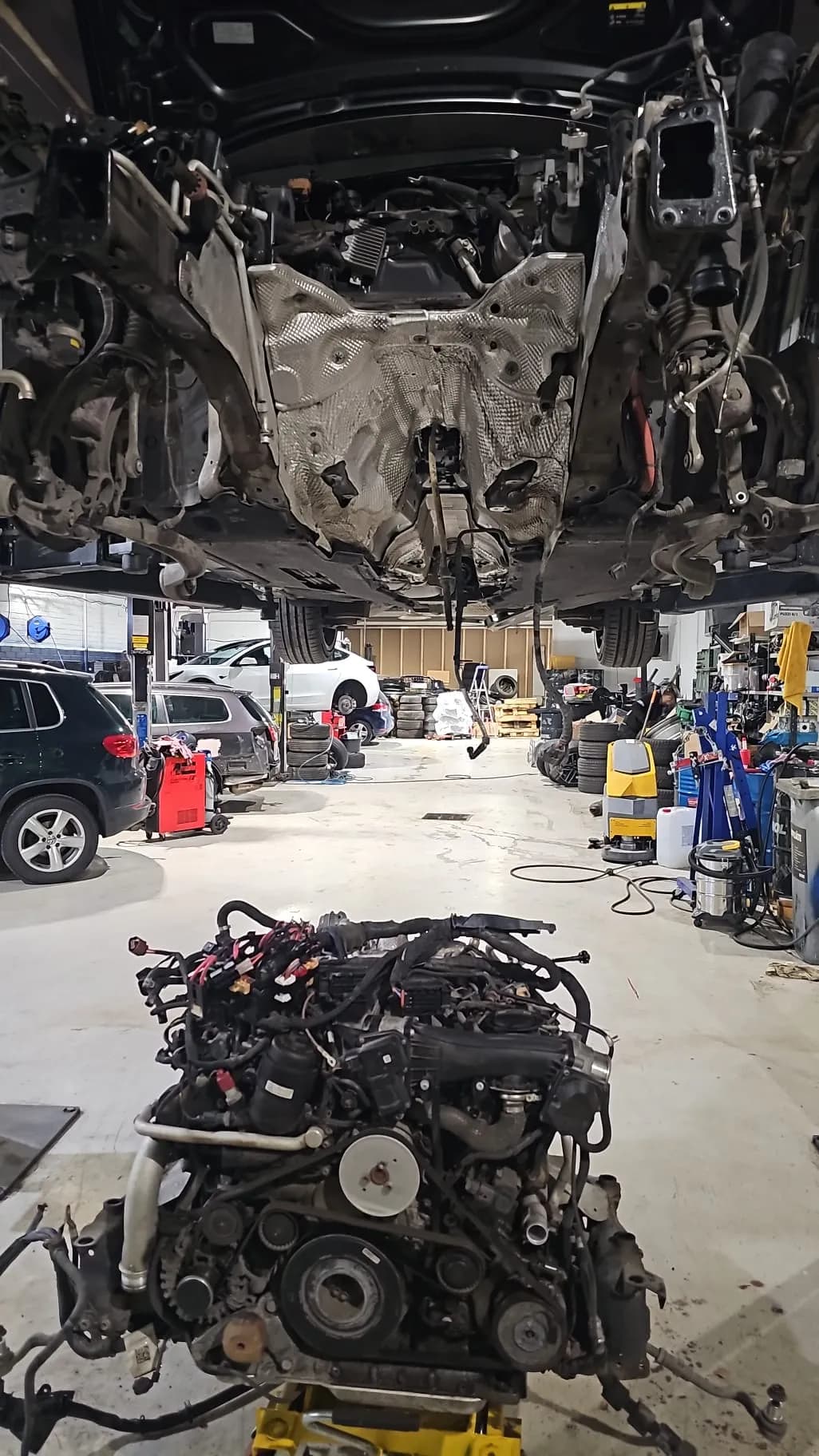
Engine RepairEngine diagnostics and repair for Skoda Fabia.
Diesel Engine RepairDiesel engine service and repair for Skoda Fabia.
Electrical RepairElectrical fault tracing and repair for Skoda Fabia.
ECU ProgrammingControl unit programming and coding for Skoda Fabia.
DSG RepairDSG transmission diagnostics and repair for Skoda Fabia.
Transmission RepairTransmission diagnostics and repair for Skoda Fabia.
Transmission Oil ChangeTransmission oil change for Skoda Fabia.
Timing Belt ReplacementTiming belt and related component replacement for Skoda Fabia.
Timing Chain ReplacementTiming chain, tensioner, and guide replacement for Skoda Fabia.
Cooling System RepairCooling system service and repair for Skoda Fabia.
AC RepairAir conditioning service and repair for Skoda Fabia.
Engine Heater InstallationEngine heater installation and service for Skoda Fabia.
Cabin OzonationCabin ozonation and odor removal for Skoda Fabia.