Škoda Karoq — repair and service in Espoo
The Škoda Karoq is a compact Volkswagen Group SUV positioned between the urban Kamiq and the larger Kodiaq. It combines a practical cabin, petrol TSI and diesel TDI engines, manual gearboxes and DSG, with 4×4 available on selected versions.
In Finland the Karoq works especially well as an all-round car for town, motorway and winter use. A high seating position, practical body and available four-wheel drive make it a popular alternative to conventional estates and larger SUVs.
Škoda unveiled the Karoq in 2017 as the brand’s second modern-line SUV after the Kodiaq. In 2021 the model received a major update, and the refreshed car reached the market in 2022 with EVO-generation engines, improved aerodynamics and extra electronic systems.
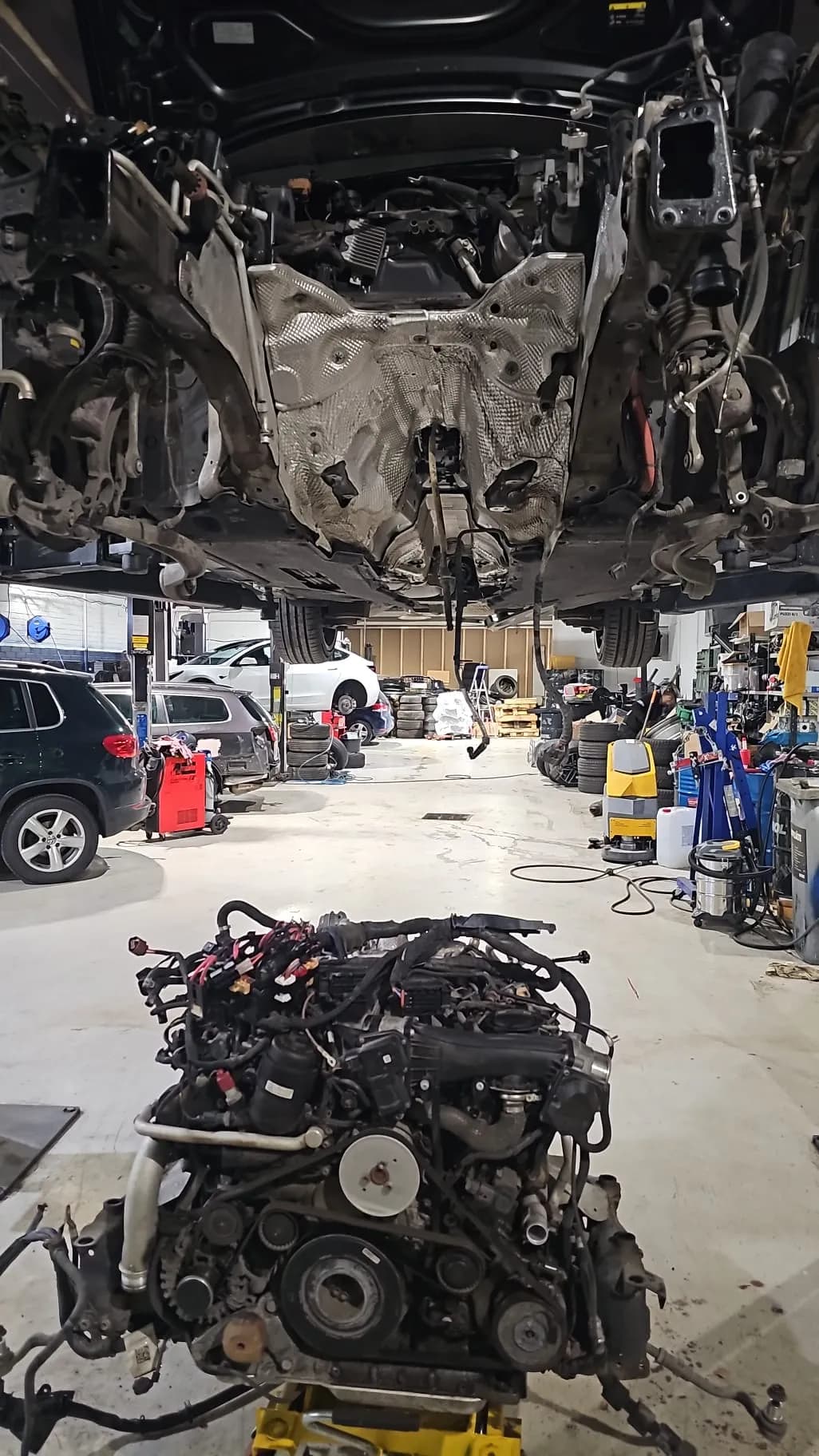
At Volkkarihuolto Espoo we carry out Škoda Karoq diagnostics, maintenance and repair at Ruukinmestarintie 7, 02330 Espoo.

History of the Škoda Karoq
The Karoq was launched in 2017 as an all-new compact Škoda SUV.
From launch the car offered a wide choice of TSI and TDI engines, manual and DSG gearboxes, and front or 4×4 drive. The most powerful 2.0 TDI diesel at 140 kW was offered with 7-speed DSG and four-wheel drive even in the base configuration of that powertrain.
Unlike the Kodiaq, the Karoq is designed for up to five passengers and is more compact. It still kept many practical Škoda solutions:
- spacious boot
- tall body
- VarioFlex system on relevant versions
- folding and removable rear seats
- four-wheel drive on selected engines
- Off-road mode on relevant 4×4 versions
Škoda Karoq facelift
Four years after launch Škoda substantially updated the model. The facelift was shown in late 2021, and the refreshed car gained a more modern front and rear, improved aerodynamics, new LED systems, Full LED Matrix headlights as an option, modern assistants and EVO-generation engines.
Drag coefficient was reduced to around 0.30, and aerodynamic efficiency improved by more than 9%.
Which engines are fitted to the Škoda Karoq?
Over the years European Karoqs have used various TSI and TDI engines. The most typical are 1.0 TSI, 1.5 TSI, 2.0 TSI, 1.6 TDI on early cars and 2.0 TDI.
After the update Škoda offered an EVO engine range from 81 to 140 kW, including 1.0 TSI, 1.5 TSI, 2.0 TSI and two 2.0 TDI versions. Exact transmission and four-wheel drive availability depend on engine and model year.
Škoda Karoq service in Espoo
The Karoq is often used as a daily family car. Finnish conditions create typical load: cold starts, short trips, road salt, snow, temperature swings, long heating use and winter tyres.
It is worth checking regularly:
- engine oil
- filters
- spark plugs
- timing belt/chain drive
- cooling system
- DSG
- clutch
- DPF
- EGR
- AdBlue
- 4×4 system
- brakes
- suspension
- battery
- air conditioning
- Škoda Karoq maintenance
- oil and filter change
- annual service
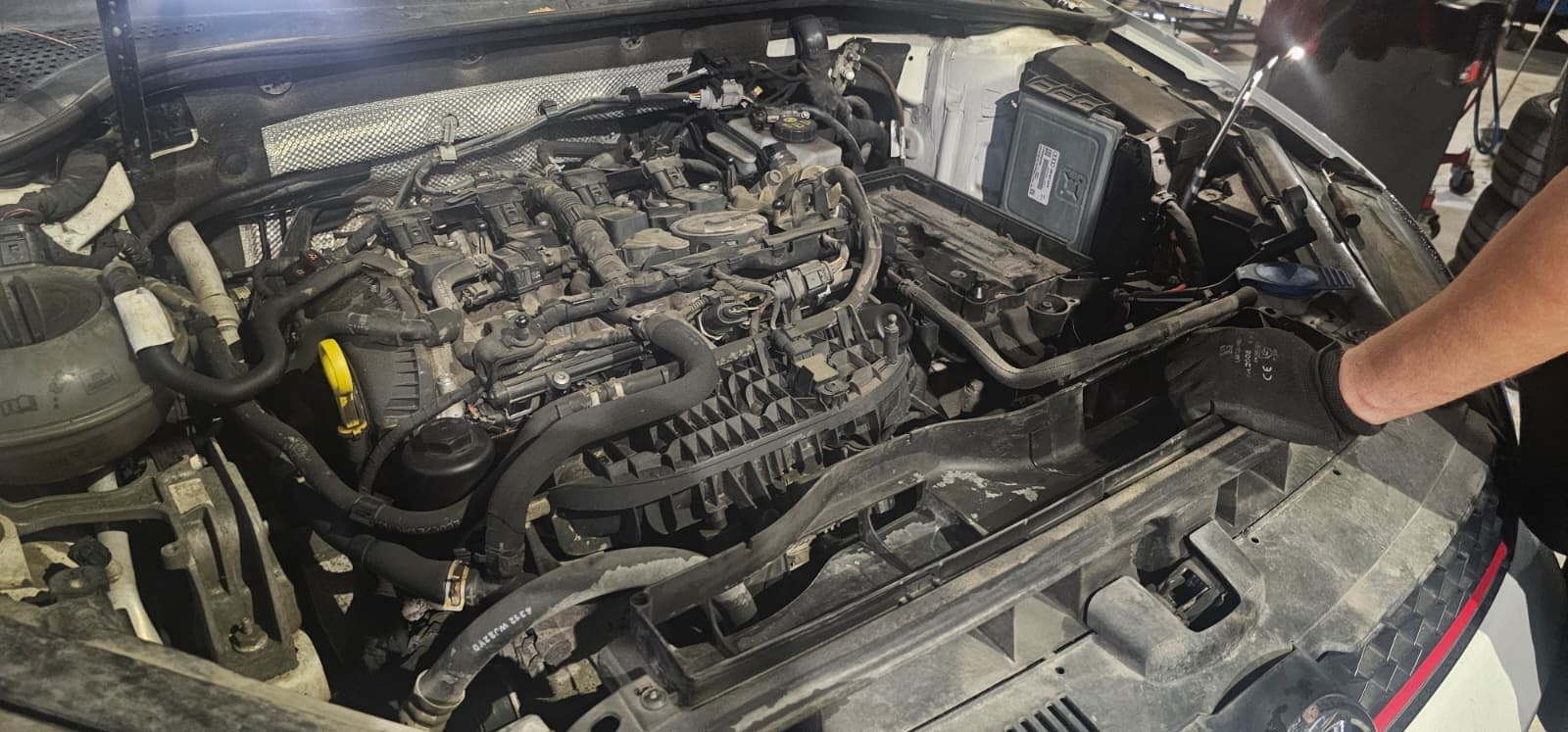
Škoda Karoq 1.0 TSI
The 1.0 TSI is a three-cylinder turbo petrol engine. After the update the Karoq 1.0 TSI EVO produced 81 kW / 110 hp and was paired with a 6-speed manual.
A small amount of characteristic three-cylinder vibration is not a fault on its own. Diagnostics are needed if the engine vibrates strongly, misfires appear, EPC or Check Engine comes on, power drops or there is judder.
Causes can include plugs, coils, injectors, air leaks, turbo, sensors or engine mounts.
Škoda Karoq 1.5 TSI
The 1.5 TSI is one of the most common petrol Karoq versions. After the update the 1.5 TSI EVO produced 110 kW / 150 hp and could be paired with manual or 7-speed DSG.
The engine also uses ACT, which can shut down two cylinders under light load to save fuel. Seek diagnostics for EPC, Check Engine, judder, misfires, unstable idle or loss of power.
Škoda Karoq 2.0 TSI
The 2.0 TSI was fitted to the most powerful versions. After the facelift the 140 kW / 190 hp version was available on the Karoq Sportline with 7-speed DSG and 4×4.
When servicing the 2.0 TSI, pay special attention to engine oil, plugs, coils, turbo, cooling, DSG and four-wheel drive. If the car has been tuned, load on the engine and transmission can be much higher than standard.
Škoda Karoq oil consumption
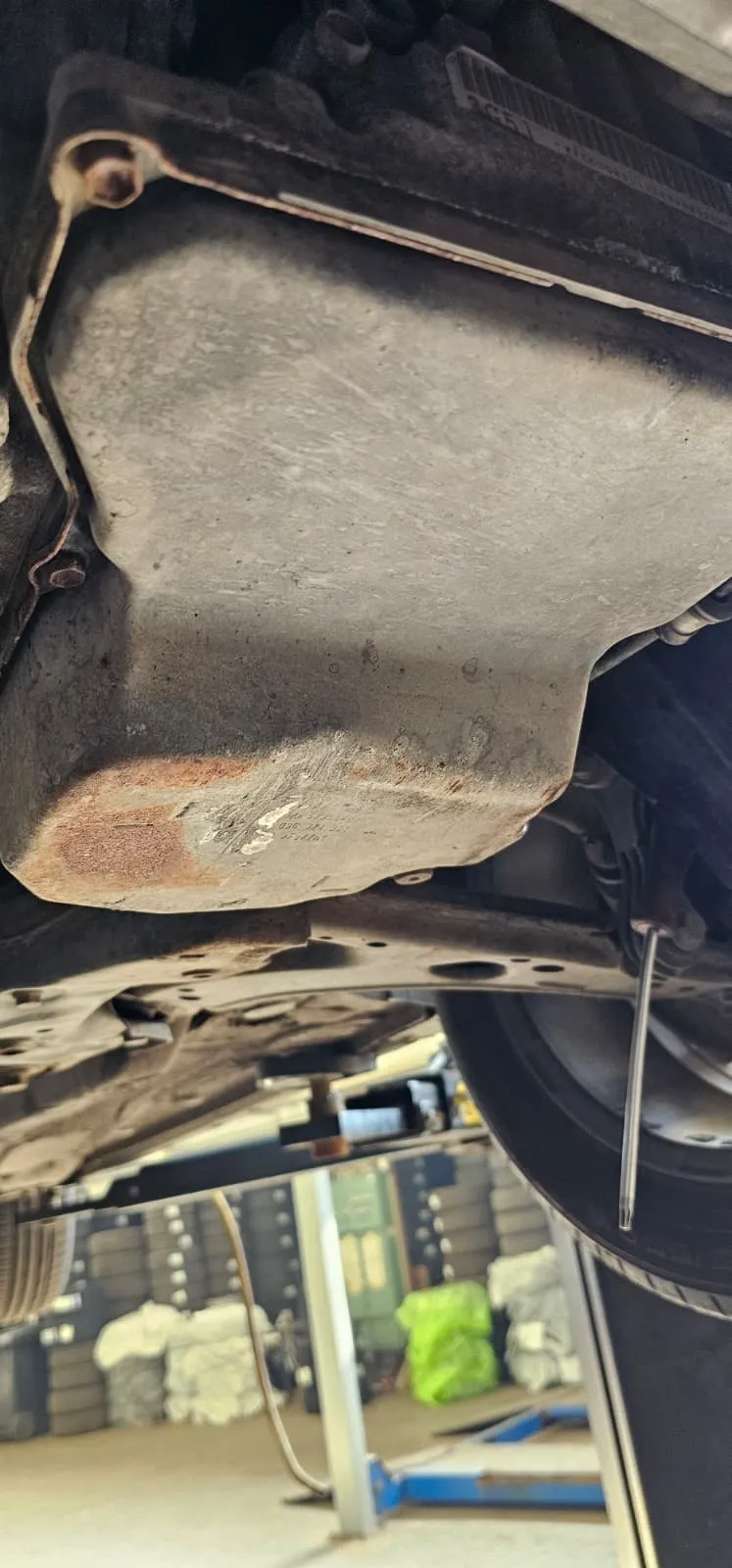
If the engine starts using oil noticeably, find the cause before serious damage. Possibilities include external leaks, crankcase ventilation, turbo or internal wear.
Not every increase in consumption means a major overhaul. First check sealing and measure actual consumption.
Škoda Karoq turbo
All main modern Karoq TSI and TDI engines use turbocharging. Faults may show as loss of power, whistling, smoke, boost pressure error, limp mode or increased oil use.
A boost fault does not automatically mean a failed turbo. Hoses, sealing, actuator, valves, sensors and wiring are also checked.
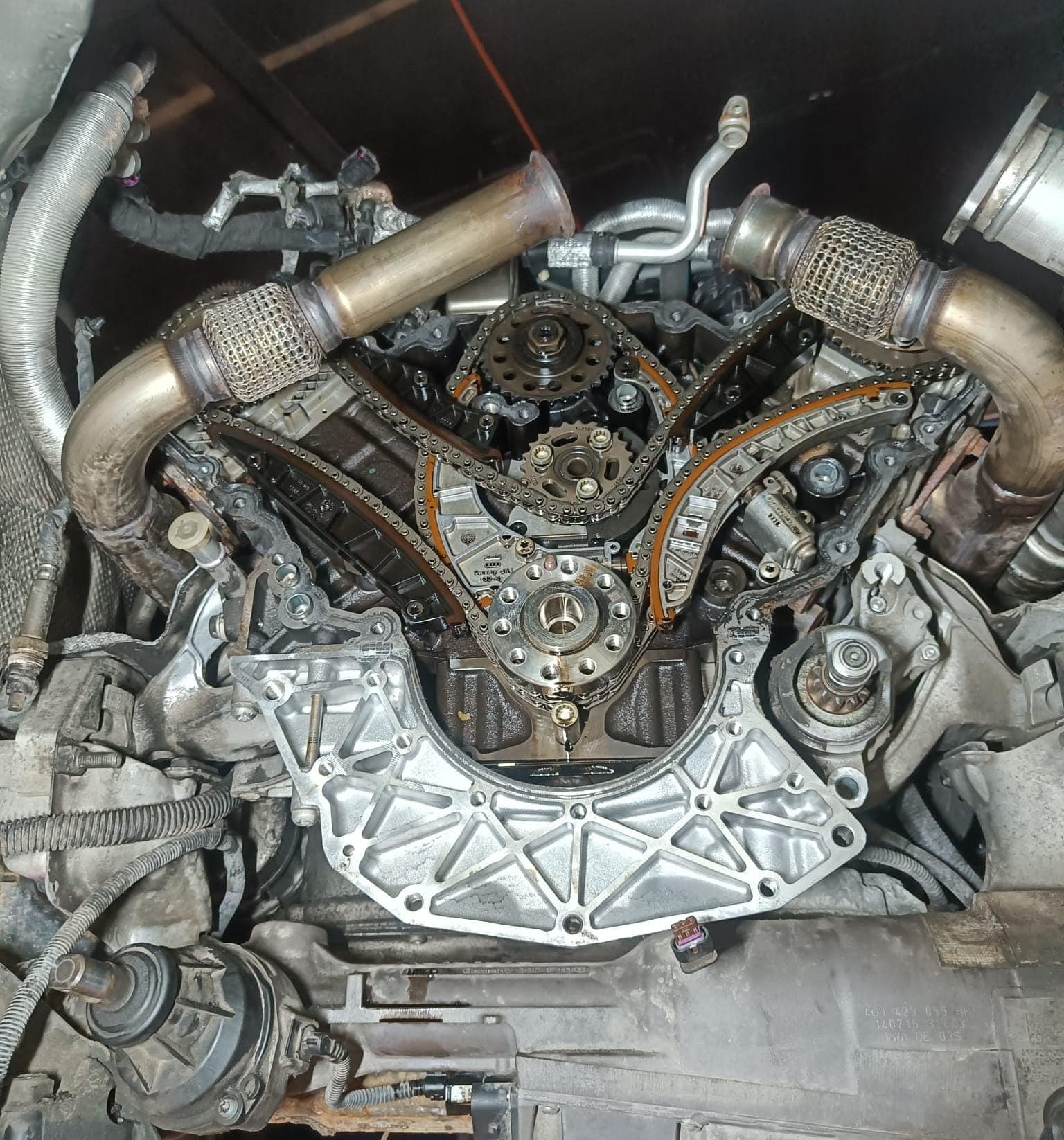
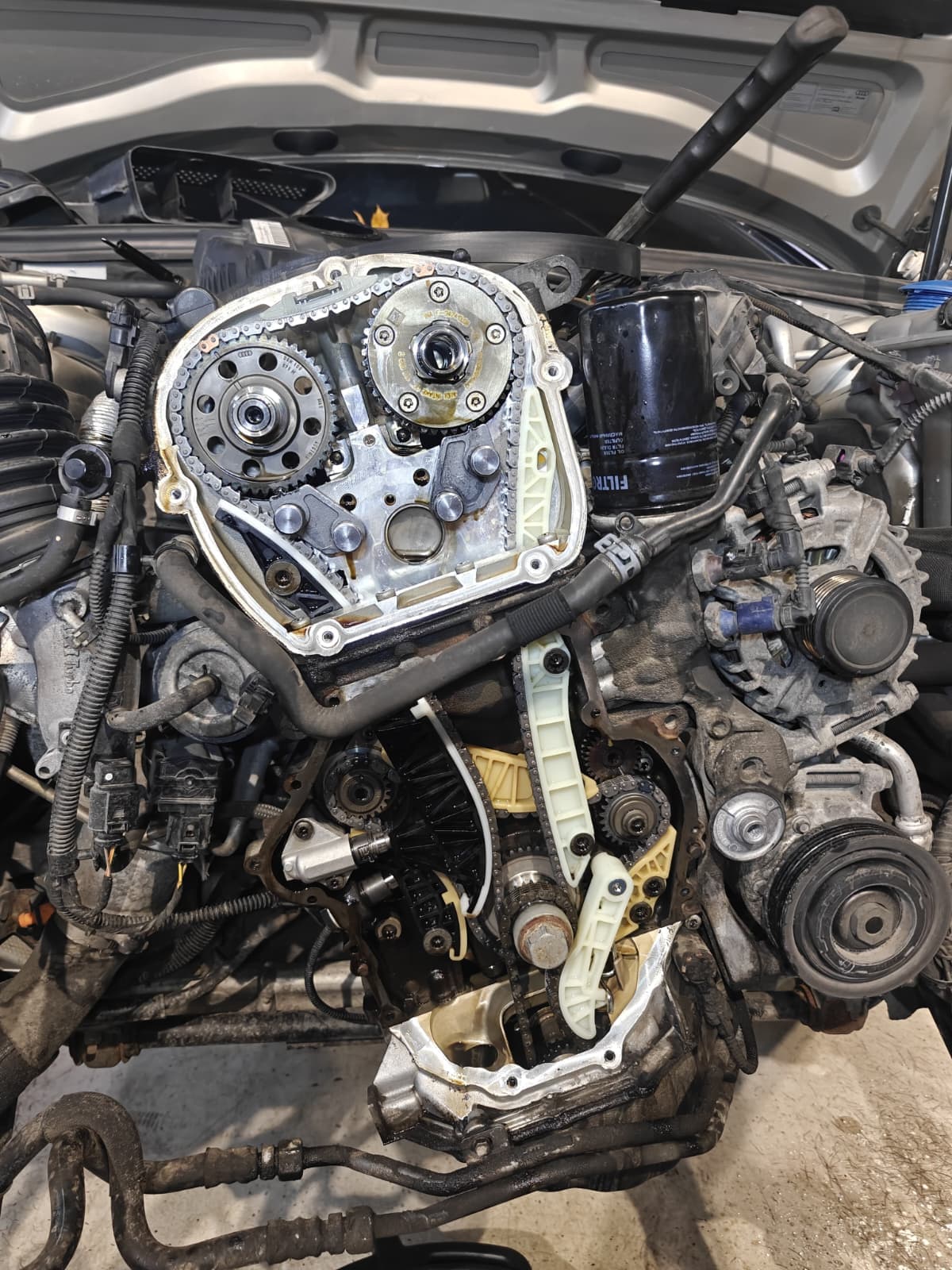
Škoda Karoq timing belt or chain
Different Volkswagen Group engines are used in the Karoq, so timing drive intervals must be set for the exact engine. Service considers VIN, engine code, year, history and manufacturer requirements.
One universal interval cannot be applied to all Karoq TSIs and TDIs. If service history is unknown, check timing drive condition after purchase.
Škoda Karoq TDI diesels
Diesel Karoqs suit high mileage and motorway use. Early cars may have 1.6 TDI and 2.0 TDI; later the main diesel is 2.0 TDI.
After the facelift, 2.0 TDI EVO versions were offered: 85 kW / 116 hp and 110 kW / 150 hp. The 110 kW version could be had with 7-speed DSG and 4×4.
When servicing the diesel, monitor:
- DPF
- EGR
- AdBlue
- turbo
- injectors
- cooling system
- timing belt/chain drive
- TDI diesel engine repair
- computer diagnostics
Škoda Karoq DPF
Modern diesel Karoqs have a particulate filter. In use the filter collects soot burned off during regeneration. Short urban trips can prevent the process completing.
Signs of active or too frequent regeneration: higher idle speed, fans running after stop, fuel use rises, Start-Stop disabled. Problems may show DPF warning, Check Engine, power loss or limp mode.
Diagnostics should check soot and ash levels, differential pressure, temperatures, EGR and engine condition. Not every DPF fault requires filter replacement.
Škoda Karoq EGR
EGR reduces NOx emissions but can clog over time. Symptoms: Check Engine, power loss, rough running, frequent DPF regenerations, limp mode.
A faulty EGR can increase soot and fill the DPF faster. If coolant level drops at the same time, consider the EGR cooler.
AdBlue and SCR — Škoda Karoq
Modern 2.0 TDI versions use SCR with AdBlue. After the facelift Škoda uses Twin Dosing on diesels with two SCR catalysts for more effective NOx reduction.
An AdBlue fault may be due to low fluid, pump, injector, NOx sensor, heater, level sensor or wiring. If a countdown blocks starting, diagnose the issue early.
DSG — Škoda Karoq
Many Karoqs have 7-speed DSG. The exact unit depends on the engine, so DSG on 1.5 TSI and 2.0 TDI 4×4 are not necessarily the same.
Diagnostics are needed if the car jerks on pull-away, D or R is delayed, there is vibration, harsh shifts, transmission fault or limp mode. Causes can be clutches, mechatronic, oil, adaptations or the mechanical section.
DSG maintenance
Intervals depend on the exact transmission version. Different boxes have different clutches, lubrication, fluid requirements and intervals. Identify the gearbox code before an oil change.
DSG mechatronic
The mechatronic controls the gearbox and clutches. Problems may show as loss of gear, inability to engage D or R, heavy judder, limp mode or pressure faults.
A mechatronic fault does not always mean replacing the entire expensive unit. Diagnostics come first.
Manual gearbox and clutch
The Karoq was also sold with manual gearboxes. Clutch wear may show as slip, high bite point, vibration or difficult shifts. On some versions the dual-mass flywheel must be considered.
Škoda Karoq 4×4
Four-wheel drive is available on more powerful versions. At launch the strongest 2.0 TDI already had 4×4; after the facelift it was used on the 2.0 TSI 140 kW among others and could be offered with 2.0 TDI 110 kW.
The Karoq uses an electronically controlled multi-plate clutch on the rear axle. In everyday language such systems are often called Haldex.
4×4 / Haldex service
The four-wheel drive system also needs maintenance. Monitor fluid, pump, contamination, clutch operation and electronic faults.
Possible symptoms: rear axle does not engage, front wheels spin excessively, four-wheel drive fault, knocks or vibration. For 4×4 use four tyres of the same size and similar wear.
Propshaft and rear differential
All-wheel-drive Karoqs also have a propshaft, rear differential, driveshafts and the 4×4 clutch. Diagnostics are needed for humming, vibration, knocks, clunk when moving off or leaks.
Similar humming can come from tyres or wheel bearings.
Off-road Mode
Four-wheel-drive Karoqs may have Off-road mode, which changes electronic system behaviour on rough surfaces.
If the mode is unavailable, causes may include four-wheel drive, ABS/ESC, wheel sensor or another electronic fault. A full fault read of the car is useful.
Škoda Karoq cooling system
Modern TSI and TDI engines have complex thermal management. Coolant loss may be caused by the water pump, thermostat, housings, hoses, radiator, heat exchanger or EGR cooler on diesels.
Topping up coolant without finding the cause does not fix the problem.
Škoda Karoq suspension
The Karoq is taller and heavier than a typical hatchback, so the underpinnings work harder. Over time sway bar links, arms, bushes, ball joints, dampers, top mounts and wheel bearings may need attention.
Seek diagnostics for knocking, poor tracking, squeaks, steering vibration or uneven tyre wear.
DCC — Škoda Karoq
Some Karoq versions have adaptive DCC dampers that change suspension character with the selected drive mode.
Faults may show a chassis error, unusually stiff suspension or wrong response when changing mode. Before replacing dampers, confirm standard or DCC suspension.
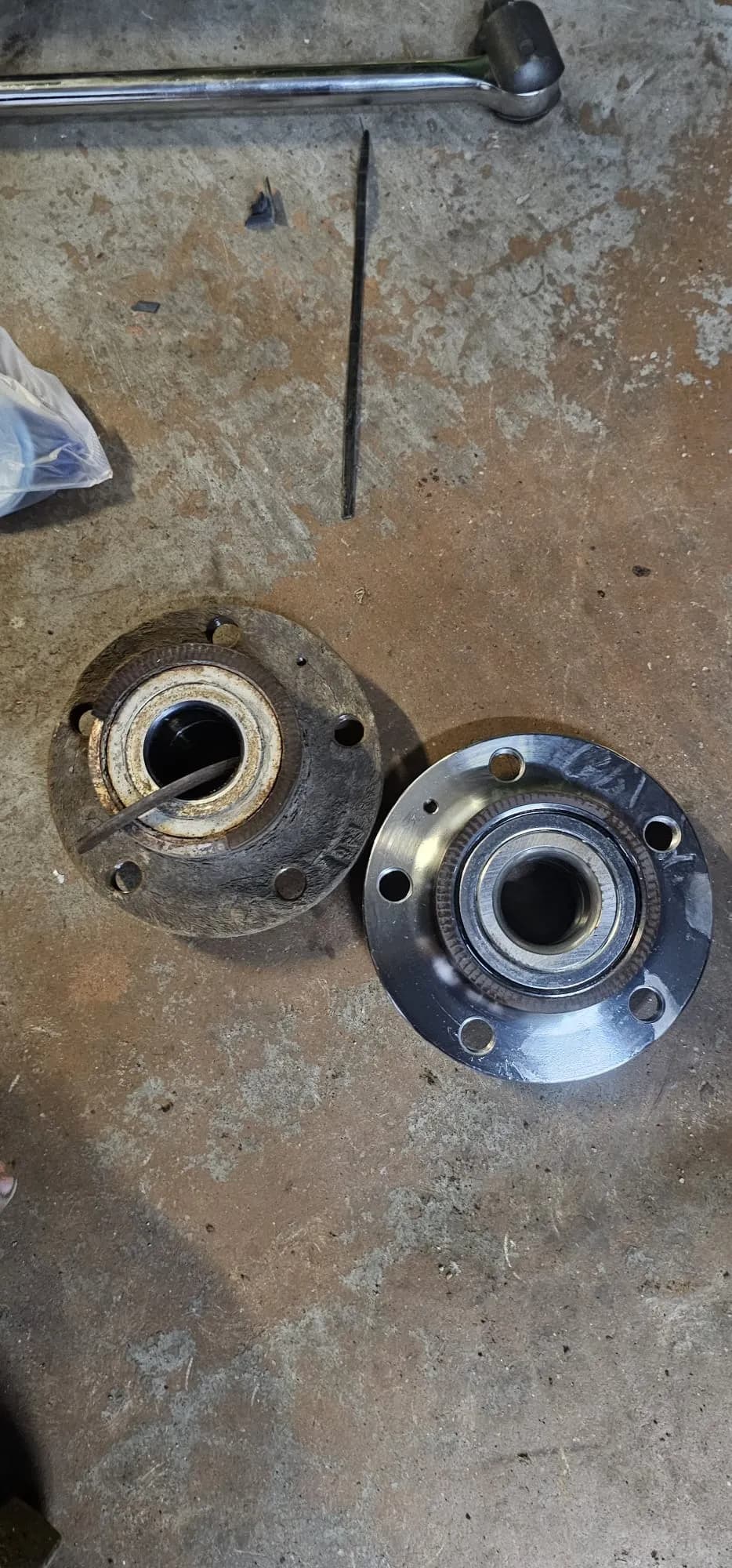
Wheel bearings
The main wear sign is humming that grows with speed. On Karoq 4×4 similar noise can come from tyres, the rear diff or propshaft. Locate the source before replacing a bearing.
Škoda Karoq brake system
In Finland brakes suffer from road salt and moisture. Common issues: disc corrosion, seized guides, uneven pad wear and sticking calipers.
Seek diagnostics if the car pulls when braking, vibrates, brakes squeal, one wheel overheats or there is a metallic noise.
Electronic parking brake
The Karoq has an electronic parking brake. Service mode is required when working on rear brakes. Faults may relate to the caliper motor, wiring, power, battery or control unit.
Battery and Start-Stop
A weak 12 V battery can cause many symptoms: Start-Stop stops working, slow cranking, random faults, assistants unavailable, multimedia rebooting.
Problems often appear in winter and on short trips. For multiple electronic faults, start diagnostics with the power supply.
Multimedia and Digital Cockpit
The Karoq was the first Škoda with a digital instrument cluster at launch. After the update, electronics were further improved.
Seek diagnostics if the screen reboots, Digital Cockpit is unstable, sound drops out, the camera will not start or Bluetooth disconnects often. Before replacing an expensive unit, check power, faults and software.
Cameras and driver assists
The Karoq can be equipped with Front Assist, Adaptive Cruise Control, Lane Assist, Side Assist, parking sensors, a camera and Travel Assist on later cars.
After windscreen, body, suspension or geometry work, some systems may need calibration. In winter sensors can be temporarily blocked by snow and ice.
LED and Matrix LED
After the update, Full LED Matrix headlights became available on the Karoq for the first time. A lighting fault is not necessarily in the headlight itself.
Check power, wiring, control unit, body position sensors and communication between modules. Diagnostics matter because of the cost of modern headlights.
Air conditioning and climate
If air conditioning cools poorly, causes may include a leak, low refrigerant, compressor, condenser, pressure sensor, fan or flap. Repeated top-ups need a leak found.
VarioFlex
A signature Karoq feature is the VarioFlex rear seat system. Three individual seats can be moved, folded or removed for a flexible cabin. Škoda highlighted this at launch.
On a used car, check latches, rails, folding mechanisms and seat belts.
Power tailgate
Well-equipped Karoqs may have a power tailgate and hands-free opening. If it will not open, stops, reverses or will not close fully, check motors, lock, sensors, wiring and power.
Panoramic roof and water ingress
On cars with a panoramic roof, check drains. Water can cause damp, connector corrosion and damage to electronics. If water appears after rain or a wash, find the source quickly.
Škoda Karoq Sportline
Sportline is the sport-styled Karoq. After the facelift the most powerful 2.0 TSI EVO at 140 kW / 190 hp was offered on Karoq Sportline as standard with DSG and 4×4.
On such a car, monitor TSI, turbo, DSG, 4×4, brakes and suspension especially. When buying, also check for chip tuning.
Is there a Škoda Karoq RS?
There was no full production Karoq RS. Do not confuse Karoq Sportline with RS. Sportline is a sporty trim; RS is used for separate high-performance models.
When searching parts and technical information, the actual engine and equipment matter.
Škoda Karoq pre-purchase inspection
Before buying a used Karoq, check cold start, fault memories, engine, oil use, turbo, timing drive, cooling, DSG or manual, clutch, DPF, EGR, AdBlue, 4×4, propshaft and rear diff, suspension, DCC, bearings, brakes, battery, air conditioning, multimedia, cameras and assists.
On Sportline 2.0 TSI 4×4, check tuning history and transmission especially.
Škoda Karoq services we offer
At Volkkarihuolto Espoo you can book:
- regular Škoda Karoq maintenance
- engine oil and filter change
- computer diagnostics
- TSI servicing
- TDI servicing
- turbo diagnostics
- timing drive inspection
- DPF diagnostics
- EGR diagnostics
- AdBlue diagnostics
- DSG servicing
- mechatronic diagnostics
- clutch repair
- 4×4 inspection
- four-wheel drive clutch service
- propshaft and rear differential diagnostics
- brake repair
- suspension diagnostics
- DCC inspection
- wheel bearing replacement
- coolant leak detection
- battery check
- air conditioning service
- multimedia diagnostics
- electronic assist check
- pre-MOT preparation
- Škoda Karoq pre-purchase check
Common Škoda Karoq fault symptoms
Book diagnostics if:
- Check Engine or EPC is on
- engine misfires
- the car has lost power
- oil consumption has increased
- unusual turbo whistling
- coolant level is dropping
- diesel regenerates DPF often
- EGR or AdBlue fault
- DSG judders
- D or R engages with delay
- 4×4 works inconsistently
- excessive front wheel spin
- vibration when accelerating
- humming noise
- suspension knocks
- DCC shows a fault
- brakes vibrate
- Start-Stop has stopped working
- multimedia reboots
- assists become unavailable
Škoda Karoq repair in Espoo
Need Škoda Karoq repair or service? Contact Volkkarihuolto Espoo at Ruukinmestarintie 7, 02330 Espoo.
We can diagnose petrol TSI and diesel TDI engines, DSG, 4×4, DPF, EGR, AdBlue, turbo, timing drive, cooling, brakes, suspension, DCC, multimedia and electronic assists.
When servicing Škoda Karoq it is important to consider the exact powertrain. Front-drive Karoq 1.0 TSI, Karoq 1.5 TSI DSG, diesel 2.0 TDI 4×4 and Karoq Sportline 2.0 TSI have different engines and transmissions and need different diagnostics and preventive care.
Proper diagnostics find the real cause and help avoid unnecessary expensive parts.
FAQ
When was the Škoda Karoq launched?
Škoda unveiled the Karoq in 2017. It was the brand’s second SUV in the modern line-up after the Kodiaq.
How many generations of Škoda Karoq are there?
The Karoq belongs to one main generation launched in 2017. In late 2021 Škoda presented a major update.
Which engines are fitted to the Škoda Karoq?
Depending on model year, petrol 1.0, 1.5 and 2.0 TSI and diesel 1.6 and 2.0 TDI were used. After the facelift the EVO range included 1.0 TSI, 1.5 TSI, 2.0 TSI and two 2.0 TDI versions.
Does the Škoda Karoq have DSG?
Yes. Many engines are available with 7-speed DSG. The exact gearbox depends on the engine fitted.
Why does DSG judder on the Karoq?
Causes can include clutches, mechatronic, adaptations, oil condition or the mechanical section. Before repair, identify the exact DSG version and read faults.
Is there a Škoda Karoq 4×4?
Yes. Four-wheel drive is available on selected powerful TSI and TDI versions. After the update 2.0 TSI 140 kW had DSG and 4×4 as standard, and 2.0 TDI 110 kW could be offered with four-wheel drive.
Does 4×4 need servicing?
Yes. Consider multi-plate clutch fluid, pump condition, contamination and control faults.
Why does Karoq TDI regenerate the DPF often?
Causes can include short trips, high soot load, EGR, sensor or injector faults or another engine issue.
Is AdBlue used on the Karoq?
Modern 2.0 TDI engines use SCR with AdBlue. Updated diesels use Twin Dosing with two SCR catalysts.
What is VarioFlex?
VarioFlex is a system of three individual rear seats that can be moved, folded or removed on relevant Karoq versions.
Is there a Karoq RS?
No. There was no full production Karoq RS. The most sporting factory version is Karoq Sportline.
How does Karoq Sportline differ from a regular Karoq?
Sportline has sporty styling and equipment. After the facelift it was also offered with 2.0 TSI 140 kW / 190 hp with DSG and 4×4.
Can a Škoda Karoq be checked before purchase?
Yes. Check engine, DSG, timing drive, cooling, brakes, suspension and electronics. On TDI also DPF, EGR and AdBlue; on four-wheel drive the clutch, propshaft and rear differential.
Detailed Services
Professional fault diagnostics for Skoda Karoq.
Oil ChangeEngine oil and filter replacement for Skoda Karoq.
Annual maintenanceComprehensive annual maintenance for Skoda Karoq.
Regular MaintenanceScheduled maintenance for Skoda Karoq according to service needs.
Engine RepairEngine diagnostics and repair for Skoda Karoq.
Diesel Engine RepairDiesel engine service and repair for Skoda Karoq.
Electrical RepairElectrical fault tracing and repair for Skoda Karoq.
ECU ProgrammingControl unit programming and coding for Skoda Karoq.
DSG RepairDSG transmission diagnostics and repair for Skoda Karoq.
Transmission RepairTransmission diagnostics and repair for Skoda Karoq.
Transmission Oil ChangeTransmission oil change for Skoda Karoq.
Timing Belt ReplacementTiming belt and related component replacement for Skoda Karoq.
Timing Chain ReplacementTiming chain, tensioner, and guide replacement for Skoda Karoq.
Cooling System RepairCooling system service and repair for Skoda Karoq.
AC RepairAir conditioning service and repair for Skoda Karoq.
Engine Heater InstallationEngine heater installation and service for Skoda Karoq.
Cabin OzonationCabin ozonation and odor removal for Skoda Karoq.