VolkkariHuolto Logo
Skoda Oil Change

Skoda Oil Change

In modern Skoda vehicles, many components operate using lubricating fluid - oil, and these components are crucial, such as:

  • Engine
  • Manual and automatic transmissions
  • Haldex all-wheel drive clutch
  • Rear axle

Engine

For petrol and diesel engines, the recommended oil change interval is 15,000 km or one year, whichever comes first. However, in urban driving with severe traffic congestion (when the average speed does not exceed 25 km/h), even vehicle manufacturers prefer engine oil changes up to every 30,000 km as the number of engine operating hours has a greater significance than the number of kilometers driven. If the vehicle is also used under heavy loads, such as with full load or with a heavy trailer, in very dusty areas, and with poor quality fuel, oil aging occurs much faster. Therefore, we recommend an oil change every 7,500 km or once every 6 months in these operating conditions. These recommendations are particularly important for diesel, turbo, and chain-driven engines.

The oil change process is as follows:

  1. Raising the vehicle
  2. Removing the engine compartment protection panel or cover
  3. Draining the engine oil pan and removing the oil
  4. Removing the engine oil filter
  5. After the oil draining process, installing a new oil pan gasket and a new oil filter
  6. Removing any remaining traces of oil
  7. Adding new engine oil, starting the engine, and checking the oil level if necessary
  8. Lowering the vehicle

Transmission

In manual transmissions, as well as in the rear axle and transfer case (in vehicles designed for all-wheel drive), oil changes are not mandated, meaning the oil does not need to be changed. In automatic transmissions and "wet" DSG transmissions, excluding the "dry" DSG7 DQ200, the oil and oil filter change interval is every 60,000 km. However, if the vehicle is used in sport mode, frequently for rapid acceleration and braking, under constant high load, in mountainous terrain, with heavy load and cargo, or in very intensive traffic queues, this leads to greater consumption of the friction elements and thus their wear and accumulation of oil products from friction wear, which adversely affects the oil properties and the component's service life. Therefore, in such operating conditions, we recommend changing the transmission oil and oil filter every 45,000 km to extend the service life.

The transmission oil change process is as follows:

  1. Raising the vehicle
  2. Removing the transmission oil drain plug and draining the oil
  3. Installing a new oil filter and oil plug
  4. Prefilling the transmission oil
  5. Next, checking the transmission oil temperature and level with a diagnostic device and adjusting if necessary
  6. Removing oil residues
  7. Lowering the vehicle

Haldex All-Wheel Drive Clutch

For the Haldex all-wheel drive clutch, an oil change is mandated every 60,000 km. However, if the vehicle is used dynamically in an aggressive mode with frequent violent stops and accelerations, constantly under high load, in mountainous terrain, in continuous off-road driving, or in very intensive traffic queues, this leads to more on/off cycles of the Haldex clutch. The Haldex clutch uses a friction pack in the lubricant to engage the rear axle. Structurally, this friction pack is similar to those in traditional automatic transmission friction packs. However, Haldex has significantly less oil, and the Haldex clutch has an oil filter that does not change and is not available as a spare part. Therefore, to extend the trouble-free service life of the Haldex all-wheel drive clutch, if the above-mentioned operating conditions occur, we recommend an oil change every 45,000 km.

The Haldex all-wheel drive clutch oil change process is as follows:

  1. Raising the vehicle
  2. Removing the Haldex all-wheel drive clutch oil drain plug and draining the oil
  3. Installing the drain plug and filling the Haldex all-wheel drive clutch with oil in the given amount
  4. Removing oil residues
  5. Lowering the vehicle
  6. Exiting the vehicle from the lift

These tasks are performed quickly and efficiently by trained Volkkarihuolto employees in Espoo. Overall, an oil change takes up to 90 minutes, including vehicle reception and delivery. It is recommended that these works be performed by trained professionals because the Haldex all-wheel drive and rear axle oil drain holes are very close to each other, and often oil can be drained from the rear axle and added to another component, which can lead to premature wear and failure of the rear axle and, in the worst case, destruction.
Skoda Service in Espoo

Professional car service in Espoo. Book an appointment easily online or call us.

Did you know?

VAG owns one of the largest collections of automotive platforms in the world — many models from different brands are built on a common base (like MQB).

Our Works

Examples of car service and repair work we have completed

Filters

Volkswagen New Beetle 2006 Transmission Oil Pan Straightening and Oil + Filter Change

Volkswagen New Beetle 2006 Transmission Oil Pan Straightening and Oil + Filter Change

Volkswagen New BeetleTransmission oil pan straightening and oil + filter change26.08.2026

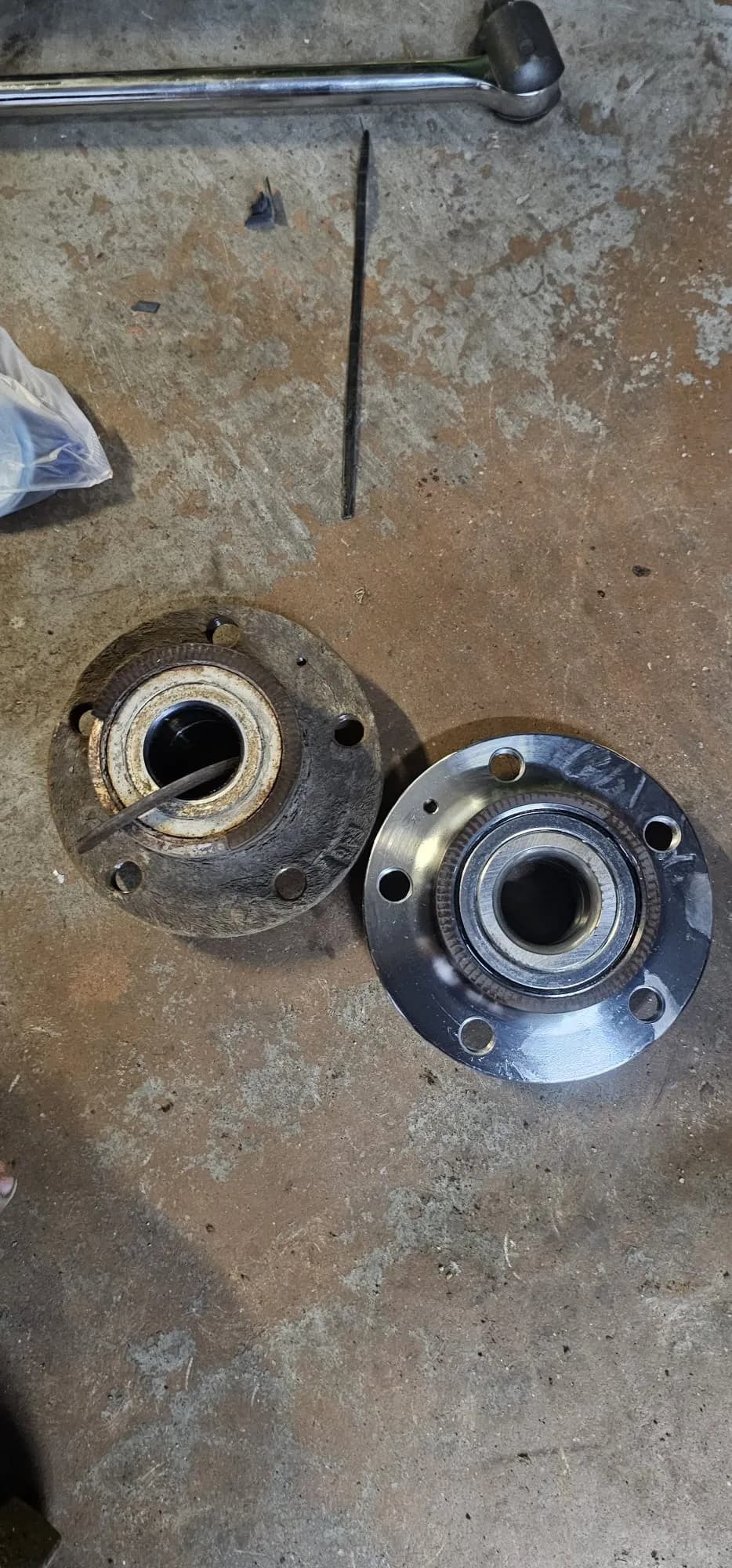
The customer brought a 2006 Volkswagen New Beetle whose automatic transmission oil pan had been struck and dented. With the car on a lift, we confirmed the pan damage and found old, contaminated transmission fluid. The oil pan was removed, the magnet and used fluid were inspected, and the transmission filter was replaced. The dented pan was straightened, refitted with a proper seal, and the gearbox was filled with fresh oil. We performed the following procedures: - Inspection and removal of the transmission oil pan - Draining and assessing the old transmission oil - Checking the magnet and metal debris - Replacing the transmission oil filter - Straightening the oil pan - Refitting the pan and renewing the seals - Filling with new transmission oil and checking the level After the service, the oil pan is back in the correct shape, the oil and filter have been renewed, and the transmission is ready for safe use.

Open case
Audi S5 2007 Wash and Protective Coating

Audi S5 2007 Wash and Protective Coating

Audi S5Wash and protective coating26.08.2026

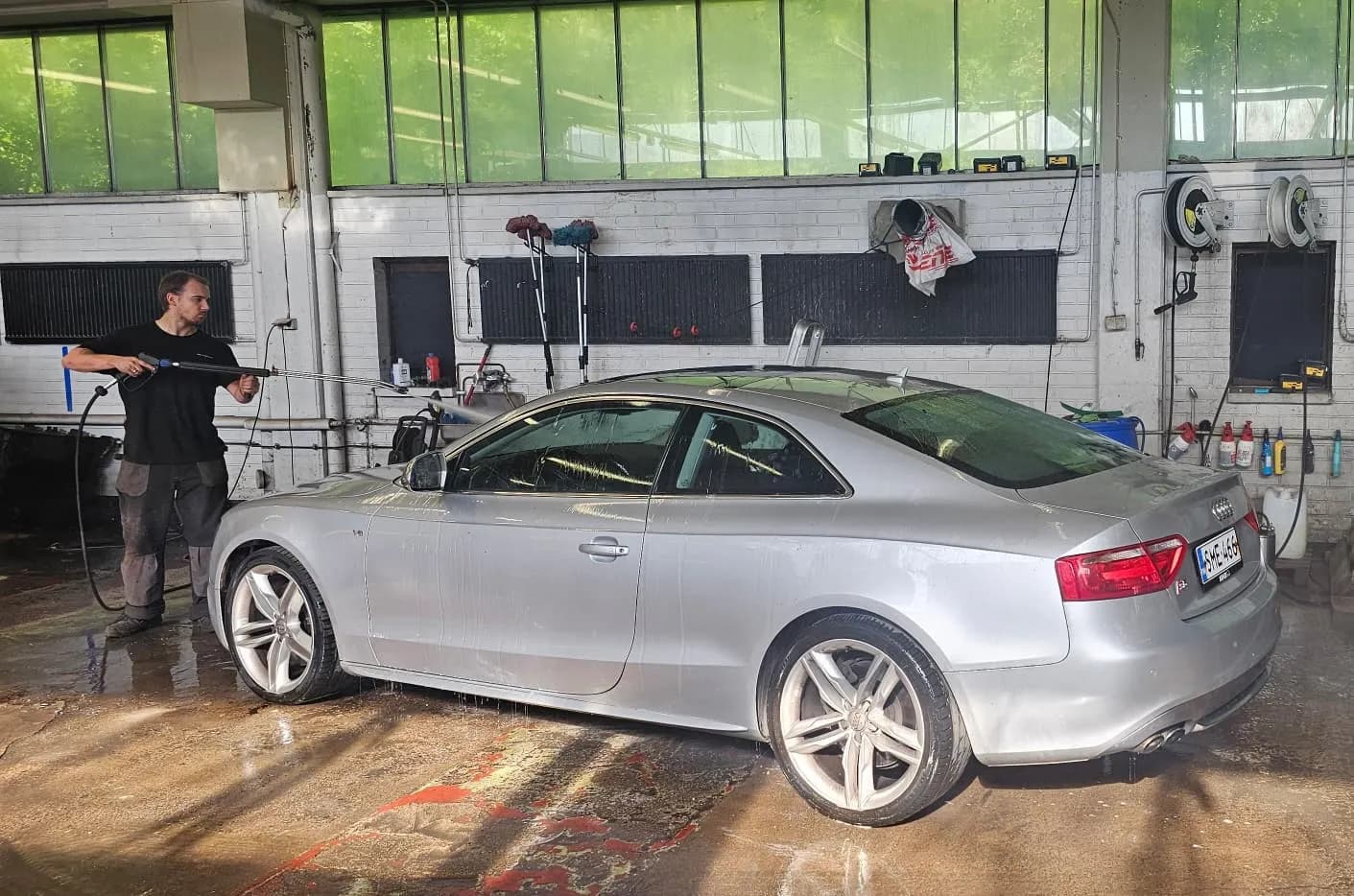
The customer brought a 2007 Audi S5 to our workshop for a car wash and protective coating. The silver S5 coupe was carefully cleaned in our wash bay with a pressure washer so the body, wheels and visible surfaces were ready before coating. We performed the following procedures: - Thorough exterior wash - Cleaning of wheels and wheel arches - Body preparation for protective coating - Application of protective coating to the paintwork After washing and coating, the car is clean, glossy and better protected against weather, dirt and road salt.

Open case
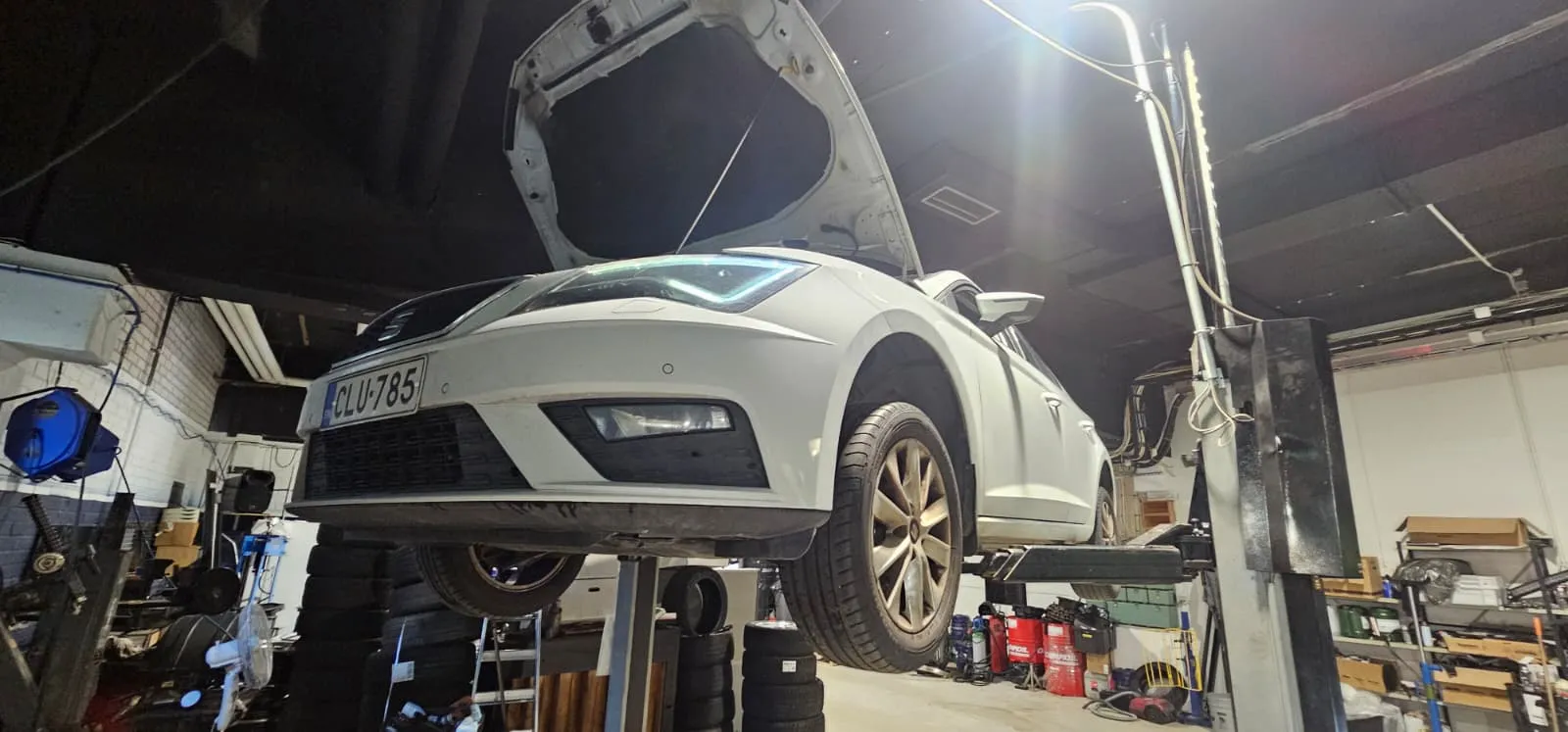
SEAT León 2017 1.4 TSI Scheduled Maintenance

SEAT León 2017 1.4 TSI Scheduled Maintenance

SEAT León 1.4 TSIScheduled maintenance25.08.2026

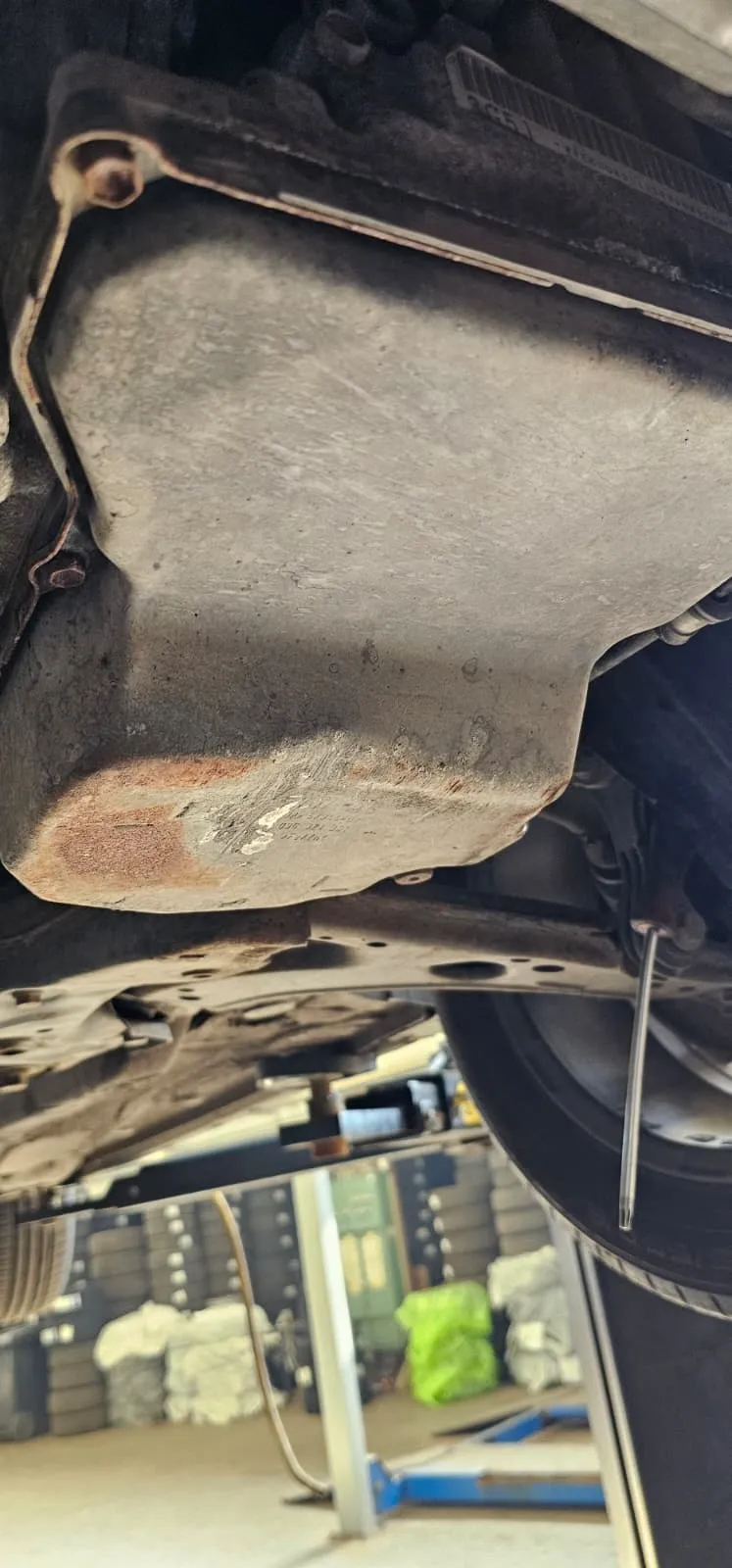
The customer brought a 2017 SEAT León 1.4 TSI to our workshop for scheduled maintenance. The car was raised on a lift so the engine oil and filter change, as well as an underbody inspection, could be carried out thoroughly. We performed the following procedures: - Draining the old engine oil - Replacing the oil filter - Refilling with fresh oil to manufacturer specification - Visual inspection of the chassis, suspension and possible leaks - Checking fluid levels - Reading fault codes and basic system diagnostics After the service, the car is ready for safe driving. Regular scheduled maintenance keeps the 1.4 TSI engine reliable and helps prevent more expensive repairs.

Open case
Audi S5 Cabriolet 2011 Convertible Roof System Repair

Audi S5 Cabriolet 2011 Convertible Roof System Repair

Audi S5 CabrioletConvertible roof system repair29.06.2026

The customer brought us a 2011 Audi S5 Cabriolet with a fault in the convertible roof system. A sensor in the roof system had failed, causing the roof to lift and get stuck in the wrong position, while the mechanism could no longer complete the opening or closing cycle correctly. This type of fault requires careful diagnostics, because several sensors, limit switches and control units work together in a convertible roof mechanism. We checked fault codes, roof position recognition and the movement of the mechanism so the roof could be safely released from the incorrect position without causing additional damage. We performed the following procedures: - Convertible roof system diagnostics with a tester - Faulty sensor location - Releasing the roof mechanism from the incorrect position - Sensor and wiring inspection - System testing through several opening and closing cycles After the repair, the convertible roof works correctly again: the roof opens and closes normally, and no active fault codes remained in the system. The vehicle was returned to the customer with a working and safely tested roof mechanism.

Open case
Volkswagen Passat 1.4 GTE Hybrid 2016 Turbo Replacement

Volkswagen Passat 1.4 GTE Hybrid 2016 Turbo Replacement

Volkswagen Passat 1.4 GTE HybridTurbo replacement

The customer brought us a 2016 Volkswagen Passat 1.4 GTE Hybrid after symptoms pointing to an oil leak started to appear in the engine operation. During diagnostics, we found that the turbo shaft seal was damaged and the turbo had started leaking oil into the intake manifold. This kind of fault should be repaired in time, because oil entering the intake side can cause rough running, smoke, and in the worst case further engine damage. We removed the necessary components, inspected the intake system, and replaced the damaged turbo with a new unit. After the repair, we checked the system for leaks, verified oil tightness, and tested engine operation. The car was returned to the customer in good working condition, with the risk caused by the turbo oil leak eliminated.

Open case
Audi S5 3.0TFSI Timing Chain Repair

Audi S5 3.0TFSI Timing Chain Repair

Audi S5 3.0TFSITiming chain repair10.05.2026

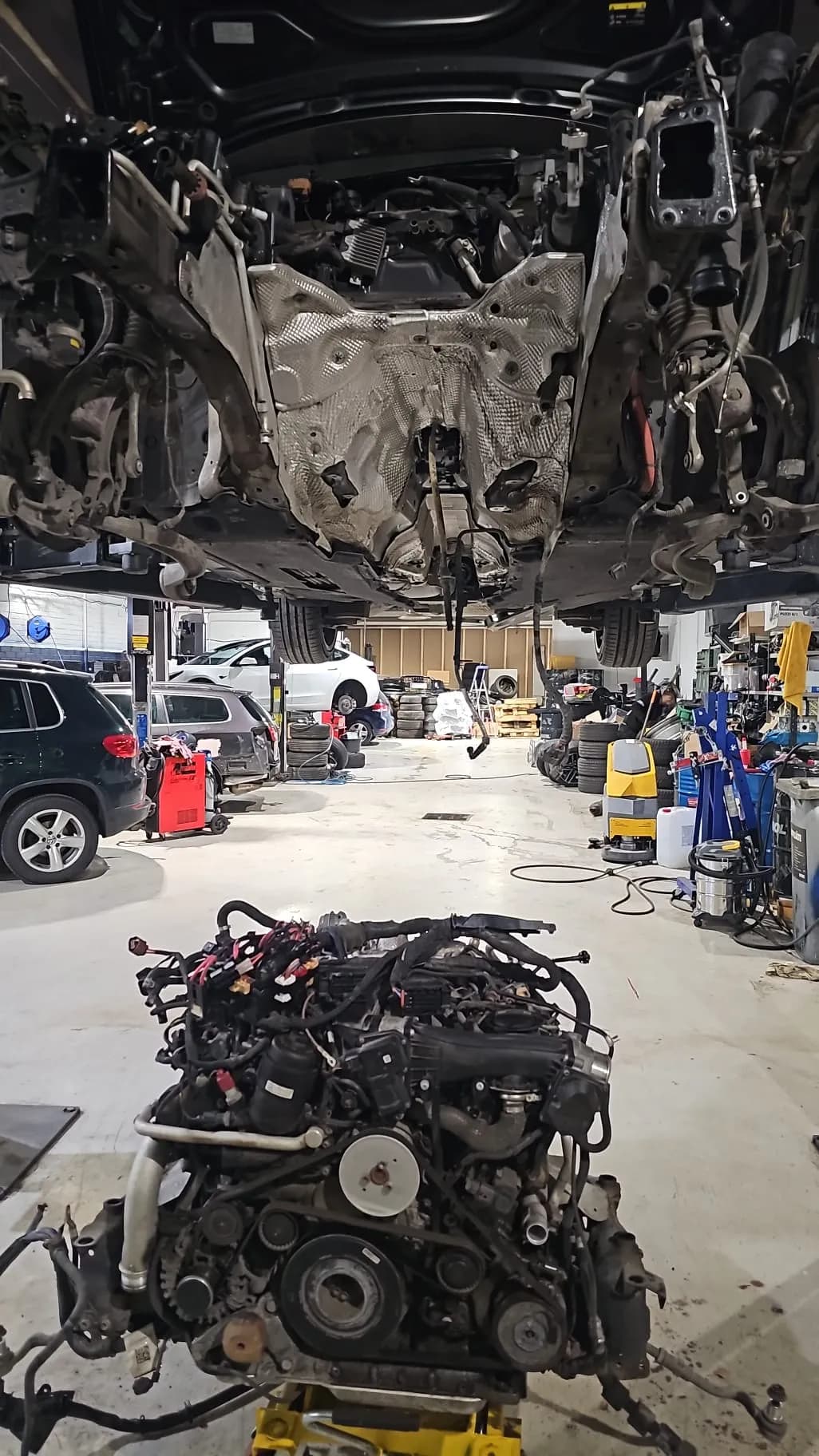
The customer brought an Audi S5 3.0TFSI to our workshop with a distinct metallic rattling noise from the front of the engine on cold start and at idle. Fault codes indicated camshaft position correlation errors — a classic symptom of a stretched timing chain and worn chain guides on the 3.0TFSI engines. Diagnostics revealed the following issues: - Stretched primary timing chain - Worn chain guides and tensioner - Camshaft position correlation fault codes - Metallic rattling noise from the front of the engine We performed a complete timing chain repair: - Disassembly of the front of the engine and accessories - Removal of old timing chain, guides and tensioner - Installation of new genuine parts (chain, guides, tensioner, sprockets) - Precise timing setup using special tools - Replacement of seals and engine oil - ECU basic settings and adaptation - Test drive and final fault code check After the repair, the engine starts cleanly, idle is smooth, and all abnormal noises have disappeared. The timely timing chain repair saved the customer from a significantly more expensive engine overhaul.

Open case

Service Process

How Volkkarihuolto service works for Audi, Volkswagen, Skoda, Seat, and Cupra vehicles

Booking

Book , by phone, or email. Provide your vehicle details and service needs.

Vehicle Reception

Upon arrival, our specialist will receive your car, discuss the service needs, and perform an initial inspection.

Diagnostics

We use original Audi diagnostic equipment and thoroughly check your vehicle to identify any potential issues.

Service Plan

If we find unexpected issues, we will contact you and propose a repair plan with a cost estimate before proceeding with the work.

Service Work

Our professional team performs all necessary service work using original or OEM-approved parts.

Quality Control

An experienced technician checks all work performed and ensures your vehicle operates flawlessly.

Vehicle Handover

We will notify you when your vehicle is ready for collection. We will explain all the work done and answer your questions.

Сначала примите согласие на cookies