VolkkariHuolto Logo
SEAT welding repairs in Espoo

SEAT welding repairs in Espoo

SEAT welding repairs may be needed because of corrosion in the sills, underbody, wheel arches, jacking points, mounts, exhaust system or metal body elements. Finnish moisture, snow, salt, dirt and temperature changes constantly stress the body. Volkkarihuolto Espoo carries out SEAT welding and body repairs at Ruukinmestarintie 7, 02330 Espoo.

Price confirmed after inspection

The true extent of corrosion often becomes visible only after cleaning. We agree on the repair method and estimate before welding begins.

When does a SEAT need welding repairs?

Welding is not needed only after a collision. Very often the cause is corrosion that develops gradually and is almost invisible at first.

  • Sill corrosion
  • Rust in the underbody
  • Damaged wheel arches
  • Corroded jacking points
  • Damaged mounts
  • Suspension mounting-point issues
  • Exhaust system damage
  • Repair after an impact
  • Preparing the vehicle for inspection
  • Restoration of older SEAT models
  • Correcting a poor previous body repair

Why is corrosion common in Finland?

Moisture, road salt, snow and temperature changes put the body under constant strain. Rust may develop beneath underbody protection, plastic trims and wheel-arch liners even when the vehicle looks clean outside.

  • Inside the sills
  • Beneath underbody protection
  • Behind wheel-arch liners
  • Around jacking points
  • Near suspension mounts
  • Lower door sections
  • Wing edges
  • Around the exhaust system
  • Under plastic trims
  • At body seams and joints
  • Lower boot and rear-panel areas

When should your SEAT be inspected?

  • Rust on the sills
  • Holes in the underbody
  • Bubbling paint on wheel arches
  • Damaged jacking points
  • The vehicle failed inspection because of corrosion
  • Detached exhaust mount
  • Metallic noise from underneath
  • Visible cracks or weak metal
  • Rust spreading beneath paint
  • Remarks about body or structural elements
  • Corrosion under plastic trims

01 — Welding

What can we weld on your SEAT?

We repair structural and non-structural steel parts when welding is a safe and cost-effective solution.

Sills and jacking points

Repair of outer and inner sills, reinforcements and damaged jacking points.

Underbody and wheel arches

Local floor, seam and wheel-arch repairs followed by corrosion protection.

Exhaust system

Welding of cracks, brackets and repairable exhaust pipe sections.

Brackets and small parts

Restoration of metal mounts, guards and other repairable components.

Wheel arches

Rust removal, welding, shape restoration and preparation for refinishing where required.

Inspection repairs

Repairs to sills, floors, jacking points and mounts before a vehicle inspection or re-inspection.

01

SEAT sill repair

Sills are among the most vulnerable parts of a vehicle. They suffer from salt, moisture, dirt, stone impacts and incorrect lifting with a jack.

Symptoms

  • Rust on the sills
  • Metal feels soft when pressed
  • Holes or cracks
  • Peeling paint
  • Problems with jacking points
  • Remarks during vehicle inspection

What we do

  • Inspect the damaged area
  • Remove corrosion
  • Cut out damaged metal
  • Prepare a repair insert
  • Weld the insert
  • Clean the welds
  • Apply corrosion protection
  • Prepare for further painting when required

02

SEAT underbody repair

The underbody is constantly exposed to moisture, salt and dirt. Corrosion is especially serious when it affects structural parts, suspension mounts, brake pipes or powertrain mounting points.

Symptoms

  • Rust on the underbody
  • Holes in the metal
  • Remarks during katsastus
  • Weak mounts
  • Cracks
  • Noise or vibration from underneath

What we do

  • Raise the vehicle and inspect the underbody
  • Assess the extent of corrosion
  • Remove damaged sections
  • Carry out the welding repair
  • Clean and treat the area
  • Protect it against further corrosion

03

SEAT wheel-arch repair

Wheel arches are exposed to sand, stones, salt and dirt. Rust may begin as a small spot on an arch edge and spread beneath the paint.

Symptoms

  • Bubbling paint around the arches
  • Rust along an arch edge
  • Perforation
  • Impact damage
  • Corrosion behind wheel-arch liners

What we do

  • Inspect the arch and hidden areas
  • Remove rust
  • Weld the damaged section
  • Restore the original shape
  • Prepare for filling and painting when required
  • Apply corrosion protection

04

SEAT jacking-point restoration

Jacking points may be damaged by corrosion, incorrect lifting or a poor previous repair. Weak metal can make lifting the vehicle unsafe.

Symptoms

  • Metal collapses during lifting
  • Damaged jacking point
  • Rust around the reinforcement
  • The vehicle cannot be lifted safely
  • Vehicle inspection remark

What we do

  • Inspect the jacking area
  • Assess the metal
  • Remove damaged sections
  • Restore the reinforcement
  • Weld the repair
  • Apply corrosion protection

05

Restoration of mounts and metal components

Welding may be needed for internal mounts and metal components rather than visible body panels. Their condition can be especially important for vehicle safety.

Parts that may require repair

  • Exhaust system mounts
  • Underbody guard mounts
  • Brackets
  • Suspension mounting points
  • Reinforcements
  • Subframe components
  • Plastic guard mounting points
  • Metal parts damaged by an impact

How we repair them

  • Inspect the mount and surrounding metal
  • Remove weakened material
  • Fabricate a repair piece or reinforcement
  • Restore geometry by welding
  • Check attachment strength
  • Protect the area against moisture and salt

06

SEAT exhaust welding

The exhaust system is affected by salt, moisture and temperature changes. A local defect can sometimes be welded if the surrounding metal is still suitable for repair.

Symptoms

  • Loud exhaust noise
  • Smell of exhaust gases
  • Vibration underneath the vehicle
  • Detached mount
  • Crack in a pipe
  • Corroded joints

What we do

  • Diagnose the exhaust system
  • Check pipes, joints and mounts
  • Weld local damage
  • Restore mounts
  • Recommend replacement when welding is no longer sensible

02 — Process

How the repair works

01

Vehicle inspection

We assess the metal, extent of corrosion and access to the damaged area.

02

Preparation of the repair area

Plastic trims, wheel-arch liners, underbody guards or obstructing parts are removed when necessary.

03

Removal of damaged metal

Severely corroded metal is removed so that the welded repair will be strong and safe.

04

Preparation of the repair insert

A metal insert or repair section is prepared to restore shape and strength.

05

Welding

The strength, geometry and safety of the damaged area are restored.

06

Cleaning and treatment

The welds are cleaned and the surface prepared for further treatment.

07

Corrosion protection

The metal is protected with primer, seam sealer or another material suitable for the repair area.

03 — Protection

Built to last in Finnish conditions

Covering rust is not a repair. A lasting result requires sound metal, the correct joint and careful protection after welding.

Damage area documented
Repair method agreed in advance
Seams protected after welding
Quality checked before handover

Passenger and commercial vehicles

SEAT Ibiza, Leon, Toledo, Altea, Alhambra, Arona, Ateca, Tarraco, Exeo, Mii and Cordoba. We work on SEAT vehicles of different generations, ages and mileages.

Welding repairs before vehicle inspection

In Finland, vehicle inspection may cover the condition of the underbody, sills, structural elements, mounts, brake pipes, exhaust system and other metal parts. If corrosion affects safety, the vehicle may fail katsastus. We can inspect your SEAT in advance and repair corrosion or damaged metal parts before inspection or re-inspection.

Why should welding repairs not be postponed?

A small rust spot can quickly become a serious problem, especially when it is hidden or close to a structural element.

  • Perforation through the metal
  • Weakening of the body structure
  • Problems during vehicle inspection
  • Damage to mounting points
  • Rust spreading beneath the paint
  • More expensive repairs later
  • Reduced vehicle safety

Welding repair FAQs

01Do you provide SEAT welding repairs in Espoo?+

Yes. Volkkarihuolto Espoo carries out SEAT welding repairs at Ruukinmestarintie 7, 02330 Espoo.

02Can all rust be repaired by welding?+

Not always. If damage is too extensive or affects a structure that cannot be repaired safely, we recommend replacement or tell you honestly when repair is not sensible.

03How much does welding cost?+

The price depends on corrosion extent, fabrication of the repair section and finishing. A reliable estimate can be provided after inspecting the car.

04Do you carry out inspection-related repairs?+

Yes. We repair corroded sills, floors and jacking points when the area can be restored safely.

05Can SEAT sills be welded?+

Yes, when the damaged area can be restored safely. We first inspect how far corrosion has spread and whether a local repair is sensible.

06Is welding or part replacement better?+

Welding can be practical for local damage. If the metal is extensively weakened, replacement or a larger repair is usually the more durable choice.

07Do you apply corrosion protection after welding?+

Yes. The repaired metal and seams are protected with materials suited to the location.

08Must plastic trims be removed before repair?+

Sometimes. On some SEAT models, corrosion may be hidden beneath sill trims, wheel-arch liners or underbody guards.

Show us the damage — we will explain the sensible repair

Visit us at Ruukinmestarintie 7, 02330 Espoo. We repair SEAT sills, underbodies, arches, jacking points, mounts and other metal components and help prepare the vehicle for inspection.

Book an inspection

Seat Service in Espoo

Professional car service in Espoo. Book an appointment easily online or call us.

Did you know?

VAG owns one of the largest collections of automotive platforms in the world — many models from different brands are built on a common base (like MQB).

Our Works

Examples of car service and repair work we have completed

Filters

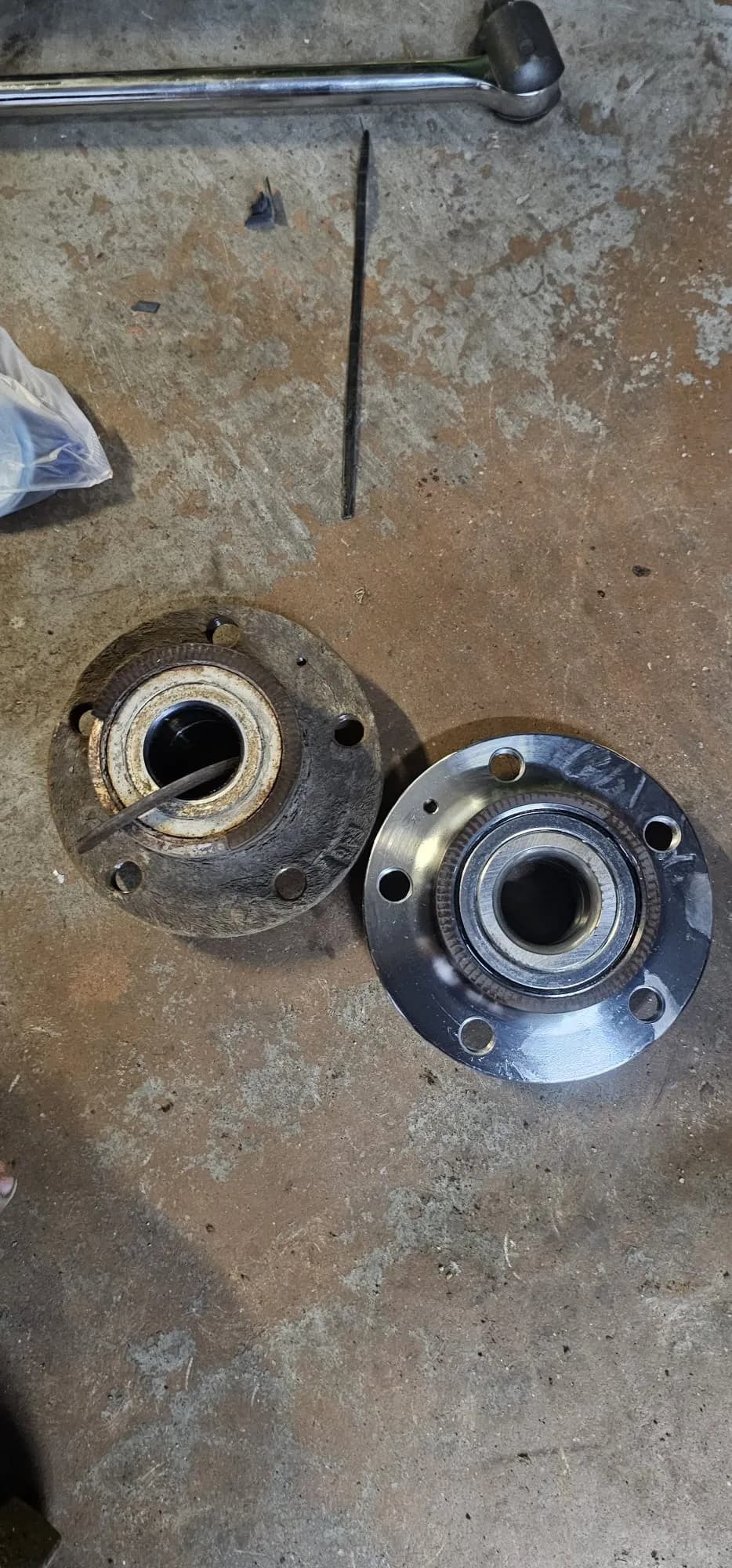
Volkswagen Passat 2019 Rear Wheel Bearing and ABS Sensor Replacement

Volkswagen Passat 2019 Rear Wheel Bearing and ABS Sensor Replacement

Volkswagen PassatRear wheel bearing and ABS sensor replacement18.09.2026

The customer brought a 2019 Volkswagen Passat with a worn rear wheel bearing and an ABS sensor that needed replacement. The rear hub was removed, the old and new hub bearing units were compared side by side, and the ABS sensor mounting point was checked before installation. We performed the following procedures: - Removal of the rear wheel and brake components for access - Removal of the old hub bearing unit - Inspection and replacement of the ABS sensor - Installation of the new rear wheel bearing / hub - Reassembly of the brakes and wheel - ABS system function check After the repair, the rear wheel bearing runs smoothly, the ABS sensor works correctly, and the car is ready for safe driving without bearing hum or ABS faults.

Open case
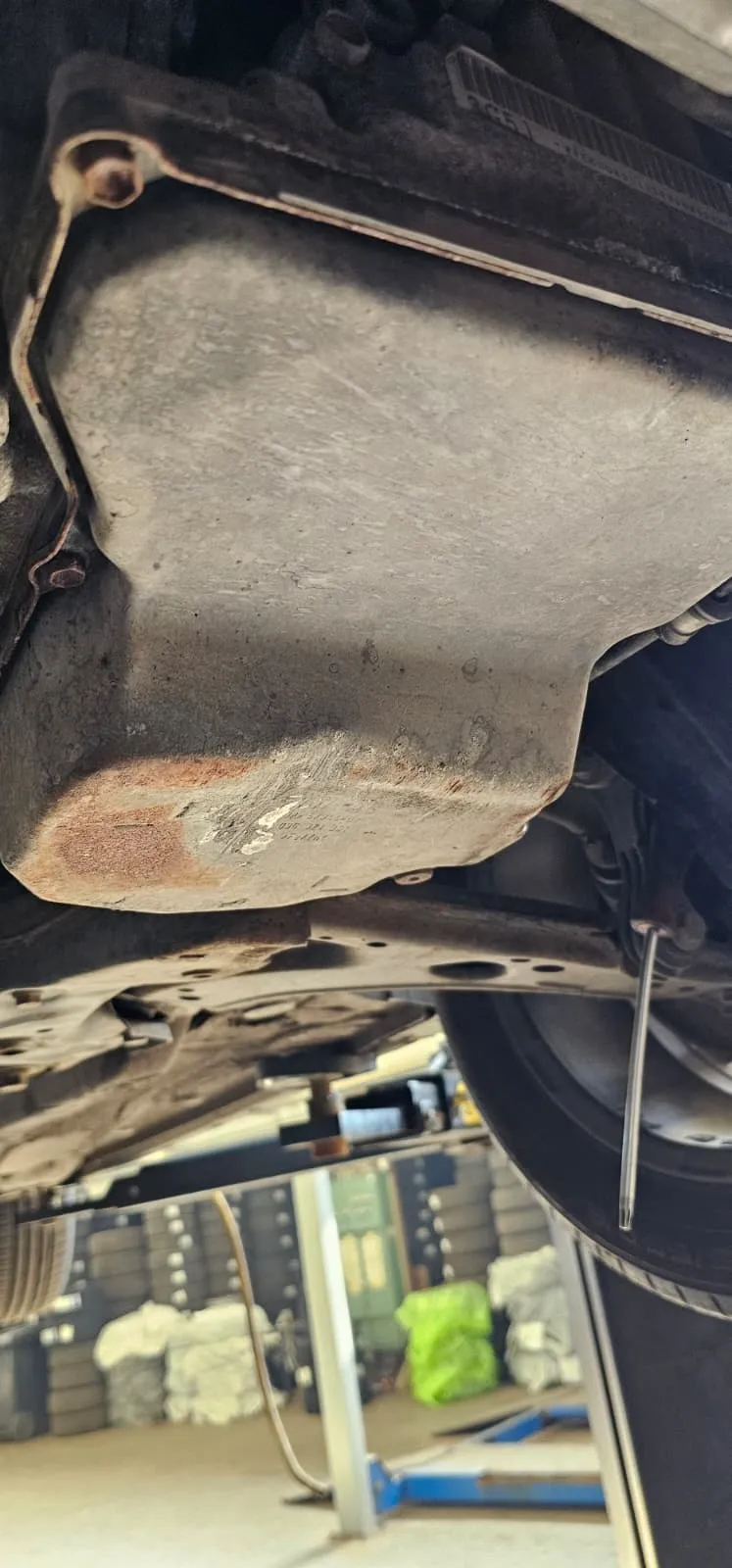
Volkswagen New Beetle 2006 Transmission Oil Pan Straightening and Oil + Filter Change

Volkswagen New Beetle 2006 Transmission Oil Pan Straightening and Oil + Filter Change

Volkswagen New BeetleTransmission oil pan straightening and oil + filter change26.08.2026

The customer brought a 2006 Volkswagen New Beetle whose automatic transmission oil pan had been struck and dented. With the car on a lift, we confirmed the pan damage and found old, contaminated transmission fluid. The oil pan was removed, the magnet and used fluid were inspected, and the transmission filter was replaced. The dented pan was straightened, refitted with a proper seal, and the gearbox was filled with fresh oil. We performed the following procedures: - Inspection and removal of the transmission oil pan - Draining and assessing the old transmission oil - Checking the magnet and metal debris - Replacing the transmission oil filter - Straightening the oil pan - Refitting the pan and renewing the seals - Filling with new transmission oil and checking the level After the service, the oil pan is back in the correct shape, the oil and filter have been renewed, and the transmission is ready for safe use.

Open case
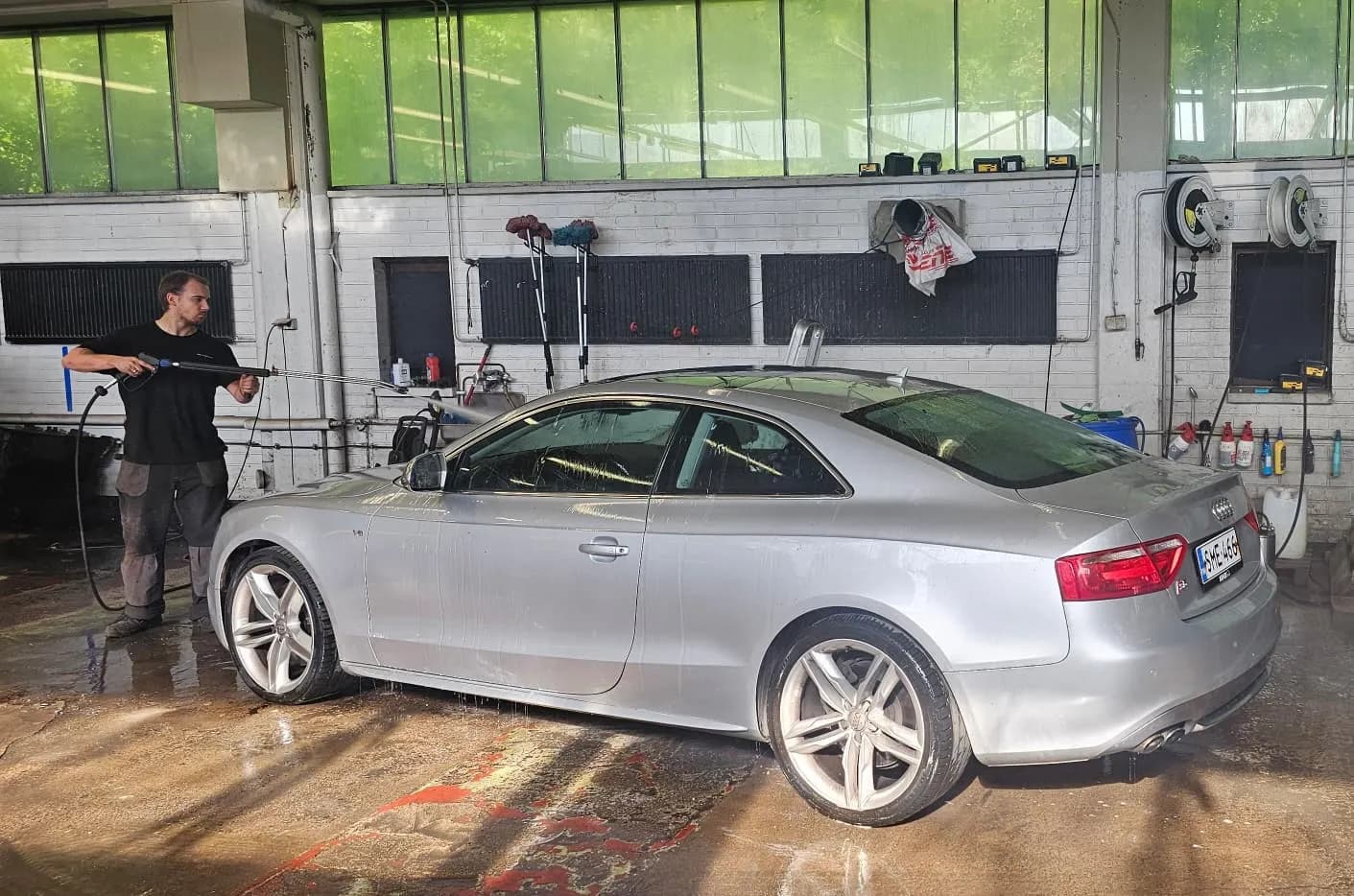
Audi S5 2007 Wash and Protective Coating

Audi S5 2007 Wash and Protective Coating

Audi S5Wash and protective coating26.08.2026

The customer brought a 2007 Audi S5 to our workshop for a car wash and protective coating. The silver S5 coupe was carefully cleaned in our wash bay with a pressure washer so the body, wheels and visible surfaces were ready before coating. We performed the following procedures: - Thorough exterior wash - Cleaning of wheels and wheel arches - Body preparation for protective coating - Application of protective coating to the paintwork After washing and coating, the car is clean, glossy and better protected against weather, dirt and road salt.

Open case
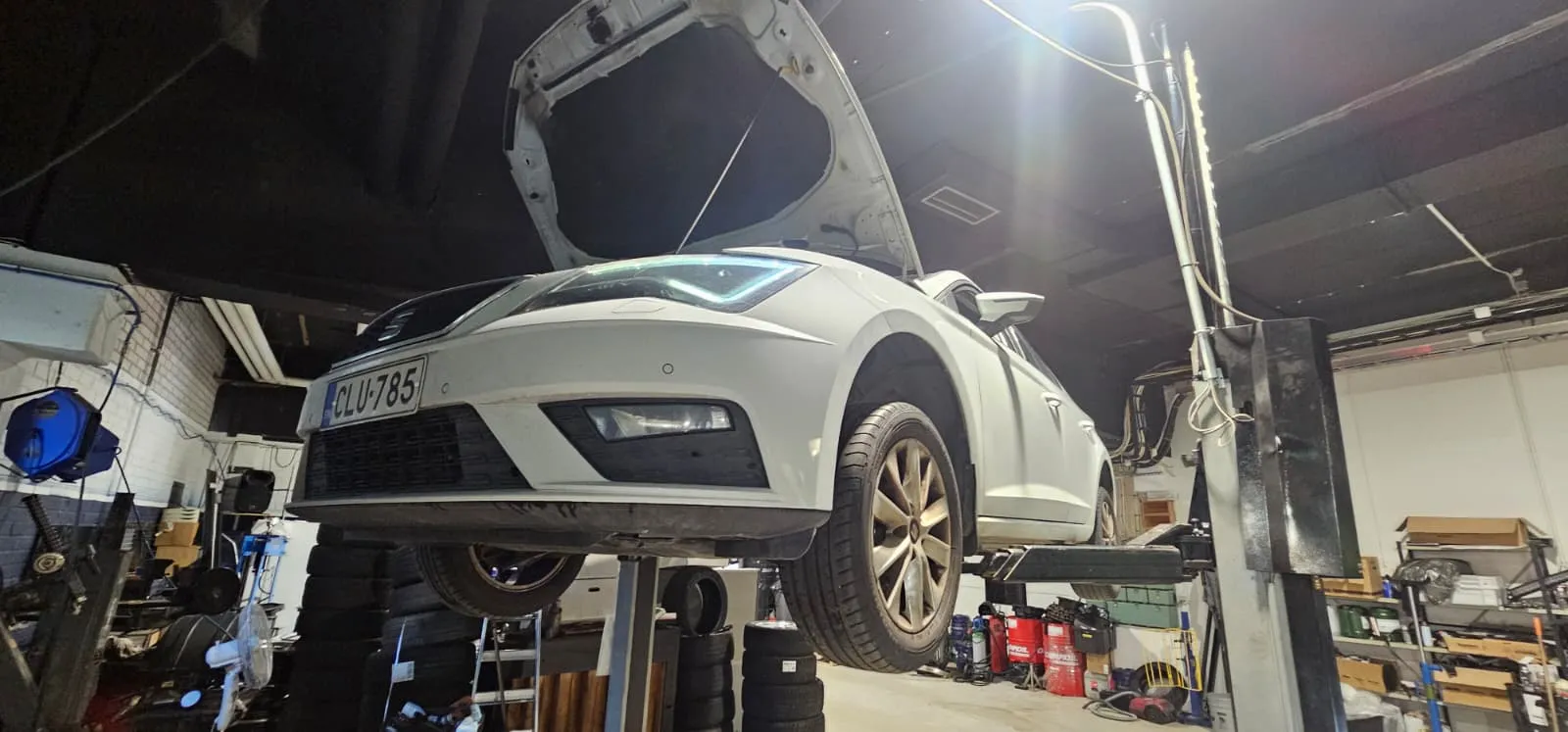
SEAT León 2017 1.4 TSI Scheduled Maintenance

SEAT León 2017 1.4 TSI Scheduled Maintenance

SEAT León 1.4 TSIScheduled maintenance25.08.2026

The customer brought a 2017 SEAT León 1.4 TSI to our workshop for scheduled maintenance. The car was raised on a lift so the engine oil and filter change, as well as an underbody inspection, could be carried out thoroughly. We performed the following procedures: - Draining the old engine oil - Replacing the oil filter - Refilling with fresh oil to manufacturer specification - Visual inspection of the chassis, suspension and possible leaks - Checking fluid levels - Reading fault codes and basic system diagnostics After the service, the car is ready for safe driving. Regular scheduled maintenance keeps the 1.4 TSI engine reliable and helps prevent more expensive repairs.

Open case
Audi S5 Cabriolet 2011 Convertible Roof System Repair

Audi S5 Cabriolet 2011 Convertible Roof System Repair

Audi S5 CabrioletConvertible roof system repair29.06.2026

The customer brought us a 2011 Audi S5 Cabriolet with a fault in the convertible roof system. A sensor in the roof system had failed, causing the roof to lift and get stuck in the wrong position, while the mechanism could no longer complete the opening or closing cycle correctly. This type of fault requires careful diagnostics, because several sensors, limit switches and control units work together in a convertible roof mechanism. We checked fault codes, roof position recognition and the movement of the mechanism so the roof could be safely released from the incorrect position without causing additional damage. We performed the following procedures: - Convertible roof system diagnostics with a tester - Faulty sensor location - Releasing the roof mechanism from the incorrect position - Sensor and wiring inspection - System testing through several opening and closing cycles After the repair, the convertible roof works correctly again: the roof opens and closes normally, and no active fault codes remained in the system. The vehicle was returned to the customer with a working and safely tested roof mechanism.

Open case
Volkswagen Passat 1.4 GTE Hybrid 2016 Turbo Replacement

Volkswagen Passat 1.4 GTE Hybrid 2016 Turbo Replacement

Volkswagen Passat 1.4 GTE HybridTurbo replacement

The customer brought us a 2016 Volkswagen Passat 1.4 GTE Hybrid after symptoms pointing to an oil leak started to appear in the engine operation. During diagnostics, we found that the turbo shaft seal was damaged and the turbo had started leaking oil into the intake manifold. This kind of fault should be repaired in time, because oil entering the intake side can cause rough running, smoke, and in the worst case further engine damage. We removed the necessary components, inspected the intake system, and replaced the damaged turbo with a new unit. After the repair, we checked the system for leaks, verified oil tightness, and tested engine operation. The car was returned to the customer in good working condition, with the risk caused by the turbo oil leak eliminated.

Open case

Service Process

How Volkkarihuolto service works for Audi, Volkswagen, Skoda, Seat, and Cupra vehicles

Booking

Book , by phone, or email. Provide your vehicle details and service needs.

Vehicle Reception

Upon arrival, our specialist will receive your car, discuss the service needs, and perform an initial inspection.

Diagnostics

We use original Audi diagnostic equipment and thoroughly check your vehicle to identify any potential issues.

Service Plan

If we find unexpected issues, we will contact you and propose a repair plan with a cost estimate before proceeding with the work.

Service Work

Our professional team performs all necessary service work using original or OEM-approved parts.

Quality Control

An experienced technician checks all work performed and ensures your vehicle operates flawlessly.

Vehicle Handover

We will notify you when your vehicle is ready for collection. We will explain all the work done and answer your questions.

Сначала примите согласие на cookies