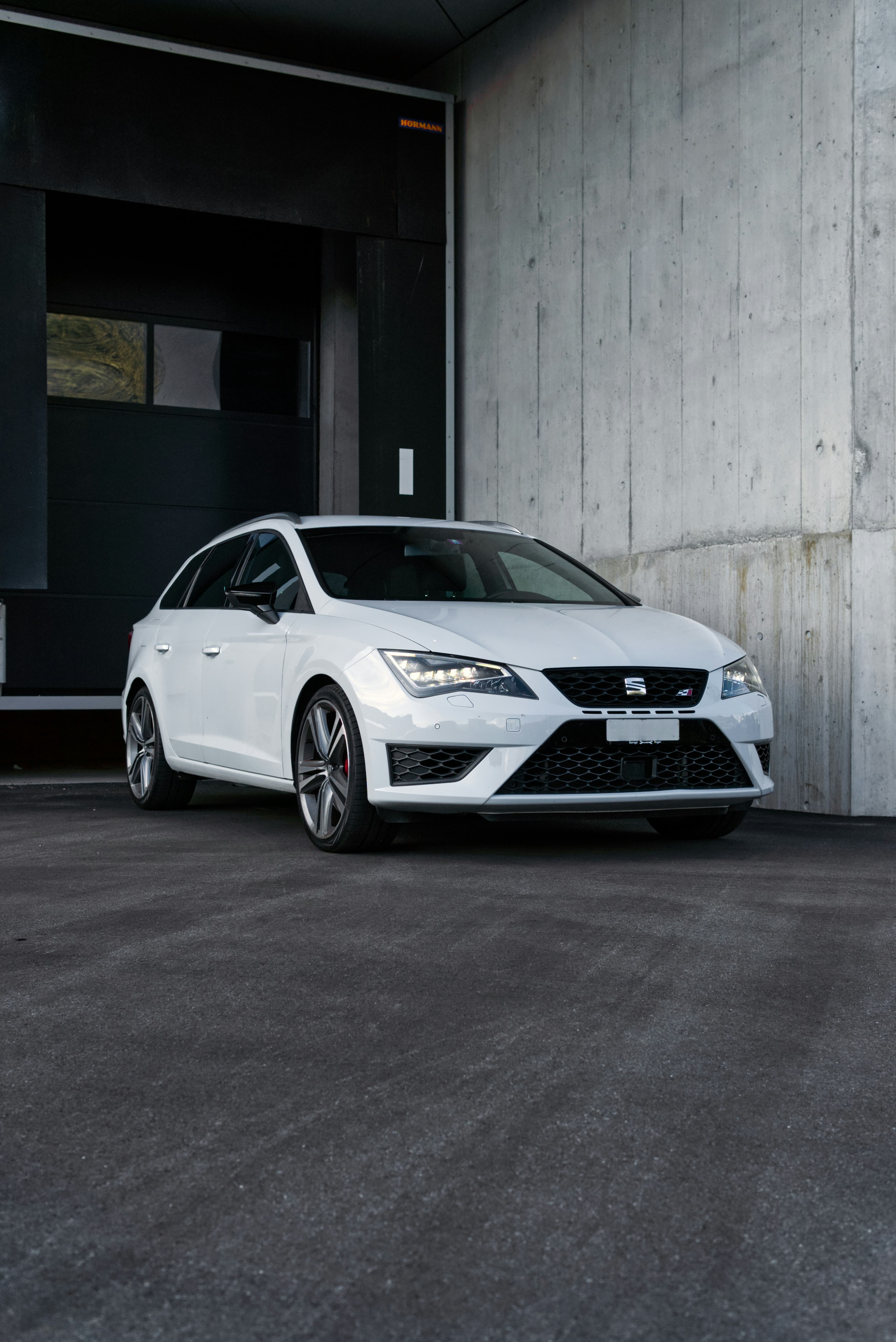
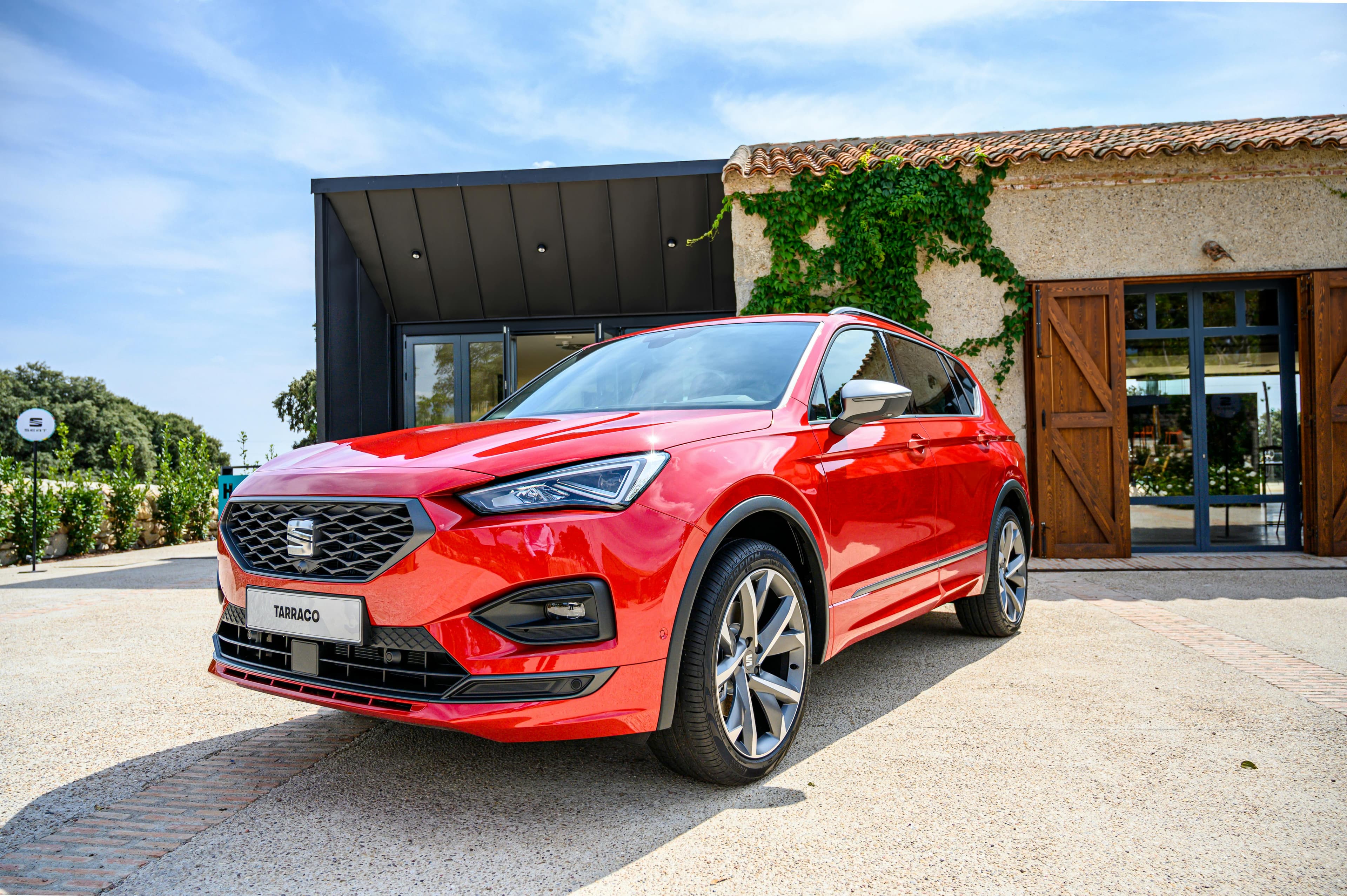
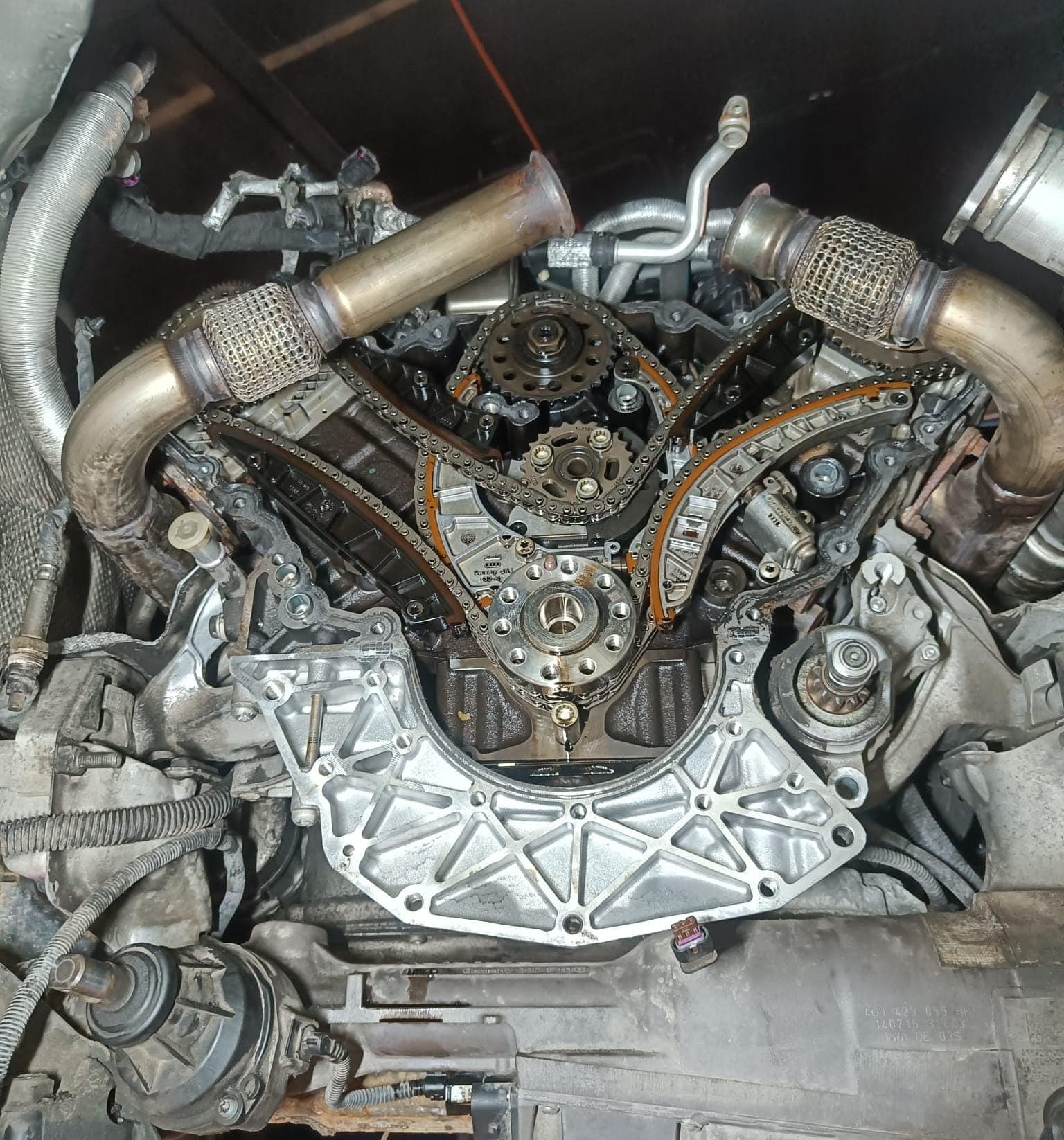
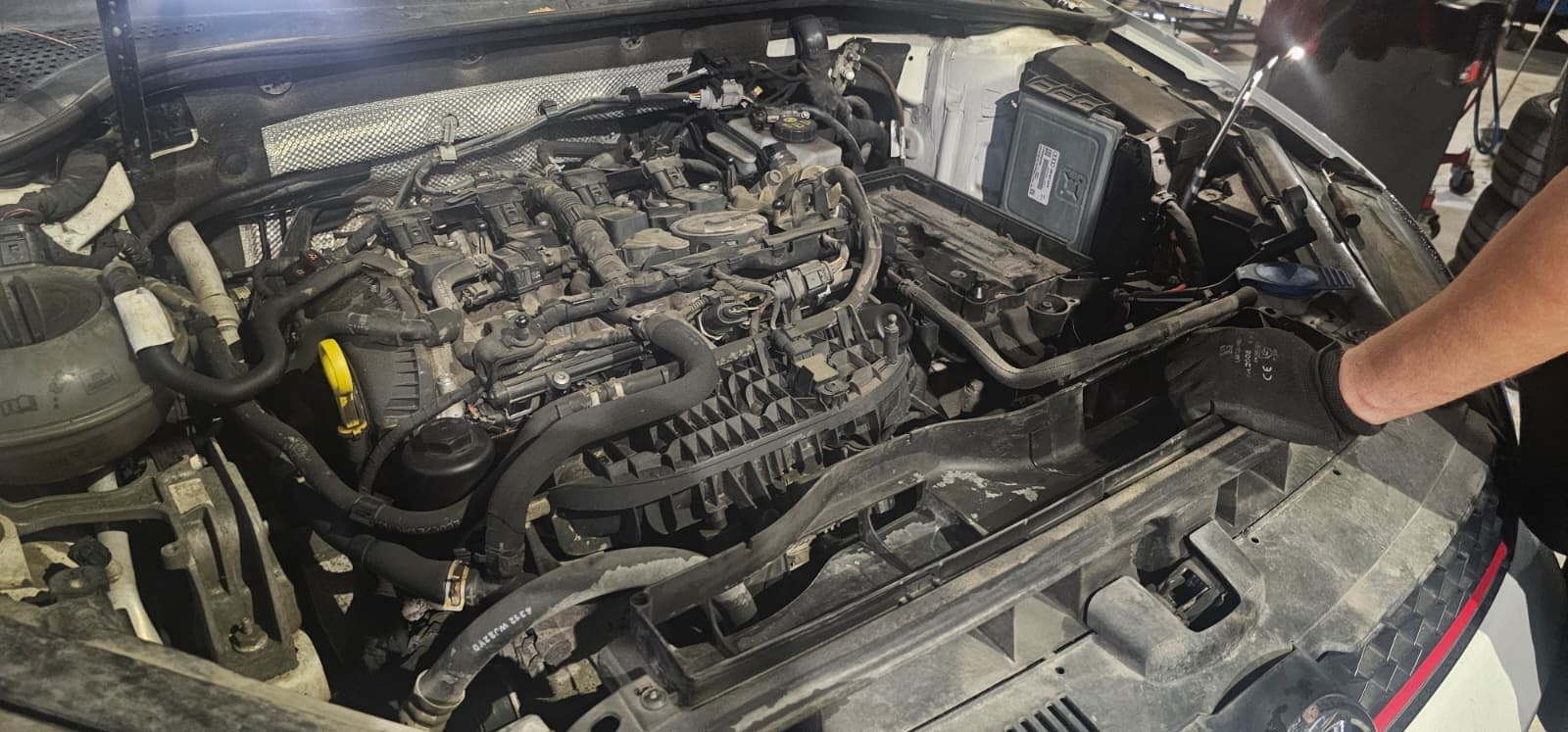
SEAT Ibiza — repair and service in Espoo
The SEAT Ibiza is one of the best-known models of the Spanish brand and one of the most popular compact cars of the Volkswagen Group. Over several decades the Ibiza has been built with naturally aspirated petrol engines, MPI, TSI, TDI diesels, manual gearboxes and DSG.
The first Ibiza appeared in 1984. Since then the model has gone through five main generations and become one of SEAT's key cars. By 2021 the company reported almost six million Ibiza cars sold.
On the Finnish used-car market the fourth and fifth generations are especially common, with 1.0 MPI, 1.0 TSI, 1.2 TSI, 1.4 TSI, 1.6 TDI and the 7-speed DSG.
At Volkkarihuolto Espoo we carry out diagnostics, maintenance and repair of the SEAT Ibiza at Ruukinmestarintie 7, 02330 Espoo.

SEAT Ibiza generations
The history of the model includes five main generations. The second generation was one of the first cars produced at the new SEAT plant in Martorell after it opened in 1993.
The current Ibiza V uses the Volkswagen Group MQB-A0 platform and is technically close to the Volkswagen Polo, Škoda Fabia and other compact models of the group.
- SEAT Ibiza I — from 1984
- SEAT Ibiza II — from 1993
- SEAT Ibiza III — from 2002
- SEAT Ibiza IV — from 2008
- SEAT Ibiza V — from 2017
First-generation SEAT Ibiza
The first generation is today of interest mainly as a classic car. It appeared before SEAT's full integration into the Volkswagen Group and differs substantially in design from modern Ibiza models.
If such a car is still used daily, it is especially important to check. For cars of this age, actual condition matters far more than mileage.
- corrosion
- the cooling system
- the carburettor or injection system depending on the version
- the ignition
- the gearbox
- the brakes
- the suspension
- the electrics
- computer diagnostics
Second-generation SEAT Ibiza
The second generation appeared in 1993 and already made wide use of Volkswagen Group technology. This Ibiza became one of the most important cars for the new SEAT plant in Martorell.
On the used market you can find petrol MPI engines, SDI and TDI diesels, manual gearboxes and the sporty GTI and Cupra versions. Today the main issues are age-related wear, corrosion and the history of previous repairs.
Third-generation SEAT Ibiza
The third generation appeared in the early 2000s. It widely used petrol MPI engines, the 1.8 Turbo, 1.4 TDI, 1.9 TDI, manual gearboxes and the sporty FR and Cupra versions.
For diesel cars of this generation the following are especially important today:
- the turbocharger
- EGR
- the vacuum system
- the clutch
- the dual-mass flywheel on the relevant versions
- the timing drive
- TDI diesel engine repair
Fourth-generation SEAT Ibiza
The Ibiza IV was launched in 2008 and is widely represented on the Finnish used-car market. This is where the 1.2 MPI, 1.2 TSI, 1.4 TSI, 1.4 TDI, 1.6 TDI, DSG, FR and Cupra are especially common.
This generation already requires full computer diagnostics, especially for problems with TSI, DSG and the diesel exhaust aftertreatment system. SEAT lists the Ibiza IV among the models covered by the historical service campaign for EA189 Euro 5 diesel engines.
Fifth-generation SEAT Ibiza
The fifth generation was launched in 2017. It became significantly more modern: the MQB-A0 platform, modern 1.0 MPI and TSI engines, the 1.5 TSI, 7-speed DSG, digital assistants, more complex multimedia and LED lighting.
Official technical materials for the generation include, for example, the 1.0 MPI with 80 hp, 1.0 TSI with 95 hp, 1.0 TSI with 115 hp, 1.5 TSI with 150 hp and DSG on selected versions.
The 2021 Ibiza update
In 2021 the Ibiza received a major update. The main changes affected the interior, multimedia, cabin materials, digital systems and assistants.
Production of the updated Ibiza began in summer 2021. SEAT also added more modern driver assistance systems, including Travel Assist, Side Assist, Traffic Sign Recognition and High Beam Assist.
SEAT Ibiza service in Espoo
The Ibiza is often used as a city car. For Finland that means many cold starts, short trips, road salt, snow, higher battery load in winter and brake corrosion.
On diesel versions DPF, EGR and the fuel system are additionally important. It is worth checking regularly:
- engine oil
- filters
- spark plugs
- the timing drive
- the turbocharger
- the cooling system
- DSG
- the clutch
- the brakes
- the suspension
- the battery
- the air conditioning
- SEAT Ibiza scheduled maintenance
- oil and filter change
- annual service
SEAT Ibiza 1.0 MPI
The 1.0 MPI is one of the simplest modern Ibiza engines. It is a naturally aspirated three-cylinder petrol engine without a turbocharger. Official data for the Ibiza V quote the 1.0 MPI at around 80 hp.
The advantage of this design is the absence of a turbocharger. But faults are still possible. A slight characteristic vibration of the three-cylinder engine is normal in itself. It is worth checking:
- spark plugs
- ignition coils
- injectors
- the throttle body
- the timing drive
- the cooling system
- petrol engine repair
- computer diagnostics
SEAT Ibiza 1.0 TSI
The 1.0 TSI is one of the most common engines in the Ibiza V. Versions of about 95 hp and 115 hp are used. In the official technical documentation the 115 hp version develops about 200 Nm and can be paired with the 7-speed DSG.
It is worth coming in for diagnostics if:
- EPC lights up
- Check Engine appears
- the engine misfires
- jerking has appeared
- power has dropped
- an unusual whistling sound has appeared
- petrol engine repair
- computer diagnostics
1.0 TSI turbocharger
A boost pressure error does not automatically mean a faulty turbocharger. The turbocharger should be replaced only after the fault has been confirmed.
It is worth checking:
- hoses
- leak-tightness
- the actuator
- valves
- sensors
- the wiring
- petrol engine repair
- computer diagnostics
SEAT Ibiza 1.2 TSI
The 1.2 TSI is often found on the Ibiza IV. It is one of those engines for which it is especially important to consider the specific code and year of manufacture. Different versions can differ in timing drive design, software, turbocharger and engine management.
Diagnostics are needed for a metallic noise after starting, EPC, unstable idle, loss of power and increased oil consumption.
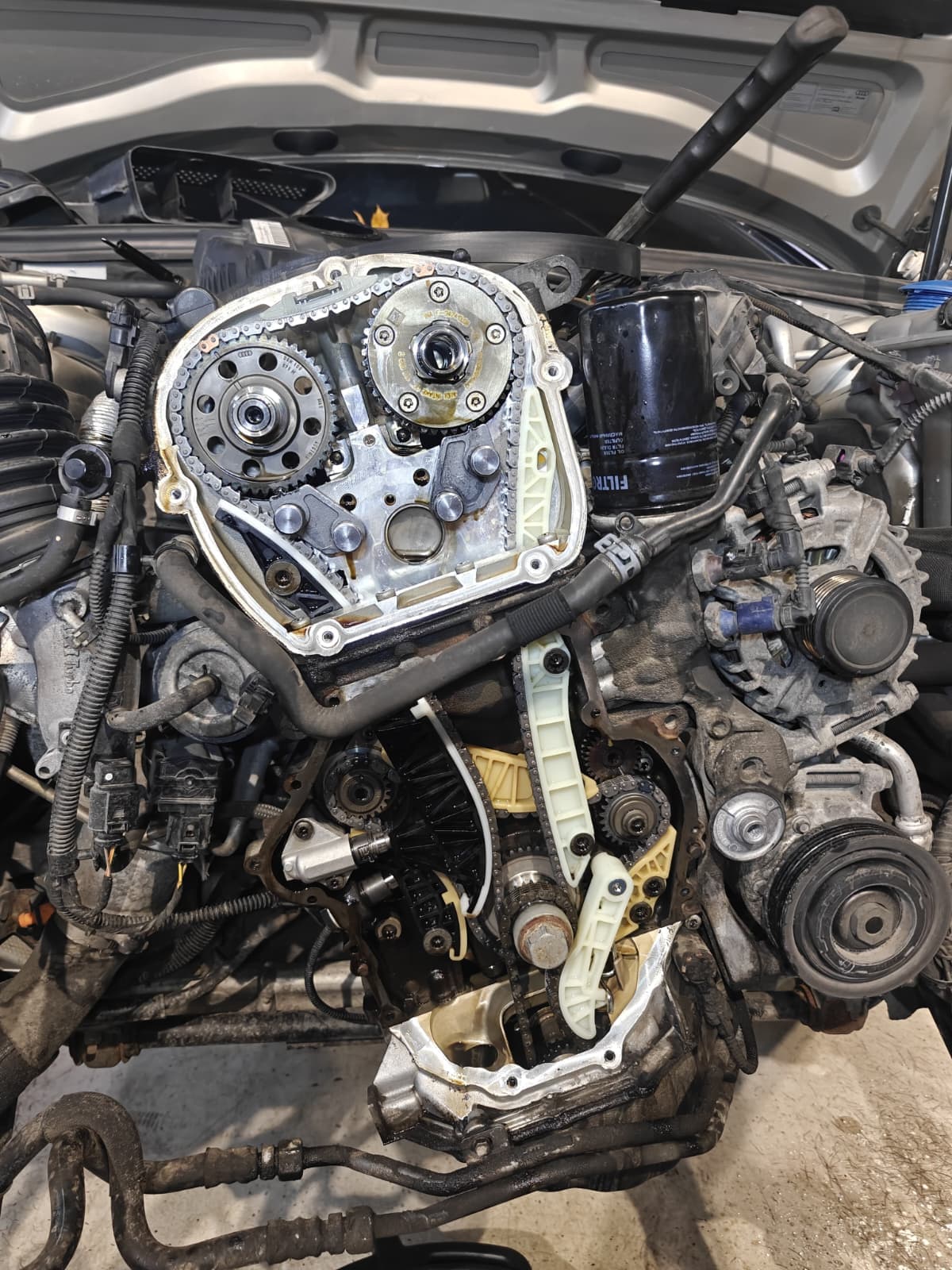
Timing chain on early TSI engines
Some early TSI engines use a chain drive. But noise alone does not mean the kit should be replaced automatically. The condition of the system must be assessed.
Possible signs of a problem: a metallic sound after a cold start, timing errors, hard starting and unstable running.
SEAT Ibiza 1.4 TSI
The 1.4 TSI was used on more powerful versions, including the sporty Ibiza FR and Cupra of the corresponding generations. Such cars may have higher power, a more complex boost system on some versions, DSG and reinforced brakes.
Before buying it is especially important to establish the service history, any tuning, the condition of the DSG and the condition of the engine.
SEAT Ibiza 1.5 TSI
The 1.5 TSI is used on the most powerful regular versions of the Ibiza V. Official data quote 110 kW / 150 hp and about 250 Nm of torque.
During servicing it is worth monitoring the oil, spark plugs, ignition coils, turbocharger, cooling system and timing drive.
SEAT Ibiza oil consumption
If the engine has started to use oil noticeably, possible causes include external leaks, crankcase ventilation, the turbocharger and internal engine wear. Continuously topping up oil without identifying the cause is not advisable. It is better to measure the actual consumption first.
SEAT Ibiza timing belt or timing chain
A large number of engines from different generations have been used in the Ibiza. That is why both chain and belt systems are found. There is no universal replacement interval for all Ibiza models.
The VIN, engine code, model year, service history and manufacturer requirements must be taken into account.
Diesel SEAT Ibiza TDI
Diesel Ibiza models are especially common among the earlier generations. You can find the 1.4 TDI, 1.6 TDI and 1.9 TDI.
They suit high mileages well, but modern diesel versions require working DPF, EGR, turbocharger and injectors.
SEAT Ibiza 1.4 TDI
The 1.4 TDI is a three-cylinder diesel. A certain amount of vibration is inherent in its design. If Check Engine appears at the same time, diagnostics are needed.
But strong vibration can be related to:
- engine mounts
- injectors
- the clutch
- the flywheel
- uneven combustion
- TDI diesel engine repair
- computer diagnostics
SEAT Ibiza 1.6 TDI
The 1.6 TDI was widely used on the Ibiza IV. If the car is driven mainly on short trips, the DPF may regenerate too often.
During servicing it is worth checking:
- DPF
- EGR
- the turbocharger
- injectors
- the timing drive
- the clutch
- TDI diesel engine repair
SEAT Ibiza 1.9 TDI
The 1.9 TDI is found on older generations. Loss of power does not always mean a faulty turbocharger.
For an older car the turbocharger, vacuum hoses, EGR, timing drive, clutch and dual-mass flywheel on the relevant version are important.
DPF SEAT Ibiza
Modern diesel versions use a particulate filter. Soot and ash gradually build up inside. Soot can burn off during regeneration. Ash is not removed by normal regeneration.
Signs of active regeneration: raised idle speed, the fan after stopping, increased fuel consumption and temporarily disabled Start-Stop.
Why does the Ibiza regenerate the DPF often?
Forced regeneration without removing the cause can give only a temporary effect.
Possible causes:
- short trips
- high DPF loading
- a faulty EGR
- the pressure sensor
- the temperature sensor
- injectors
- another engine problem
- DPF diagnostics
EGR SEAT Ibiza
The EGR gradually becomes contaminated with soot. On an older diesel it is worth checking the whole system, not only the valve.
Possible symptoms:
- Check Engine
- loss of power
- unstable running
- frequent regenerations
- limp mode
- EGR diagnostics
DSG SEAT Ibiza
DSG is widely found on newer Ibiza models. The 7-speed DSG is especially common on small-capacity TSI engines. For example, the technical materials for the Ibiza V explicitly quote the DQ200-7F gearbox for the 1.0 EcoTSI 115 hp.
This matters because different DSG gearboxes have different designs and service schedules.
Why does the DSG on the Ibiza jerk?
The cause can be the clutches, mechatronic unit, adaptations, the engine, mounts or the mechanical part of the gearbox.
Diagnostics are needed if:
- shudder has appeared when pulling away
- D or R engages with a delay
- the gearbox shifts with jolts
- gears are lost
- limp mode appears
- DSG service and repair
- computer diagnostics
DSG mechatronic unit
The mechatronic unit controls the gearbox and clutches. But a mechatronic fault does not always mean the whole unit needs replacing. Diagnostics are carried out first.
Signs of a possible problem: strong jerking, inability to engage D or R, limp mode, pressure errors and flashing gear indication.
DSG clutches
On a dry DSG, clutch wear can show up as shudder when pulling away, vibration at low speed and jerking during parking manoeuvres.
However, similar symptoms can also be caused by engine mounts or faults in the engine itself. That is why the source should be confirmed first.
Manual gearbox and clutch
Many Ibiza models have a manual gearbox. On diesel versions a dual-mass flywheel may also be used.
Signs of clutch wear: slipping, a high biting point, vibration and difficult gear engagement.
Is there a SEAT Ibiza 4×4?
The series-production modern Ibiza is front-wheel drive. It has no Haldex, propshaft or rear differential.
That is why the transmission is simpler than on all-wheel-drive Leon, Ateca or Tarraco models.
SEAT Ibiza cooling system
A falling coolant level must be diagnosed. On TSI engines it is especially important not to ignore a small continuous leak.
Possible causes:
- the water pump
- the thermostat
- the thermostat housing
- hoses
- the radiator
- the heat exchanger
- coolant leak diagnosis
Engine overheating
If the engine temperature rises above normal, it is worth reducing load, not continuing to drive for long while overheating, and checking the cooling system. Overheating can lead to serious engine damage.
The cause can be the thermostat, pump, fan or a leak.
SEAT Ibiza suspension
The Ibiza is a light compact car, so the suspension is relatively simple. Over time the anti-roll bar links, bushes, ball joints, dampers, top mounts and wheel bearings may need attention.
An inspection is needed if:
- a knocking noise has appeared
- the car pulls to one side
- the steering wheel vibrates
- the tyres wear unevenly
- computer diagnostics
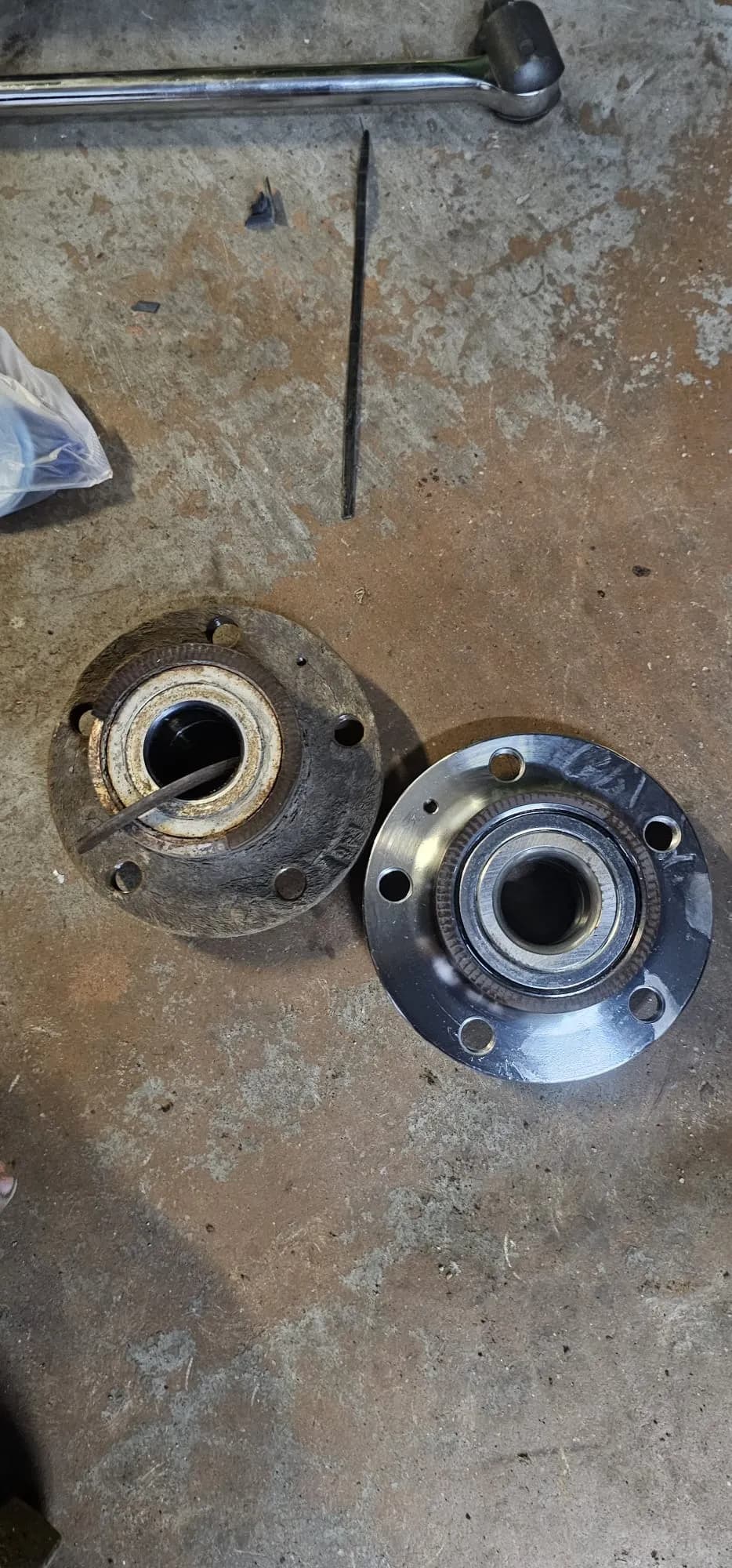
Wheel bearings
A worn bearing usually hums more loudly as speed increases. But winter tyres can create a similar sound. That is why the source should be identified before replacement.
SEAT Ibiza brakes
In Finland brakes suffer mainly from salt and moisture. Possible issues include disc corrosion, seized guide pins, a sticking caliper and uneven wear.
An inspection is needed if:
- the car pulls to one side
- vibration has appeared
- a wheel overheats
- the brakes squeal
Rear drum brakes
On some less powerful Ibiza versions rear drum brakes may be used. They also require servicing.
The shoes, operating mechanisms, drums and parking brake are checked.
Handbrake
On many Ibiza generations a conventional mechanical parking brake is used. In Finnish conditions it is useful to check it after winter.
Over time cable stretch, seizure and incorrect adjustment are possible.
Battery and Start-Stop
The modern Ibiza uses Start-Stop and many electronic systems. If several unrelated faults appear at the same time, the power supply should be checked.
A weak battery can lead to Start-Stop failure, poor starting, random warnings, multimedia problems and unavailable assistants.
SEAT Ibiza electronics
The fifth generation has far more electronics than older Ibiza models. The updated version received modern connectivity systems and assistants, including Travel Assist and Side Assist.
When a fault occurs, possible issues include multimedia restarts, camera errors, parking sensor problems and temporary unavailability of assistants.
Multimedia
If the screen freezes, restarts, loses Bluetooth or will not connect a phone, the head unit should not be replaced straight away.
First the power supply, fault codes, software and communication between modules are checked.
Cameras and assistants
A modern Ibiza can be equipped with Front Assist, Lane Assist, Adaptive Cruise Control, Travel Assist, Side Assist, Traffic Sign Recognition and High Beam Assist. The 2021 update expanded the range of electronic driver assistance systems.
After windscreen replacement or major body repair, some systems may need calibration.
LED headlights
After the 2021 update SEAT quoted fully LED headlights as standard equipment on the updated Ibiza in the relevant market. It is not always necessary to replace the entire lighting module.
If a lighting fault appears, the headlight, control unit, wiring and power supply are checked.
SEAT Ibiza air conditioning
Air conditioning is needed not only in summer. It helps cool the cabin, remove moisture and clear the windows faster. Regular recharging without finding a leak does not solve the problem.
If performance is poor, the refrigerant, leaks, compressor, condenser, pressure sensor and fan are checked.
SEAT Ibiza FR
FR is one of the best-known sporty Ibiza trim levels. It usually differs in design, seats, wheels, suspension settings and interior details. But FR does not denote a specific engine.
An Ibiza FR can have different TSI engines depending on the model year. That is why technical servicing is determined by the actual powertrain.
SEAT Ibiza Cupra
In previous generations sporty Ibiza Cupra versions were produced. Depending on the generation, different powerful petrol engines and sporty settings were used. Sporty cars are more often driven under high load.
When buying an Ibiza Cupra it is especially important to check the engine, turbocharger, DSG or manual gearbox, brakes, suspension and tuning history.
Is there a modern Ibiza Cupra?
After CUPRA was spun out as a separate brand, there is no sporty Ibiza Cupra in the current range.
The modern Ibiza remains a SEAT brand model, and sporty positioning is represented mainly by the FR trim.
SEAT Ibiza tuning
TSI versions are often given a software power increase. Tuning can increase the load on the turbocharger, DSG, clutches, engine and cooling system.
Before buying it is worth finding out whether the firmware was changed, whether the DSG program was altered and whether non-standard components were fitted.
Body and corrosion
Newer generations are well protected against corrosion, but older Ibiza models already need careful inspection. Finnish salt accelerates corrosion of the underside of the car.
It is worth checking the sills, wheel arches, underbody, brake lines, suspension components and areas of body repair.
Water in the cabin
If the carpets are damp, it is worth checking the door seals, drains, tailgate and the consequences of body repair.
Moisture can lead to fogging, odour, oxidised connectors and electronic faults.
SEAT Ibiza pre-purchase inspection
Before buying a used Ibiza it is worth checking the cold start, electronic control unit faults, engine, oil consumption, turbocharger, timing drive, cooling system, DSG or manual gearbox, clutch, suspension, wheel bearings, brakes, battery, air conditioning, electrics, body and underbody.
For a TDI the DPF, EGR, injectors and turbocharger are additionally checked. For a DSG it is especially useful to check the gearbox cold, after warm-up, when pulling away and when shifting D/R.
What SEAT Ibiza services we provide
At Volkkarihuolto Espoo you can come to us for:
- regular SEAT Ibiza maintenance
- engine oil and filter change
- computer diagnostics
- MPI servicing
- TSI servicing
- TDI servicing
- turbocharger diagnostics
- timing belt or timing chain inspection
- DPF diagnostics
- EGR inspection
- DSG servicing
- mechatronic diagnostics
- clutch repair
- cooling system diagnostics
- brake repair
- suspension diagnostics
- wheel bearing replacement
- battery inspection
- air conditioning service
- multimedia diagnostics
- electronic assistant inspection
- preparation for the roadworthiness test
- SEAT Ibiza pre-purchase inspection
Common SEAT Ibiza fault signs
It is worth booking diagnostics if:
- Check Engine or EPC is on
- the engine misfires
- jerking has appeared
- the car has lost power
- oil consumption has increased
- an unusual turbo whistle has appeared
- a metallic noise is heard after starting
- the coolant level is falling
- the TDI regenerates the DPF too often
- an EGR fault has appeared
- the DSG jerks
- D or R engages with a delay
- the clutch slips
- the suspension knocks
- a humming noise has appeared
- the brakes vibrate
- one wheel overheats
- Start-Stop has stopped working
- the multimedia restarts
- assistants become unavailable
SEAT Ibiza repair in Espoo
Need repair or scheduled maintenance for a SEAT Ibiza? Contact Volkkarihuolto Espoo at Ruukinmestarintie 7, 02330 Espoo.
We can diagnose petrol MPI and TSI engines, TDI diesels, DSG, turbocharging, chain and belt timing drives, DPF, EGR, the cooling system, brakes, suspension, battery, air conditioning and electronic systems.
When servicing a SEAT Ibiza it is especially important to consider the specific generation. An Ibiza IV 1.2 TSI DSG, a diesel 1.6 TDI, an Ibiza V 1.0 TSI and an Ibiza FR 1.5 TSI have different engines and gearboxes and require different approaches to diagnostics and preventive maintenance.
Correct diagnostics make it possible to identify the real cause of a fault and avoid unnecessary replacement of serviceable components.
FAQ
When did the SEAT Ibiza appear?
The first Ibiza appeared in 1984. The model became one of the most important in SEAT's history and by 2021 had sold almost six million cars.
How many SEAT Ibiza generations are there?
There are five main generations. The current fifth generation appeared in 2017 and later received a major update.
Which engines are used in the modern Ibiza?
The fifth generation uses, among others, the 1.0 MPI, 1.0 TSI and 1.5 TSI. Official technical data quote outputs of roughly 80 to 150 hp depending on the version.
Is there a SEAT Ibiza with DSG?
Yes. For example, the 1.0 TSI 115 hp was built with the 7-speed DSG DQ200.
Why does the DSG on the Ibiza jerk?
The cause can be the clutches, mechatronic unit, adaptations, the engine or mounts. Diagnostics must be carried out before repair.
Timing belt or timing chain on the SEAT Ibiza?
It depends on the engine and generation. Both designs were used on different engines, so the schedule is determined by the VIN and engine code.
Is there a diesel Ibiza?
Yes. Previous generations widely used the 1.4, 1.6 and 1.9 TDI.
Why does a diesel Ibiza regenerate the DPF often?
The cause can be short trips, high DPF loading, EGR, sensors, injectors or another engine problem.
Is there a SEAT Ibiza 4×4?
No. The series-production modern Ibiza is a front-wheel-drive car.
What is Ibiza FR?
FR is a sporty trim level with corresponding design and settings. It is not a separate engine.
Is the Ibiza Cupra still produced?
No. Sporty Ibiza Cupra versions belong to previous generations. In the current Ibiza range the main sportily styled version is FR.
Can a SEAT Ibiza be checked before purchase?
Yes. It is worth checking the engine, timing drive, turbocharger, DSG or clutch, cooling system, brakes, suspension and electronics. On a diesel car the DPF and EGR are additionally checked.
Detailed Services
Professional fault diagnostics for SEAT Ibiza.
Oil ChangeEngine oil and filter replacement for SEAT Ibiza.
Annual maintenanceComprehensive annual maintenance for SEAT Ibiza.
Regular MaintenanceScheduled maintenance for SEAT Ibiza according to service needs.
Engine RepairEngine diagnostics and repair for SEAT Ibiza.
Diesel Engine RepairDiesel engine service and repair for SEAT Ibiza.
Electrical RepairElectrical fault tracing and repair for SEAT Ibiza.
ECU ProgrammingControl unit programming and coding for SEAT Ibiza.
DSG RepairDSG transmission diagnostics and repair for SEAT Ibiza.
Transmission RepairTransmission diagnostics and repair for SEAT Ibiza.
Transmission Oil ChangeTransmission oil change for SEAT Ibiza.
Timing Belt ReplacementTiming belt and related component replacement for SEAT Ibiza.
Timing Chain ReplacementTiming chain, tensioner, and guide replacement for SEAT Ibiza.
Cooling System RepairCooling system service and repair for SEAT Ibiza.
AC RepairAir conditioning service and repair for SEAT Ibiza.
Engine Heater InstallationEngine heater installation and service for SEAT Ibiza.
Cabin OzonationCabin ozonation and odor removal for SEAT Ibiza.